You write await a dozen times before lunch. Fetch a row, await it. Call a service, await that. It works, you move on, and you never have to think about what the word is doing. Then one day someone asks you to explain it. Maybe it's an interviewer."But what does await actually do?" And you open your mouth and what comes out is "it, uh, waits for the promise." Which is true, and also explains nothing.
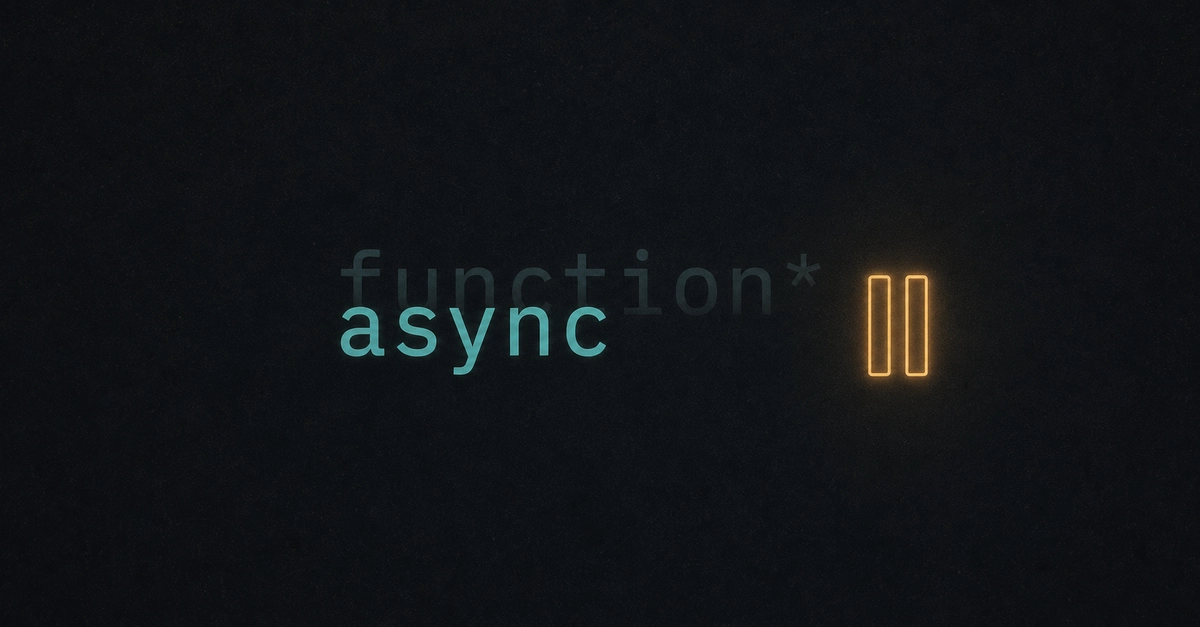
We can build async/awit mechanism from scratch using generators as a learning exercise. It requires a pause button wired to a small loop that waits on a promise and then presses play again. You already know one half of that machinery if you read the last post in this series. The other half is a trick generators have that we glossed over. Put the two together and you can build a working version of async/await yourself, by hand, and watch it behave exactly like the real thing.
Let's do that.
The shape of the problem
Strip await down to what it has to accomplish and you get two requirements: