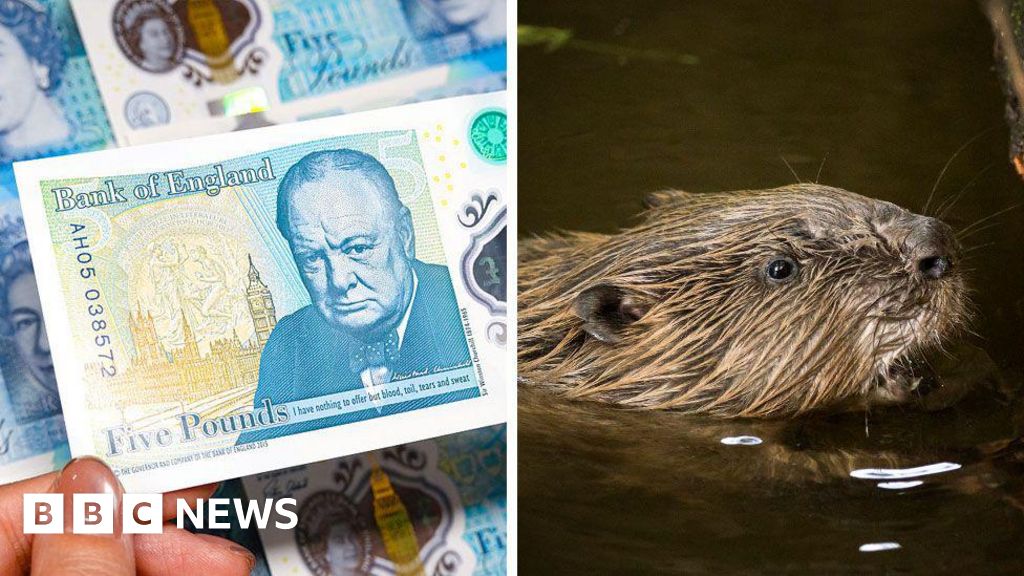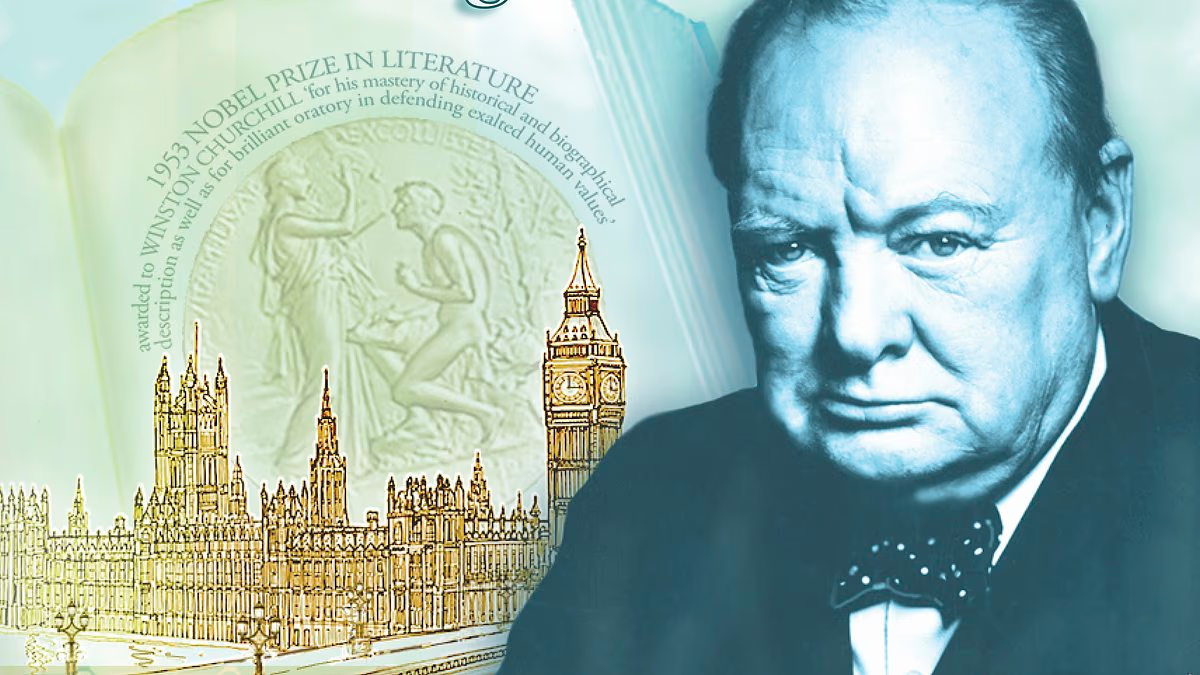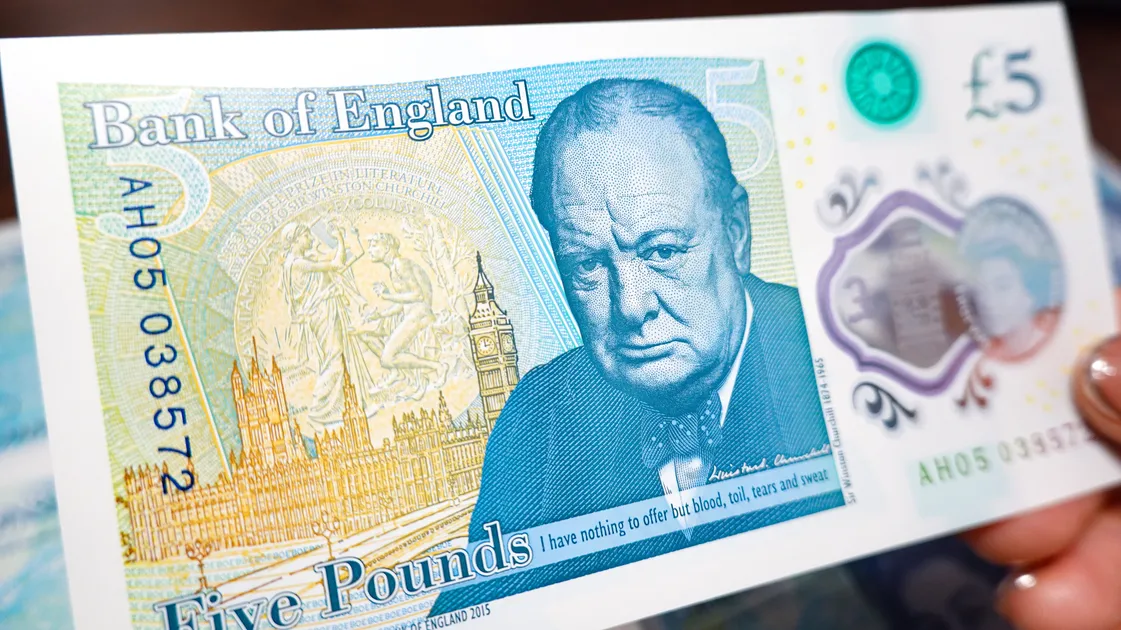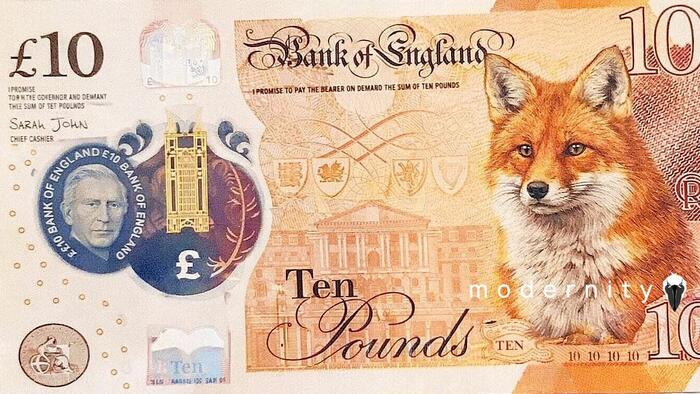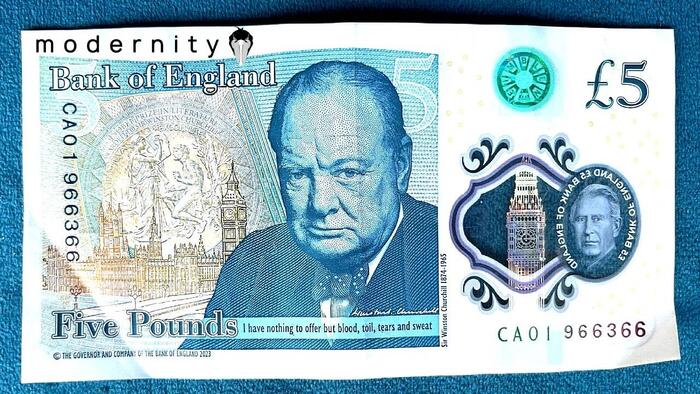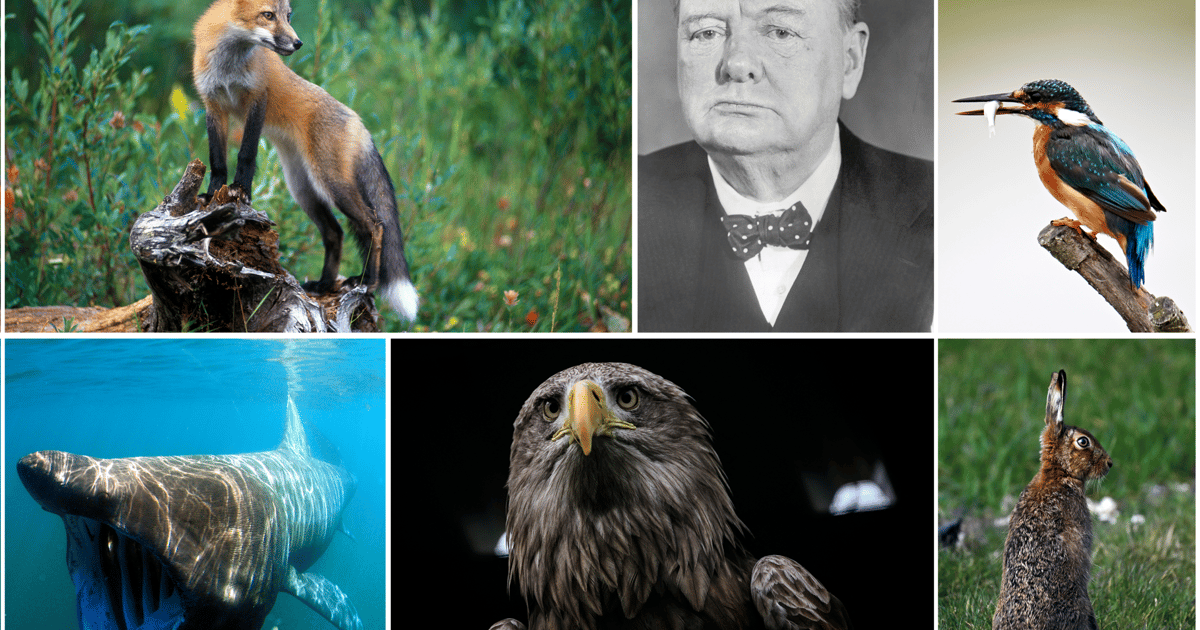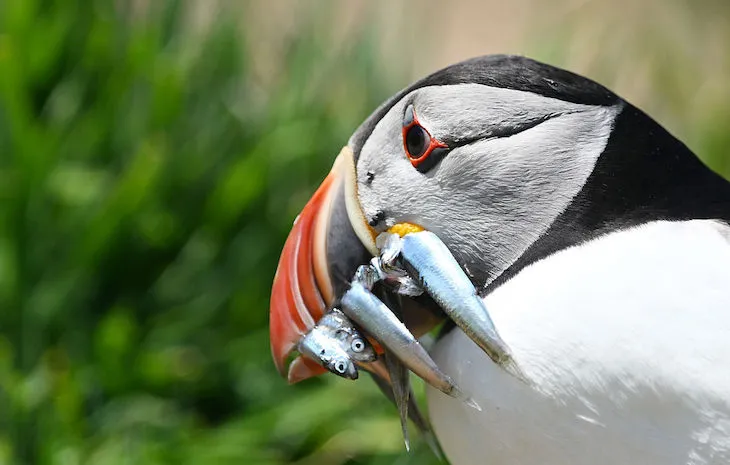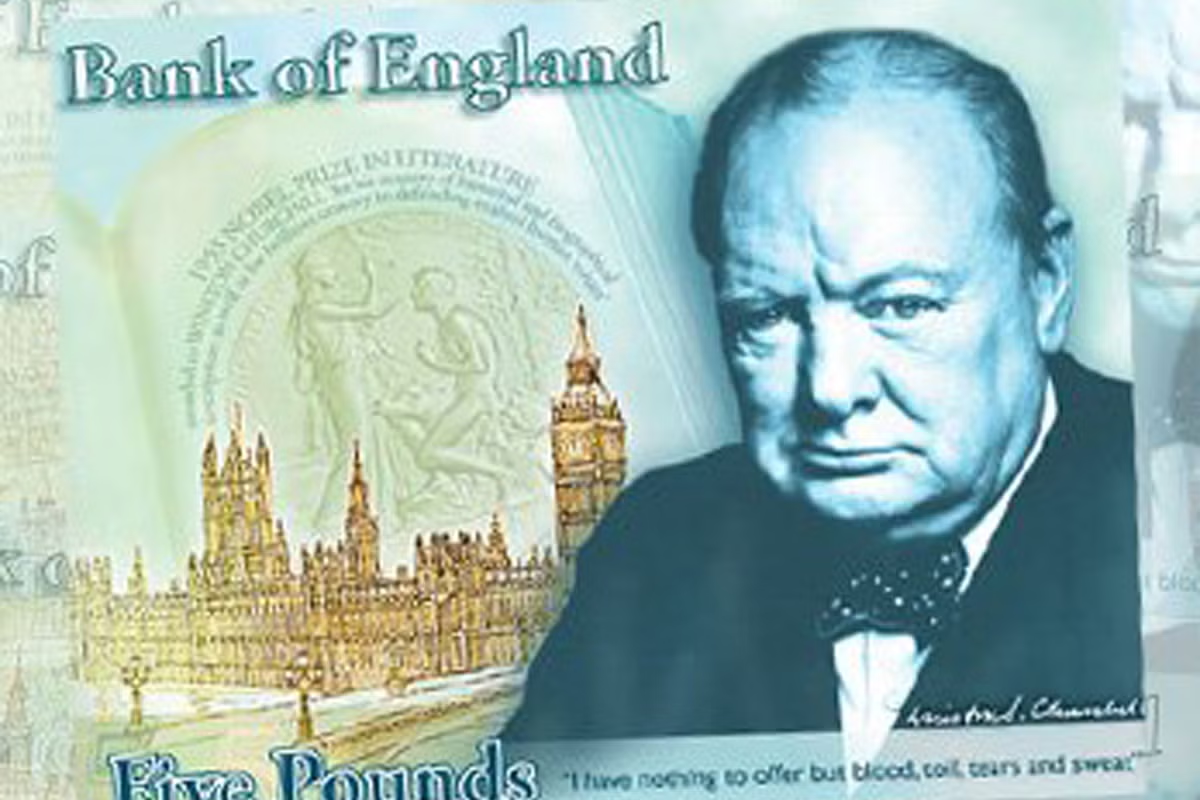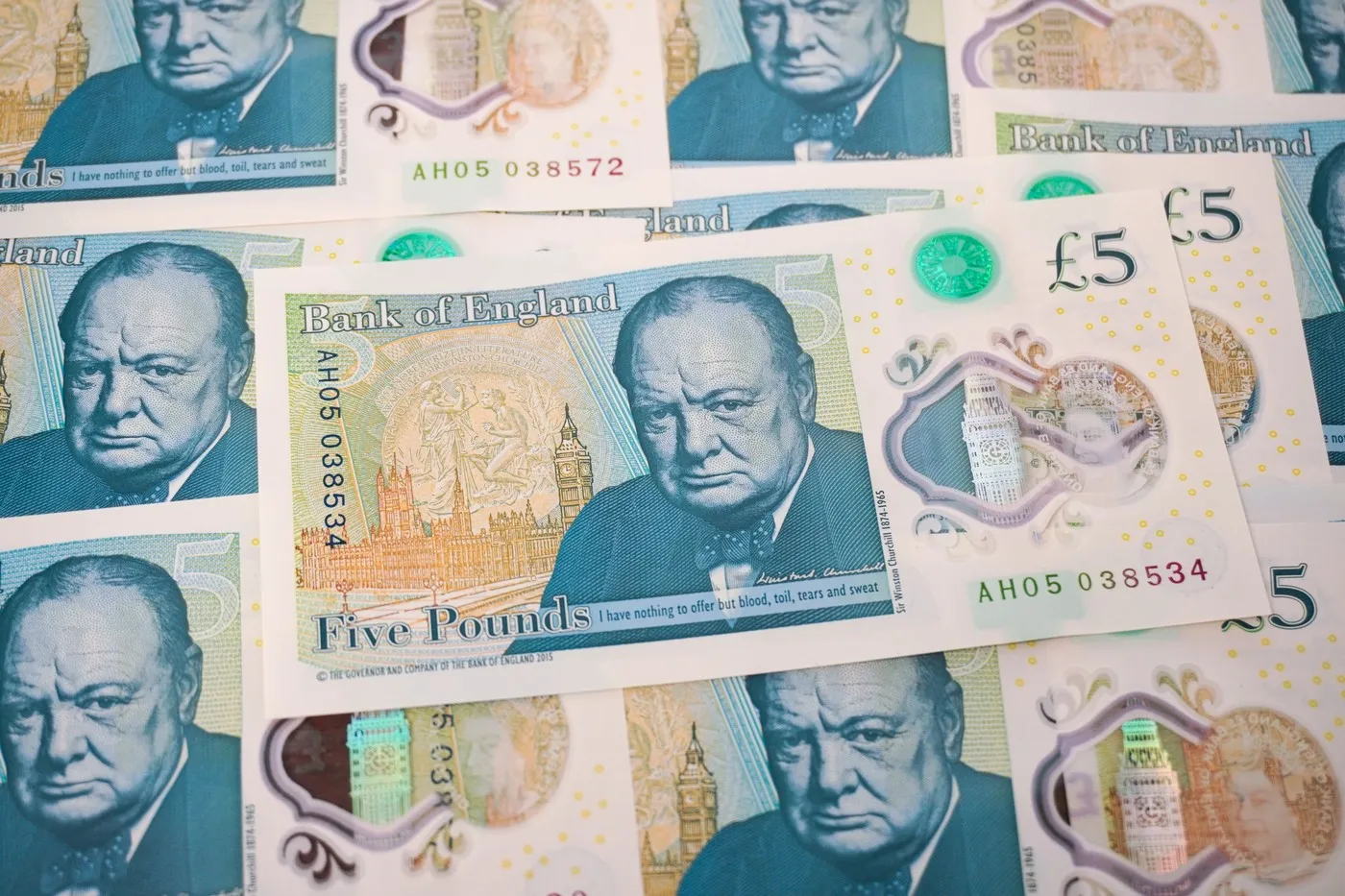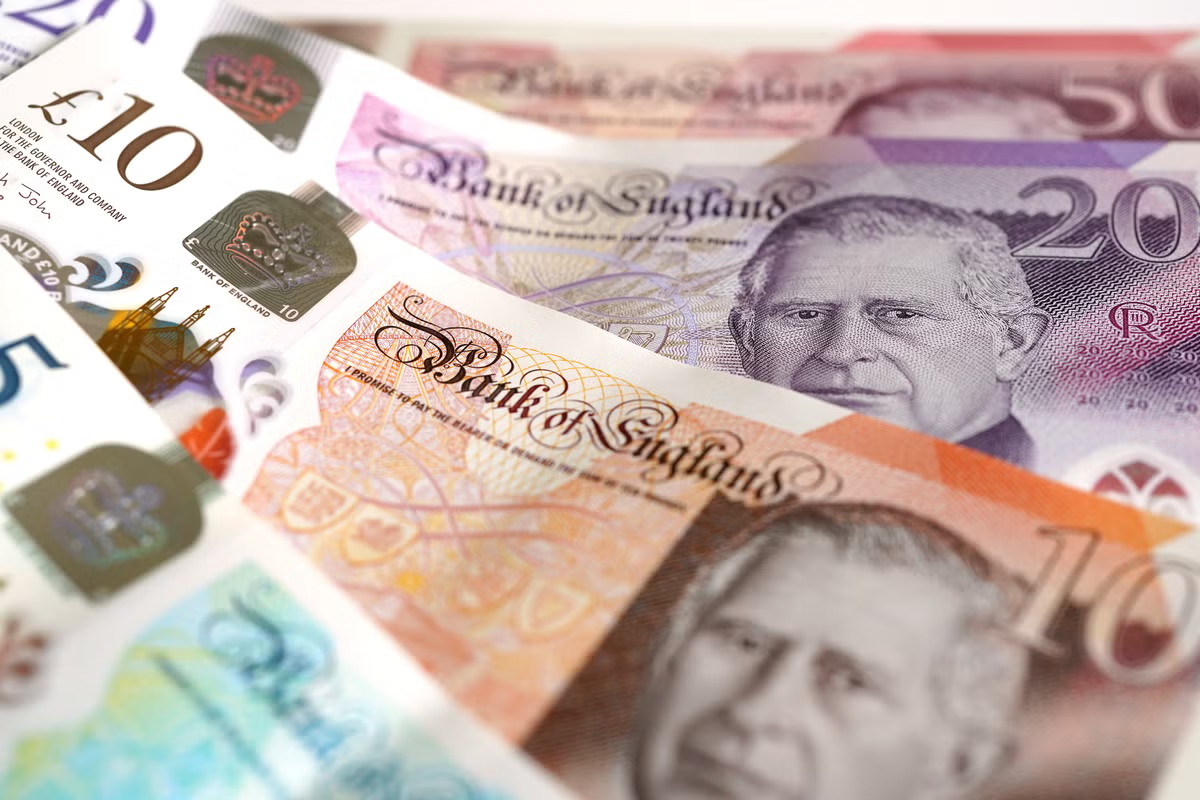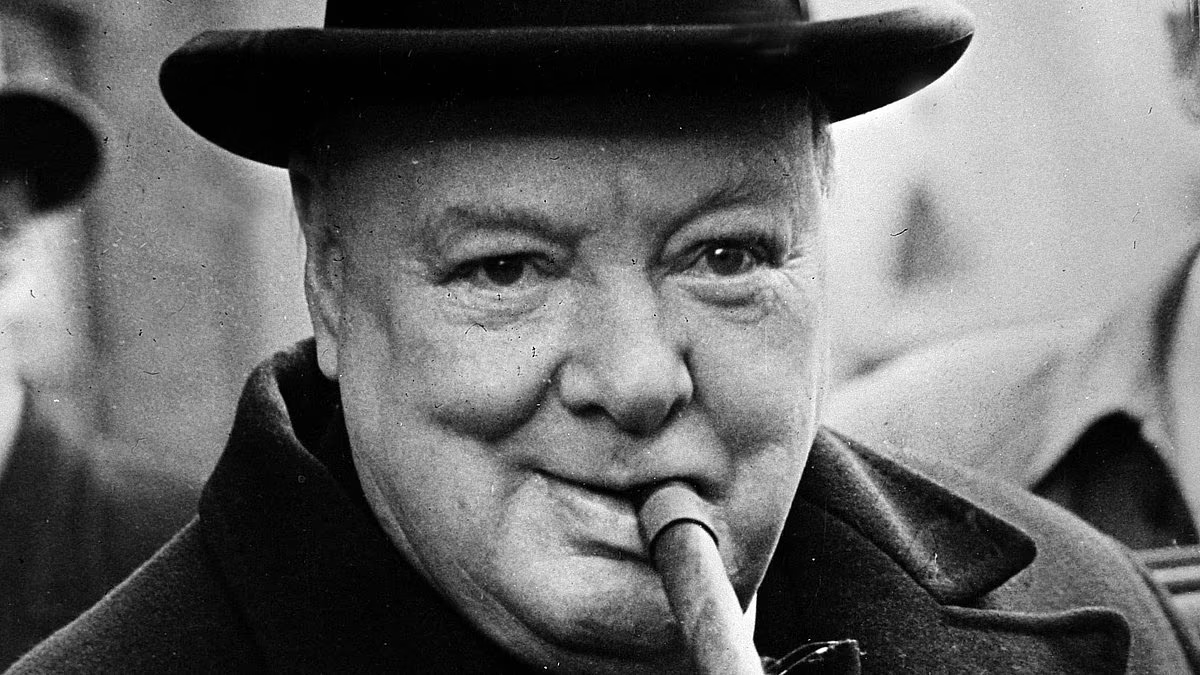
Banks always tell us that we can trust them. Most of us would automatically trust the Bank of England. But what if its Governor, Sir Andrew Bailey, went around being 'economical with the truth'? Would we trust him then?This question arises because, in his justification last week for removing depictions of famous Britons from our banknotes, Sir Andrew said we, the public, had voted for this. Some 44,000 people had taken part in a poll, shared on the Bank of England's website, and the majority had opted for images of British wildlife over historical figures – so Winston Churchill is out, and bees and basking sharks are in.However, he failed to mention the focus groups, involving 119 people, that were also consulted by the Bank.It was revealed yesterday that one participant in these secret groups described Alan Turing, who features on our £50 note, as 'imperialistic' – anyone who knows about the mathematician's experience of prejudice will know that nothing could be further from the truth. Others apparently objected to people associated with Britain's victory in the Second World War. Even images of great buildings were controversial 'due to potential links to colonialism/slavery'.As such, marketing consultancy Savanta advised the Bank that putting historical figures on its notes was 'potentially divisive, elitist'.So, Sir Andrew, is your decision to banish titans of British history from our currency really a reflection of public will? The Bank of England has dropped Winston Churchill and other famous Britons from future banknotesOr was it because the dead hand of focus group research dovetailed with a liberal belief, shared by much of the ruling class, that the nation's past is 'problematic'?For why else would you be pushing ahead with this scheme when leaders of three major political parties – Kemi Badenoch, Nigel Farage and Sir Ed Davey, representing a large majority of voters today – are all opposed?That Jane Austen, one of our most celebrated writers, or Britain's greatest painter, JMW Turner, could be replaced by puffins or hedgehogs tells us a lot about the state of the nation.In 2000 we were asked to decide, 'Who was the greatest Briton?' by the former trustworthy BBC and after watching excellent programmes, the nation chose Churchill over the engineer Isambard Kingdom Brunel.The latter was depicted by Kenneth Branagh 12 years later at the opening ceremony of the London Olympics. We thrilled at the evocation of British history choreographed by Danny Boyle, including scenes of the Industrial Revolution through which Britain changed the world.Yet now we have lost the will and confidence to put our history, and those who made it, on our money. National pride and patriotism are embarrassments in Britain today.We all love our countryside and its animals and birds, but they hardly define us as a nation. They give no clue to British life and identity, or of our contributions to freedom, science and the arts. Jane Austen could soon be replaced by puffins or hedgehogs on banknotes, after being viewed by some as 'not representative of the UK's cultural and natural diversity' Bees and basking sharks are among the animals set to feature on new banknotesBanknotes with a fresh group of famous Britons on them – how about Queen Elizabeth I, novelist George Eliot, physicist Stephen Hawking and Capability Brown, the landscape gardener? – could launch 10,000 history lessons across British schools and another series from the BBC teaching us about the heritage we share.Some chance! We are told instead by educationalists and commentators in our universities, the Left-wing media and the BBC, that our history has been immoral and that its great figures are unworthy.Is it any surprise that the majority who replied to the Bank of England's survey – the one we know about, not the one hidden from us – chose illustrations from nature for banknotes? Even so, more than a third opted to continue with great Britons.Think about today's Euro notes. There's nothing to think about, is there? Adorned with generic images of vague architectural features, in their blandness and conformity, they are eminently forgettable. They were evidently designed by a committee given a brief to be boring, as is so much in the EU. But can you remember what they replaced? Richly coloured French banknotes before the franc was abolished celebrated the composer Debussy, the painter Cezanne, the engineer Gustave Eiffel (he of the Tower) and the great scientific partnership of Pierre and Marie Curie. In Italy you had images of the painter Caravaggio, sculptor Bernini and radio pioneer Marconi. For nations wise enough to illustrate their history on their banknotes, everyday commercial exchanges affirm membership of the national community, and teach tourists about the countries they visit. For decades, American dollar bills have featured, in order from $1 to $100, great founders of the republic and presidents: Washington, Jefferson, Lincoln, Hamilton, Jackson, Grant and Franklin. 44,000 people took part in a poll, shared on the Bank of England's website, and the majority had opted for images of British wildlife over historical figuresLiving in a nation of immigrants, Americans have always understood – at least until recently – the need for national symbols and a shared culture to bind a diverse nation together. American children begin each school day reciting the Pledge of Allegiance; the Stars and Stripes flies over every civic building; their banknotes tell the national story.The mistake made by the British elite, which this decision about our money demonstrates yet again, is to have tried to build a multicultural society without a common identity. Rather than hiding that identity behind small mammals and reptiles, we should be reinforcing it.Instead, recent issues of our 50 pence coins have depicted Winnie the Pooh, Dennis the Menace and Star Wars. The Bank of England has encouraged the trivialisation and Disneyfication of our culture and it now proposes to do further damage. While British people remain loyal and proud, their political and cultural leaders (despite occasional empty words to the contrary) retreat in horror from displays of national pride. The French call it 'trahison des clercs', the treason of the intellectuals.Step forward the man making this decision, Sir Andrew Bailey. Before he became a banker, he studied History at Cambridge and even wrote a doctorate there on the Lancashire cotton industry during the Napoleonic Wars. Having studied this, he of all people will be aware of the significance of national symbols in bringing us together, especially in times of national danger and stress. Images of 'Farmer George' (George III), John Bull and Britannia (who used to be on the back of our 50 pence coin but has been steadily removed over time) saw us through the wars against the French.Despite Sir Andrew's educational advantages and distinctions, he demonstrates the cultural cowardice of so many people in positions of influence in Britain. If even Sir Ed Davey can complain at the thought of Winston Churchill 'being replaced by a badger', it's clear something is wrong. Sir Andrew should be true to his training as a historian, and 'speak for England'. What's the point of a central banker who can't be trusted, or of a historian in public life who diminishes history?
Liberal elites sneer at our history - and want bumblebees on banknotes
This question arises because, in his justification last week for removing depictions of famous Britons from our banknotes, Sir Andrew said we, the public, had voted for this.
1,188 words~5 min read