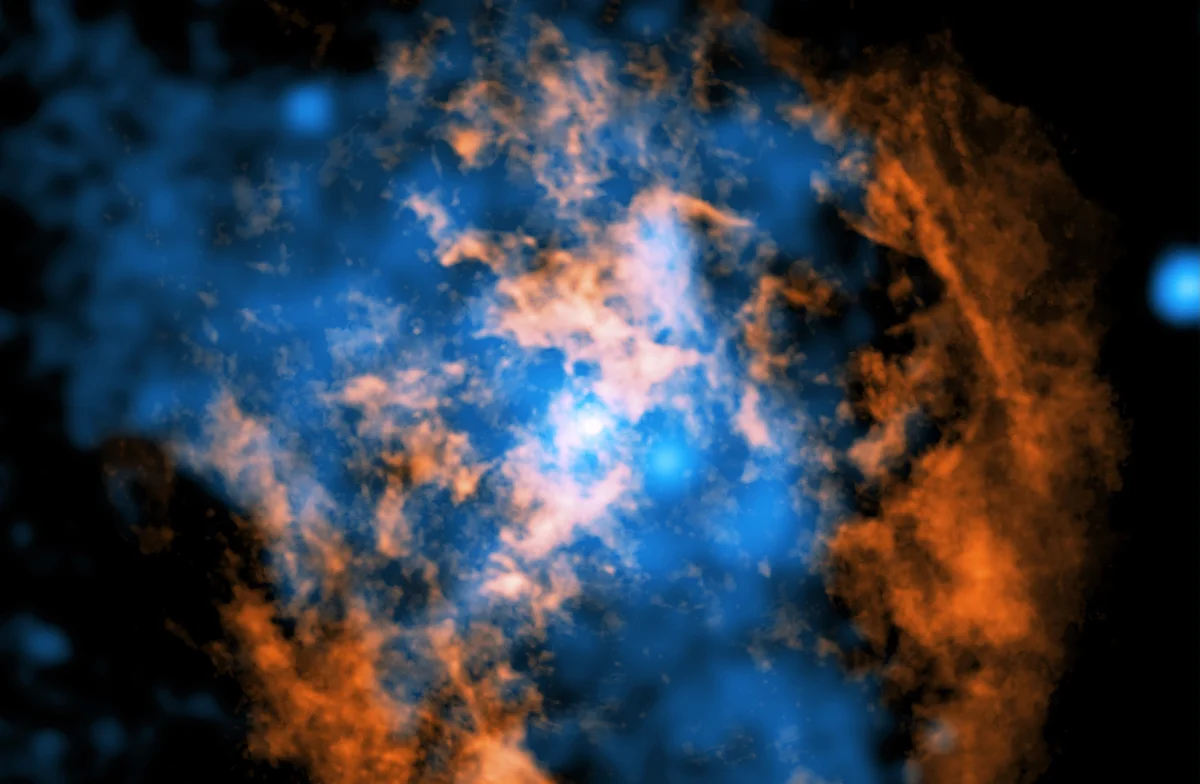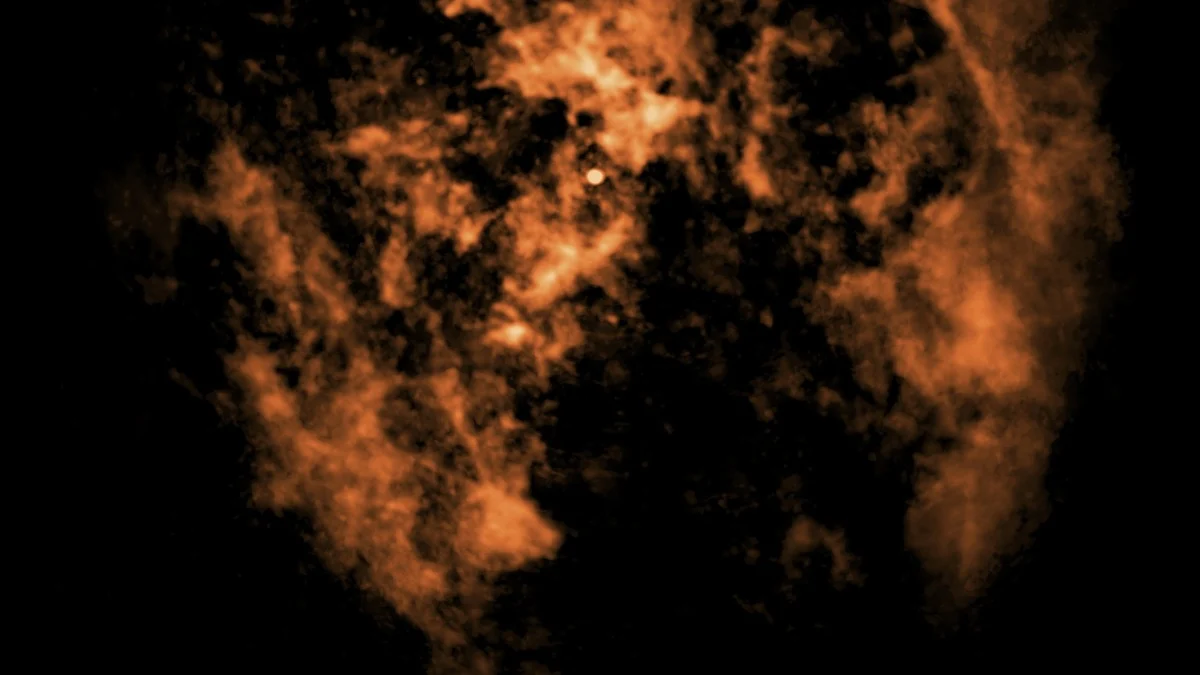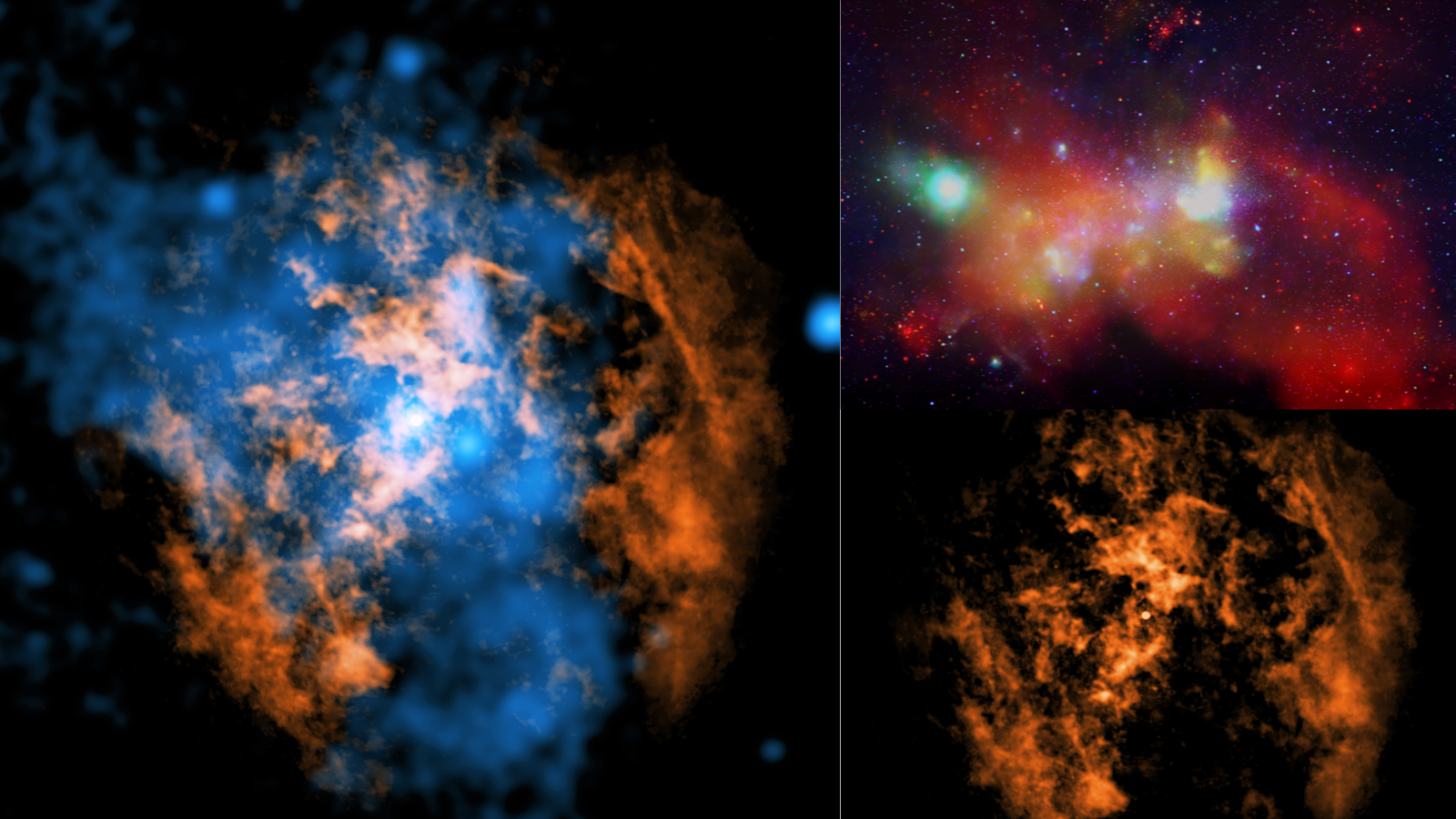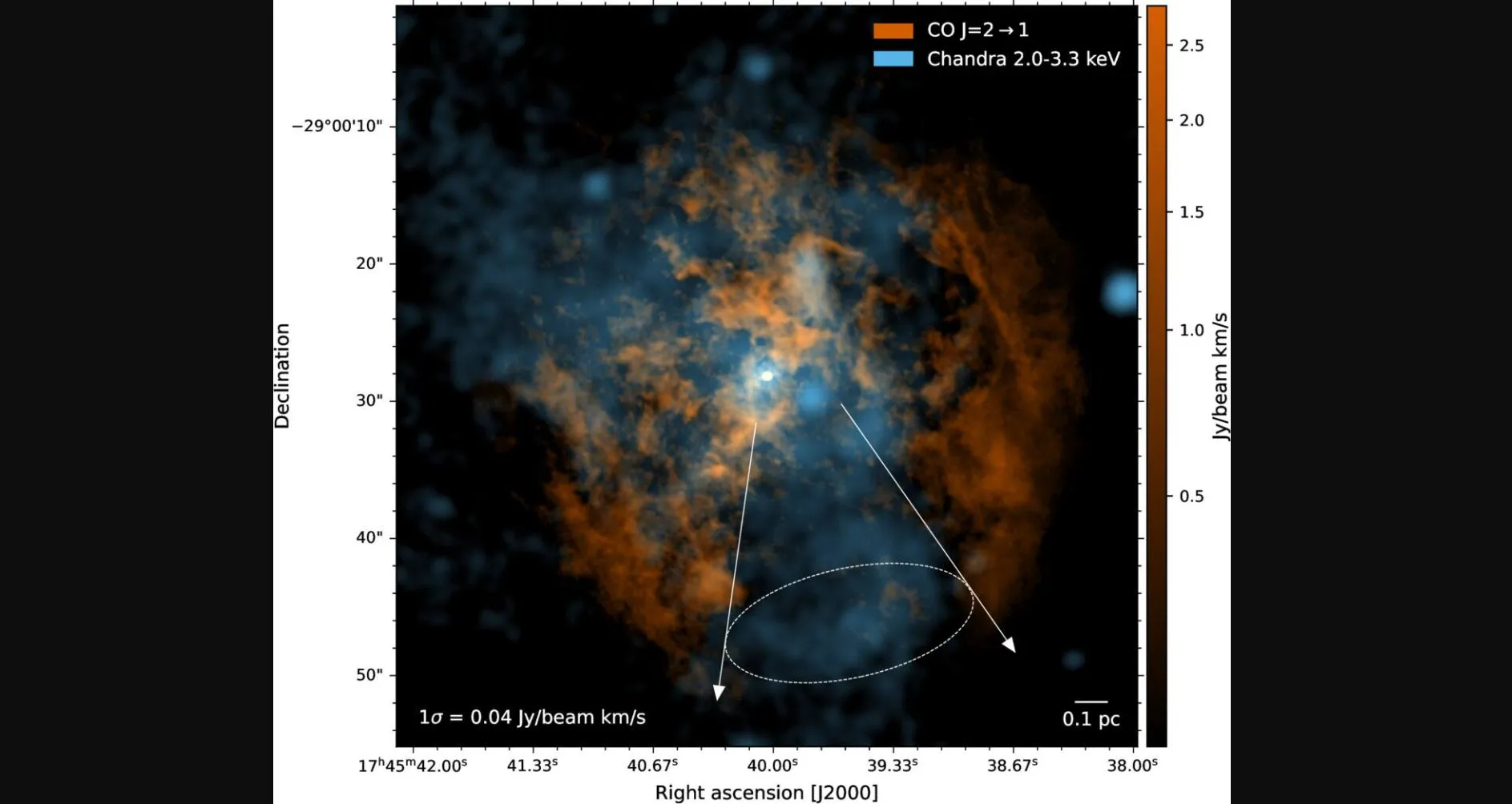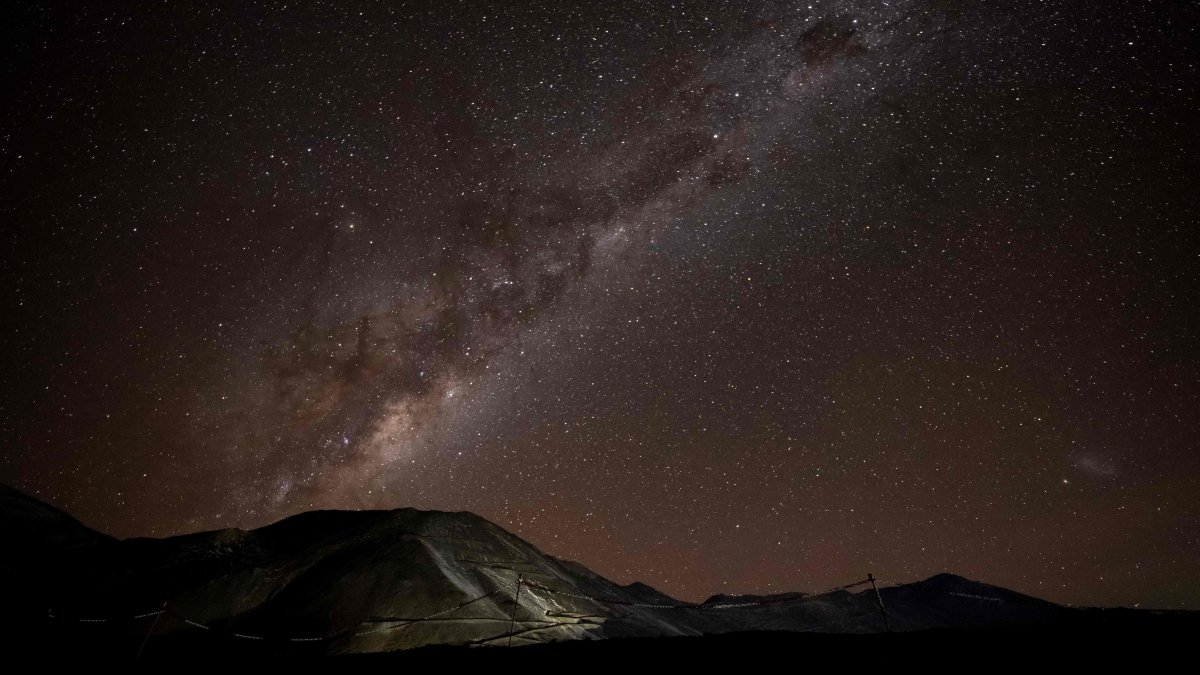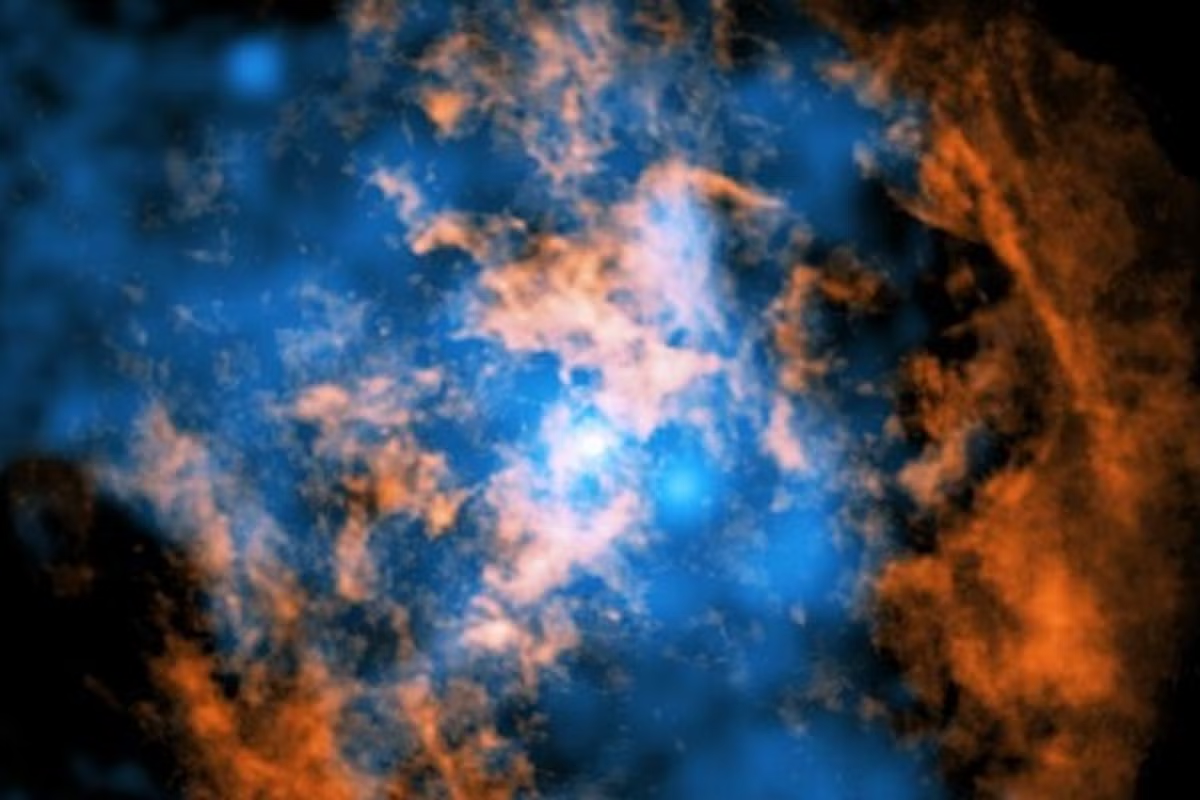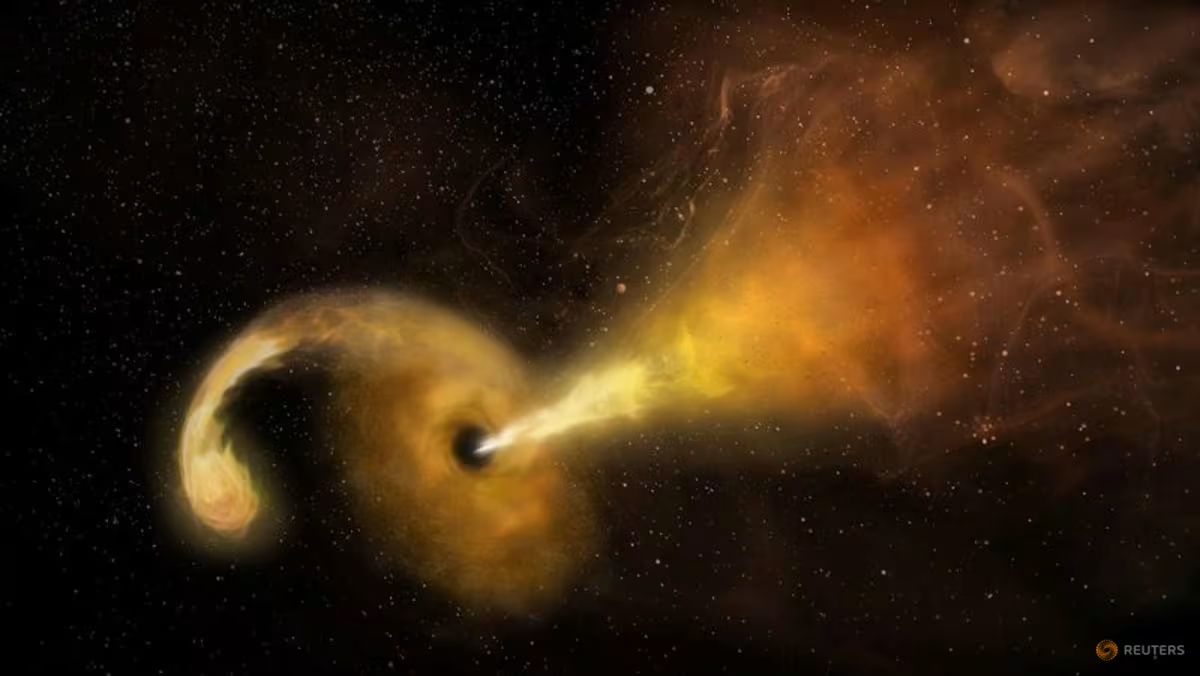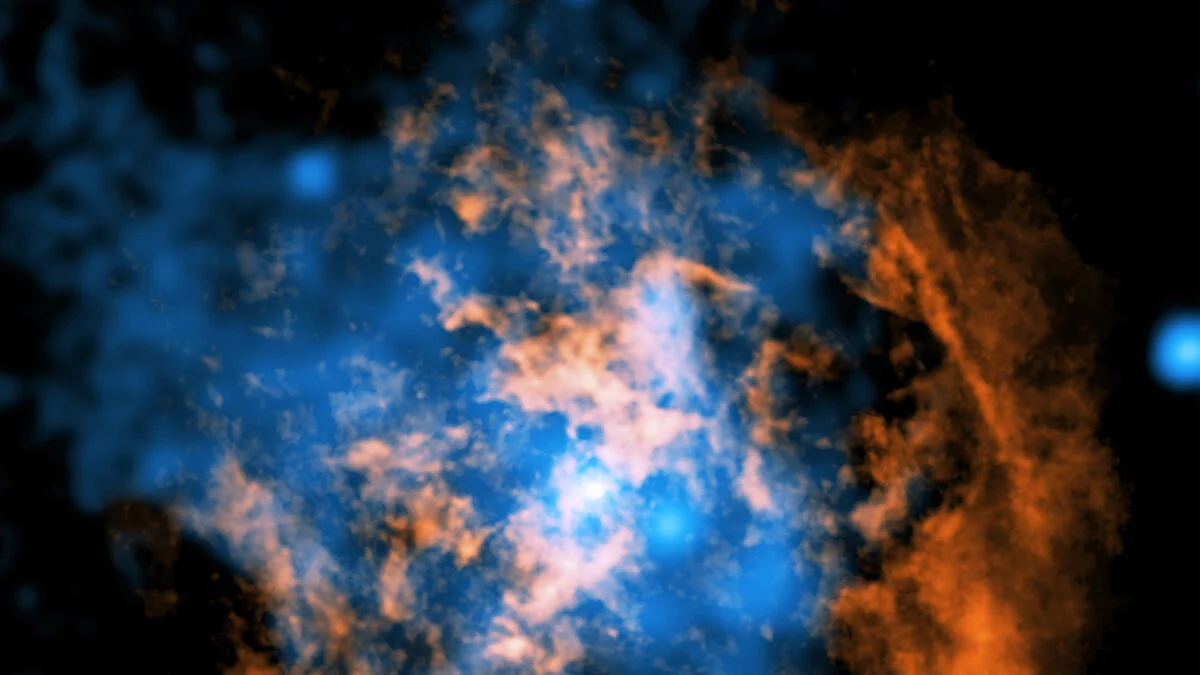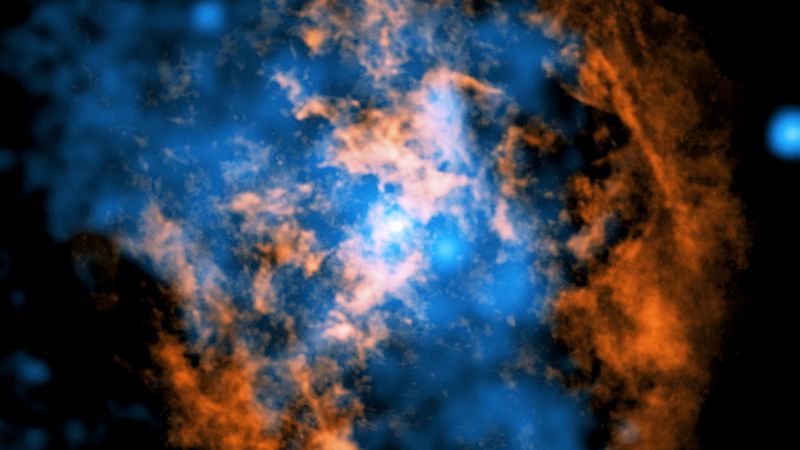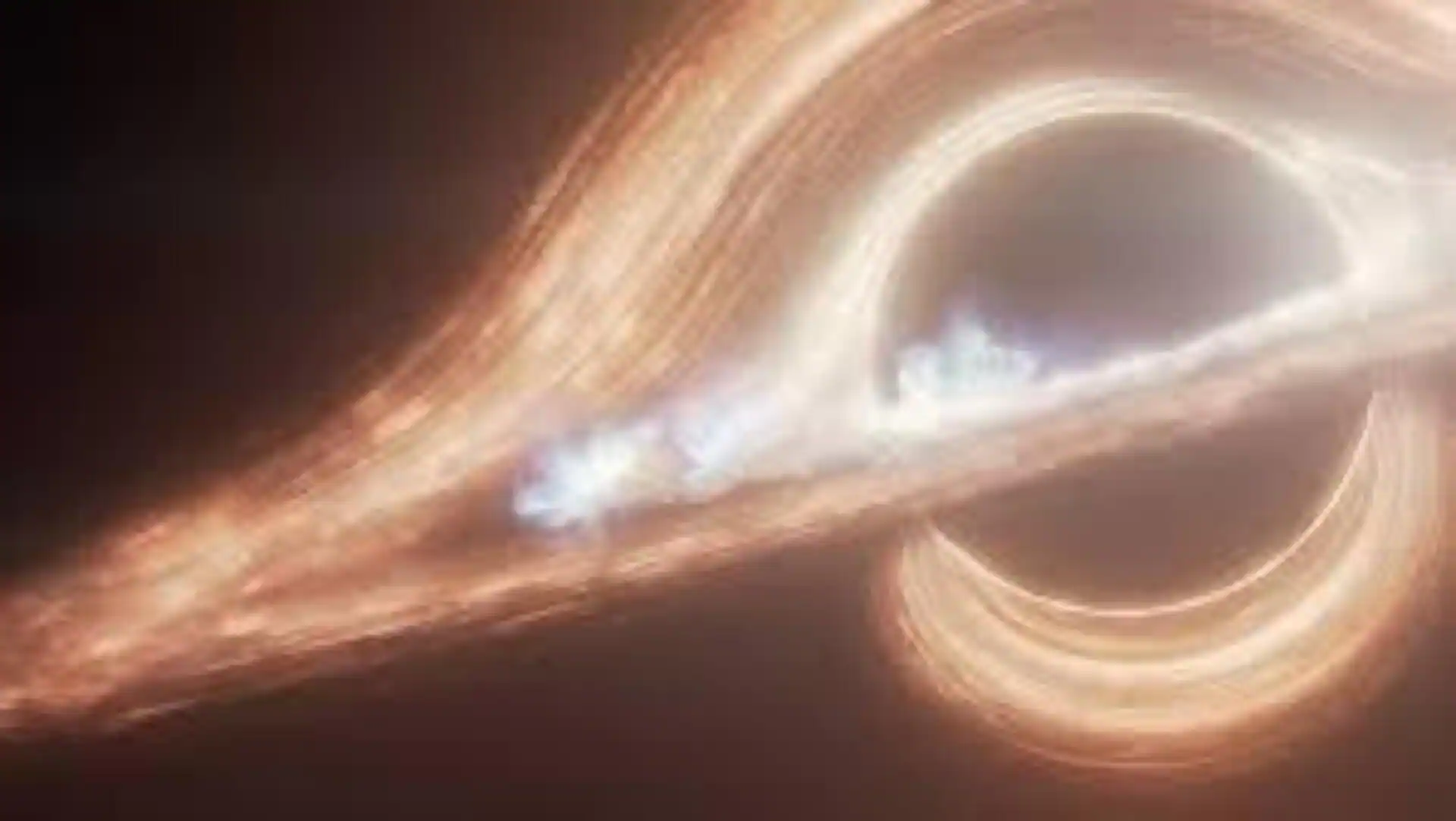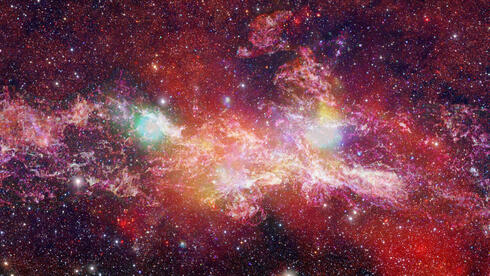
Radio observations revealed a giant cone-shaped cavity at the center of the Milky Way, providing the clearest evidence yet of an energetic wind from Sagittarius A* and offering an unprecedented glimpse into the galaxy's hidden heartAfter more than 50 years of searching, astrophysicists at Northwestern University have finally discovered evidence of a powerful wind blowing from Sagittarius A* (Sgr A*), the supermassive black hole at the center of the Milky Way.According to theoretical physics and the long-established understanding of galaxy evolution, black holes are expected to generate winds or jets as they consume matter. Even a small amount of gas falling into a black hole should produce enough energy to push material outward. Without such a wind, the black hole, located about 26,000 light-years from Earth and estimated to have a mass of roughly 4 million suns, appeared to be an outlier.6 View gallery Composite image showing evidence of a wind blowing away from the supermassive black hole at the center of the Milky Way galaxy (Photo: NASA/CXC/Northwestern Univ./M. Gorski/ESO/NAOJ/NRAO/ALMA/SAO/K. Arcand and P. Edmonds)Now, a study published in The Astrophysical Journal Letters has provided the most detailed picture yet of how Sagittarius A* interacts with and reshapes its surroundings, potentially solving one of astronomy's longest-standing mysteries. The discovery offers a new window into the physics at work at the center of the Milky Way.6 View gallery Composite image of the Milky Way's center combining radio observations from ALMA and X-ray data from NASA's Chandra Space Telescope (Photo: NASA/CXC/Northwestern Univ./M. Gorski/ESO/NAOJ/NRAO/ALMA/SAO/K. Arcand and P. Edmonds)6 View gallery The center of the Milky Way as observed by NASA's Chandra X-ray Observatory (Photo: NASA/CXC/Northwestern Univ./M. Gorski/ESO/NAOJ/NRAO/ALMA/SAO/K. Arcand and P. Edmonds)"A black hole has to produce a wind unless it exists in a perfect vacuum, which does not exist in the universe. This is the first time we have had a clear enough picture to identify the wind that everyone has been looking for for half a century," said Dr. Mark Gorski, an astronomer who studies galaxy evolution at Northwestern University."We were the first to show that molecular gas extremely close to the black hole is feeding it," added Dr. Lena Murchikova, a black hole astrophysics specialist in Northwestern University's Department of Physics and Astronomy. "The wind is not very strong, and its direction probably changes over time. This shows that the Milky Way's black hole is not unique, and our place in the universe is not unique."Although black holes are notorious for swallowing anything that comes too close, they do not only draw matter inward — they also expel it. For decades, theorists have predicted that all actively feeding black holes launch powerful outflows. As matter spirals toward a black hole, it moves faster and faster until it approaches the speed of light. This generates enough energy and pressure to eject some of the hot, fast-moving material in the form of winds or jets.6 View gallery An observation from NASA's Chandra X-ray Observatory (Photo: NASA/CXC/Northwestern Univ./M. Gorski/ESO/NAOJ/NRAO/ALMA/SAO/K. Arcand and P. Edmonds)The research team believes the decades-long search for outflows from the Milky Way's supermassive black hole stems from the fact that it is in a quieter phase than the supermassive black holes found at the centers of many other galaxies, making observations more challenging."To observe our black hole, we have to look through the plane of our galaxy," Murchikova said. "That means we have to peer through gas, dust and ionized structures, and you really cannot see through all of that easily."Five years of exceptionally deep observations using the Atacama Large Millimeter/submillimeter Array (ALMA), a network of 66 radio telescopes in Chile, were required for Gorski and Murchikova to build the sharpest image ever obtained of the cold molecular gas surrounding the black hole.The image revealed gas located remarkably close to Sagittarius A*, just one parsec, or about three light-years, from the black hole. The researchers then applied a calibration method to remove the black hole's bright radio signals. The resulting image is 100 times deeper and 80 times sharper than previous maps of the region. At this level of detail, structures that had been invisible in earlier observations emerged.6 View gallery Sagittarius A (Sgr A), the supermassive black hole at the center of the Milky Way (Photo: EHT Collaboration/Cover Images/Reuters)6 View gallery The Milky Way stretches across the night sky above Chile's Atacama Desert (Photo: Esteban Felix/AP)One newly revealed feature, however, left the researchers stunned. A vast cone-shaped cavity, nearly one parsec long and 45 degrees wide, contained no cold molecular gas. According to the researchers, only a hot, energetic wind blowing from Sagittarius A* could have created the region by either pushing away or heating the cold material.Before announcing that they had solved the decades-old mystery, the two researchers continued analyzing data to further strengthen their findings. NASA's Chandra X-ray Observatory had previously detected bright X-ray emissions in the exact same area. The location of those bright X-rays coincided with the cone-shaped hollow where cold gas was absent.The researchers also calculated that nearby stars could not have generated enough energy to create the cone-shaped cavity they observed. Based on the cavity's size and its effects on surrounding gas, the study's authors estimated that the wind has been active for at least 20,000 years.
50-year mystery solved: Scientists confirm powerful wind blowing from the Milky Way's supermassive black hole
Radio observations revealed a giant cone-shaped cavity at the center of the Milky Way, providing the clearest evidence yet of an energetic wind from Sagittarius A* and offering an unprecedented glimpse into the galaxy's hidden heart
872 words~4 min read