SINGAPORE – Daniel Charles remembers saving all his Chinese New Year red packet money in a tin jar for years as a child before spending it all on a mountain bike he had been eyeing.He also started a small side hustle, selling drawing paper to classmates.“I bought inventory, priced it and sold it quickly. That first ‘investment’ gave me a 100 per cent return in a single day. More importantly, it showed me the direct relationship between risk, value creation and reward,” said Charles, 39, who founded Sum Capital Partners, an operator-investor based in Singapore.These experiences taught him that to buy the things you want, it is not about how much you save. “It’s about how much you earn.”He added: “One needs to have the ability to generate revenue, not only save. Ever since then, I’ve focused less on saving and more on acquiring the skill sets and framework to produce income.”Charles worked overseas for about 10 years, spending about eight years in the US and two in Australia, Dubai and the Bahamas.His career spanned various industries, including the tech world and organising Formula One racing experiences for clients. While in the US and Australia, he developed a passion for marketing and advertising as he learnt the ropes.In the US, he worked on high-tech aerospace technology products with NASA, developing electric propulsion systems to enable clean, sustainable air travel.He graduated with a master’s in business administration from the Massachusetts Institute of Technology in 2023.He also founded an acquisition firm, DC Partners Capital, around 2023, which bought and ran small and medium-sized businesses in Washington. The firm closed in 2025.This venture gained him scaling knowledge, and Charles returned to Singapore in July 2025 wanting to build small and medium-sized enterprises (SMEs) and empower and build Singapore-based companies.He then founded Sum Capital Partners in March 2025. “We invest in small to medium-sized companies to help them scale,” said Charles.“Many of these SMEs do not have successors to take over their businesses. Even if they do, many largely do not have the expertise to understand how to build a good foundational infrastructure required to be a company at the next level,” he said, adding that this is where his firm steps in to help.“There was a roofing company owner who wanted to shut down his business due to burnout and not having a direction for growth,” said Charles.“He had been running the company for over 10 years. We helped restructure how they did sales, marketing and recruitment, and relaunched the company under a different brand. Now it is profitable, supporting a team of over 40 people, something that would not have been possible without a pivot,” he said.Charles, who moved back to Singapore in July 2025, lives in a rented condominium unit with his wife, 39. They have a two-year-old child, and another on the way.A: By investing in great businesses. That sounds simple, but it’s actually very deliberate. I’m not looking for trends or quick flips – I’m looking for businesses that have real demand, strong fundamentals and the ability to grow over time.I also think about where I actually have an edge. If it’s a business or opportunity where I can influence outcomes or understand it deeply, I’m willing to allocate more. If not, I keep it simple and let long-term compounding do the work.At the end of the day, growing money isn’t about doing more – it’s about making fewer, better decisions and holding them long enough for the results to show.A: Tech stocks, S&P 500, and small and medium-sized businesses.A: I keep it pretty simple – I invest only in things where I genuinely understand how they work. If I can’t clearly explain how something makes money, what drives its growth, and where it can go wrong, I don’t touch it. That alone filters out most of the noise, especially anything that promises quick wins or feels overly complicated. I’ve learnt that a lot of people lose money not because they’re unlucky, but because they’re chasing things they don’t fully understand.At the end of the day, I think growing money is less about finding the next big thing and more about avoiding bad decisions, staying disciplined, and letting compounding do its job.A: I grew up in a middle-income family, and my parents divorced when I was young. My mum became the sole breadwinner and, from early on, I could see what financial pressure and responsibility looked like up close.That environment shaped me in two ways. First, it made me very aware that money isn’t just about lifestyle – it’s about stability, options and control over your life. Second, it created a strong desire in me not to leave my future to chance or to a fixed pay cheque.I realised early that traditional paths often come with capped upside and limited control. That pushed me towards entrepreneurship, where value creation is directly tied to outcomes. Instead of trading time for income, I wanted to build systems and businesses that could scale.When it comes to personal finance and investing, that mindset carried through. I don’t see money as something to simply save – I see it as a tool to allocate, grow and compound. Every dollar should have a role, whether it’s protecting downside, creating cash flow, or funding the next opportunity.Ultimately, my upbringing made me less focused on consumption and more focused on building – building assets, building resilience and building a life where I have control over my own trajectory.A: One of my biggest financial mistakes was getting caught up in penny stocks when I was younger. At the time, the idea of exponential returns was incredibly appealing. These stocks would move quickly, and it felt like there was an opportunity to multiply money fast. But in reality, many of these were classic pump-and-dump schemes, driven more by hype than fundamentals.I lost money, but more importantly, I learnt a critical lesson early: Not all opportunities are real opportunities – some are just well-packaged traps. That experience fundamentally changed how I approach investing. I moved away from speculation and towards understanding underlying value, long-term growth, and credible fundamentals.A: One of my best financial decisions was consistently investing in the S&P 500 Index over the past 10 years. I made a deliberate decision to allocate a significant portion to the S&P 500 rather than trying to trade actively or time the market. I kept it simple, regularly investing and staying disciplined regardless of market conditions.Over the decade, this has returned approximately 300 per cent on my initial investment, despite going through multiple periods of volatility, including downturns and broader economic uncertainty.What’s most important is that there were many moments when the market dipped and it was tempting to pull out or reallocate into something more “exciting”. But sticking to a long-term, compounding strategy ended up outperforming most of the more complex ideas I considered.The key lesson for me was this: boring scales. Consistency, patience, and time in the market matter far more than trying to outsmart it. Investing isn’t about constant action – it’s about disciplined inaction and letting compounding do the heavy lifting. That experience shaped how I think about capital allocation today: Build a strong, stable base with long-term compounding assets, and take only calculated risks on top of that foundation.A: To be an astronaut. Why? Because it was the most prestigious, difficult and most unattainable job on a list of jobs on this job chart I saw in my room growing up.A: I was a waiter in a hotel cafe. Until this day, I am still pretty good at holding a tray with one hand.A: An ice bath and workout in the morning. Meeting the CEOs of our companies and discussing strategies for scaling. Hiring great people to join the team. And hearing customer testimonials on how our products/services impacted them in a positive way.A: The same playbook that we have deployed. Focus on buying great businesses and investing in people and founders with conviction over their ideas.A: I would build a business using AI – all kinds of businesses – and also provide my knowledge as a service to others who would like to implement AI in their companies.
Me & My Money: For this entrepreneur, growing wealth beats saving up
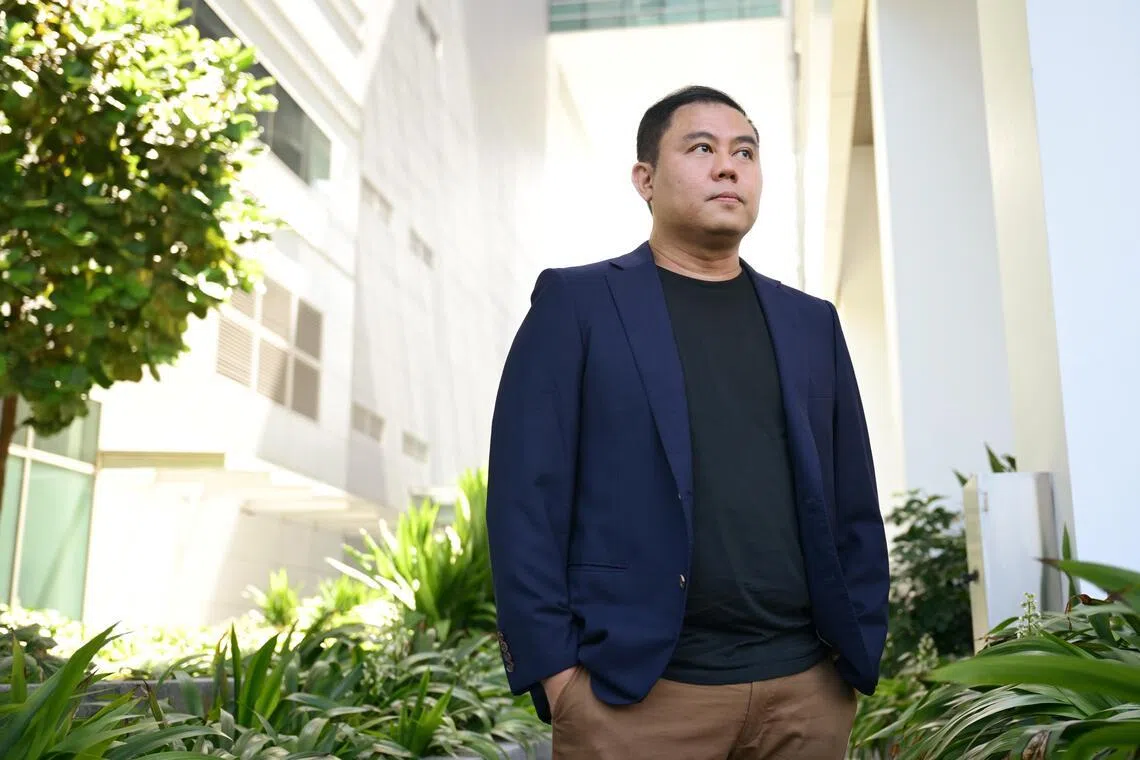
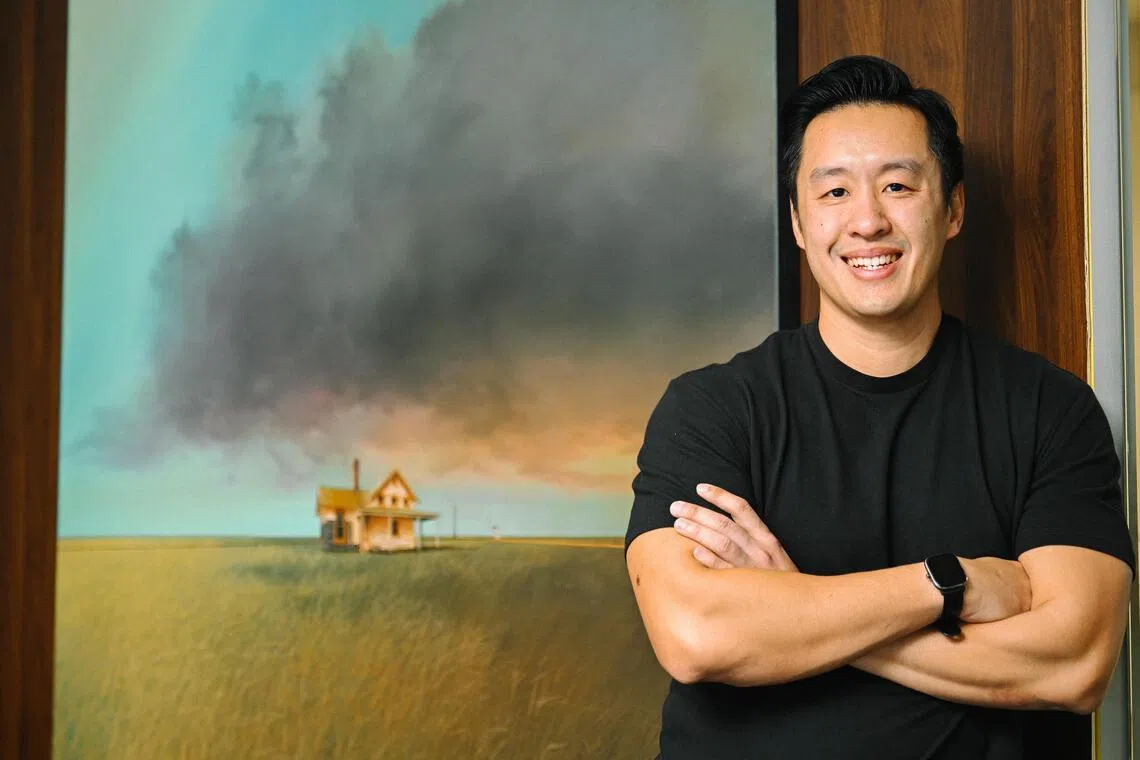
Daniel Charles, 39, sees money as 'a tool to allocate, grow and compound'. Read more at straitstimes.com. Read more at straitstimes.com.
1,362 words~6 min read