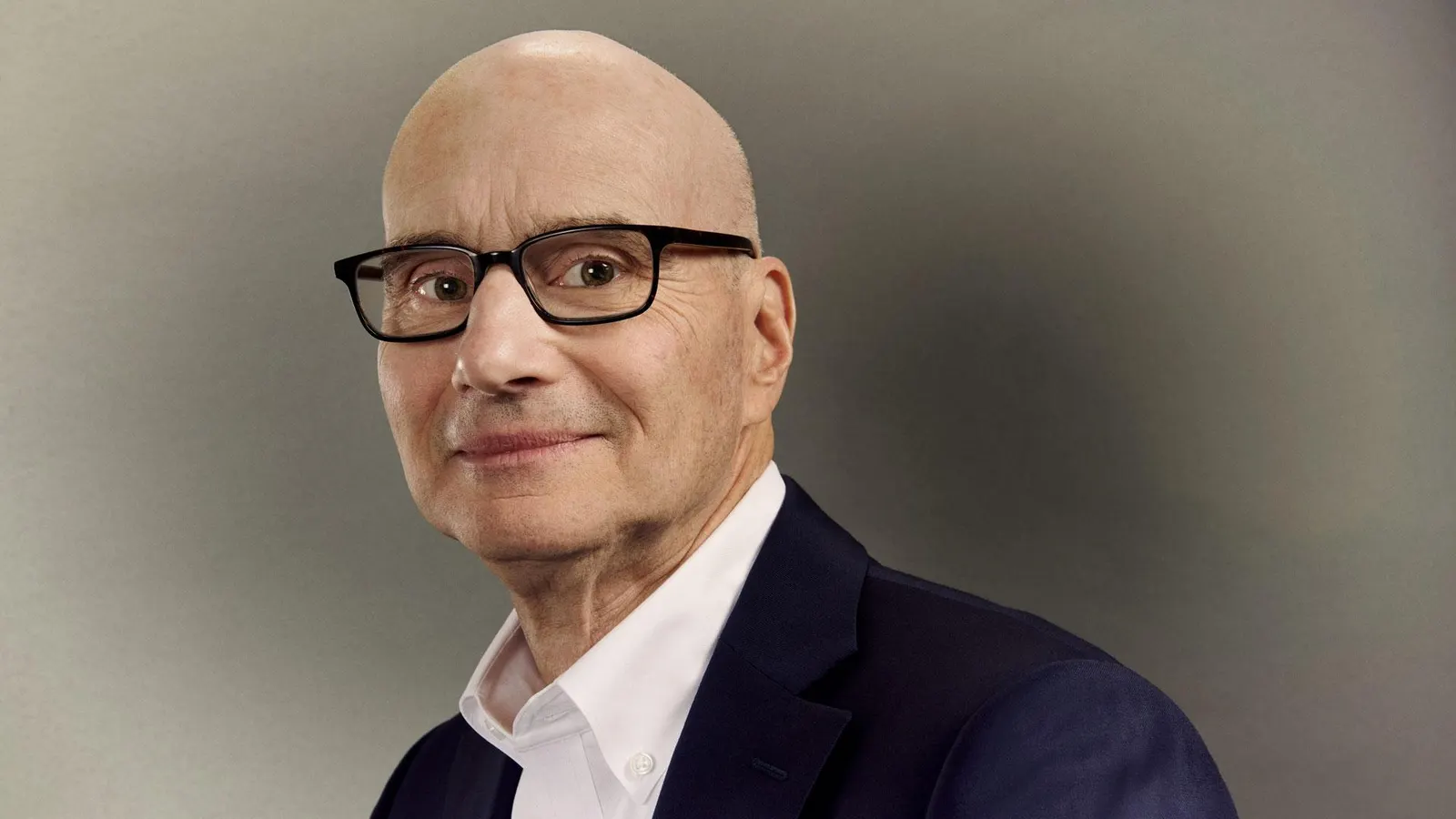
Lasers that can shoot down drones. Data center infrastructure powering artificial intelligence. Trade schools training the next generation of electricians and welders.These might not seem like the usual ingredients of a top-performing mutual fund, but they’ve helped propel the $2.3 billion (assets) Needham Aggressive Growth Fund (NEAGX) to a 94% return over the past year and a 58% gain so far in 2026, far outpacing both the S&P 500 and Russell 2000.Portfolio manager John Barr has built that track record by investing in what he describes as the “picks and shovels” of the new economy: small-cap companies building the infrastructure behind everything from artificial intelligence to modern warfare. He calls them “hidden compounders.”The bet is simple: instead of chasing the companies everyone already knows, Barr is investing in the ones making them possible.Barr, who has run the fund since 2010, spent 14 years in the semiconductor industry before moving to Wall Street as an analyst and later a portfolio manager. That background helps explain his focus on underfollowed companies with an established core business that are quietly investing in a new product or service the market doesn’t yet fully appreciate. “The market rarely looks beyond 12 to 18 months,” he says. “We’re trying to look much further out than that.”’Take the case of Barr’s largest holding, nLight (LASR), a Camas, Washington-based company that produces high-powered lasers to shoot down drones. Originally focused on industrial uses like cutting and welding, it has spent years investing in directed-energy systems for defense.Barr began building a position five to six years ago, drawn to the company’s founder-led management and the potential upside from its pivot into defense. At the time, the market largely viewed nLight as an industrial business. Today, growing concerns around drone incursions—from military use to commercial airspace—have helped bring that opportunity into focus. Last year nLight had $261 million in revenue with a net loss of $23 million, though Barr expects the company will soon become profitable. Its stock has risen 97% so far in 2026 and currently trades at $75 per share.“It had an established business that gave us a margin of safety,” says Barr. “The upside was in something the market didn’t yet appreciate.”Barr investment selection process starts by identifying smaller companies with a stable legacy business and a potential new growth engine. Positions begin small. As those bets begin to work, he adds to them during a “transition” phase, before ultimately holding onto the winners for years as they evolve into what he considers “quality compounders.”The strategy requires patience. Barr’s average holding period is roughly a decade, and Morningstar lists turnover at about 16%, far lower than most growth strategies. Early-stage bets are sized modestly to limit downside, while successful investments are allowed to grow into larger positions over time.That discipline has produced a handful of massive winners. Barr’s fund holds just over 100 stocks, but he estimates that roughly 20 investments over his tenure have generated returns of five times or more, with some delivering gains of 10 times, 50 times or higher. A relatively small group of long-term holdings has driven the bulk of the fund’s outperformance.More recently, where Barr has applied that process has mattered just as much as how. He has leaned heavily into what he sees as the backbone of the next economic cycle: infrastructure, broadly defined. That includes semiconductor manufacturing, data centers, defense technologies and the skilled labor required to build and maintain it all.That positioning paid off in early 2026. Eight of Barr’s ten largest holdings were also among the fund’s top contributors in the first quarter, including nLight, Vertiv Holdings, Vicor, Lincoln Educational Services and Universal Technical Institute. nLight has risen 97%, Vicor 170%, Vertiv 82%, Lincoln Educational Services 120%, UTI 83% and PDF Solutions 92% so far this year.Ohio-based Vertiv Holdings (VRT) provides power and cooling equipment for data centers. It has annual revenue of over $10 billion and posted net profits of $1.3 billion last year. Barr initially bought shares after the company went public via a SPAC, attracted by its exposure to the growing demand for digital infrastructure. The investment was volatile early on. Inflation and pricing pressures hit margins, sending the stock sharply lower. Barr used the pullback to build his position, betting that management could fix operational issues over time. As demand for data centers surged—driven in part by artificial intelligence—Vertiv rebounded and became one of the fund’s largest holdings.Barr’s background covering semiconductors has also led him to companies like California-based PDF Solutions (PDFS), a lesser-known firm that provides data analytics and software to chip manufacturers. The company recorded $219 million in sales last year, while posting a small profit loss after two prior years of profitability. Its tools help improve yields and efficiency in chip production, which is an increasingly critical function as manufacturing becomes more complex. The company has been a long-term holding and is part of Barr’s “super seven,” his internal nickname for seven stocks that have generated a disproportionate share of the fund’s returns. Its close ties to major industry players, including Intel, position it to benefit from efforts to expand domestic chip manufacturing. Not all of Barr’s investments are tied directly to high-tech industries. One of his more unconventional bets is Chicago, Illinois-based Oil-Dri Corporation of America (ODC), a niche business that mines and processes clay used in products ranging from cat litter to industrial filtration. The company made $485 million in revenue last year with net profits of $54 million.Barr was drawn to the company’s unique assets and long-term investments in new applications. Over time, Oil-Dri has expanded into areas like lightweight cat litter and animal health products, where its materials can be used to improve livestock nutrition and reduce reliance on antibiotics. The stock took years to gain traction, but more recently those investments have begun to pay off. The company also has little to no Wall Street coverage, which is something Barr views as an advantage.“If no one’s looking at it, that’s often where the opportunity is,” he says.Another piece of Barr’s broader theme is New Jersey-based Lincoln Educational Services (LINC), which operates vocational schools focused on training workers in fields like HVAC, electrical work and welding. Revenue grew 20% last year to $518 million, while net profits doubled to $20 million. As demand for infrastructure projects and manufacturing grows, Barr sees a shortage of skilled labor that companies like Lincoln are positioned to help address.“None of this works without labor,” says Barr.The common thread across these investments is that they sit behind larger, more visible trends. Rather than betting on the winners everyone can see, Barr is focused on the companies enabling them. That includes the infrastructure powering AI, the technologies reshaping defense or the workforce needed to support it all.Not every bet works. Barr points to KVH Industries, which makes satellite communication systems for ships. Today the company makes $100 million in annual revenue with a net loss of nearly $10 million. When Barr first invested in 2013, he believed the company could expand into content and become a kind of “Netflix of the seas,” but that strategy never fully materialized—especially as new competitors like Starlink reshaped the market. While KVH survived and restructured under new leadership, the stock remains below where Barr originally purchased it more than a decade ago. In another case, Canadian firm DIRTT Environmental Solutions, which makes prefabricated office interiors, struggled after its founder clashed with the board and was eventually pushed out. The business was further hit when construction activity collapsed during the pandemic. Barr exited after the turnaround failed to take hold. He had purchased the stock in 2017 at roughly $4 per share, today it trades for 50 cents a share.Those missteps, however, have generally been contained. Because early-stage positions are kept small, losses tend to be limited. Over time, the outsized gains from a handful of winners have more than made up for the misses.Barr also resists the temptation to sell those winners too early. “If you let the winners run, that’s where the returns come from,” he says.More broadly, he sees small-cap investing as an area rich with opportunity especially as AI begins to transform seemingly mundane businesses.Fewer analysts and less coverage, he argues, create inefficiencies that disciplined investors can exploit.“There’s just less attention on these companies,” says Barr. “If you do the work and take a long-term view, you can find some really interesting opportunities.”More from ForbesForbesInside Dana White’s $60 Million Plan To Stage UFC Freedom 250 At The White HouseBy Matt CraigForbesWhy Pfizer And Eli Lilly Are Betting On This $1.3 Billion AI Drug Discovery StartupBy Amy FeldmanForbesCaryn Seidman Becker Bought Clear Out Of Bankruptcy. Now She’s A Billionaire.By Katharine Schwab
This Small-Cap Manager Is Up 94%, Betting On Hidden Drivers In The New Economy
Needham’s John Barr is trouncing the market investing in overlooked companies powering AI, defense and national infrastructure.
1,447 words~7 min read