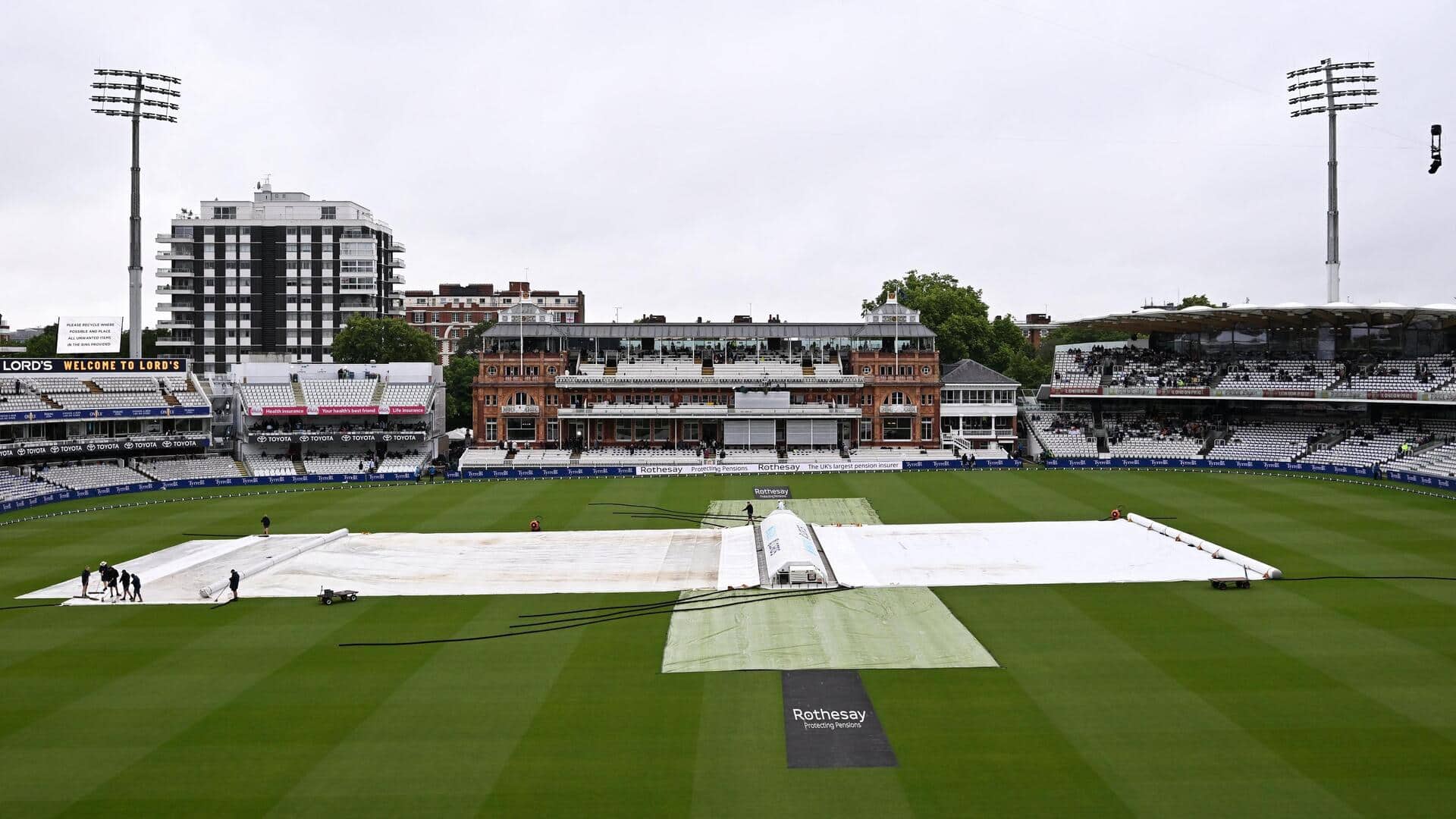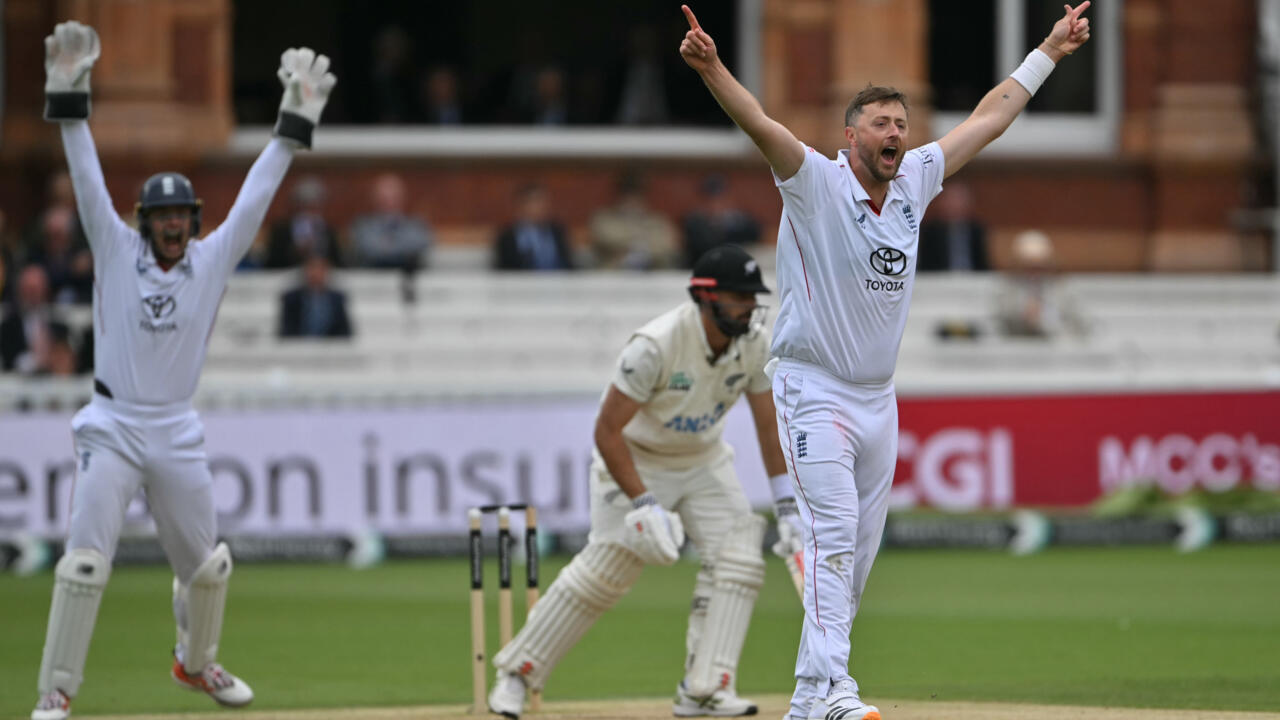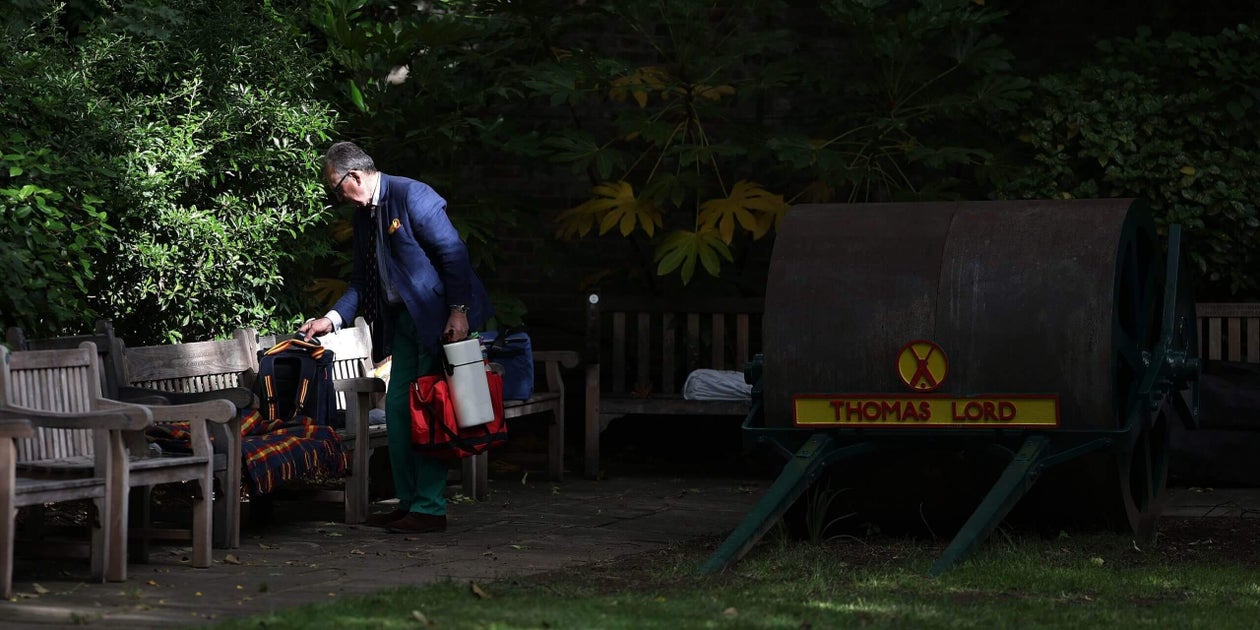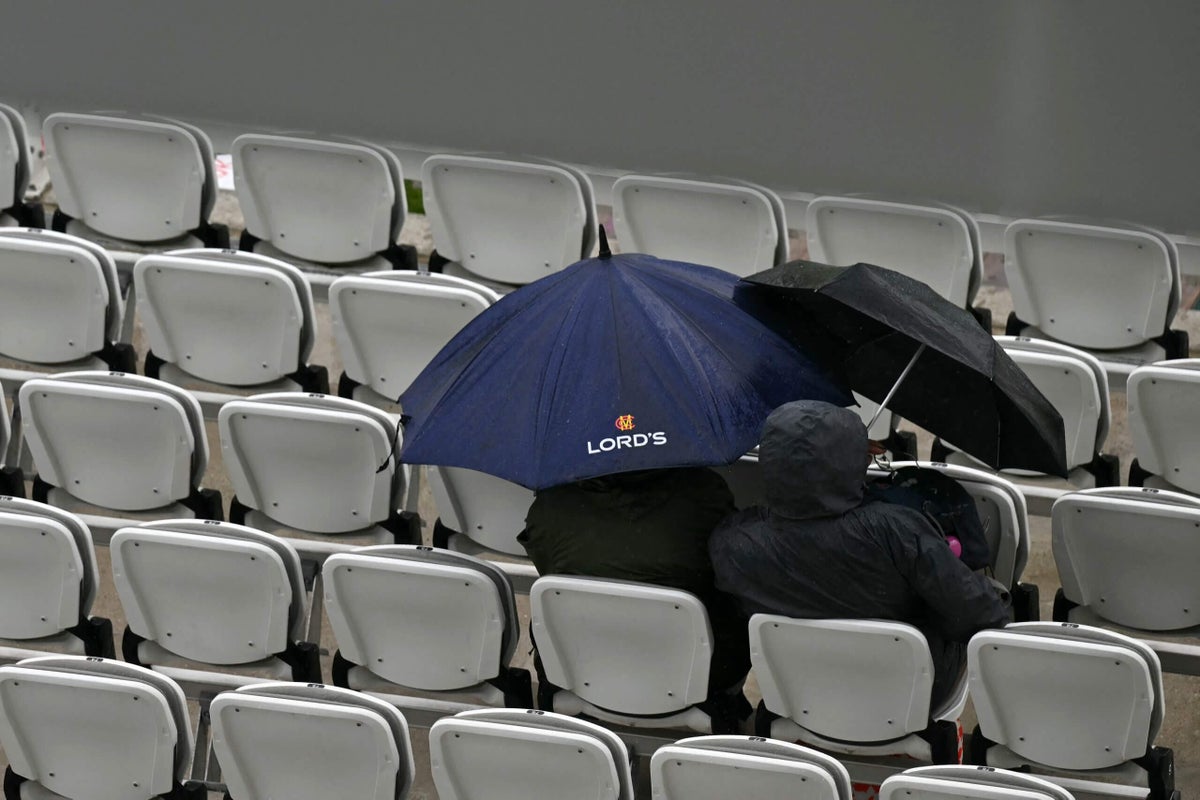
The Athletic has launched a Cricket WhatsApp Channel. Click here to join.Day three of the first Test between England and New Zealand brought frustration at Lord’s where rain limited play to only 9.4 overs.In the little time the teams were out on the pitch, England edged closer towards victory with Ollie Robinson taking two more wickets as New Zealand added 19 runs to their overnight score, leaving them a precarious 55-5.With the Lord’s pitch still perilously difficult for batting, the hosts will be firm favourites to complete victory on what is forecast to be a dry fourth day as New Zealand chase a further 199 runs for victory with only five wickets remaining. But the prospect of a home win will be of little consolation to the Saturday full-house who saw their day ruined by the weather.Here The Athletic looks at what happens in cricket when rain stops play.Test cricket is expensive, right? Do fans lose their money when there is nothing for them to watch?There was a time when there were no refunds in cricket however little play was offered up and that, particularly in an unpredictable English climate, would often prove a costly business for the cricket lover.Thankfully, times have changed and those who paid up to £175 for their Saturday entertainment — a crowd of 30,000 would have been expected at Lord’s — will get a full refund because there were fewer than 15 of the scheduled 90 overs possible. The MCC’s refund policy gives the paying spectator 50 per cent of their money back if they see between 15 and 30 overs and nothing if there is more than 30 overs.So at least those at Lord’s on Saturday witnessed two New Zealand wickets for free.England’s players traipse from the ground as the rain comes down (Gareth Copley/Getty Images)So that is expensive for the game instead? It is, but all the major grounds have insurance these days which at least eases the financial blow.The exact premium cost of rain insurance is not disclosed but MCC, the owners of Lord’s and custodians of the laws of the game, use specialists to cover the risk of substantial losses that can total £2million ($2.7m) per day washed out.What about all the food and drink that doesn’t get eaten and drunk when spectators go home early to escape the rain?That can be the biggest financial hit, with MCC estimating they can lose around £1million per day from a wash-out across food and beverage outlets, retail and hospitality. But at least none of that food goes to waste. MCC work with the Felix Project, a London-based food redistribution charity, to give their surplus to various charities and schools.Ground staff mop up the water on the covers (Gareth Copley/Getty Images)Surely there could have been more play? The sun was beating down from around 11.50am to 1pm and nothing happened…Now that’s a good question. No sport shoots itself in the foot more than Test cricket.The patience of those spectators at Lord’s was tested to the limit when it was announced that an early lunch would be taken at 12.20pm with play then due to start at 1pm. Basically, the whole sport revolves around breaks for food, with lunch and tea intervals built into the Test schedule.So there we were with the ground ready for play and England’s bowlers practising on the outfield at 12.15 and we all had to wait until 1pm for the start of the action. Predictably enough, and as various weather apps had warned us, rain quickly followed.Bright sunshine at Lord’s while while the players and umpires take lunch (Glyn Kirk/AFP via Getty Images)The official explanation was that the ground staff still needed time to roll the pitch and prepare its markings, but all that could have been done much, much quicker and the umpires could have been far less fastidious.As former England captain Michael Vaughan said on BBC’s Test Match Special: “If this were a T20 match we would have been out there. Why is it different in Test cricket?”Why indeed.Why don’t they just play in the rain in the first place and get on with it?Again, it is better than it once was. There was a time when it seemed even the first sight of a dark cloud would be enough to send the players scurrying for the dressing rooms. And once the ground was wet there was no drainage and no chance of play, however hot and sunny it became.Now the players do often carry on in light rain and floodlights help against bad light — even if there is still scope for more own goals when play is stopped for light while floodlights beam down. That happens in red-ball cricket when ‘artificial light takes over’ but, in this day and age, they really should just carry on more than they do.The argument goes that it can become dangerous to play in the rain and also farcical if the ball is wet and the bowler cannot grip it properly, but in Major League Baseball play continues in light to moderate rain. Cricket please take note.Gus Atkinson cuts a miserable figure in the field as the rain comes down (Philip Brown/Getty Images)Why don’t they just cut out the elements and put a roof on the place?Cricket has always been a weather-affected game, but a roof would solve a lot of problems.The docklands arena in Melbourne experimented with cricket under a roof and now Hobart — rain is not unknown in Tasmania — is developing the Macquarie Point Stadium, designed to feature both cricket and Aussie Rules football, which will feature the world’s largest timber-domed and transparent roof at a cost of more than $1bn Australian ($700m; £520m).The theory is it will not affect the growth or grass or the health of the pitches. Richard Thompson, chairman of the England and Wales Cricket Board (ECB), has described building a cricket stadium with a roof in England as his “moonshot project”. Old Trafford in Manchester, where 29 full days cricket have been washed out — the most of any Test ground in the world — would be a prime candidate.What do the players do when they can’t get out there?The time off the pitch can be a test of their patience, too.Phones are banned in dressing rooms because of cricket’s anti-corruption rules, so they can’t hide behind them all day while they wait for a resumption. And the players are not allowed to leave the pavilion without permission from ICC anti-corruption officers, so it’s not as if they can nip out into the stands for a chat with their family and friends.On Saturday at Lord’s several England payers crossed the ground for a net in the indoor school, while others played their card game of choice, ‘Nomination.’ Often called ‘Whisk’ or ‘Noms’, it is described as a trick-taking card game for four players where the objective is to correctly predict the exact number of tricks you will win in a hand.Others prefer to solve puzzles — Jonny Bairstow was a prolific sudoku consumer when he was in the England team, and coach Brendon McCullum was caught on camera working his way through a puzzle book during the winter’s Ashes — while others have even been known to retire to a quiet corner with a book.New Zealand’s players watch from the dressing-room balcony before the rain comes down again (Philip Brown/Getty Images)There was a time when newspapers were read in dressing rooms and unflattering comments from cricket writers could be shared with their targets, sitting across the ground in the press box, but not so much now.Analyst Rupert Lewis is allowed a laptop with secure Wifi and he keeps track of the weather, with the Met Office their forecasters of choice. The media centre usually prefers AccuWeather.It is easy to eat too much when you’re bored. Is that a temptation at Lord’s?It is, with the Lord’s menu legendary within cricket. It used to provide all sorts of stodgy treats, but at least it is healthier now and players generally are far more disciplined.On Friday for day two of the Test the players were offered potato and leek or cauliflower soup for starter with chargrilled chipotle chicken supreme, teriyaki salmon fillet, chargrilled lamb cutlets and tomato and mozzarella gnocchi the main course options.Then came a choice of cherry Bakewell, a selection of sorbets, fruit salad and Greek yogurt with berries to finish.England this summer have employed their own chef to provide their food — it has often been common for them to have a chef accompany them on tour, though this is the first time it has happened at home — but even he has just been overseeing at Lord’s rather than preparing the food himself.Nobody does it better.At least they have five days to finish the game — can the time be made up?Yes, in these modern impatient times, with the game played in fast forward, there is usually enough time to achieve a result if large chunks of play are lost to rain.The day’s play can be extended technically up to 98 overs (from 90) or a cut off at 7.30pm, if the light holds. Time can be added to individual sessions, too, though the start of play is never brought forward from 11am in England. It is in other countries.There was a time when there were timeless Tests played to a conclusion however long it took. Sometimes even ‘timeless’ was not time enough. In 1939 the timeless Test between South Africa and England had to be abandoned as a draw after 12 days because England had to catch their scheduled boat home.Raindrops keep falling on my head (Ben Whitley/PA Images via Getty Images)There’s not much chance of 12 days being needed to finish games with these perilous Lord’s pitches, presumably?Quite. Twelve sessions, let alone days, are usually more than enough these days…
Cricket and the rain: What happens when a day’s play is ruined by the weather?
Play was limited to only 9.4 overs on day three at Lord's to leave a large Saturday crowd frustrated and the players twiddling their thumbs
1,642 words~7 min read