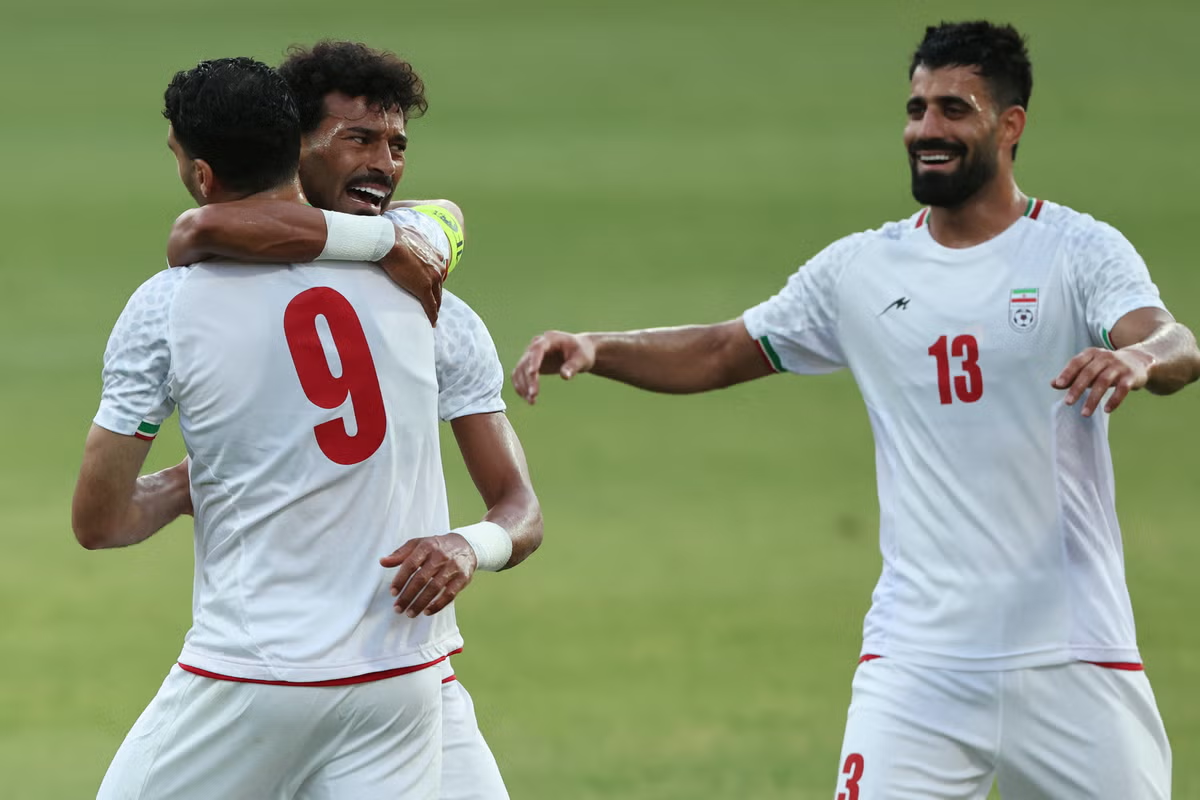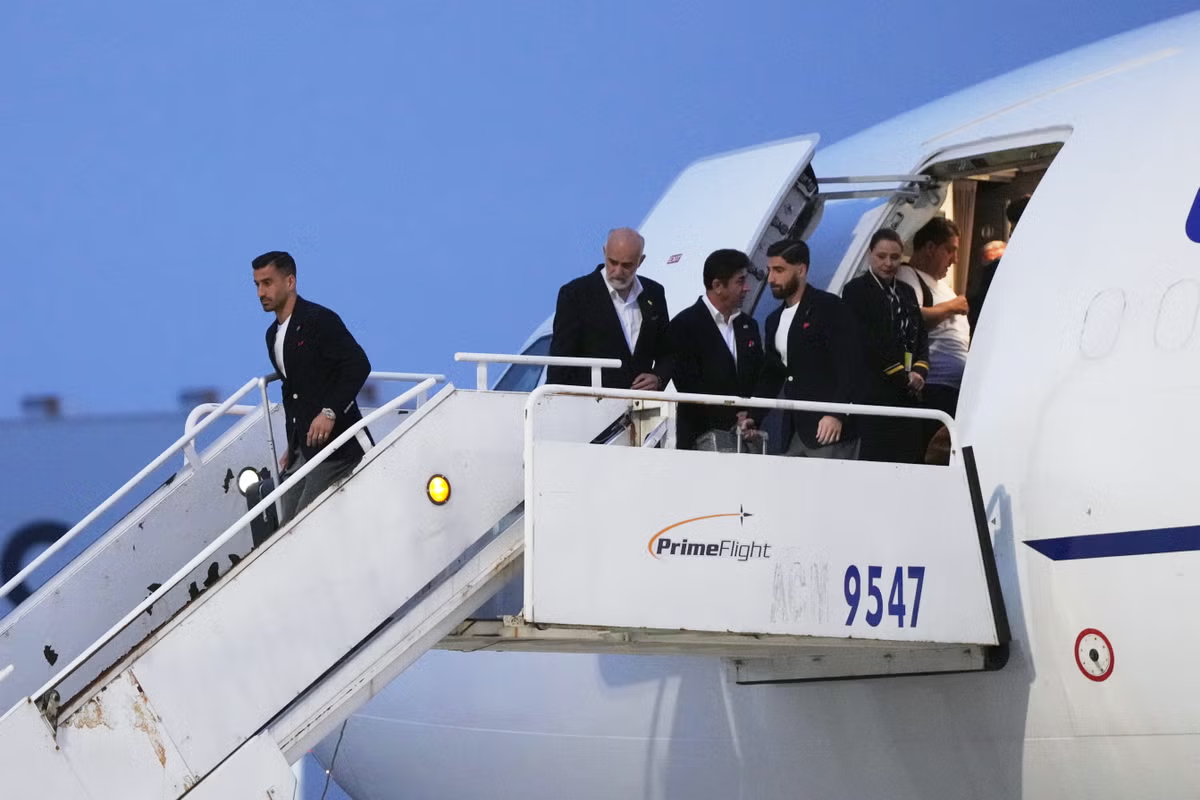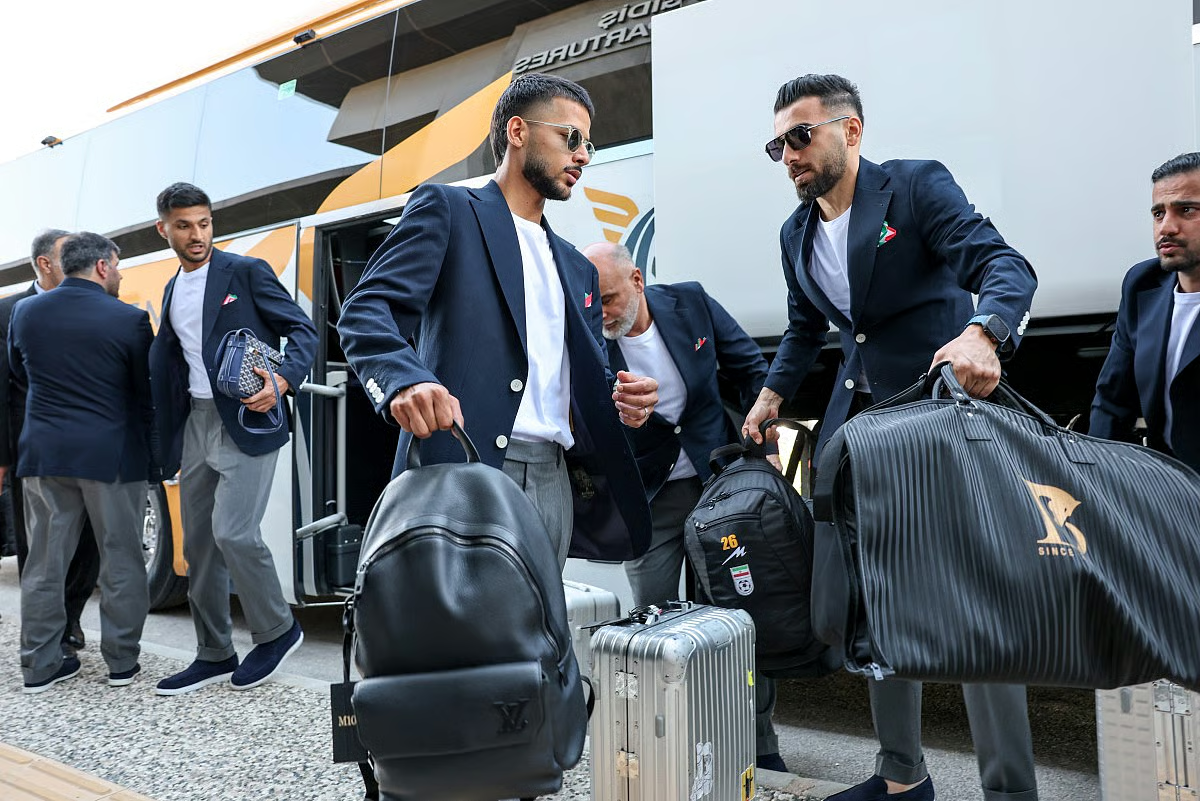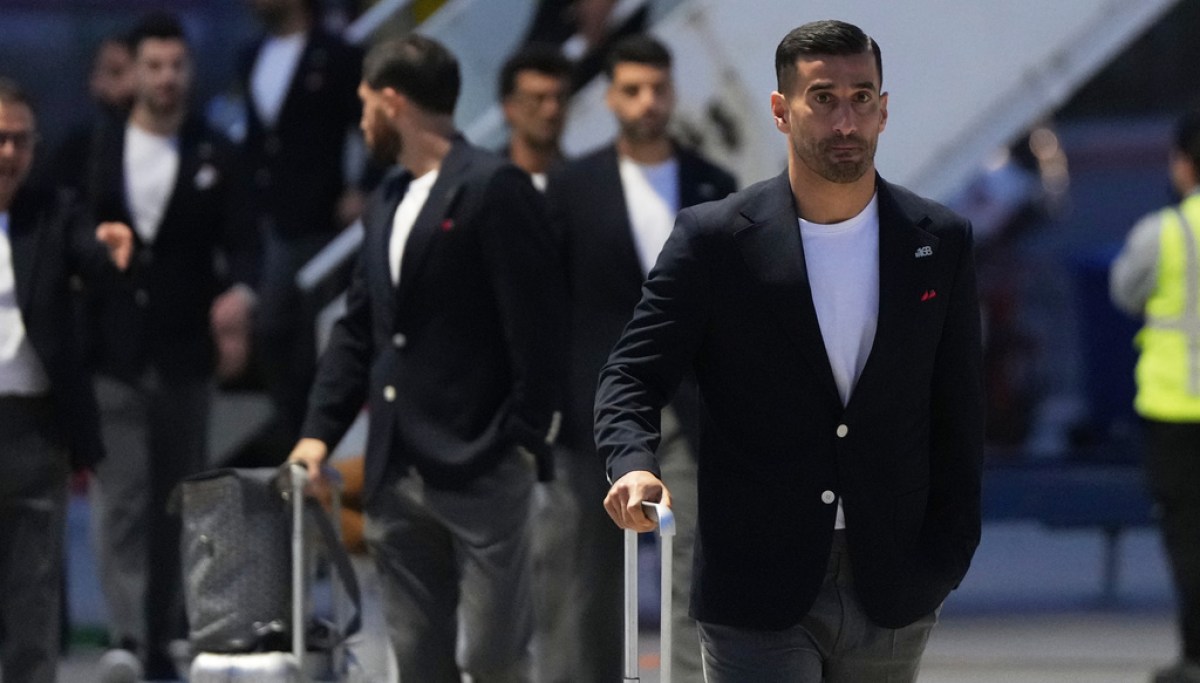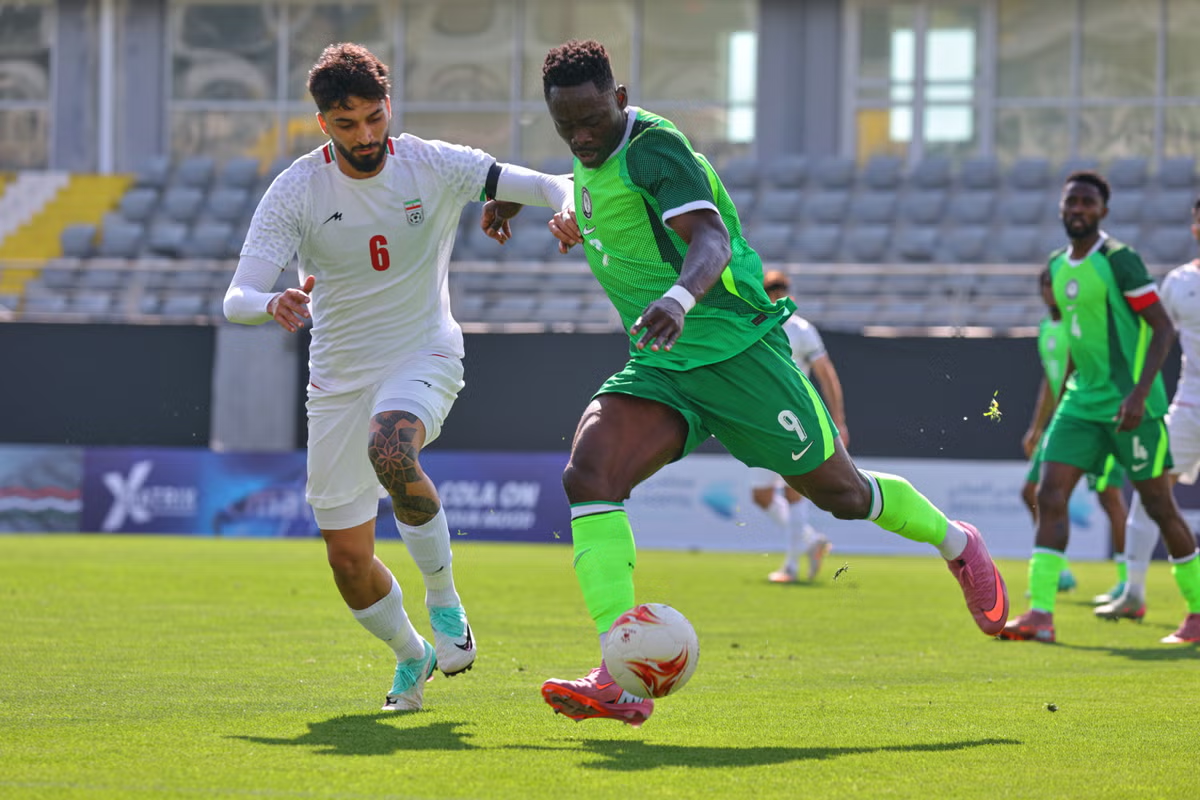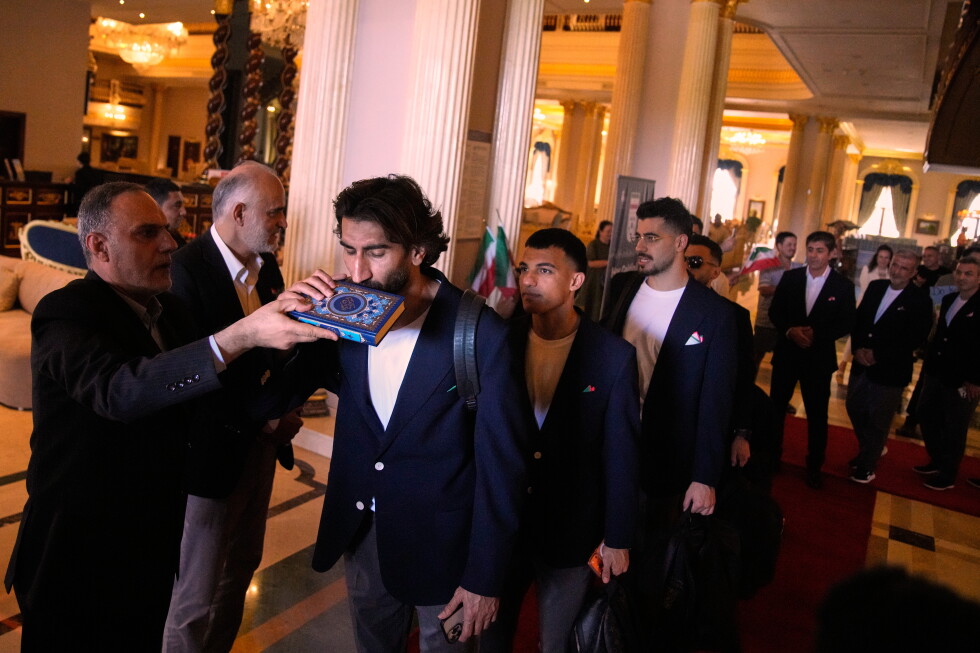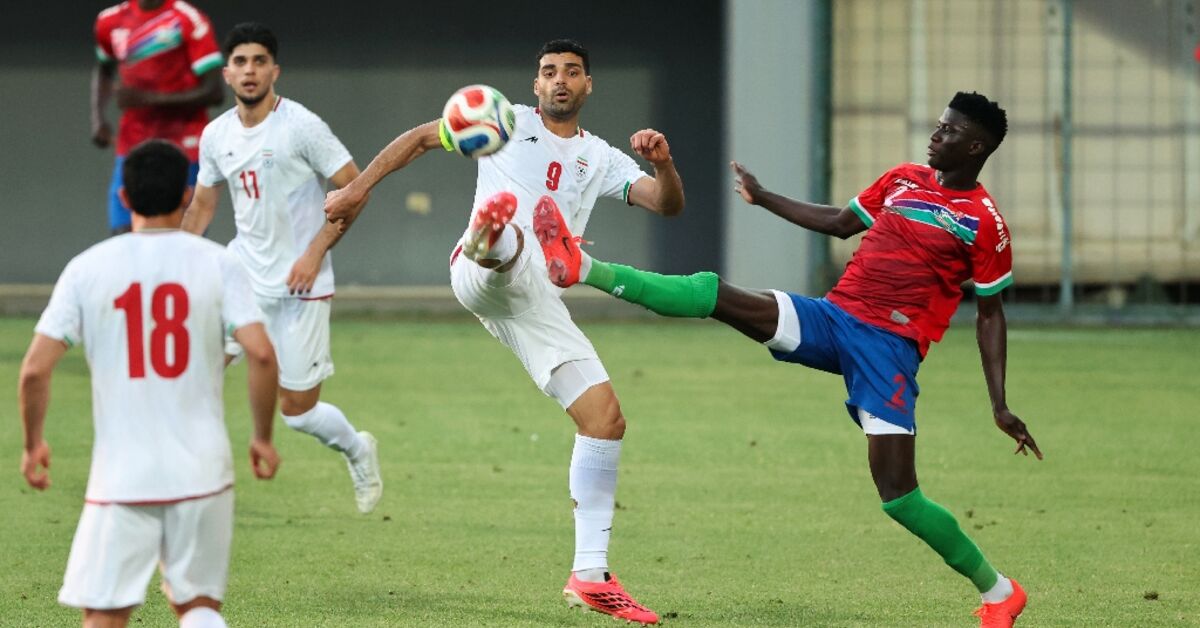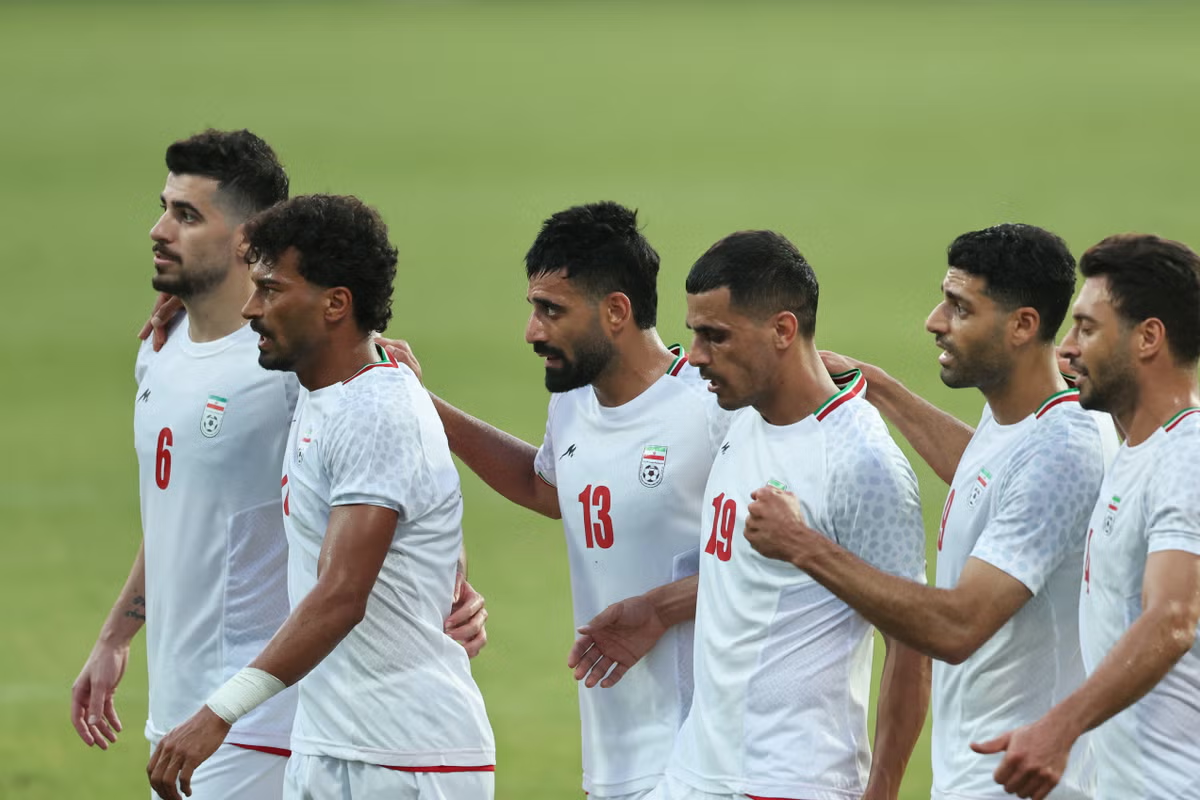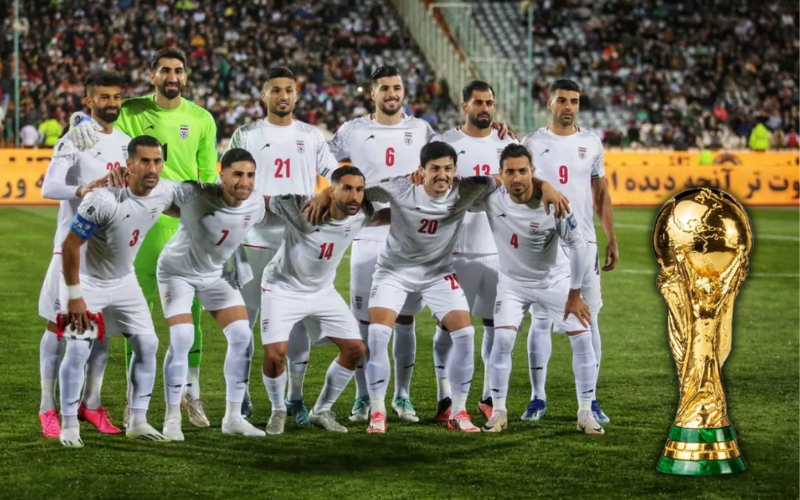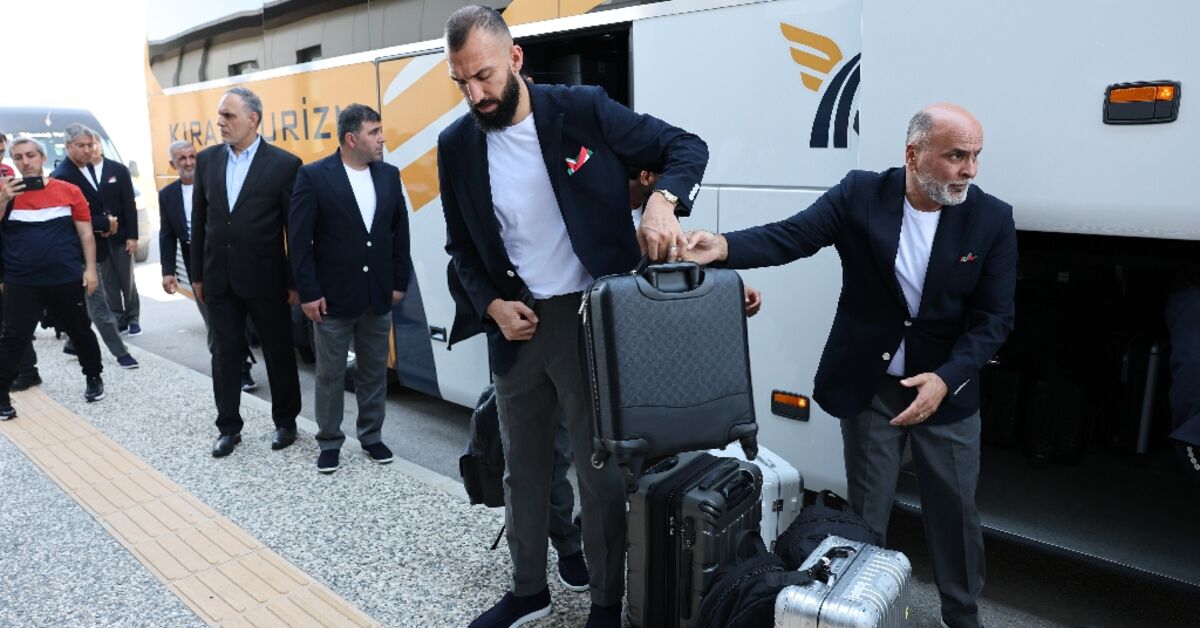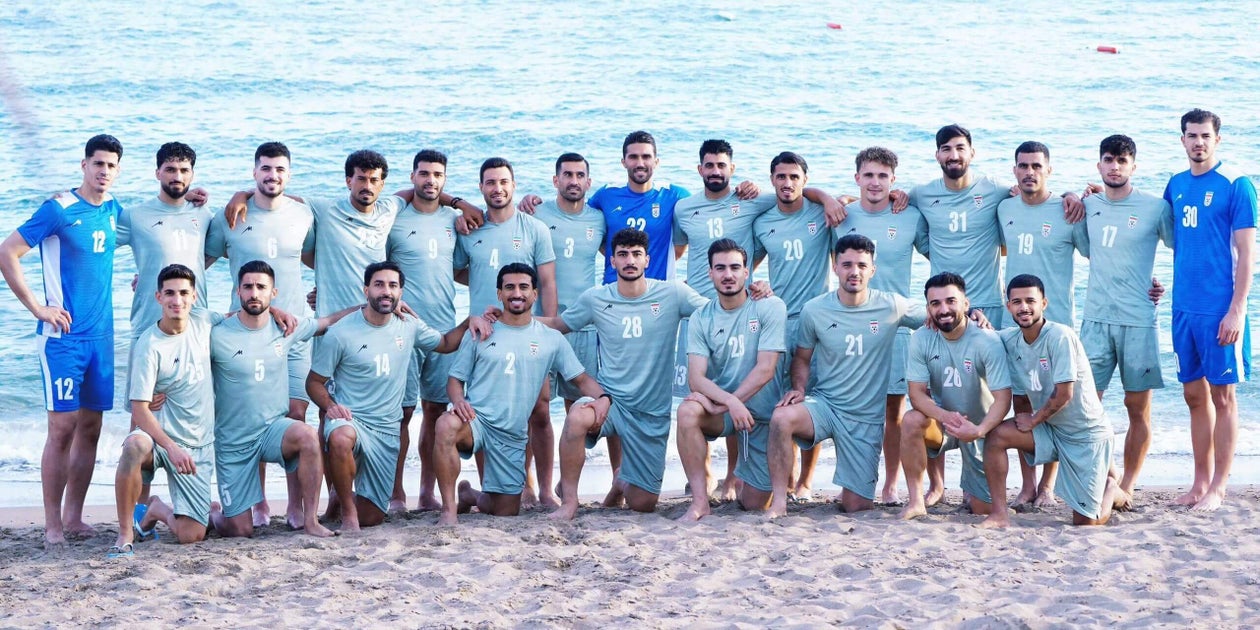
When the first American bomb dropped on Iran on February 28, it looked unlikely the Iranian national team would play at this World Cup. But on Saturday afternoon, they began their journey to North America, departing from their hotel shortly before 4pm local time to head for the VIP terminal at Antalya airport in Turkey. They are due to land in Tijuana, Mexico, on Sunday soon after 3am.Iran’s participation in a tournament co-hosted by a country that had declared war on it has been fraught with uncertainty for months and that continued into the past 24 hours in Turkey.The touring party had been granted visas to travel to Mexico earlier in the week, but having submitted their passports to the United States embassy in Turkey, they waited anxiously to see if they would be granted visas that would allow them to play Group G games against New Zealand and Belgium (on June 15 and 21, in Los Angeles) and Egypt (on June 27, in Seattle).Late on Friday evening, they got news that some, but not all, had been granted visas. Players, head coach Amir Ghalenoei and some of his assistants had received approval, but other team management, two analysts, executives and media officials were among 13 who had not been given visas.It meant only some boarded the coach at midday on Saturday safe in the knowledge they would be able to travel onwards into the U.S. when the time comes.Late on Friday evening, a White House official issued a statement to The Athletic saying “necessary support” staff had been issued with visas but the U.S. administration “will not allow them to abuse this system to sneak terrorists” into the country.The Athletic has been told by multiple sources close to the Iran team — like some others referenced in this article, they were speaking on the condition of anonymity to protect their positions — that the statement shocked officials within the Iranian camp, who set about rectifying the situation to allow members they deem necessary to football operations to gain access.The Iranian Football Federation (FFIRI) said on Saturday: “FIFA, as the responsible governing body, has a duty to follow up on and secure visas for the members of Iran’s national team staff who are currently with the squad in camp and whose presence is essential to the team, until the matter is fully resolved.”Iran’s players and staff board their plane to head to Mexico (Iran Football Federation)In Tijuana, they could hardly be closer to the U.S. without actually being in the country. The Mexican border city is immediately to the south of San Diego, California. It is just the other side of a tightly policed road and pedestrian crossing, complete with an echoing metal turnstile that bisects the imposing border wall.The Athletic spent four days following Iran’s World Cup preparations, taking in a behind-closed-doors training session and warm-up match before they boarded their flight — via a refuelling stop in Mallorca, Spain — to the tournament.To report this story, we spoke to players and officials on and off the record to enable them to speak freely.During their time in Antalya, Iran’s team stayed at the five-star Mardan Palace hotel on the Mediterranean coastline, with views of the Taurus Mountains. They had the option to swim in the sea, walk on the beach or lounge by one of the many pools, or use the luxury spa, gym or meditation room.Antalya became a welcoming home away from home for the team.They regularly watched films in the hotel’s cinema. One was a documentary about how Iraq’s victorious 2007 Asian Cup team united as a group — despite being from different cultures — to win the tournament. After the showing, Ghalenoei, Iran’s coach, told the team to use it as inspiration.The 62-year-old — a former international with 20 caps — is a rare homegrown coach. A foreigner had been at the helm for Iran’s previous four World Cup appearances (Croatia’s Branko Ivankovic in 2006 and Carlos Queiroz of Portugal in 2014, 2018 and 2022).He has a steely glare but is courteous when introduced at the team’s training base, a short drive from their palatial hotel.The coach insisted on training at least once a day, sometimes twice following their arrival in mid-May. Despite the intensity and the fact security needs to be particularly tight, the atmosphere is light. It includes the usual sights and sounds of any normal group of footballers.Out of the blue, a familiar face from the Premier League shouts up to the stand: “All right, mate,” echoes an English twang. It’s former Brighton & Hove Albion attacker Alireza Jahanbakhsh going through some fitness work.Via Dutch sides Feyenoord and Heerenveen, the 32-year-old is at Belgian side Dender. Sitting on 98 caps and on the verge of returning from a minor hamstring injury, he is set to reach 100 at a milestone tournament.“If you told me when I was 12 that in 20 years, you’re going to play your fourth World Cup, I would have laughed,” he tells The Athletic. “But hopefully, in the next 10 days, I will keep fit and make it. It’s just incredible.”The team — especially in the circumstances — is taking priority for Jahanbakhsh and the other leaders, including Ehsan Hajsafi (who will level Iran’s all-time appearance record if he adds another three caps to his 146) and Olympiacos’ Mehdi Taremi, the squad’s leading scorer (60 goals). Amirmohammad Razzaghinia, 20, is Iran’s youngest player at a World Cup since Jahanbakhsh first appeared in Brazil in 2014.“With the whole situation, it hasn’t been easy,” says Jahanbakhsh. “But what we try as the more experienced players is to make sure that this team is united.”Antalya is 2,000km (1,250 miles) from Tehran but the job has been made easier by relaxed surroundings that feel a world away from a divided region.“We keep telling the boys that whatever is happening outside, we cannot control it,” he explains. “As long as we control inside: the team, cohesion, relationships between players and staff, that’s the most important thing.”The complexity of the situation — with differing political views existing within the group and tight controls by federation officials on what they can and can not say publicly — should not be underestimated. But Jahanbakhsh is enthused by what he sees around him.“The atmosphere is very good. I’ve been surprised myself how close the boys are despite the whole situation back home and being away from family,” he says. “I keep telling them, ‘Guys, it’s going to be a long camp, it’s going to be weeks until we get to where we want to be. So make sure that you make it so much fun inside that you’re not missing much from outside’.”Jahanbakhsh explains how “as Persians, we are really proud people” who embody “resistance and resilience”. He says his motivation is personal, not political. “The most important thing is when I see the smile on my parents’ face, whenever I represent my country. That’s beautiful.”Training ends after the final players on the pitch have practised free kicks. Then the commitment to keeping the atmosphere light is on show again.After raising a peace sign before boarding the coach, imposing 6ft 5in (196cm) goalkeeper Alireza Beiranvand sits on the floor at the front of the coach and commandeers the microphone. Smiling, he sings a local Persian folk song from his home village of Sarab-e Yas to the rest of his team-mates, as the last few crates and kit bags are loaded onto the coach.The moment is a contrast to the scene from when the Iran team first travelled to Antalya as the war was raging in March.They snaked their way from Tehran on a 40-hour bus journey over the Turkish border. During that difficult journey, Beiranvand — capped 86 times — lay in the aisle on the floor to stretch out his long limbs.The team’s Iranian-based players have effectively been together since then. They played two friendly games in March, against Nigeria (2-1 defeat) and Costa Rica (5-0 win) before returning home.With the domestic league suspended, the football federation decided to keep the players in camp in Tehran from April 1, aside from sporadic breaks due to the conflict. Of the final 26-man squad, 17 are based in Iran.“The biggest challenge we have is obviously the situation for the local players that they were forced to stay home for a couple of weeks without any games and training,” says Jahanbakhsh, who returned to Belgium. “The plan has been really good, because I can see they are quite fresh, but they need another week to be fully game-ready.”In addition to the World Cup squad, the nation’s under-23 team has also been in Antalya, operating out of another five-star hotel to supplement the senior squad when necessary.It was during the March camp that FIFA president Gianni Infantino visited and watched Iran’s match against Costa Rica. After the match, he said “everything is fine” and reiterated his position that Iran would play at the tournament.Later, Infantino’s official Instagram account indicated he also had met with Iranian soccer officials during his visit.
How Iran prepared for the World Cup: A 40-hour bus journey, visa issues and a switch to Mexico
The Athletic's Adam Leventhal travelled to Iran's training base in Turkey and spent time following their final tournament preparations
2,618 words~12 min read