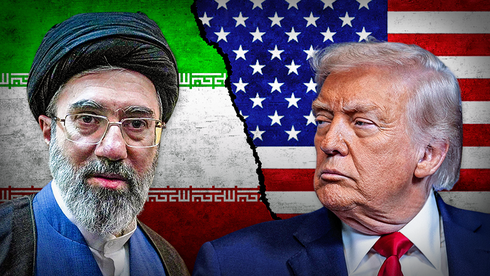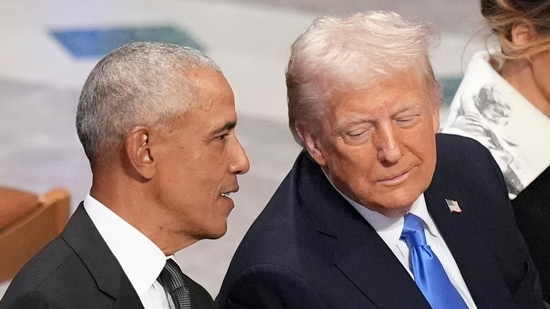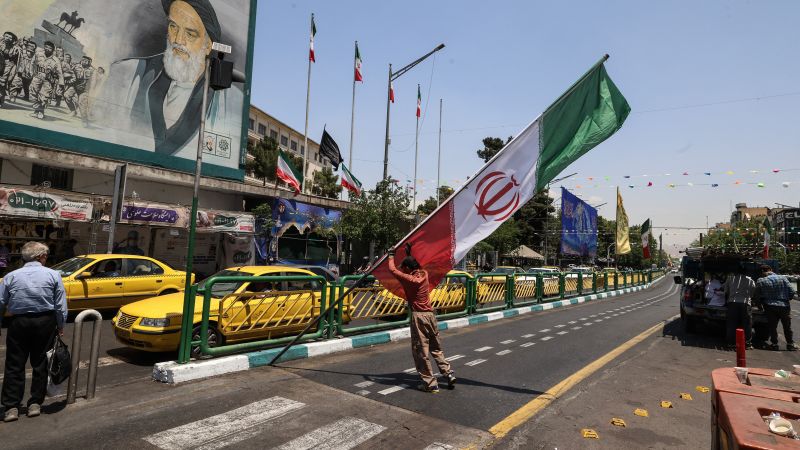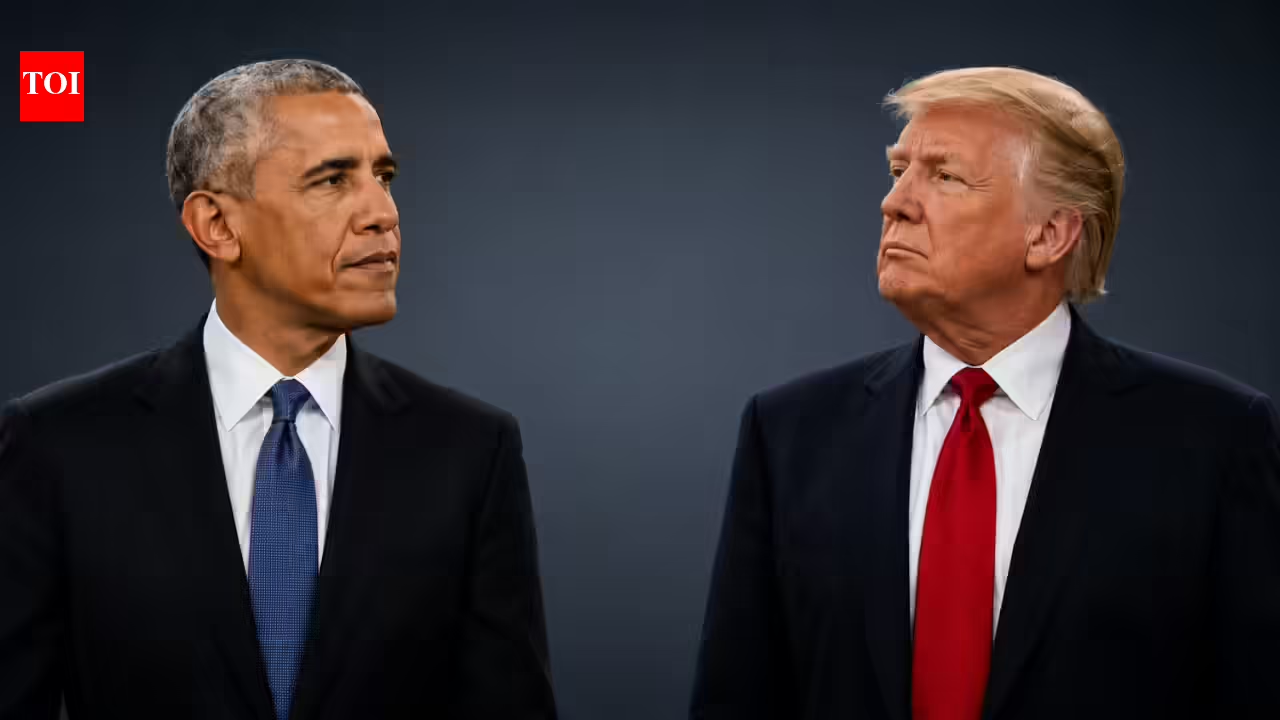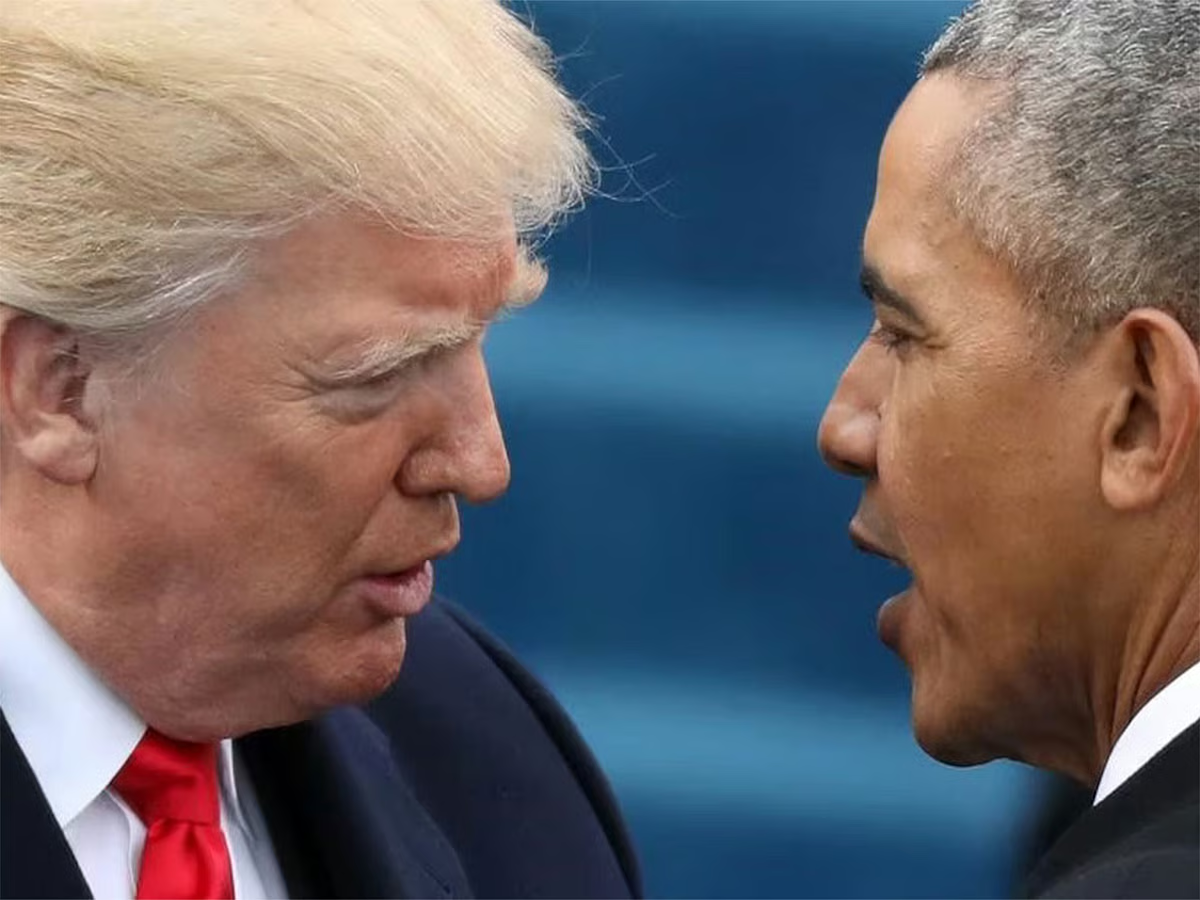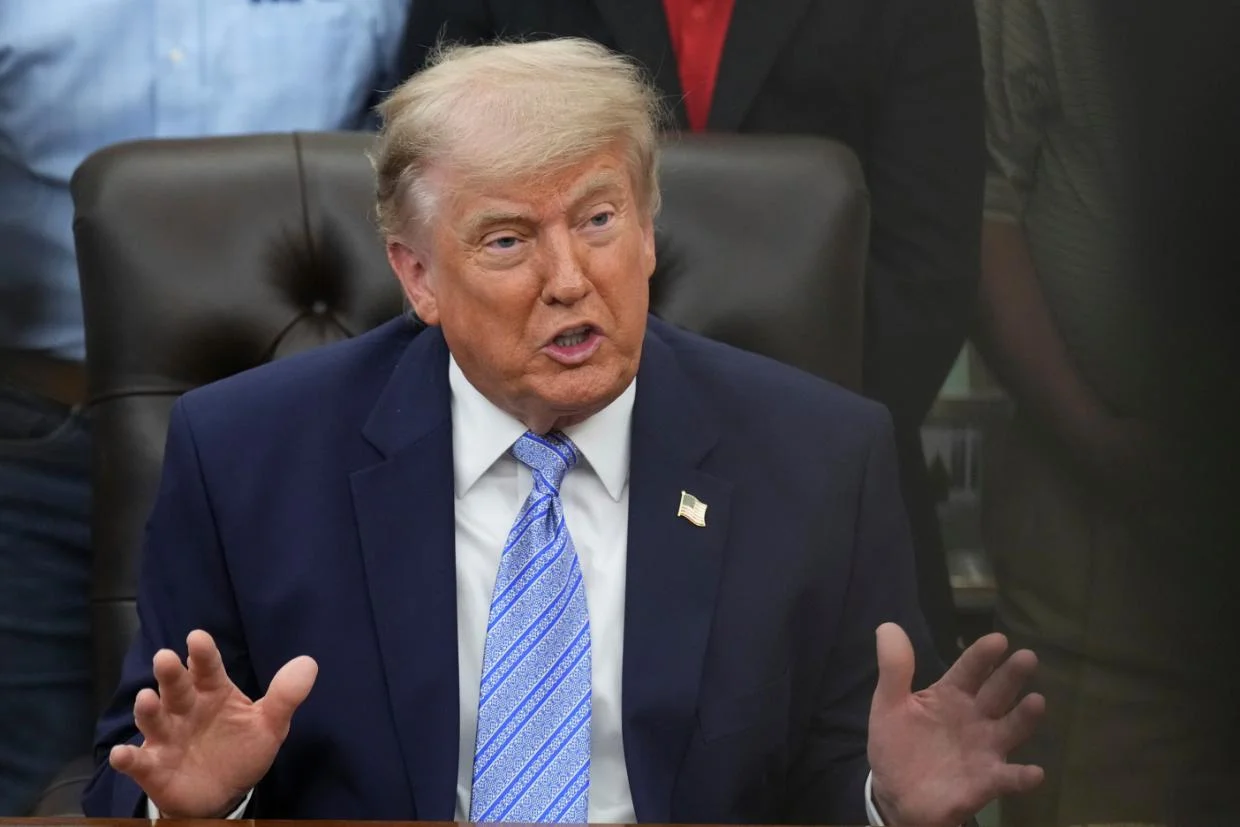
US President Donald Trump has spent years attacking his predecessor Barack Obama for what he called a giveaway to Iran. The image of "pallets of cash" became one of his favorite political talking points, a symbol of what he portrayed as weakness in dealing with Tehran.Yet the irony of the current moment is becoming harder to ignore. As negotiations to end the latest US-Iran confrontation stall, Iran is demanding access to billions of dollars in frozen assets, and the success of any deal may depend on whether Trump agrees to some form of financial relief. The president who built his Iran policy around rejecting Obama's approach may now find himself confronting the same reality that faced previous administrations -- diplomacy with Iran often comes with a price tag.Pay $12 billion now, and $12 billion laterAn indication of how central money has become to the negotiations came from Mohsen Rezaei, military adviser to Supreme Leader Ayatollah Mojtaba Khamenei, in an exclusive interview with CNN. According to Rezaei, the negotiations have reached a deadlock and the responsibility for breaking it lies squarely with Trump. He said Iran wants the release of $24 billion in frozen Iranian assets, with $12 billion to be made available immediately after an interim agreement is signed and another $12 billion at a later stage.Rezaei termed the demand not a concession from Washington but as a test of American intentions. "If he wants to reach an agreement with Iran, this $24 billion is a test of trust that Iran wants to have with Trump," he told CNN. "This is our own money, not America's money."The significance of the demand extends beyond the amount involved. By publicly linking the prospects of peace to the release of frozen assets, Iran has effectively made financial compensation the central political hurdle in the negotiations.Trump's Obama problemFor Trump, the issue is not as much financial as deeply political. CNN reported that Trump has repeatedly instructed his team that any agreement with Iran must be viewed as stronger than the 2015 nuclear accord negotiated by Obama. Equally important, he wants to avoid anything that resembles the controversial payments that became a focal point of Republican criticism a decade ago.Throughout his political career, Trump has portrayed the Obama administration's handling of Iran as evidence of weak leadership. Recently, he revived his criticism of the Joint Comprehensive Plan of Action, or JCPOA, describing it as a horrible deal and insisting that any agreement he reaches will be far better. That political history now threatens to constrain his negotiating options. A deal that includes billions of dollars flowing to Iran could invite immediate comparisons with the very agreement he spent years denouncing.What Obama actually didThe comparison is unavoidable because financial relief was also a major feature of the Obama-era approach. The JCPOA, finalized in 2015 after negotiations between Iran and the P5+1 powers, imposed strict limits on Iran's nuclear activities in exchange for sanctions relief. The agreement capped uranium enrichment, reduced centrifuge capacity and established what experts described as one of the most intrusive inspection regimes ever negotiated.The deal also coincided with the release of $1.7 billion to Iran, a figure that Trump and other critics frequently cited as evidence of appeasement. Critics argued that sanctions relief and financial compensation rewarded Iranian behaviour across the region.Supporters of the agreement took a different view. They argued that much of the money involved consisted of Iranian assets that had already belonged to Iran and that the deal successfully halted Tehran's progress toward a nuclear weapon while providing unprecedented transparency into its nuclear program.Former US Energy Secretary Ernest Moniz, who helped negotiate the agreement, told CNBC that the JCPOA's most important achievement was its extraordinary verification system. Arms control experts similarly maintain that the deal effectively constrained Iran's nuclear ambitions before it unraveled.Why the current situation is more difficultThe irony for Trump is that negotiations now are taking place under conditions far less favorable than those that existed in 2015. After the US withdrew from the JCPOA in 2018, Iran gradually breached many of the agreement's restrictions. It expanded uranium enrichment, accumulated a much larger stockpile of nuclear material and scaled back some transparency measures.Many think that any new agreement must address a more advanced Iranian nuclear programme and a more complicated political environment. There is also the added challenge of rebuilding trust after years of mutual escalation. That reality means economic incentives have become even more important. Tehran is demanding tangible benefits upfront rather than promises of future relief. From Iran's perspective, accepting new restrictions without immediate financial gains would be politically difficult.Trump's search for a political workaroundTrump's advisers are acutely aware of the political risks. According to CNN, administration officials are exploring mechanisms that would allow Iran to receive financial relief without creating the appearance of a direct US payment. One possibility involves third countries such as Qatar releasing funds. Another would permit access to frozen assets while restricting their use to humanitarian purchases such as food, medicine and agricultural goods. There have also been discussions about creating reconstruction funds financed largely by Gulf states rather than the United States.These proposals reflect an important reality. The debate is no longer about whether Iran should receive economic relief at some stage. It is increasingly about how that relief can be structured so that Trump can claim he has not repeated Obama's mistakes. In that sense, the dispute is becoming as much about political messaging as about financial policy.Leverage versus peaceThe White House remains reluctant to surrender what it views as one of its strongest bargaining tools. Trump has publicly insisted that the United States will retain control over frozen Iranian funds until Iran meets Washington's demands. Secretary of State Marco Rubio has similarly emphasised that sanctions relief should follow compliance rather than precede it.The administration's concern is straightforward. Once funds are released, Washington loses a major source of leverage. That leverage could prove critical during the highly technical second phase of negotiations focused on Iran's nuclear program. Iran, however, sees the issue differently. For Tehran, immediate access to frozen assets is evidence that the United States is negotiating in good faith. Without such a gesture, Iranian leaders appear unwilling to commit themselves to a broader settlement. That difference in perspective has created the current impasse.The choice facing TrumpThe strategic dilemma confronting Trump is becoming increasingly clear. He can maintain a hard line and refuse any significant financial concession, preserving political consistency but risking the collapse of negotiations. Or he can accept some form of economic relief for Iran, potentially unlocking a broader peace agreement but exposing himself to accusations that he has embraced a version of the same approach he once condemned.Rezaei's comments to CNN show how central that decision has become. By presenting the release of $24 billion as a test of trust, Iran has effectively challenged Trump to choose between ideological purity and diplomatic pragmatism. For a president who built his Iran policy in opposition to Obama's legacy, that may be the most uncomfortable choice of all. If peace ultimately requires releasing billions of dollars in frozen Iranian assets, Trump would be seen as eating his words when he had asked Iran for complete surrender.
Obama casts a long shadow as a hefty Iran bill lands on Trump’s desk
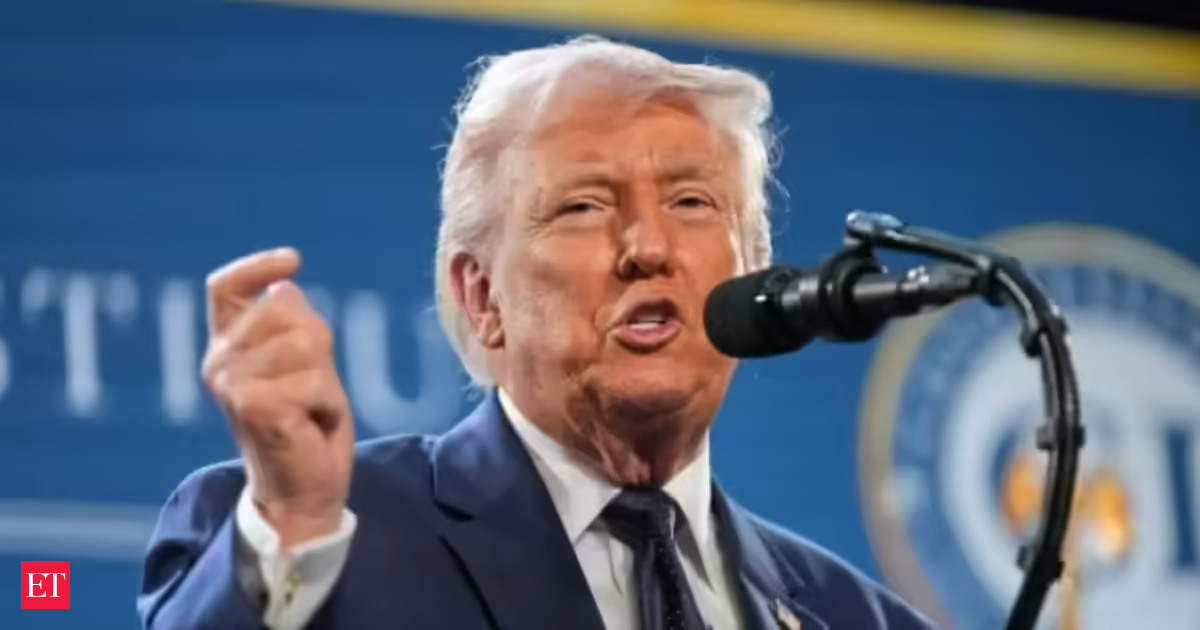
Iran seeks billions in frozen assets for a deal with the US. President Trump previously criticized his predecessor, Barack Obama, for similar financial concessions to Iran. Now, negotiations stall as Iran insists on immediate access to its funds. This demand presents a political challenge for Trump, who built his Iran policy on rejecting Obama's approach.
1,198 words~5 min read