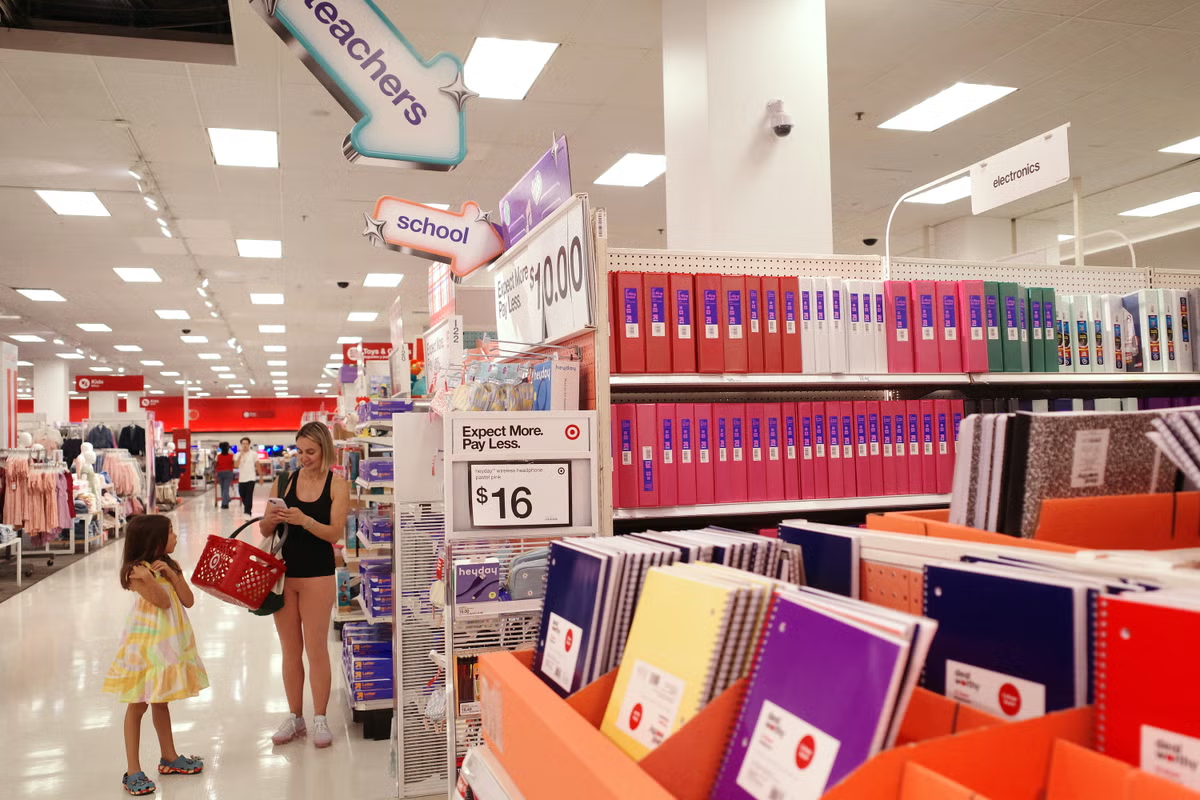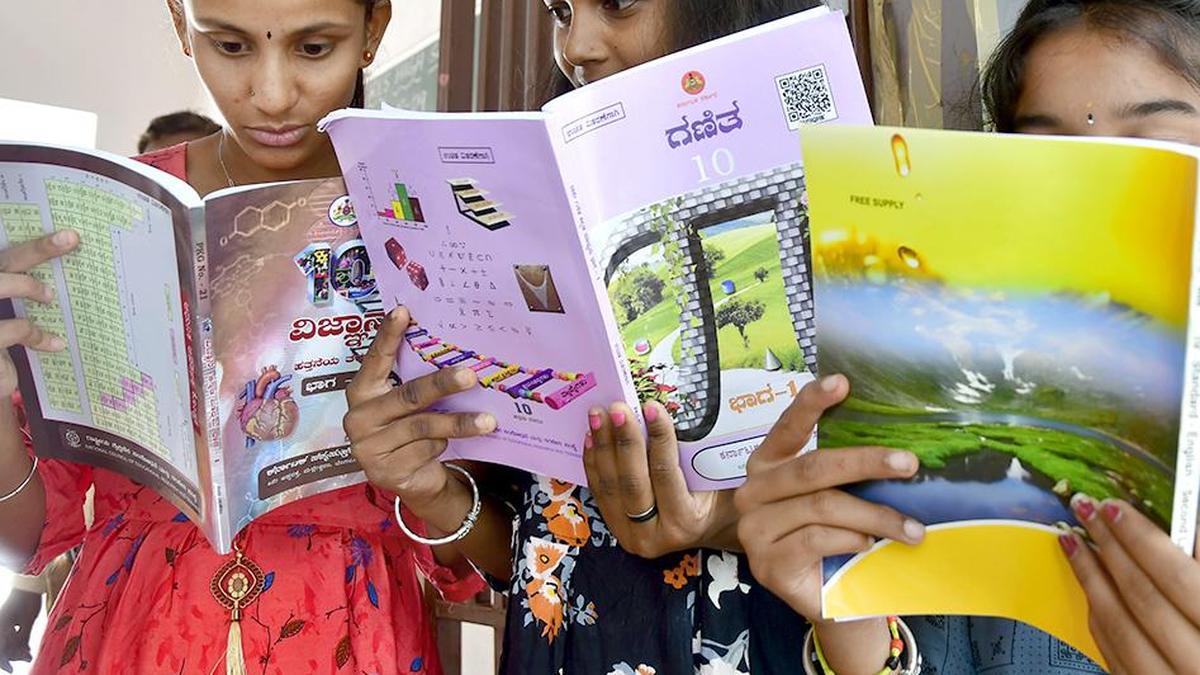
The price of notebooks has gone up by ₹5 this year.
| Photo Credit: File photo
Parents of students returning to school this week have had to shell out at least ₹5 more per notebook, with industry insiders attributing the hike to the West Asia crisis.Gangadharaiah, a bookshop owner in Avenue Road, said, “The price of notebooks has gone up by ₹5 this year. It may vary by ₹1-2 at the wholesale level, but retail prices are fixed. A 75-80 page notebook, commonly referred to as a 100-page book, now costs ₹30, up from ₹25. A 175-page book, considered a 200-page notebook, has risen from ₹45 to ₹50. Popular brands in the market charge ₹55 per book.”Anand Pawar, a parent of two children, said, “I have enrolled my children in a low-budget private school in Attiguppe, where they do not provide textbooks and notebooks. This year, I spent ₹2,000 instead of ₹1,000 on notebooks and textbooks for both of them. This includes other stationery as well. But we realised it was because of the increase in notebook prices.”West Asia crisisThe ongoing West Asia crisis, which has pushed up transportation and raw material costs, has led to an increase in notebook prices, Karnataka Offset Printers Association (KOPA) and notebook manufacturers have pointed out.Peter Anil Rego, president, KOPA, said, “At present, the industry is facing price hikes in all types of raw materials, including paper, lamination films, packaging material, and chemicals used for printing solutions. Every second day, we receive emails from suppliers about price increases of 4-8%. Unfortunately, we are forced to pass this burden on to consumers.”Saravana Kumar, former secretary of the Karnataka Paper Merchants and Stationers Association, said, “The prices of raw materials have gone up by nearly 15%. With petrol prices also rising, most transporters have increased freight charges by 5-10%. The paper mills are located around 300 km from Bengaluru. For instance, we were earlier paying ₹1,250 per tonne, which has now increased to ₹1,500 per tonne.” He also pointed to unresolved Goods and Services Tax (GST) issues.‘Unprofitable’Mr. Gangadharaiah said the notebook business had become unprofitable over the past few years, especially for smaller players. “Most private schools purchase notebooks in bulk from a single large manufacturer and distributor, and only they benefit from it. They have monopolised the business. What about small-scale manufacturers, distributors and shop owners like us?” he questioned, adding that government schools and colleges provide books for free, and that only a few private schools allow parents to purchase books and notebooks from outside shops. Published - June 06, 2026 08:52 pm IST