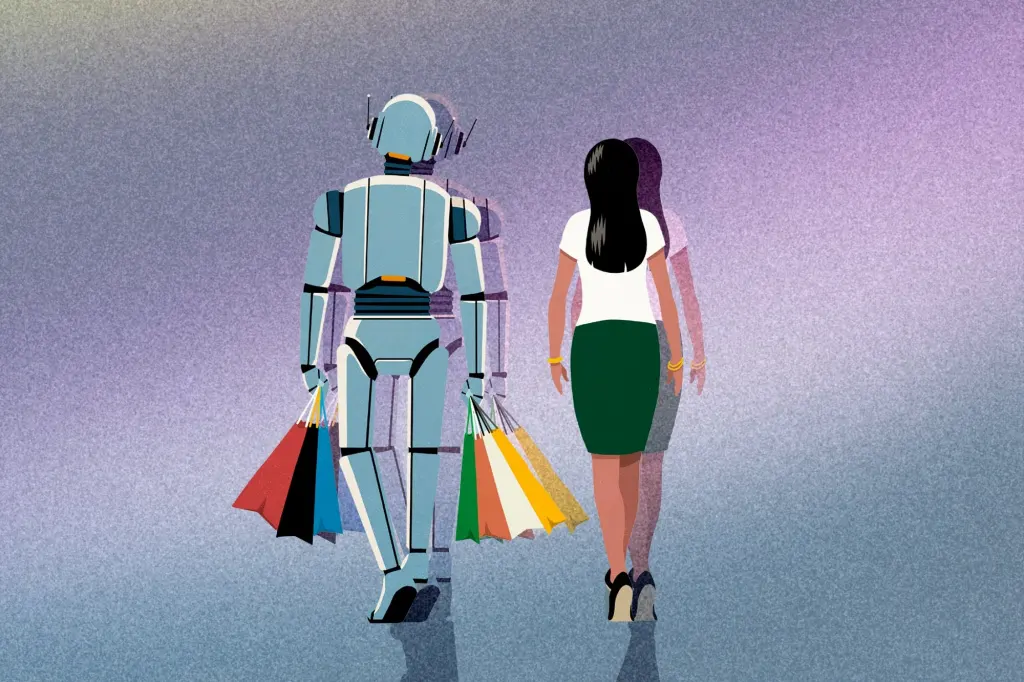
BusinessShoppers are already using AI to sort through and compare products before they buy, and now, retailers are looking to adopt autonomous payments. But those involved in processing payments will need to first sort out what happens when AI makes mistakes and take steps to keep bad actors out.Whether shoppers want to let AI buy products of all kinds is still unclearAbby Hughes · CBC News · Posted: Jun 06, 2026 4:00 AM EDT | Last Updated: 2 hours agoListen to this articleEstimated 6 minutesThe audio version of this article is generated by AI-based technology. Mispronunciations can occur. We are working with our partners to continually review and improve the results.AI tech companies are betting customers will want to outsource their shopping to AI agents that can buy things on their behalf. But experts say it will take time for customers to trust AI agents with their money. (Chris Young/The Canadian Press)You might already use AI to suggest the most comfortable sneakers under $150, or compare the specs on a new vacuum cleaner before you buy. From Walmart's Sparky to Amazon's Alexa for Shopping, or even regular chatbots like OpenAI and Gemini, there's plenty of options for a shopping companion that can help with research and recommendations. Now, retailers are betting you'll let AI agents buy that vacuum or pair of shoes for you — no "proceed to cart" required. Alexa for Shopping now allows U.S. users to automatically purchase a product when it drops below a certain price.Investing platform Robinhood last week launched a new feature that lets users have AI agents make decisions to buy or sell stocks on their behalf.And last month, Google announced a new feature of their payments protocol that will allow AI-driven tools to make purchases for you when certain criteria, like brand and price, are met. The function is coming first to Google's new AI agent available in the U.S., called Gemini Spark, and should arrive in a matter of months.The aim, the company says, is to set strict guardrails when letting AI buy a product, to make sure its not buying something the human doesn't want.Vidhya Srinivasan, Google's vice-president and general manager of ads and commerce, speaks at a Google I/O event last year. Last month, the tech giant announced a new feature of their payments protocol that will allow AI-driven tools to make purchases for you. (Jeff Chiu/The Associated Press)"On the team, we think … of it like you're giving a teenager their first debit card. There's sort of limits and sort of constraints around it," said Josh Woodward, vice-president of Google Labs, Gemini and AI Studio, during an announcement ahead of the company's I/O conference in May.Ritesh Kotak, cybersecurity and tech analyst, says the moves we've seen so far are "baby steps," but they're an indication that agentic payments are the next big thing in AI-driven shopping."Clearly, there's a full-blown strategy here to completely automate the shopping experience," Kotak said.But before the tech is commonplace, industry and cybersecurity experts say there are plenty of issues related to privacy, standards and consumer trust that will need to be overcome.Control and security are big hurdlesWhile product discovery and research has gotten "pretty good," senior product manager at Shopify Victoria Duggan said agentic checkout is lagging behind because it's really complex.Amazon's Alexa for Shopping, formerly called Rufus, allows Prime members in the U.S. to automatically purchase a product when it goes below a certain price. (Peter Morgan/The Associated Press)"Anything from split shipping to buy now pay later, installments, validations, even … how will my agent navigate an ID requirement because I'm purchasing an age-verified product. These are all tricky to think about an agent going through," Duggan said at a Shopify event during the Toronto Tech Week conference in May.The race to provide AI agents for tedious tasks is on, but should we trust them with our data?Plus, she says, AI agents often get tripped up by CAPTCHAs or other safety mechanisms meant to keep malicious bots away from the payment system.Shenela Tavarayan, group product manager of merchant solutions at Interac, says the technical kinks can be more easily worked out than consumer consent, as letting AI make buying decisions opens the door for it to make mistakes.WATCH | AI is changing how customers research before buying:Is AI changing the way we shop for the holidays?December 2, 2025|Duration 2:08Picking the perfect gift for your loved one is always a challenge.
Companies are betting you'll give AI agents your credit card. But agentic payments aren't so easy | CBC News
Shoppers are already using AI to sort through and compare products before they buy, and now, retailers are looking to adopt autonomous payments. But those involved in processing payments will need to first sort out what happens when AI makes mistakes and take steps to keep bad actors out.
1,486 words~7 min read