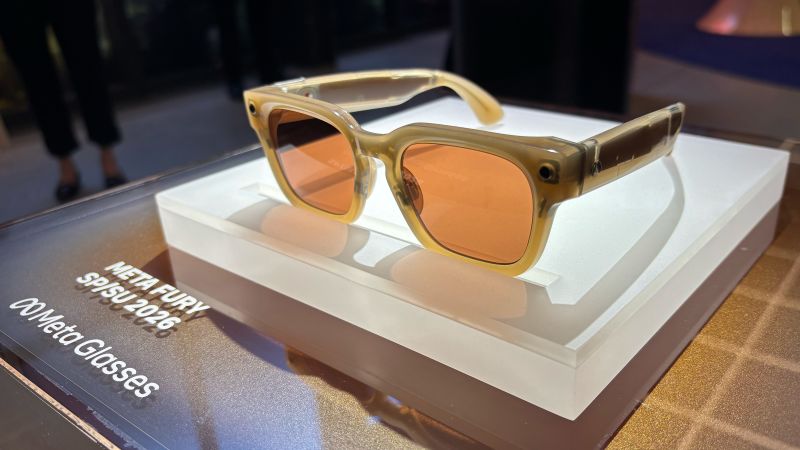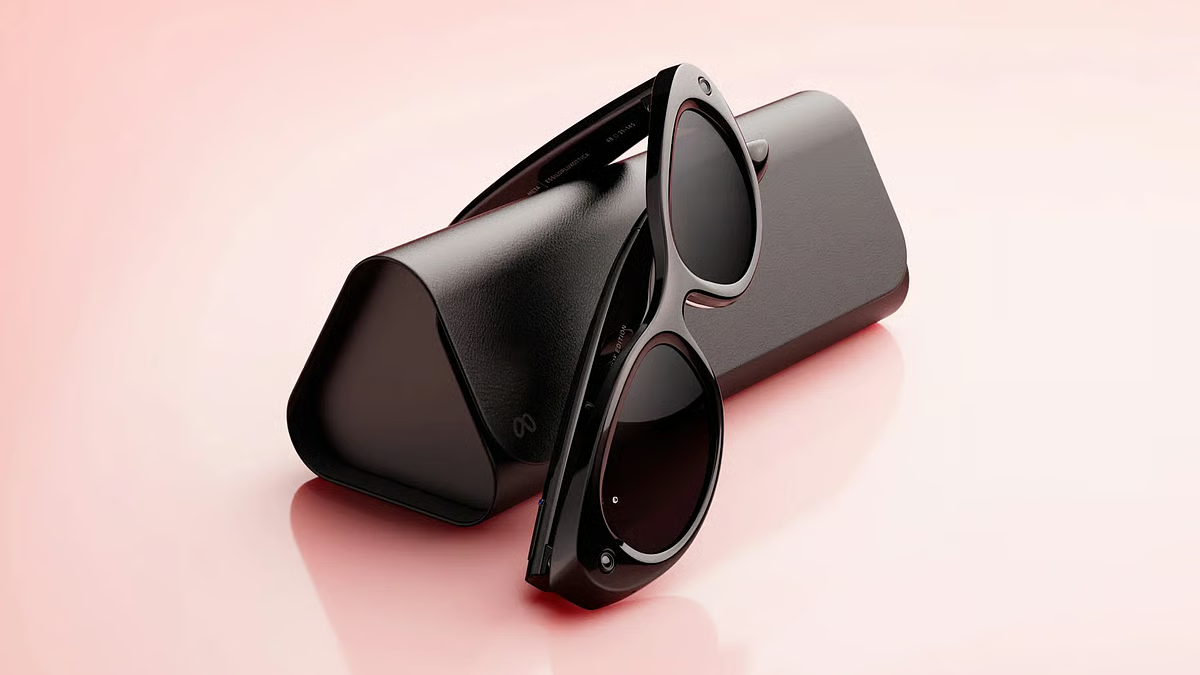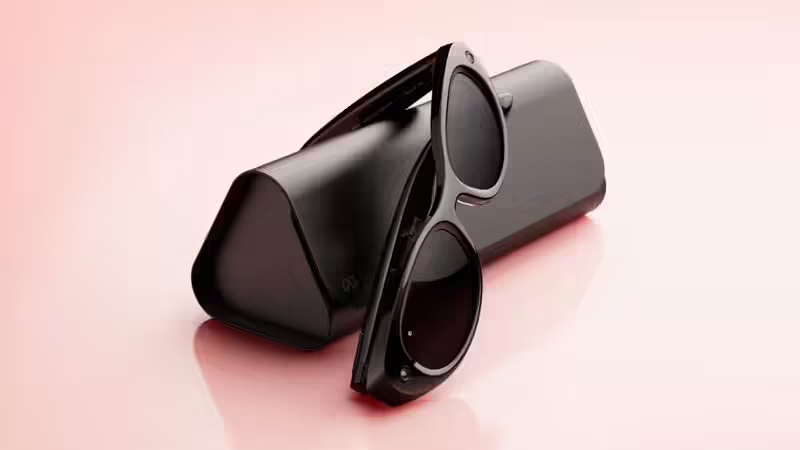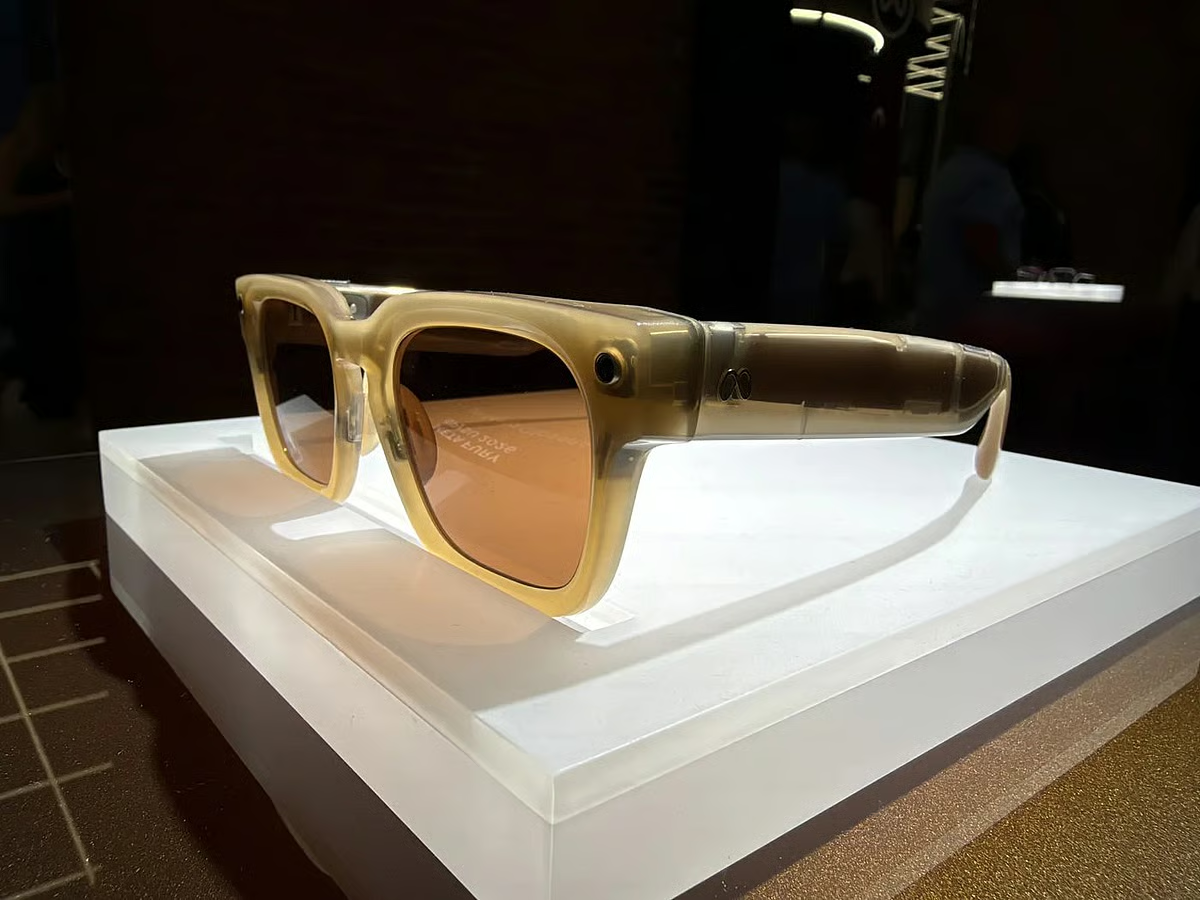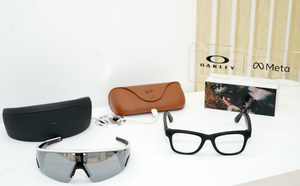
Hands-free demos impress, but Korean support and everyday usefulness remain works in progress Oakley Meta AI glasses (left) and Ray-Ban Meta AI glasses (Meta Korea) “Hey Meta!”The glasses woke up with the short phrase. Then, I looked down and asked how many calories were in the plate of food in front of me.For two or three seconds, nothing much happened. Then a voice came through the open-ear speaker built into the frame. It picked up a croissant, an egg, milk and salad, then offered a rough calorie estimate.There was no phone in hand — just a spoken command and an answer through the glasses.The small moment neatly sums up Meta’s pitch for AI glasses. Officially launched in Korea on May 25, Meta’s AI glasses were developed with EssilorLuxottica under the Ray-Ban Meta and Oakley Meta lineups. Both lines carry cameras, microphones and speakers inside frames that still mostly look like regular eyewear.At a hands-on event in Seoul on Thursday, Meta Korea Country Director Kim Jin-ah said glasses offer a more natural way to use AI than smartphones.“What is most different from smartphones is that glasses allow you to stay focused on the moment,” Kim said. She added that Meta sees glasses as an ideal device because they let people use AI while remaining connected to the world around them, rather than looking down at a screen.Kim said Meta’s roadmap moves from today’s camera-and-audio glasses to future models with displays and, eventually, augmented reality glasses that can overlay digital information onto the real world.For now, most of the experience happens through voice. In the food demo, the glasses identified a Korean melon and put its glycemic index at around 50, adding that it could raise blood sugar relatively quickly. Meta AI glasses analyze a meal including a croissant, egg, salad and milk after The Korea Herald reporter gives a voice command. (Jie Ye-eun/The Korea Herald) A separate calorie-counting test was less clear-cut. Looking at a plate with a croissant and other items, the AI estimated the meal at roughly 500 calories. Depending on where the wearer looked and how the question was phrased, the result changed. At one point, it focused only on the croissant. In another case, it included the egg, salad and milk. For diet tracking or blood sugar management, it felt more like a quick reference than a dependable tool.The fashion demo felt more seamless. When I asked what outfit would go well with the white shoes I was wearing, Meta AI suggested options ranging from casual daily wear to a semi-formal look with beige slacks or a blazer. The advice was not surprising, but the hands-free format made it feel less like a search and more like asking someone nearby.The glasses also summarized a book and described an artwork. When shown a novel, the AI gave a detailed explanation of its plot and themes, though the answer was sometimes longer and softer in tone than necessary.The translation test, however, exposed some of the limits. In one demo, the glasses translated a French sign into Korean as “Welcome, we are open.” A separate real-time translation test also worked, though the Korean output arrived with a noticeable lag — not enough to stop a conversation, but enough to feel closer to a short relay than simultaneous interpretation.According to a Meta Korea official, real-time translation between English and some European languages is already available, while Korean real-time translation has not yet been officially launched. The English name “Natasha,” for instance, was rendered in Korean as “Natalia.”For travel, the feature could be useful. For interviews or business meetings, it is still better treated as a backup. A smartphone screen shows real-time translation output from Meta AI glasses during a hands-on demo in Seoul on Thursday, including the English name “Natasha” rendered in Korean as “Natalia.” (Jie Ye-eun/The Korea Herald) The voice interface had its own issues, too. When the wearer spoke while the AI was answering, the system sometimes stopped mid-sentence to listen again.With prices starting in the 690,000 won ($451) range in Korea, Meta’s glasses sit closer to premium eyewear than casual tech accessory.The competitive picture is also becoming clearer. Alibaba is likely to push its Qwen-powered glasses through shopping and payment services in China, while Samsung and Google could bring stronger software integration through Maps, Gmail and Android.Meta’s bet is more immediate: design. Its glasses are already on sale, and they look like something people may actually want to wear. That is not a small advantage.Alibaba may have an edge in commerce-heavy use cases, while Samsung and Google could be stronger in everyday software integration. Meta, for its part, will have to prove that stylish hardware, camera-based AI and voice interaction are enough to make smart glasses a daily habit.After a brief trial, Meta’s AI glasses felt less like a smartphone replacement than an early look at how AI might slip into daily life.Meta appears to be betting that the next major AI interface will sit at eye level. After the trial, that idea did not feel far-fetched. The harder question is whether the glasses can become useful and comfortable enough to stay there all day.
[Gadget Review] Meta AI glasses bring AI to eye level
“Hey Meta!” The glasses woke up with the short phrase. Then, I looked down and asked how many calories were in the plate of food in front of me. For two or thre
858 words~4 min read