The Bill That Broke the Architecture
In early 2026, a founder I know got his first real AWS + API bill after three months of building. The number was not catastrophic. It was worse than that: it was predictable. Every new user, every new query, every new document ingested into the knowledge base added a fixed marginal cost he could not engineer away. The architecture was correct. The economics were not.
This is the scenario most tutorials skip. They show you how to build the thing. They do not show you what happens when the thing works and the invoices start compounding. According to McKinsey's The State of AI in 2024 (source), organizations are increasingly adopting open-source AI frameworks and self-hosted components specifically to reduce costs and accelerate deployment of production applications. The shift is not ideological. It is financial.
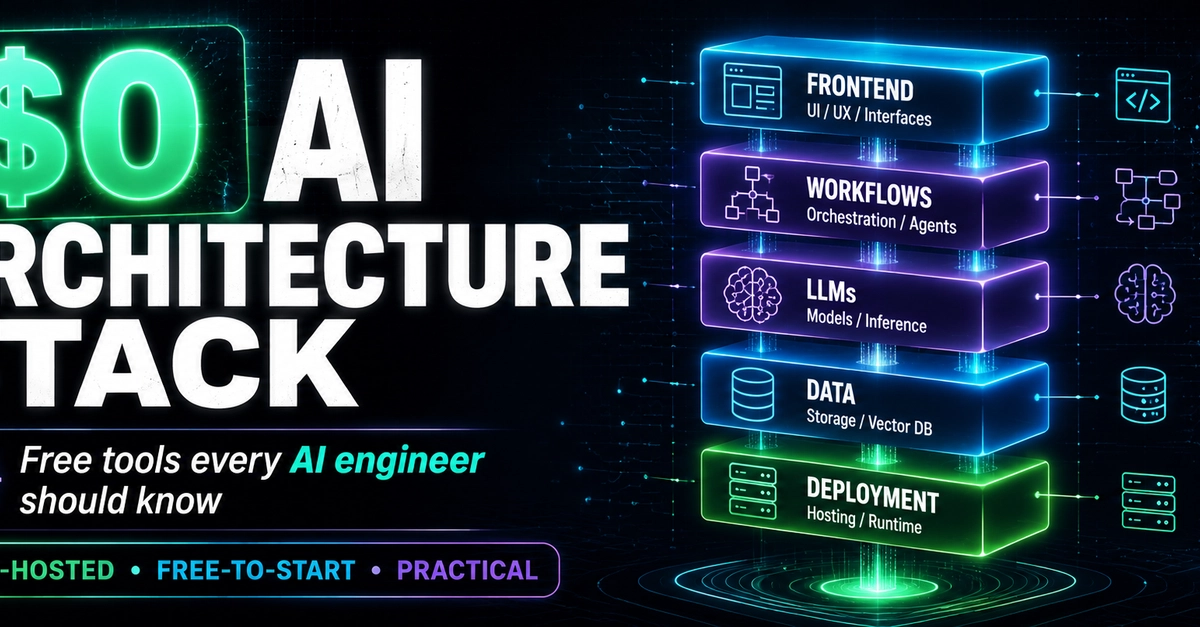
What follows is a layer-by-layer breakdown of the open-source stack we use and recommend: what each component does, which tools fill each role, and where the approach genuinely breaks down.
The Stack, Layer by Layer