(Image credit: Shutterstock)
As the weather starts to warm up, it’s the perfect time to unwind in your backyard or outdoor sanctuary. What’s more, the brighter evenings mean you can host those summer gatherings well into sunset.But what happens when your neighbor's hedge is too high and blocks out the natural light? Are there any legal restrictions? And what is the best way to tackle this?Similar to knowing your legal rights for cutting your neighbors' overhanging bushes or painting shared fences, what are the rules for dealing with a neighbor’s high boundary hedge? This is especially the case when they refuse to maintain it, and it starts to become a nuisance.Fortunately, we’ve called on the experts to weigh in on our legal rights, what steps to take, and best practices for approaching your neighbors directly. So if you want to avoid any neighborhood wars, read this first.What are my legal rights if my neighbour's hedge is too high?
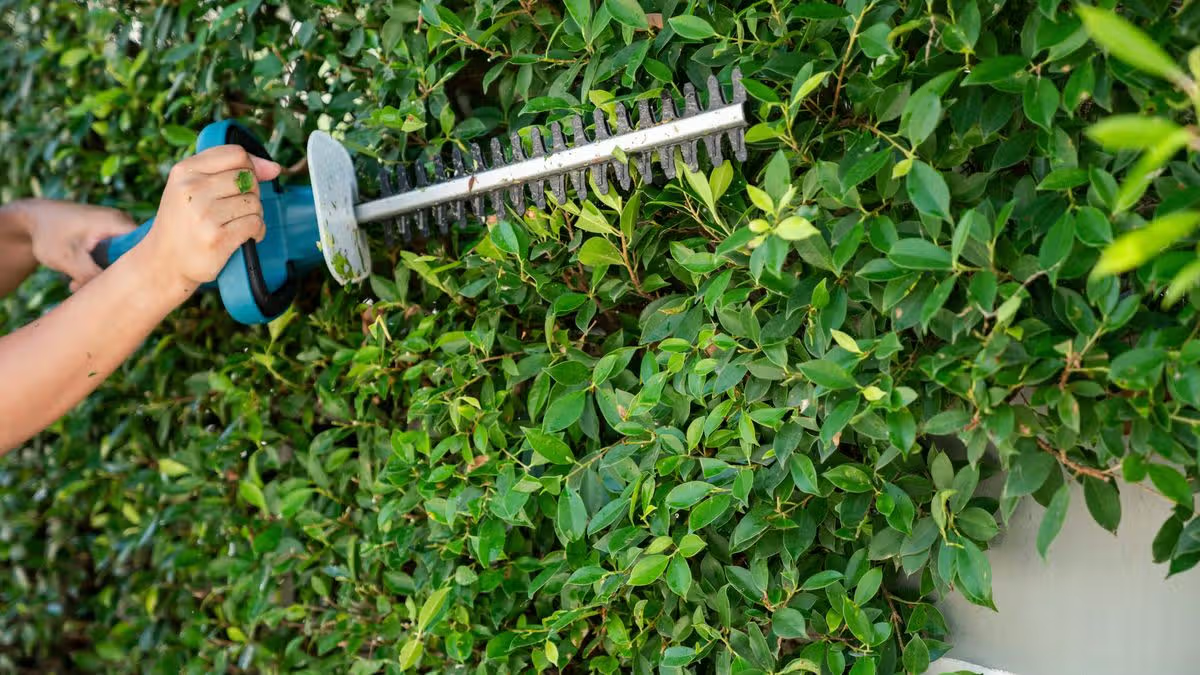
man trimming hedge (Image credit: Shutterstock)To establish whether you have any legal rights, this will depend on your local ordinances. Generally, this varies from state to state, so it’s important to check your city laws and codes.“This is always going to be different depending on where you live, and there are likely to be some ordinances on the books that discuss hedges and their interference with your property,” states Edward Susolik. CEO & President, Managing Partner of Callahan & Blaine.In California, there is a concept involving a spite fence, which means if a neighbor intentionally grows or keeps a hedge simply to annoy or hurt you, then it can be the basis for your claimEdward Susolik, CEO & President, Callahan & Blaine“What needs to be done is to show how the hedge is disrupting your life to give any merit to your complaint. Hedges are often zoned to be a maximum height, and that can also serve as the basis.”Get instant access to breaking news, the hottest reviews, great deals and helpful tips.“For instance, in California, there is a concept involving a spite fence, which means if a neighbor intentionally grows or keeps a hedge simply to annoy or hurt you, then it can be the basis for your claim. It’s that motive that matters.” So what if your neighbor’s high hedge blocks natural light? While experts agree there is no general rule that would guarantee access to sunlight for homeowners, you may have a case if the hedge poses a danger.“If the hedge creates a safety hazard, damages homeowners' property, overruns the border line between properties, or violates local code, there are more possibilities to do something about it,” explains Ashley James, Virginia Real Estate Investor and founder of TrueVision Homes.“You need to know your local codes and laws, so it's better to contact an experienced real estate lawyer in case of need.” Additionally, it’s useful to check the boundary lines, which can be done by a professional surveyor. Similar to overhanging branches, when that hedge is creeping over into your property, you are usually allowed to trim it away, but you need to stop once you reach your line.Politely speak to your neighbor