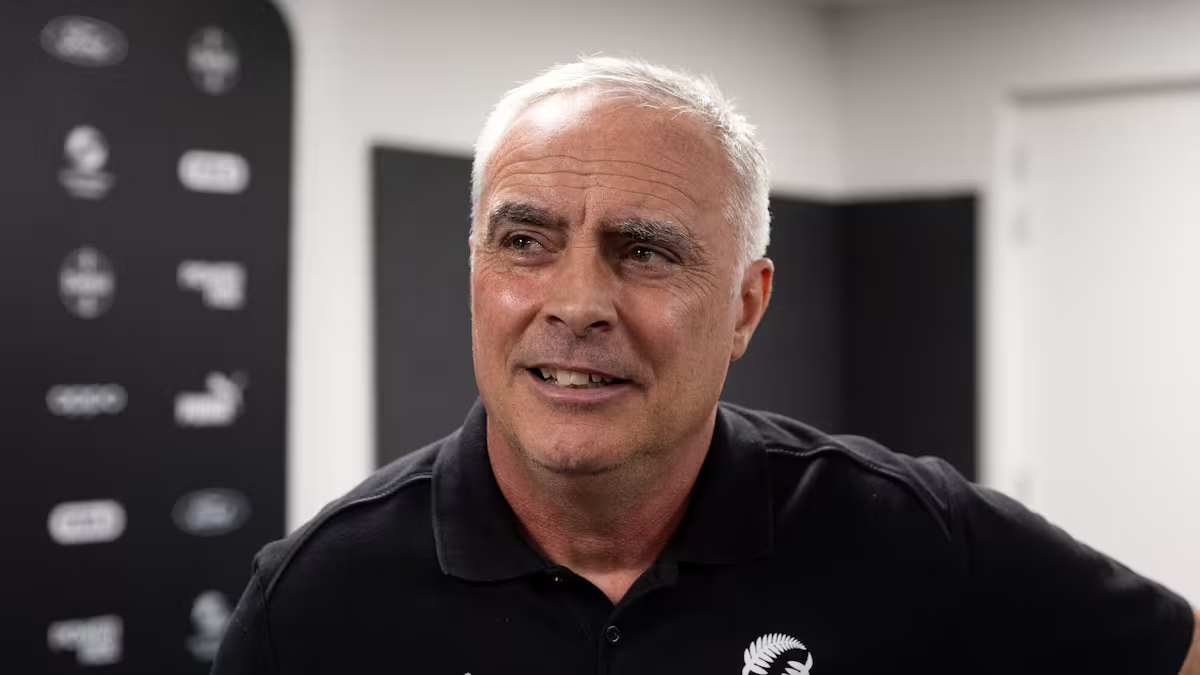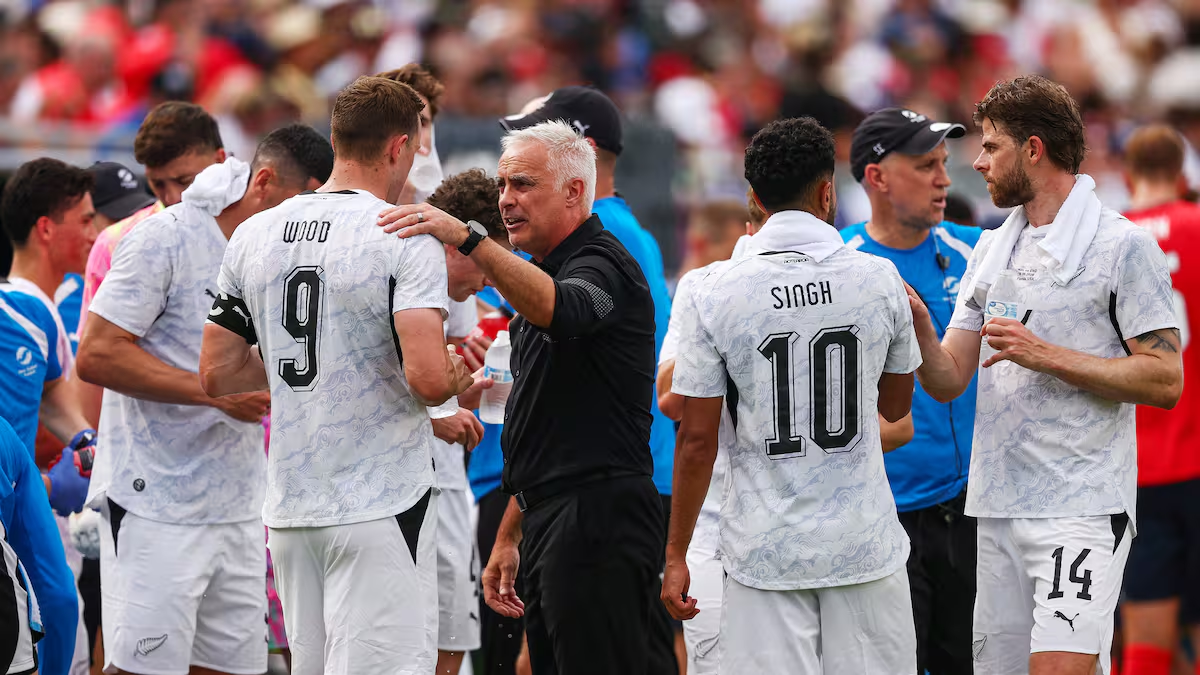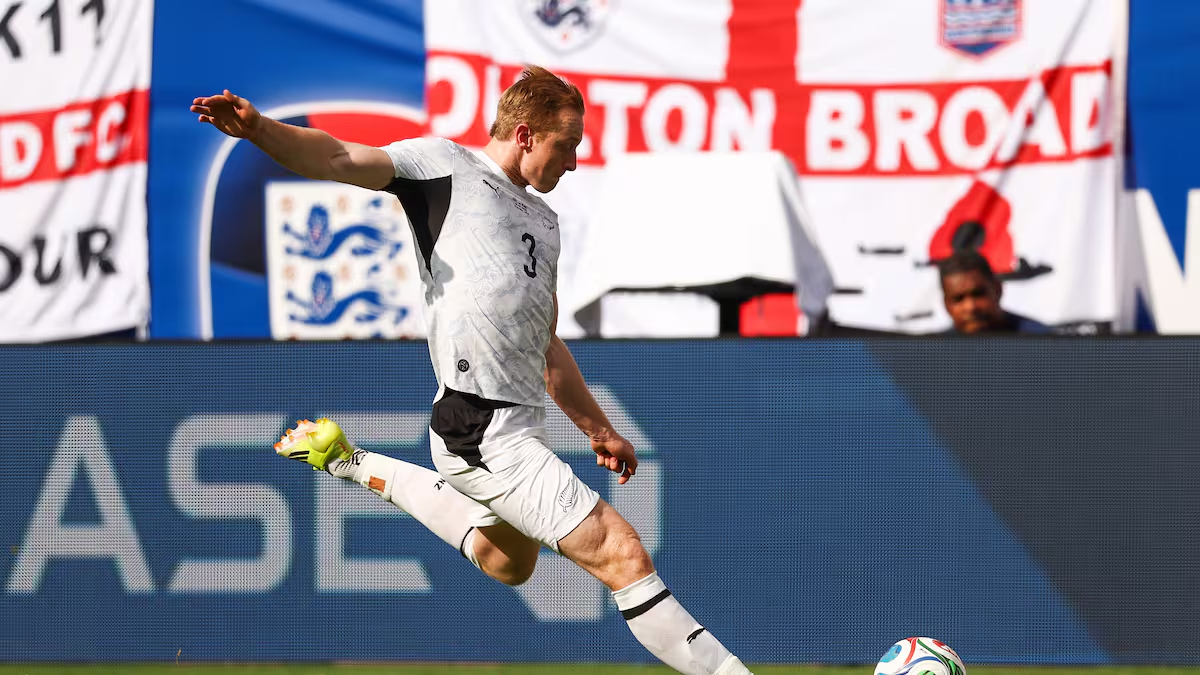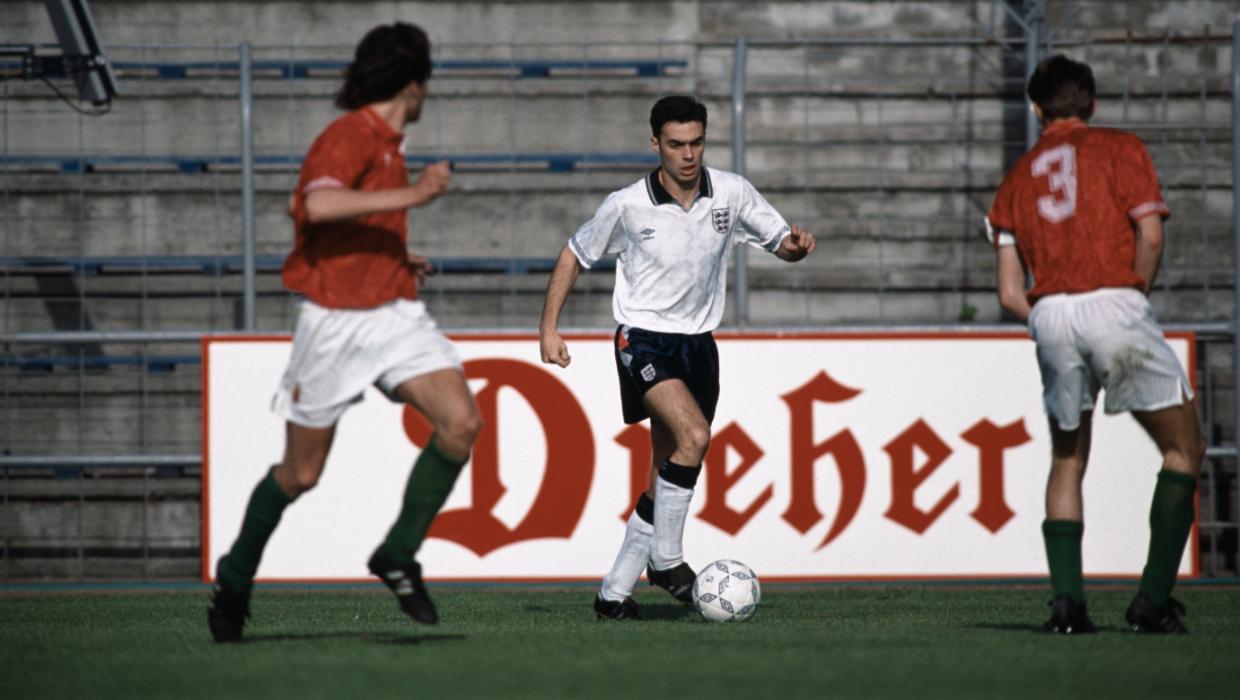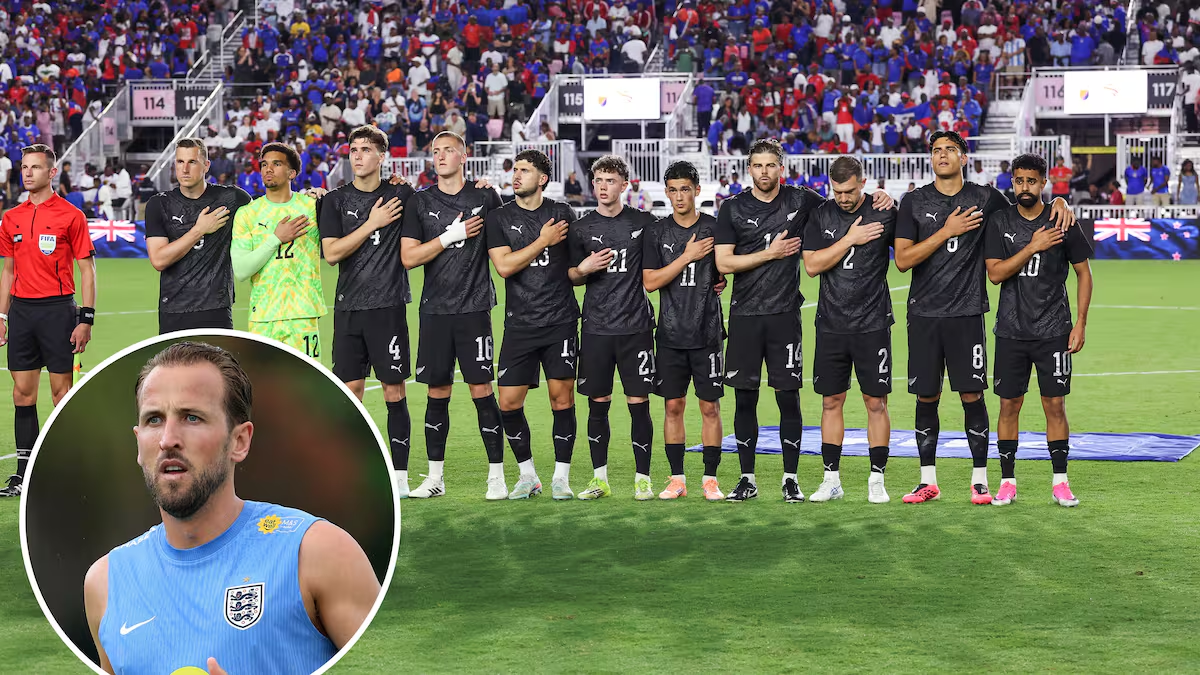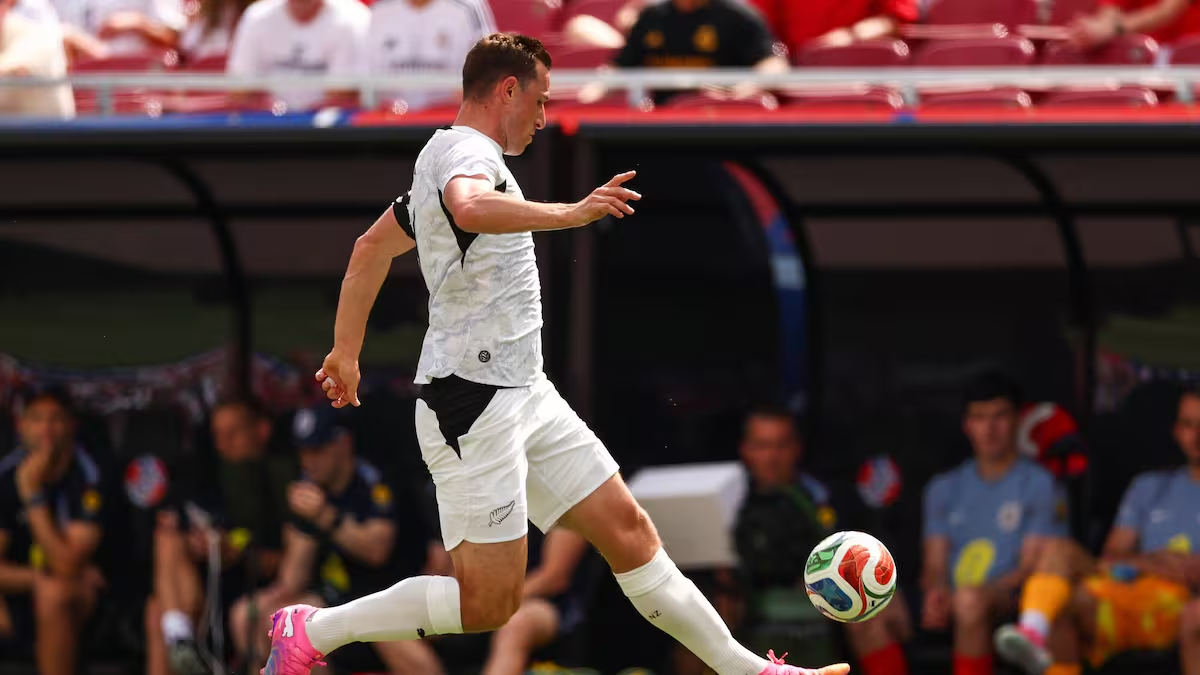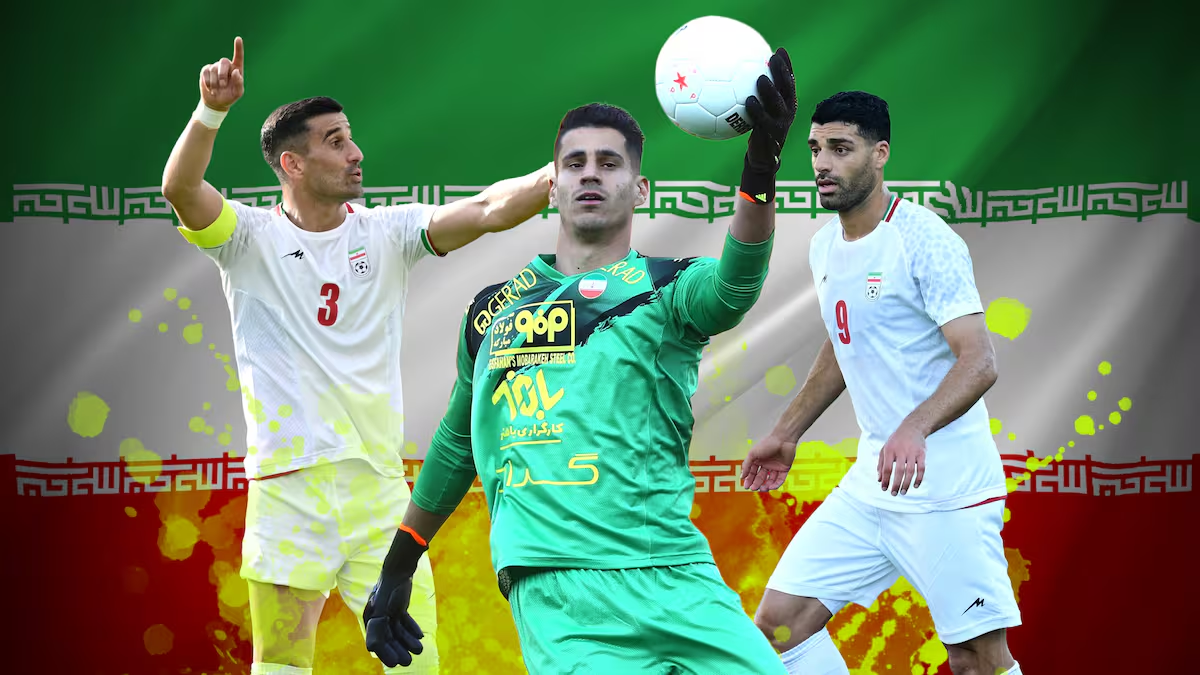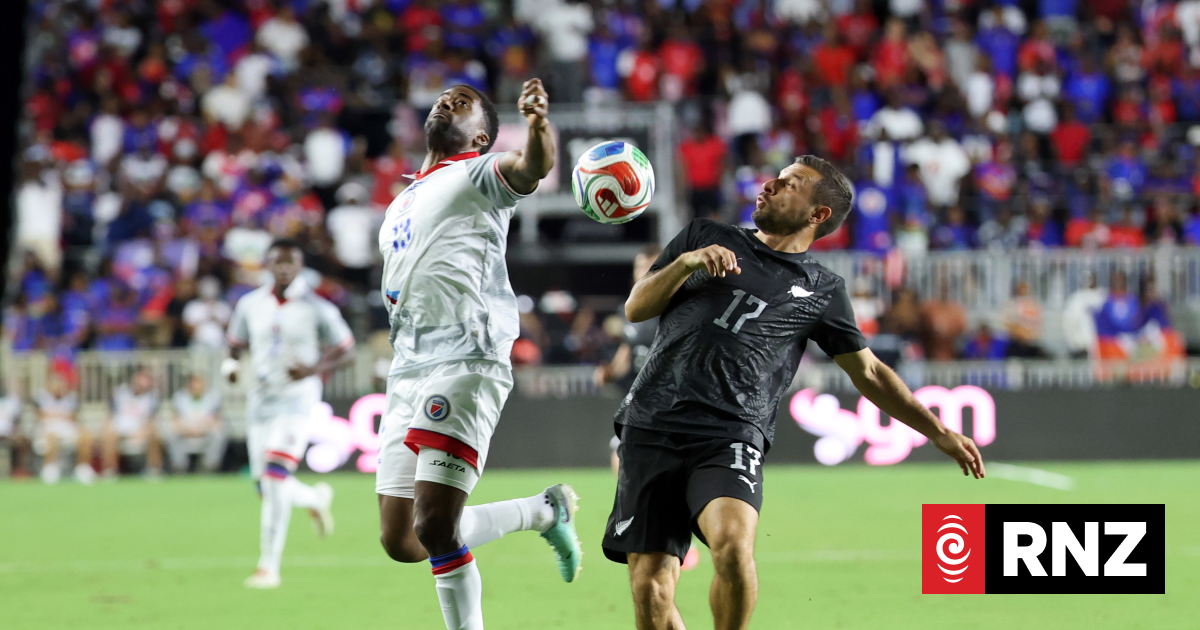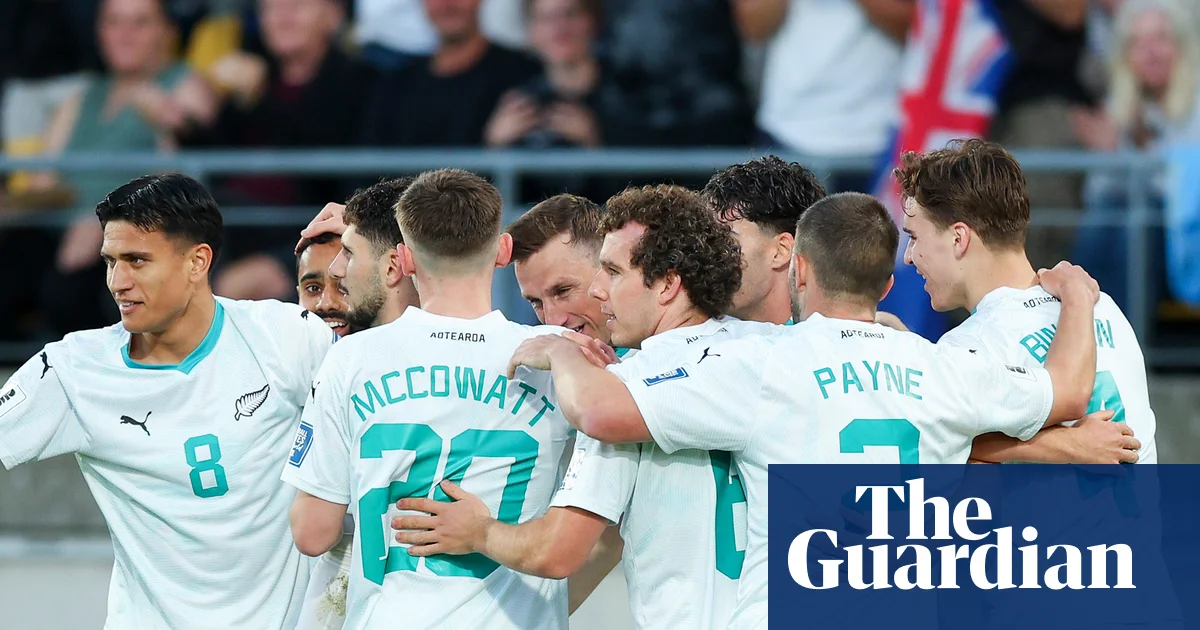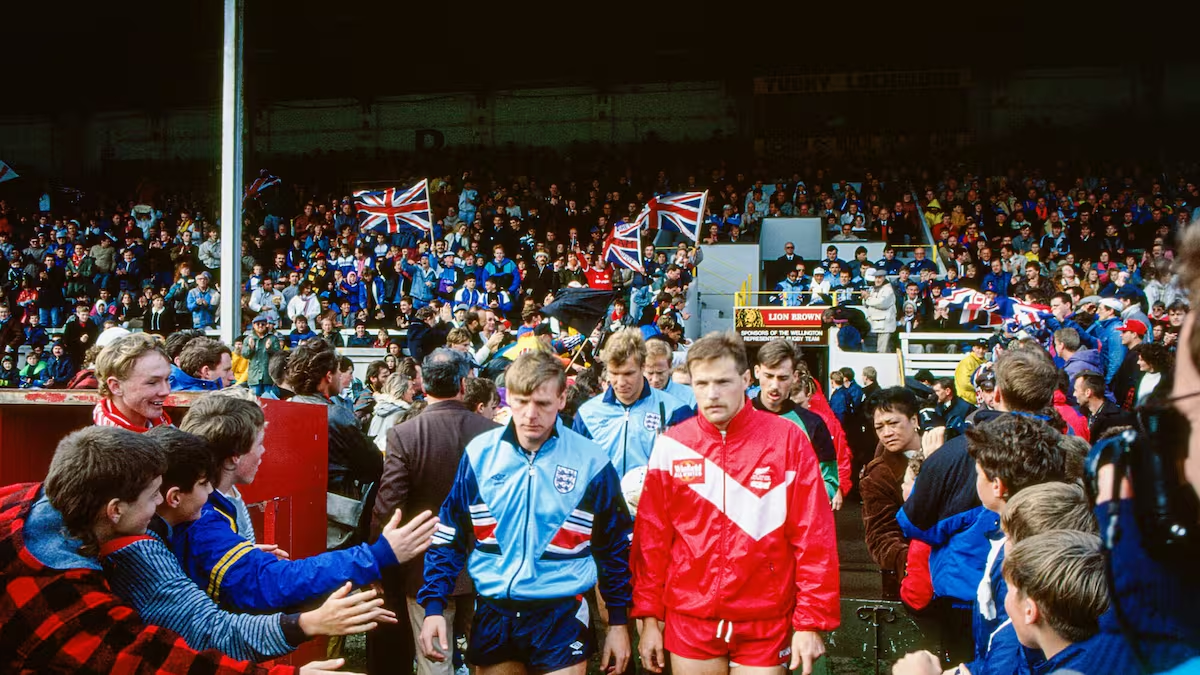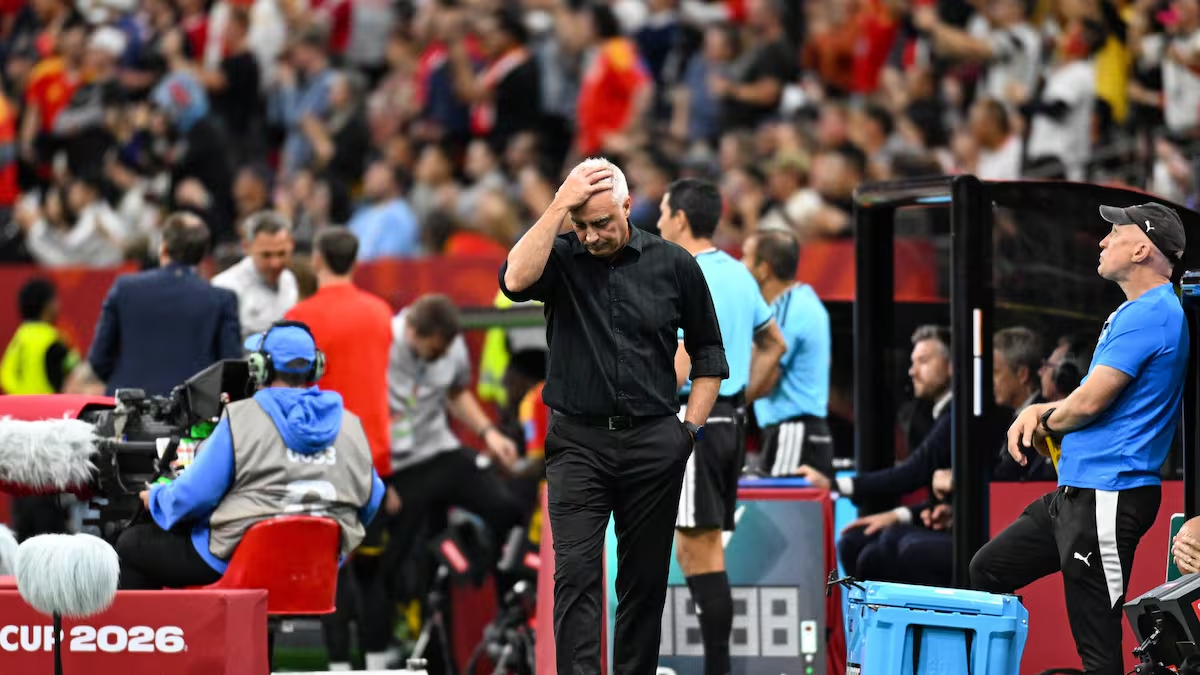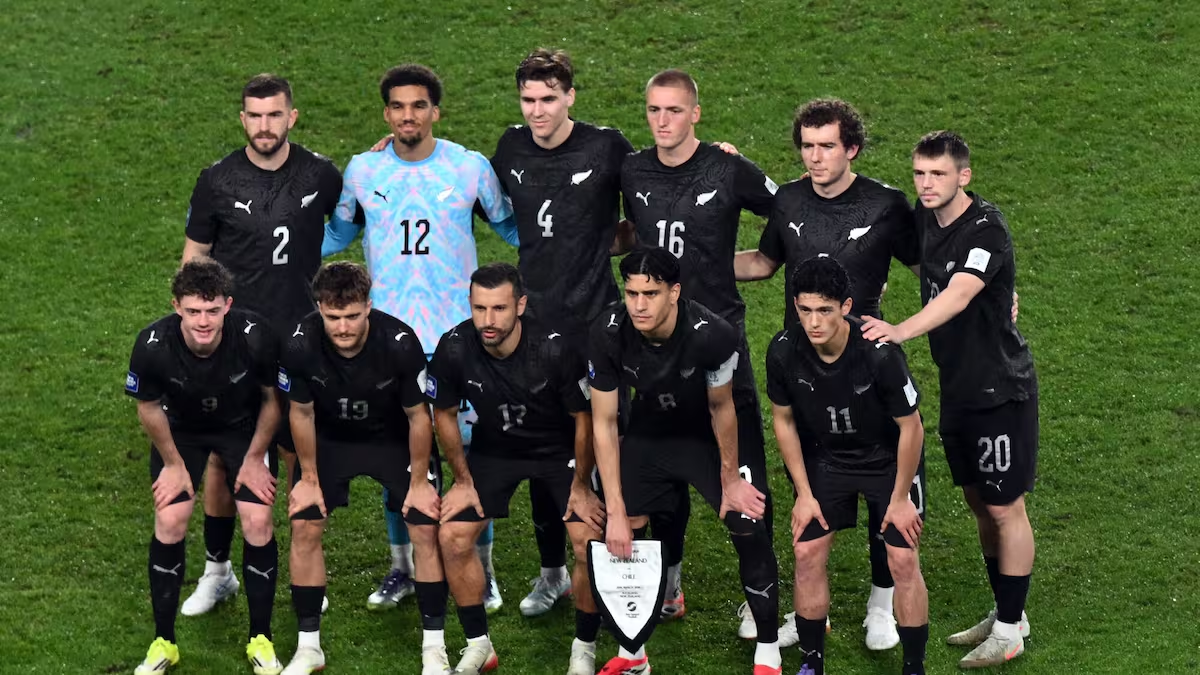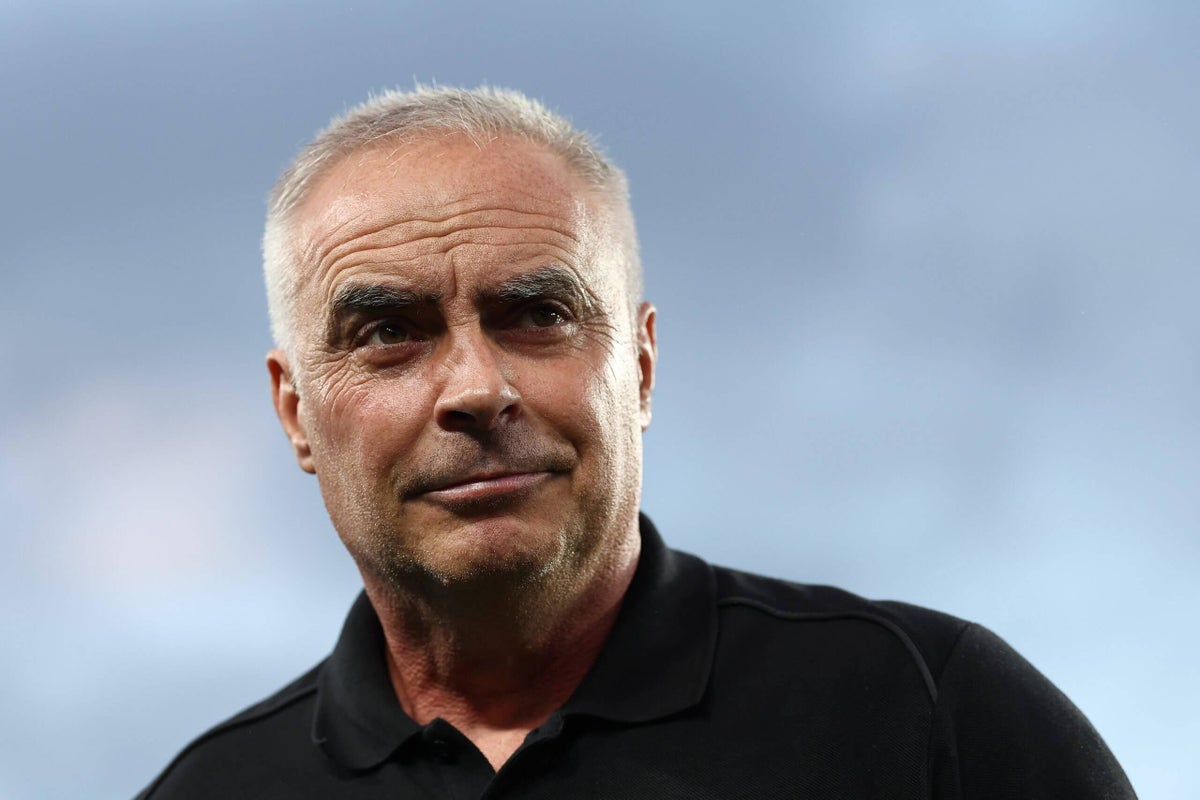
Darren Bazeley is about to do something no other men’s national team head coach has done before.And yet, sitting down with The Athletic over a coffee at Pullman Auckland Hotel ahead of New Zealand jetting to the United States, you sense caution and modesty pull him back from talking about it.When Bazeley’s team kicks off its World Cup with a Group G opener against Iran on June 15 in Los Angeles, the 53-year-old will become the only coach to have managed at the men’s Under-17 World Cup, Under-20 World Cup, an Olympics and a World Cup finals.“It’s amazing… but I haven’t got there yet,” smiles Bazeley. “It’s not about me. This is the players’ environment. Their team. We’re here to make sure they enjoy it and they’re in the best place to perform.”It feels insincere to suggest anyone could happen upon the job of head coach at a World Cup finals. Plenty of stars have aligned for Bazeley’s journey, but he has also proven adept at developing relationships and fostering trust.Darren Bazeley in his Wolves days back in 2000 (Mike Hewitt /Allsport)After a modest playing career as a full-back that peaked with consistent spells at Watford, Wolves and Walsall in English football’s second tier, Bazeley was offered a move to join New Zealand Knights in their inaugural 2005 season in the A-League — Australia and New Zealand’s elite domestic competition.The call came from his former Walsall team-mate, Danny Hay, and Bazeley relocated to New Zealand with his wife and two daughters.The Knights lasted two seasons before being dissolved and replaced by Wellington Phoenix. Bazeley finished his playing career and found a route into coaching on Aotearoa, alongside becoming a New Zealand citizen.“I mean, it’s been an amazing journey looking back,” Bazeley tells The Athletic. “I look back fondly on my playing days but I don’t really miss it. There was too much running!“I’ve only ever done football, so I needed to stay in it. I was quite lucky when I retired at 35, I got straight into coaching locally in New Zealand. Then the (New Zealand Federation) environment I got involved with early; I helped out with some under-17 teams and just stayed helping in the programmes.“I’d done some coaching when I was at Watford and there were lots of opportunities for players to coach in the academy. I used to do that once a week. But I probably didn’t really think about coaching until I’d retired, and then I was like: ‘Oh, I probably need to get a job.’“For ex-players, it is easier to stay in the game than find a different career unless you’ve got a passion for something different and done some qualifications. I had no other qualifications to do anything else. All I’ve ever known is football.”Darren Bazeley playing for the Knights in the A-League in 2006 (Paul Kane/Getty Images)Bazeley’s ascent at NZF eventually took him to the senior side, initially as Anthony Hudson’s assistant from 2015 and then assisting Hay for three years from 2019, before taking on the reins himself in 2023.The only break was to follow Hudson to MLS side Colorado Rapids at the end of 2017. It makes the World Cup something of a reunion for Bazeley with the United States.“With Colorado Rapids, it was cool, different,” he says. “It reminded me of playing professional club football. It’s a really good league. Facilities are amazing, training and stadiums. I worked with some really good people and some good players.“It was tough because my family were all here. I was in America, my youngest daughter had just started university, my oldest daughter just got her first job. My wife was going backwards and forwards, doing four weeks in New Zealand, five weeks there, three weeks, six weeks over the two years. It became quite hard to continue.“Covid changed a lot, with the way people could travel, and so I made a decision to stay with the family.”As Bazeley’s coaching path took him to the job of New Zealand’s national head coach, his current World Cup squad has been beside him most of the way.It will be a unique characteristic for the lowest-ranked team at the tournament: 85th in FIFA’s list at the time of writing.Their 26-man squad was among the first to be confirmed, almost three weeks ahead of the June 1 deadline, and it is a tight-knit group. Eight players are at either Wellington or Auckland FC, with a ninth in Australia with Newcastle Jets.“Our connection is super important to us,” said Bazeley. “I was lucky and worked with some really good managers, like Graham Taylor (at Watford). You always take a lot from those people and then make it your own. Copy, edit and paste, we call it.“Being a father helps when you’re managing people, too, especially when I was starting with the under-17s, under-20s and you’re managing young adults.“The beauty I have is pretty much everybody in our squad, I’ve coached over the last 12, 15 years. Most I can remember when they were 12, 13, 16 years old. I’ve been to World Cups with them at other levels. They know me, I know them, and that really helps now.“Yes, we’re very small and we only have a certain number of professional players eligible to play for the All Whites. That’s sometimes not a good thing because we don’t have a lot of depth.“But some of our players went to school together, grew up together, played club football and international age-group football together. We have been pretty consistent with our squad selections so they do form this culture and these relationships quicker than maybe other teams can. It’s something that could be a really big advantage for us.”That would be an advantage among many disadvantages.A small full-time staff is supplemented by essential contractors who join for international windows and tournaments including physios, a doctor, sports scientists, a psychologist and leadership coach.The list of contractors includes one of Bazeley’s assistant coaches, Simon Elliott — a former New Zealand international with 69 caps who has been living in Sacramento since managing the city’s Republic USL Championship team. He now leads the boys’ youth coaching at Davis Legacy Soccer Club.New Zealand’s Chris Wood finds himself surrounded by Australia’s players (Michael Bradley/AFP via Getty Images)Travelling to see his players in person, especially those based in Europe and the Americas, does happen for Bazeley but is infrequent. Scouting how his players perform each week is usually delivered by a video package put together by NZF performance analyst, Logan Hughes.You can throw in the usual obstacles for international managers, too. The two-week international window in March saw New Zealand play two friendly matches in the FIFA Series, against Finland and Chile in Auckland, but only enjoy three training sessions. Blazeley acknowledges sometimes they can find room for a fourth.“It’s really hard — that’s why we have to be so consistent with our style of play, our culture and our selections, because you can’t keep learning new styles of play,” says Bazeley. “Simon played in the 2010 World Cup. I’ve known him a few years. He’s a bit of an All Whites legend so it’s great for me because I’ve been coaching a while, I’ve got relationships with all these players, but I never played for the All Whites.“Having somebody like Simon brings a different angle. He’s been there, done it for New Zealand. He’s captained the All Whites and holds a lot of mana in the group.”Mana is a Maori word for respect and influence. If the definition came with an illustrative picture for the All Whites’ World Cup squad, then Chris Wood would be the subject.The Nottingham Forest striker is New Zealand’s captain and highest-profile player. At 33, Wood is already the country’s all-time leading scorer with 45 goals and the joint highest appearance-maker with 88 caps.In a perfect world, one record will be broken and another extended over the coming weeks.Nottingham Forest’s Chris Wood will lead New Zealand’s line (Darren Staples / AFP via Getty Images)“He’s pretty ruthless — he wants to break records that will never be broken again,” Bazeley tells The Athletic. “He’s the most passionate Kiwi. When we play in New Zealand, you’ll see him after a game or an open training session sign every autograph, have a photo with every person that wants a photo. He’s a man of the people and so respected outside and inside our camp because of the way he is.“He got over 20 Premier League goals (in 2024-25) and he’s so humble. He doesn’t like all that attention and wants to be treated as one of the players. He has a lot of mana within the group, but has no ego and works so hard.”That hard work will come in handy. New Zealand’s 4-0 friendly defeat on Tuesday in Fort Lauderdale to fellow World Cup minnows Haiti — ranked 81st by FIFA, four places above the All Whites — was an ugly watch that Bazeley hopes will serve as a “harsh lesson” rather than anything more destabilising.Their final warm-up is against England tonight in Tampa, nine days ahead of facing Iran.New Zealand’s World Cup debut at Spain 1982 brought their first finals goal. Their second appearance, at South Africa 2010, then brought their first points: The All Whites drew all three group games, finishing the tournament as the only unbeaten side after eventual winners Spain lost their opening match. However, New Zealand still exited at the group stage.With that unbeaten finals run still intact, at least theoretically, New Zealand and Bazeley will now bid for their first win and to break through the barrier of reaching the knockout phase — something Bazeley has achieved while coaching New Zealand’s Under-17 and Under-20 teams.“The challenge for us is to go on, to keep progressing. It’s not going to be easy but we want to get into those exciting knockout games and see where that leads us,” adds Bazeley. “I’ve been really lucky. I’ve been to six World Cups already, two Olympics and a Confederations Cup, and football’s been very generous to me after my playing career. I’m super grateful for that.“Now all of our players are determined to go to the World Cup, create history and do something really special.”
Darren Bazeley on New Zealand, the World Cup and managing the minnows: ‘We want to create history’
The All Whites head coach has taken a team to an Olympics, the Under-17 and Under-20 World Cups, and now the senior men's tournament
1,703 words~8 min read