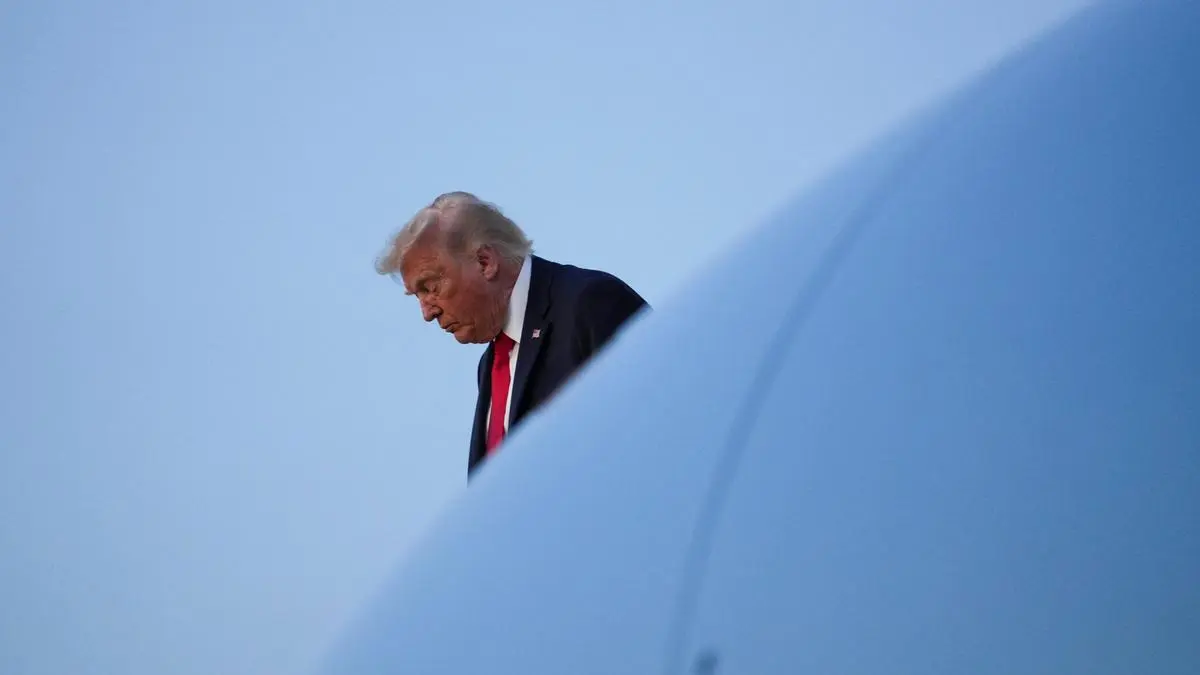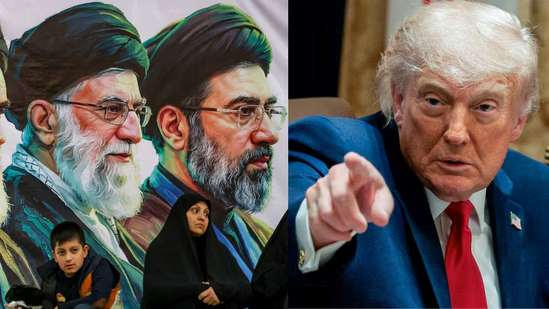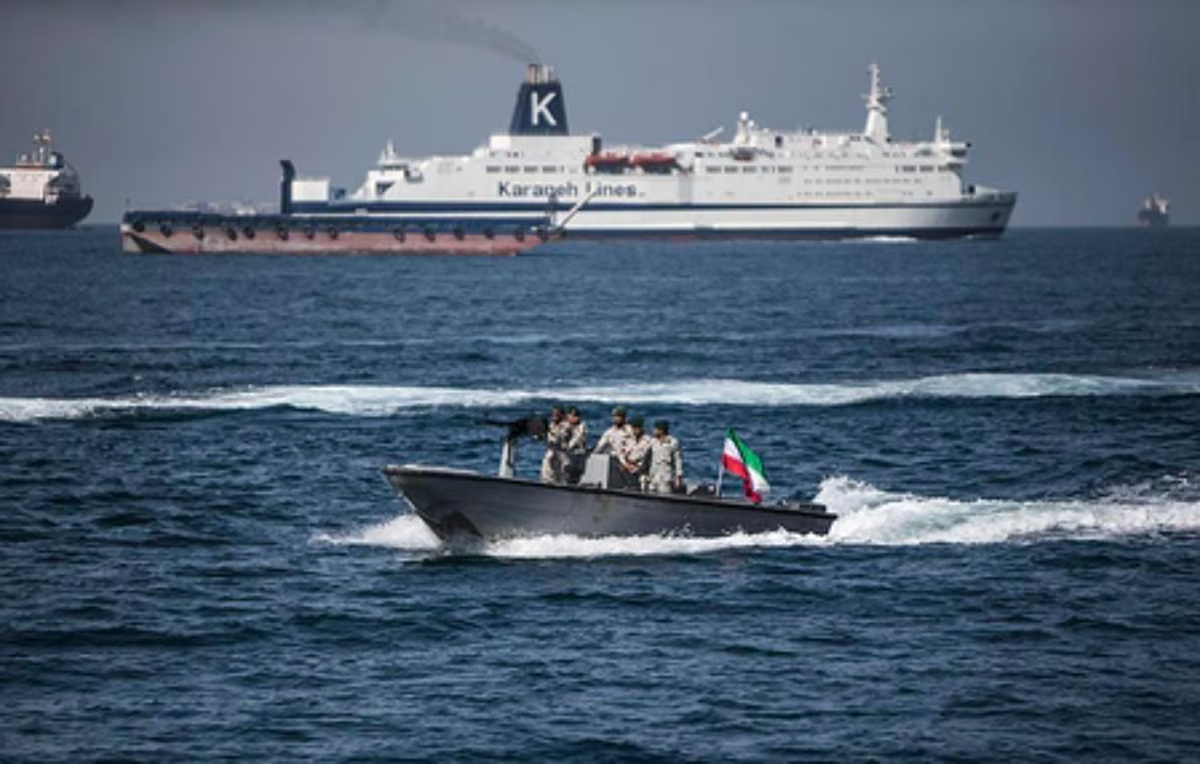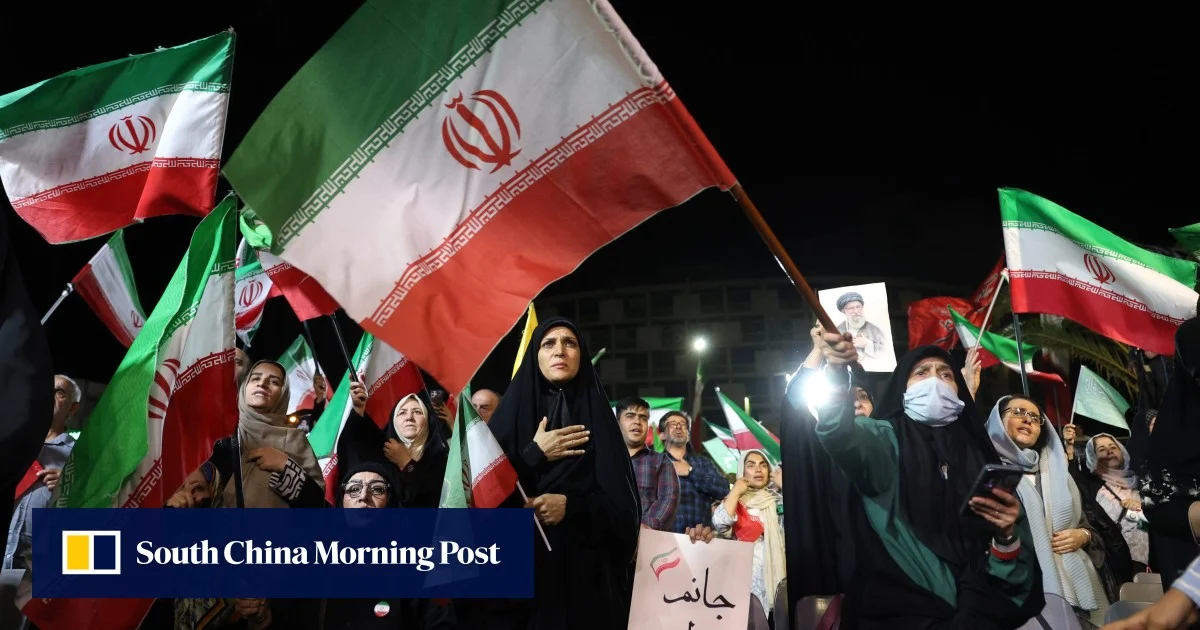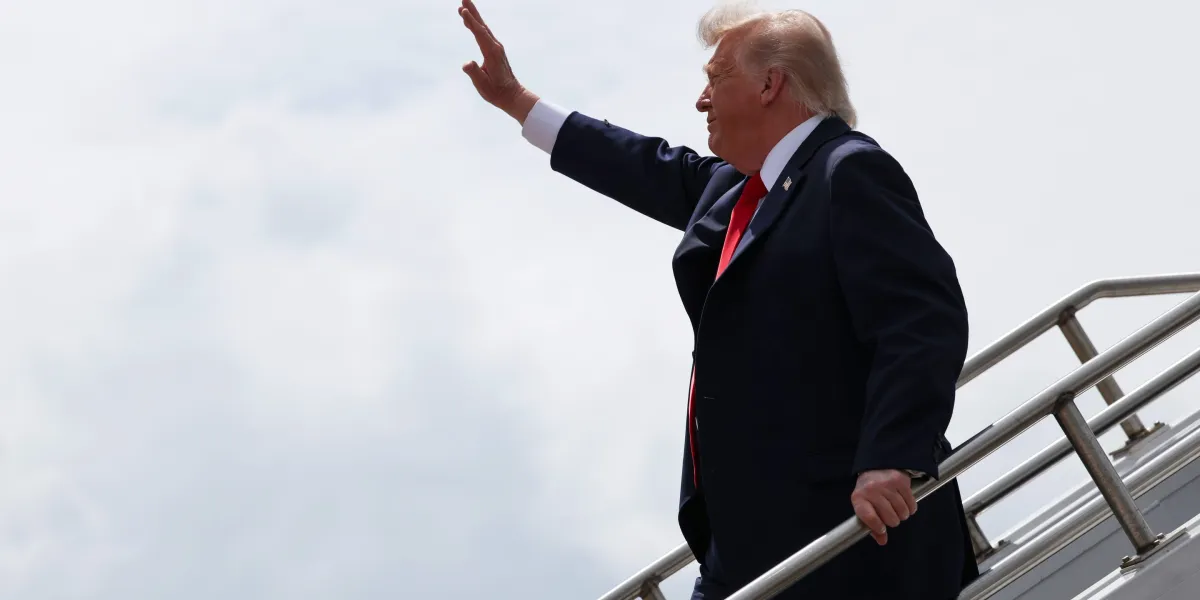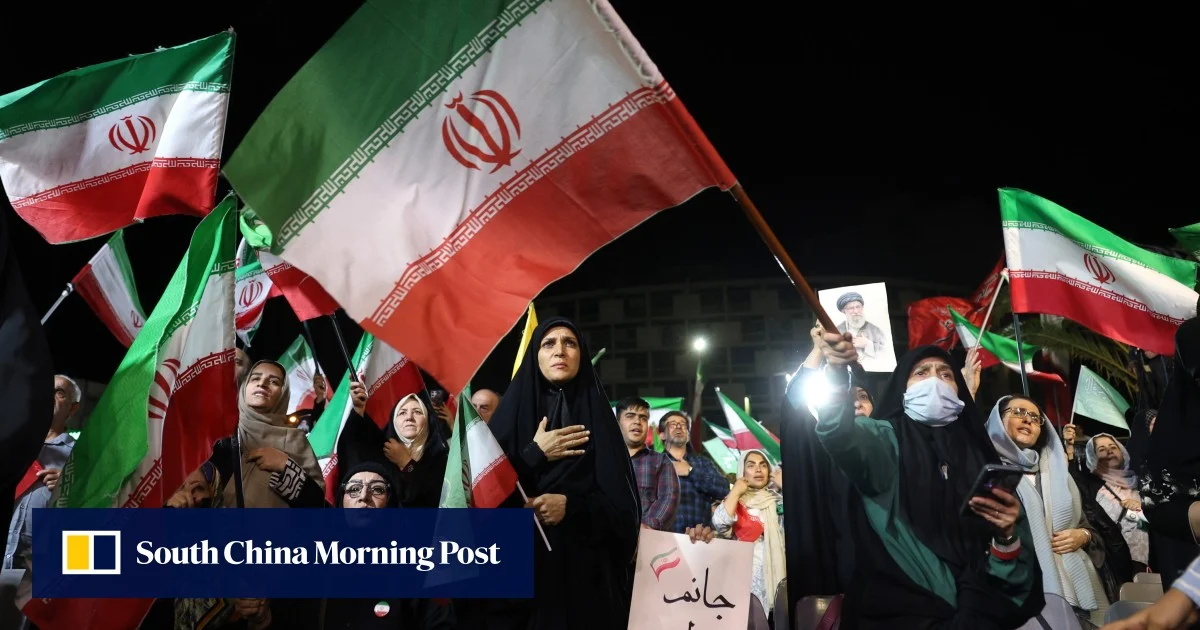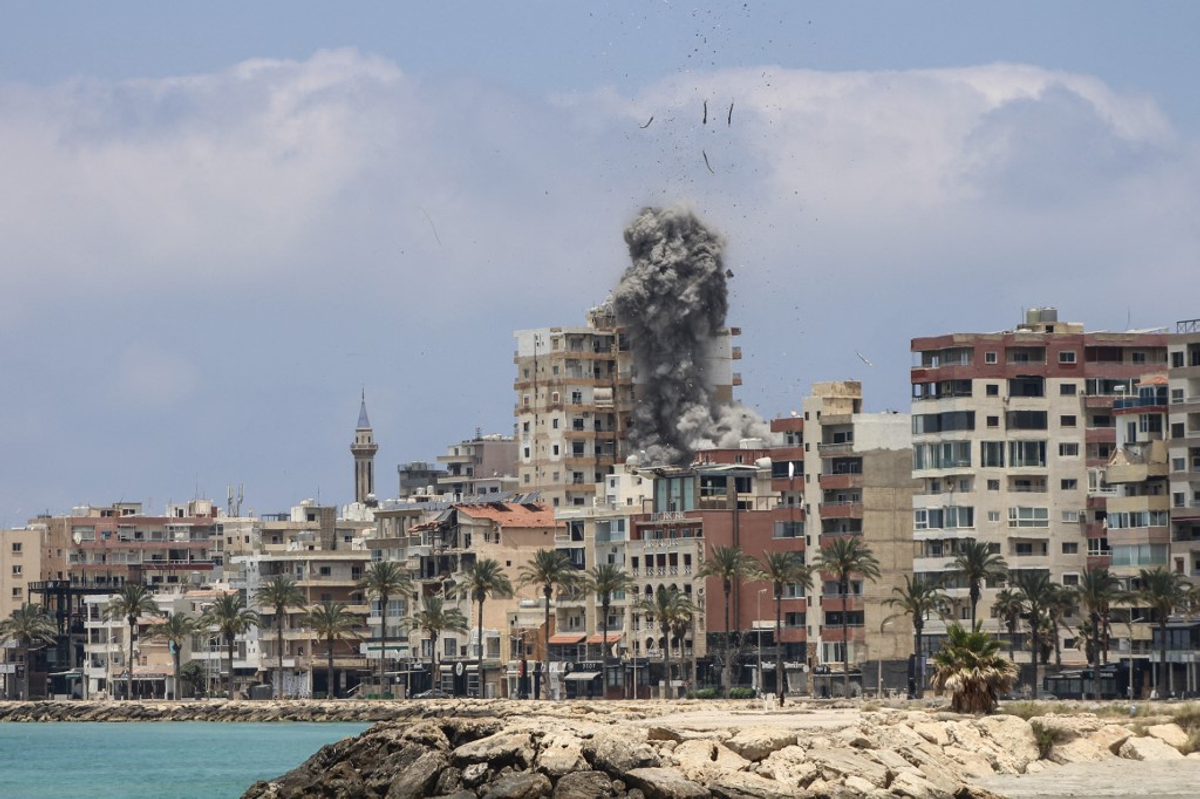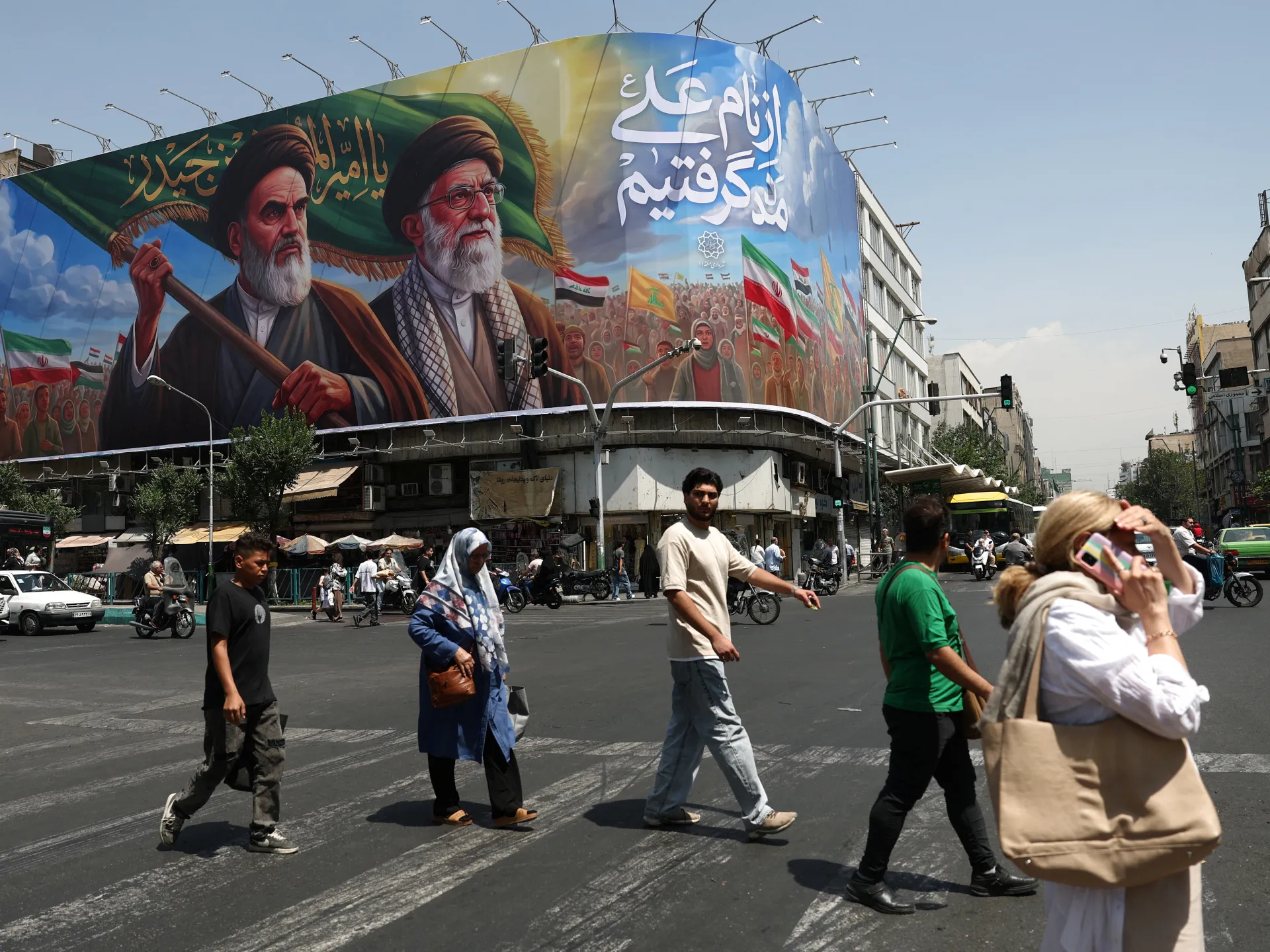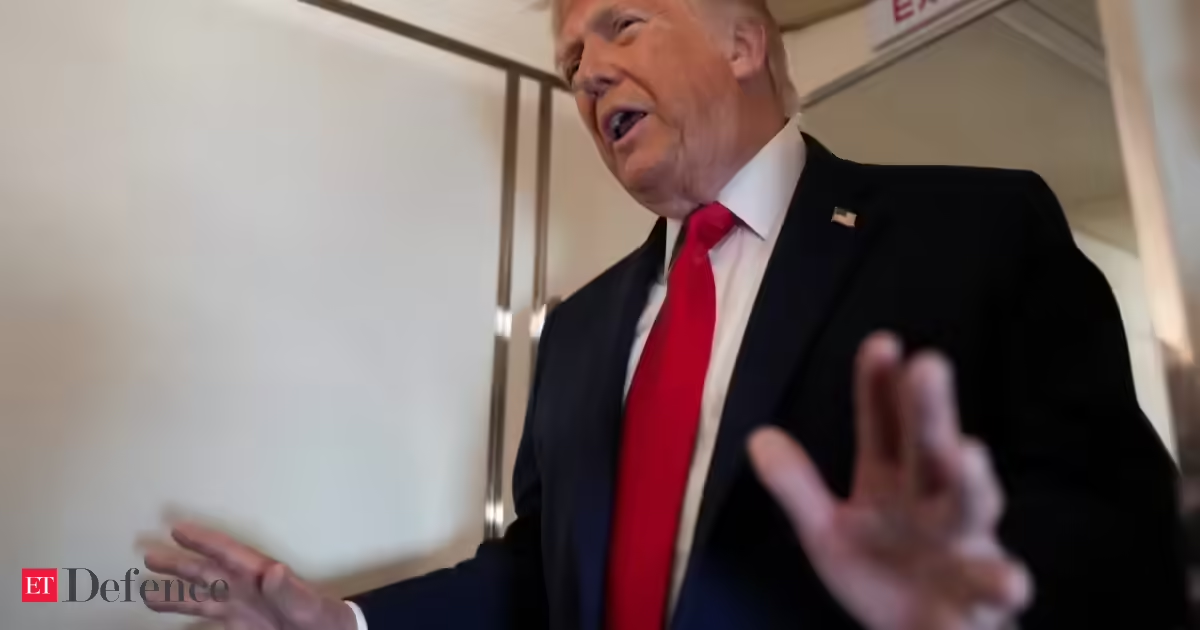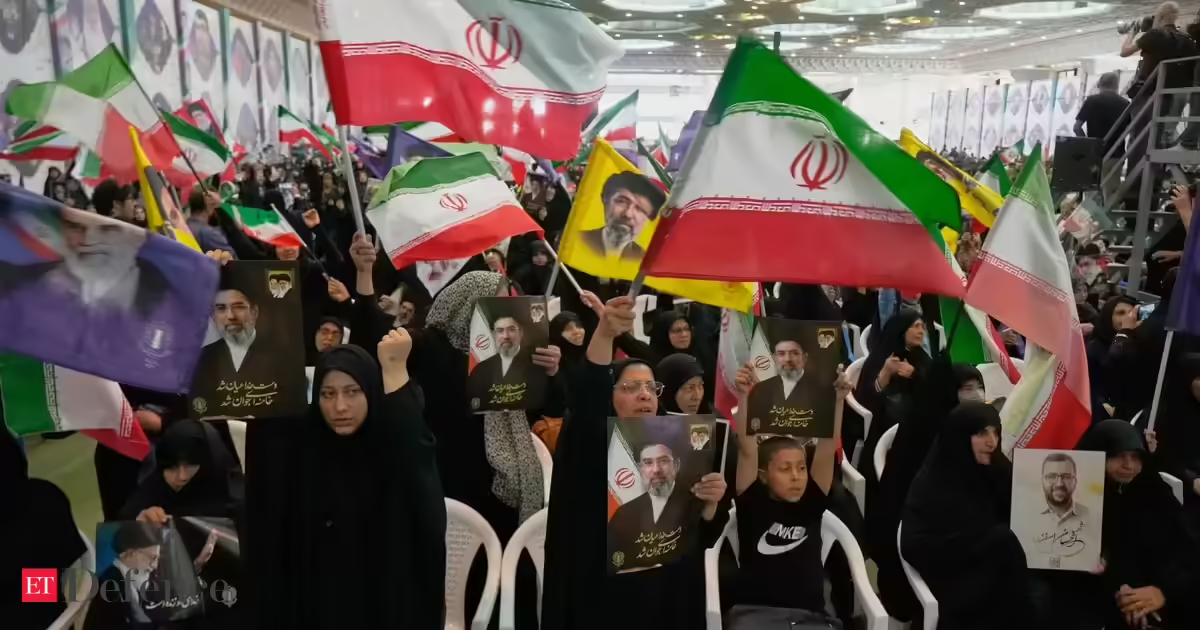
SynopsisTensions between the US and Iran remain high as the conflict approaches 100 days. Both nations are engaged in military actions and diplomatic exchanges. Iran insists on a ceasefire in Lebanon before any deal with the US. The US has intercepted Iranian drones and seized an oil tanker. Oil prices have seen fluctuations.APGovernment supporters hold Iranian flags and pictures of Iran's Supreme Leader, Ayatollah Mojtaba Khamenei, during a ceremony honoring the armed forces and those killed in the war with Israel and the U.S. at the Imam Khomeini Grand Mosque in Tehran, Iran, Sunday, May 24, 2026.The US and Iran remained at loggerheads over any potential truce heading into the weekend, with the conflict nearing the 100-day mark and Tehran saying that it and Oman have sovereignty over the Strait of Hormuz. Following skirmishes overnight between Hezbollah and Israel in southern Lebanon, Iran continued to insist on a ceasefire there before reaching a deal with the US. A military adviser to Iran Supreme Leader Ayatollah Mojtaba Khamenei told CNN that “the ball is in Trump’s court” when it comes to a deal, insisting on the unfreezing of $24 billion in assets.Also read: US military says it shot down Iranian drones launched toward Strait of Hormuz President Donald Trump has insisted for months that Iran is near its breaking point. On Friday he told reporters that “We’re having great success with Iran,” adding that “they’re in no position to have a nuclear weapon.” But the president, in an interview with NBC News during a trip to Wisconsin, conceded that Iran had some missile and drone capacity, despite moments earlier saying that the US had “totally destroyed” the country’s military capabilities and that it was “virtually decapitated.” He said Iran still has about 21-22% of their missiles remaining.“It’s a lot of missiles, but it’s not what it was when we first attacked,” he told the television network.American forces shot down four more Iranian one-way attack drones headed toward the Strait of Hormuz, US Central Command said Friday evening, adding that the military “subsequently struck Iranian coastal surveillance radar sites in Goruk and on Qeshm Island to defend against further attacks.” The US earlier Friday announced that American forces had seized a sanctioned oil supertanker it said was part of Iran’s ghost fleet. BloombergTrump earlier in the day downplayed the higher cost of oil, an increase that has helped push up gasoline prices: “People thought it was going to be a lot worse. Today I looked at $96 a barrel, people thought that was going to be $300 a barrel.” Oil prices fell nearly 3% on Friday, with US crude trading above $90 a barrel on signs that China had curbed consumption and as American crude exports helped to plug some of the lost supplies.Without a breakthrough, the continuing standoff suggests that Tehran believes it can bear the current level of pressure longer while betting that the political pain in the US may get the American president to concede on some of his objectives. Iran’s Foreign Minister Abbas Araghchi earlier said there had been “no tangible progress” in talks even though the two sides continued to exchange messages via mediators. No commercial transits through the Strait of Hormuz were observed on Friday morning, with three passages in each direction seen Thursday, according to ship-tracking data compiled by Bloomberg.Also read: Trump, campaigning for Republicans in Wisconsin, vows quick end to Iran warUS forces have counted nearly 1,000 commercial vessel transits in and out of the strait in the last two months, according to an official familiar with Central Command. The figure is still far below the more than 100 ships passing daily through the vital waterway for oil and gas from the Persian Gulf before the conflict. As the conflict that began Feb. 28 nears the 100-day mark, Trump’s trip to Wisconsin for a domestic political event unfolded after a pair of rebukes by the Republican-led Congress over his foreign policy. The first was when the House voted to halt the war, a largely symbolic move that perhaps underscores the president’s loosening grip on Capitol Hill. Four GOP members joined Democrats in passing the measure. Congress then passed legislation to provide additional aid to Ukraine and impose more sanctions on Russia. The moves come after a surge in inflation since the war started has eaten away at Americans’ paychecks, straining consumers who were already frustrated by the high cost of living. Sixty-four percent of Americans say going to war with Iran was the wrong decision, according to a New York Times/Siena poll taken in May. Earlier this week, Iran fired missiles and drones at Kuwait and Bahrain, killing one person and injuring dozens at Kuwait’s main airport. That was the worst of several flareups since a fragile ceasefire between the US and Iran took hold on April 8.Read More News on
West Asia war: 100 days on, Trump and Iran remain locked in high-stakes showdown
Tensions between the US and Iran remain high as the conflict approaches 100 days. Both nations are engaged in military actions and diplomatic exchanges. Iran insists on a ceasefire in Lebanon before any deal with the US. The US has intercepted Iranian drones and seized an oil tanker. Oil prices have seen fluctuations.
807 words~4 min read