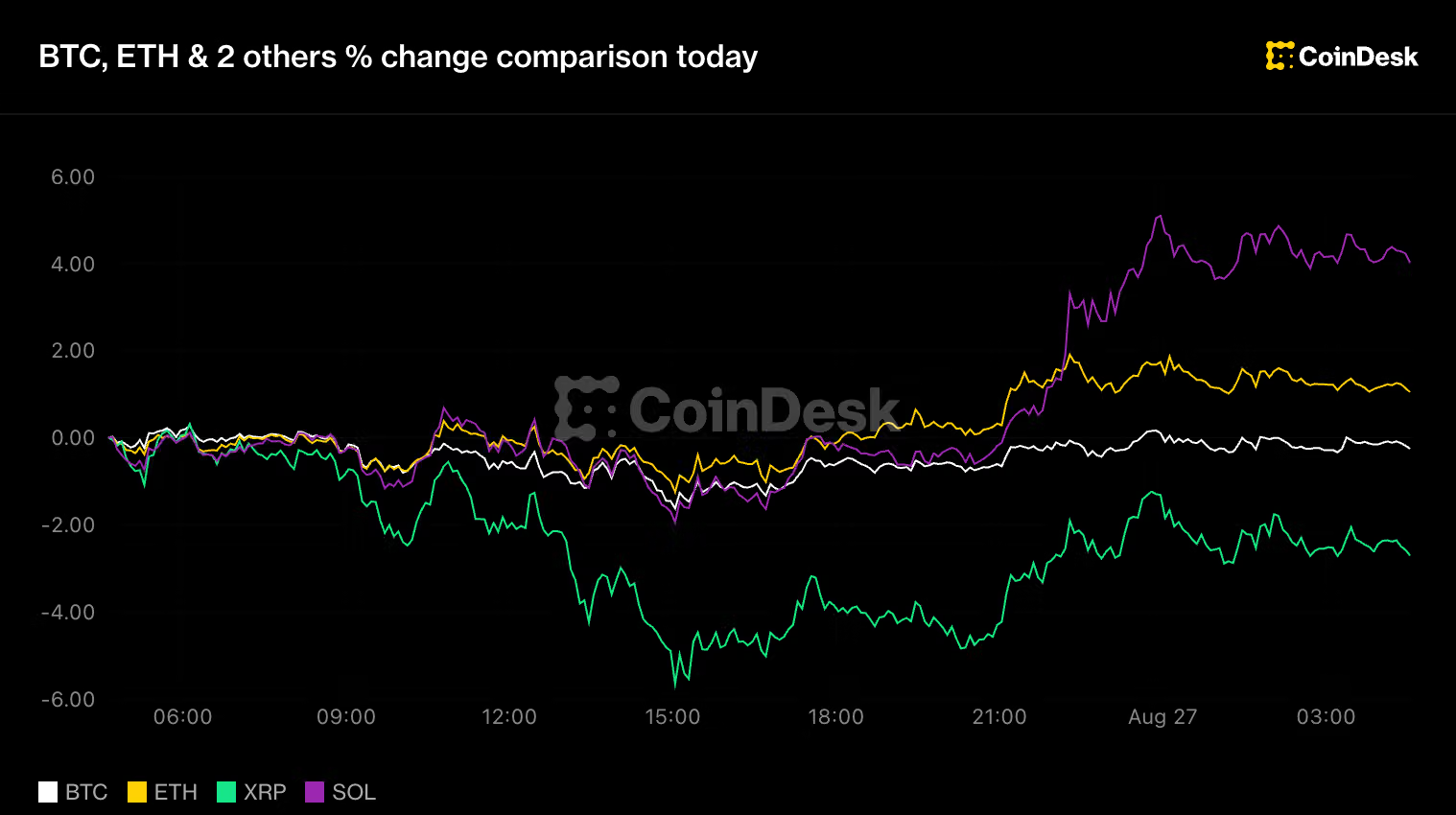
Bitcoin Drops Below $60K as the $2 Trillion Crypto Crash Batters Ethereum, Solana, and XRP: Something broke in crypto this week — and not in the gradual, quietly-worrying way markets usually unravel. Bitcoin fell below $60,000 for the first time since October 2024, Ethereum hemorrhaged nearly eleven percent in a single session, and the total crypto market saw roughly two trillion dollars in value evaporate since its peak. The Fear & Greed Index sits at 16 — deep in "extreme fear" territory. This is not a dip. By the numbers, this is Bitcoin's worst weekly performance since the collapse of FTX in November 2022, when the entire industry looked like it might not survive. The question every investor is asking right now is simple and urgent: why, and what comes next?Bitcoin has shed 25 percent over the past month alone, falling from a high of around $126,000 in October 2025 to roughly $60,785 today — a drop of more than 50 percent from its all-time peak. Ethereum briefly touched its lowest level since April 2025. Crypto-linked equities like Strategy Inc. (MSTR), Coinbase (COIN), MARA Holdings, and Robinhood (HOOD) all fell between 7 and 12 percent in Friday's session. The contagion is wide. The damage is real. And the causes, when you look past the noise, are more structural than most headlines are letting on.Why Is Crypto Crashing? Bitcoin Falls Below $60,000 as $2 Trillion Vanishes From the Crypto MarketFor years, crypto bulls built their case on a simple premise: when trust in traditional finance erodes, money flows to alternative assets. Bitcoin was the hedge, the escape valve, the uncorrelated store of value. That thesis is facing its hardest test yet — not because of a scandal or a hack, but because traditional markets are doing exceptionally well. The Nasdaq has risen roughly 12 percent in 2026. The S&P 500 is up around nine percent. The Dow Jones, another six. These are record highs, driven largely by an AI-fuelled surge in technology stocks that is pulling institutional capital with magnetic force.As Bitunix analyst Dean Chen put it Friday, digital assets are now competing directly with AI and large-cap technology stocks for investor allocation — and they are losing that competition. When Nvidia and Microsoft are printing fresh all-time highs, the risk-reward argument for holding a volatile, non-yielding asset like Bitcoin becomes much harder to make. Capital does not sit idle. It rotates. And right now, it is rotating into equities at pace."If investors begin to question the sustainability of U.S. equity valuations, the pace of capital rotation could unfold far more rapidly than markets currently anticipate." — Dean Chen, BitunixThe danger in this moment, as Chen notes, is that the same rotation could violently reverse. If confidence in tech valuations cracks — and at current multiples, some analysts argue that crack is overdue — money could flood back into alternative assets with the same urgency it left. For now, though, crypto is on the wrong side of that trade.Key data behind the crypto market crashBitcoin (BTC) briefly fell below $60,000 for the first time since October 2024. BTC traded near $60,785, down about 4.5%. Bitcoin has lost roughly 17% this week. It is Bitcoin's worst week since the FTX crash in 2022. BTC is down more than 50% from its $126,000 peak. Bitcoin's market value has fallen from $2.5 trillion to about $1.2 trillion. The total crypto market has dropped from $4.2 trillion to $2.1 trillion. Nearly $2 trillion has been wiped out. Ethereum (ETH) crashed nearly 10%. ETH fell to around $1,595, its lowest level since April 2025. Solana (SOL) dropped about 8.1%. XRP fell around 7%. Litecoin (LTC) lost nearly 4%. The Crypto Fear & Greed Index plunged to 16. A reading of 16 signals extreme fear. Strategy (MSTR) disclosed a $2.5 million Bitcoin sale. The move shocked investors because of its long-term Bitcoin stance. Strategy stock fell more than 10%. Coinbase, Robinhood, and MARA also dropped between 7% and 12%. Bitcoin treasury stocks have erased roughly $62 billion in value. Their combined valuation fell from $134 billion to $72 billion. Spot Bitcoin ETFs have seen billions in outflows. Could Bitcoin treasury companies become the next major crypto risk? Nothing unsettled the crypto market this week quite like a single filing from Strategy Inc. — the company built almost entirely on the conviction of one man, Michael Saylor, that Bitcoin is the ultimate store of value. Strategy revealed it had sold $2.5 million worth of Bitcoin, the firm's first such sale since 2022. The amount is modest relative to its total holdings. The symbolism is not.Saylor has been among the loudest and most uncompromising advocates for Bitcoin accumulation. His company's entire model was built on issuing equity at a premium, using the proceeds to buy more Bitcoin, and riding the cycle upward. When even that firm begins liquidating, retail investors — who often follow institutional signals more than they follow balance sheets — read it as a warning sign. Charles-Henry Monchau, chief investment officer at Swiss firm Syz Group, told CNBC that the Strategy sale hastened what was already a steep selloff as retail attention shifted toward equities.The broader universe of Bitcoin treasury companies has taken an even sharper blow. According to Artemis data, the combined market value of fully diluted Bitcoin treasury company stocks has dropped from nearly $134 billion at its early October peak to around $72 billion — a wipeout of $62 billion. Nakamoto announced a 1-for-40 reverse stock split after its shares fell nearly 100 percent over the past year. Metaplanet is down more than 80 percent. Twenty One Capital has dropped 84 percent over the same period, with SoftBank exiting its 26 percent stake by selling to Tether.There is a darker structural question underneath all of this. The Bitcoin treasury trade — where companies hold BTC on their balance sheets as the core of their business model — functioned beautifully in a rising market. Issue shares at a premium to net asset value, buy more Bitcoin, watch both the stock and the asset appreciate. For a time, it looked like a perpetual motion machine. That machine is now running in reverse.As Bitcoin has lost roughly half its value since October, the premium these companies once commanded has begun to evaporate. Spot Bitcoin ETFs, which gave institutional investors a cleaner, regulated way to gain crypto exposure, have seen billions of dollars in outflows. Smaller companies that copied Strategy's playbook lack its scale, liquidity, and access to capital markets. ProCap Financial this week sold 52 Bitcoin to fund a stock buyback at roughly a 50 percent discount to net asset value. That sentence alone captures the desperation of the current moment — selling the core asset at a loss to prop up the share price.What once looked like amplified upside has become amplified downside. The trade worked when leverage and narrative moved in the same direction. Now they are pulling apart. Whether this represents a permanent structural failure of the treasury model or a temporary pain point before the next cycle is the question that will define crypto's next chapter.What This Crash Actually Tells Us About the Future of Crypto Market crashes are rarely just about price. They are about conviction — who holds it, who loses it, and what the market believes a thing is actually worth when the music slows. This crypto crash is a stress test for several ideas simultaneously: that Bitcoin is a reliable store of value, that crypto can compete with equities for long-term capital allocation, and that the treasury model of holding digital assets on corporate balance sheets makes structural sense.The honest answer in June 2026 is that all three ideas remain unresolved. Bitcoin's 17 percent weekly decline and 50 percent drawdown from its peak are serious. But the crypto market has weathered comparable collapses before — the $1.9 trillion slide between late 2021 and the end of 2022 looked, at the time, like an extinction event. It was not. The technology survived. The adoption curves continued. The developers stayed.
What is actually happening to Bitcoin (BTC) right now? Why the $2 trillion crypto market crash is sending Bitcoin, Ethereum, Solana, and XRP into freefall
Bitcoin crash fears intensified after BTC briefly slipped below $60,000 for the first time since October 2024. The broader crypto market has lost roughly $2 trillion since its October peak, falling from about $4.2 trillion to nearly $2.1 trillion. Ethereum price dropped around 10%, while Solana and XRP also suffered sharp losses. This looks less like a single collapse and more like a major repricing as investors rotate toward AI-driven stocks and traditional equities.
1,340 words~6 min read