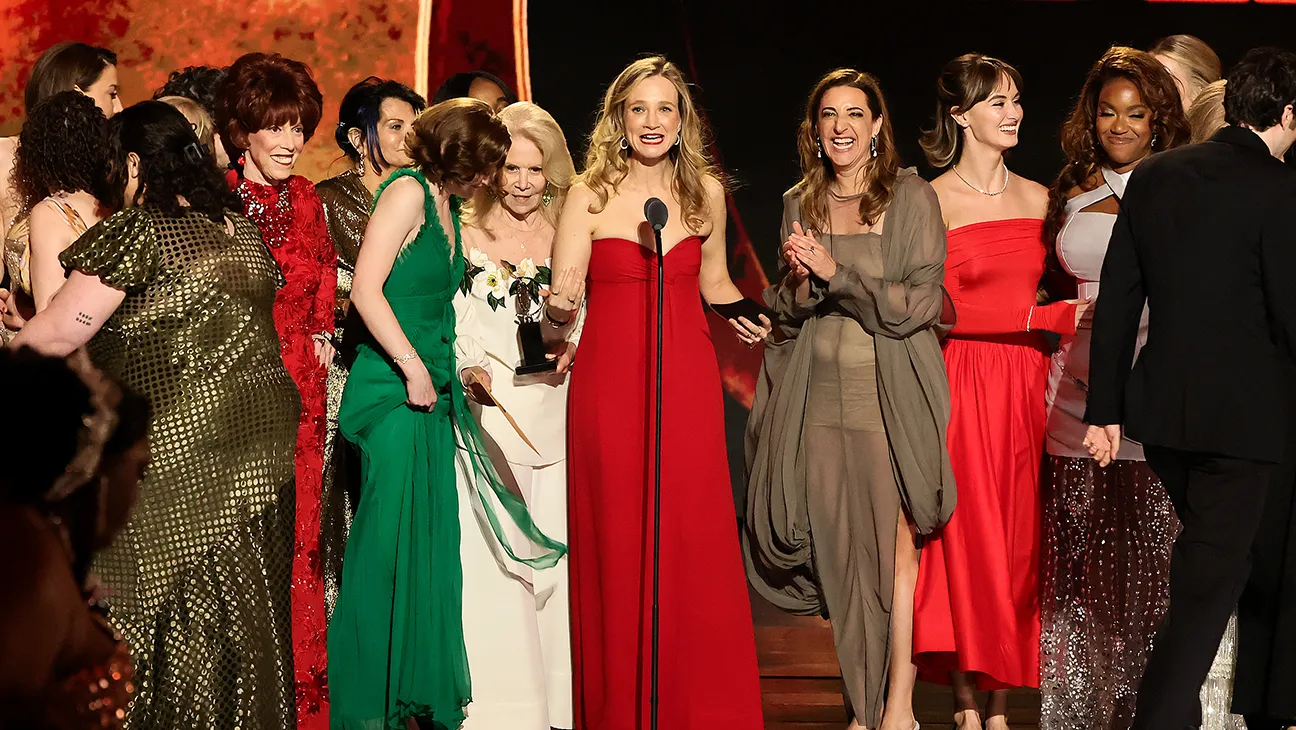
Susannah Flood is nominated for the best actress in a play Tony for her performance in Liberation, which was awarded the Pulitzer Prize for Drama last month.
What does it mean to me to be nominated for a Tony for the first time? To answer that question, I really need to go back to my parents. Allow me to explain.
They move to New York, young, with their own dreams and ambitions; she’s from the Upper Peninsula of Michigan, and he’s from Texas. She stands in the non-equity line all day to try to get auditions. He tries his hand at producing and directing. It’s hit and miss. They both start teaching at The Actors Studio; they meet; they have a child. Just one, a girl. Sponge-like, she begins to absorb what’s important to them and there’s really no turning back.
For Christmas, when she’s nine, her mom buys her a seat in the back row of the balcony at Les Misérables because she’s worn out the cassette of the original cast recording staging it with Barbies. When she’s 12, living now in Santa Fe, she joins a community theater and upstages all the other weasels in The Wind in the Willows by saying all her lines a half second behind the group. She says her character is “slow.”
Her parents divorced. She moves in with her dad and stepmom for high school. California. Los Angeles. As if she needed any more encouragement. Things start to get serious in high school. In her senior year, she’s voted “Most Dramatic” in her class and takes it as a compliment. For the talent show, she does Nina’s breakdown scene from the fourth act of The Seagull — by herself — in the dress she wore to homecoming and a shawl. Her father is becoming concerned. “Acting is just controlled humiliation,” he said, sitting at the dining room table, the script open between them. It’s what he teaches all his students and he believes it. But this is something else. When she’s finished, the auditorium immediately fills with a knee-jerk round of polite applause that is somehow more embarrassing than stunned silence might have been. Not even one hormonal teenager can get it up to laugh or jeer. They just want whatever “that” was to be in the past as quickly as possible. He’s wondering, what can I say to her that is both loving and true? The problem is she doesn’t know enough even to be humiliated, even to consider it as an emotion she could feel in this moment. She’s not bad, per se… in fact, she might be good… she’s just unwatchable. For example, he likes the feeling of the warm sun on his shoulders, but he doesn’t want to stare directly into an eclipse. He likes ice cream, but he wouldn’t like it out of a cannon.