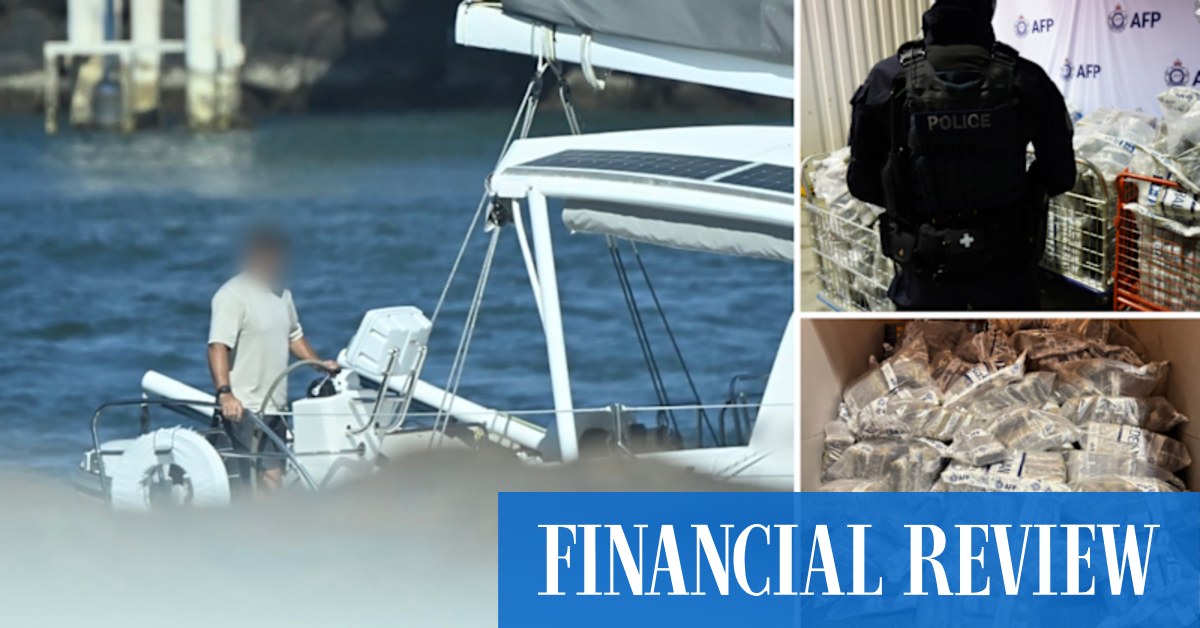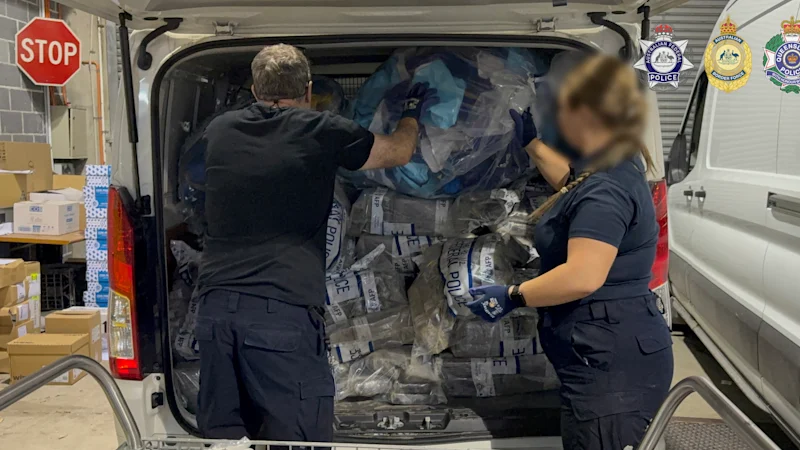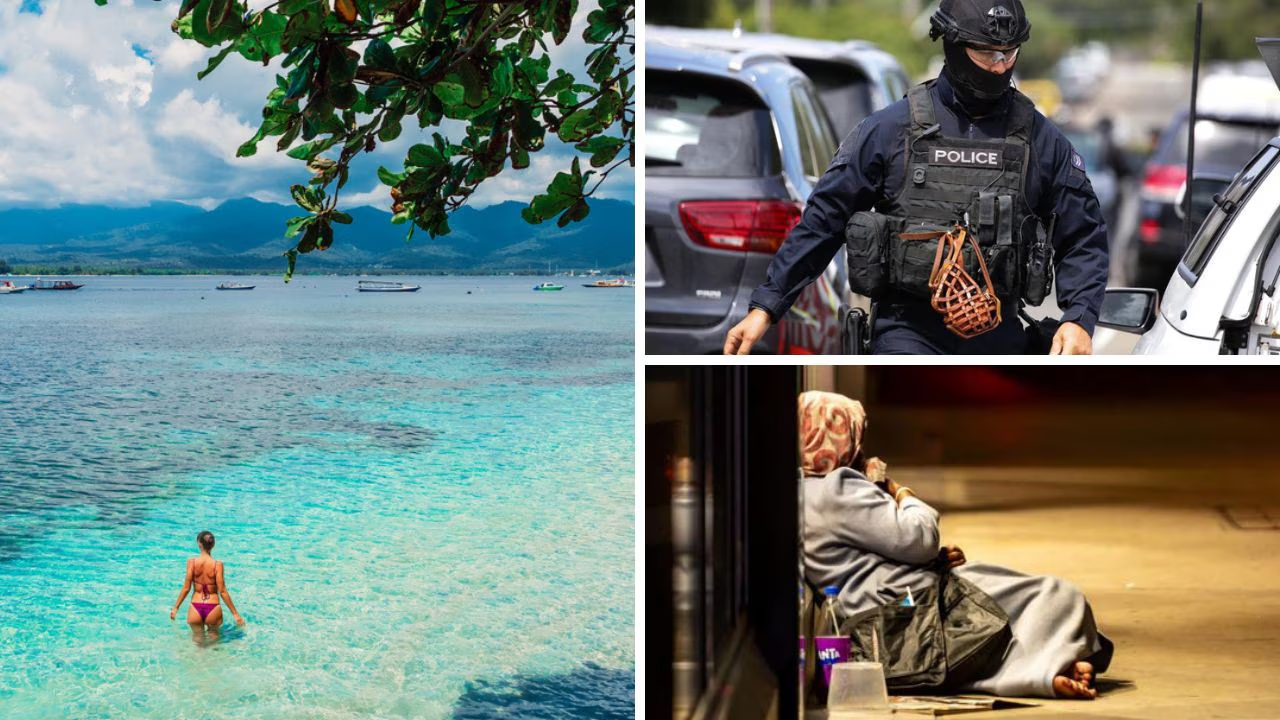
Australia has a crisis unfolding on its doorstep – and things are about to get a whole lot worse, according to security and health experts.Connor Graham, a Pacific Islands expert from the Lowy Institute, said the illicit drug trade which has ravaged Fiji and seen it experience the fastest-growing rates of new HIV cases in the world now shows signs of branching out into neighbouring island nations also beloved by Aussie tourists.The researcher said traces of meth have appeared in wastewater in Tonga while so-called “narco-subs” have washed up in the Solomon Islands and the Northern Pacific. Police have also made drug busts in idyllic French Polynesia.“These countries haven’t been hit as hard as Fiji yet, but they’re showing the warning signs and the precursors,” Mr Graham told news.com.au. “Those drugs showing up in the wastewater … that’s a sign that it’s in the community. We’re seeing some low amounts of HIV and tuberculosis and other transmissible diseases in Solomon Islands, in Tonga, much lower than Fiji, but this is how Fiji looked in 2019.”Fiji’s health minister declared an HIV outbreak in January, calling it a “national crisis”. According to UNAIDS, a UN body tasked with tackling HIV transmission, more than 1 per cent of the nation’s 937,000 people are believed to be HIV positive.Sadly, the disease is hitting young people the hardest. Two-thirds of HIV cases in Fiji involve people under 30. Meanwhile, the infection rate in pregnant women now sits at 3.1 per cent.Experts believe unsafe drug usage is partly to blame. Last year, news.com.au reported that addicts were “bluetoothing” or “hotspotting” among themselves – a practice where an intravenous drug user withdraws their blood after a hit and injects it into a second person, who may then do the same for a third, and even a fourth individual.Mr Graham said the demand for drugs in Australia and New Zealand is driving this booming trade. So entrenched is the route from the Americas to our shores that it now has its own nickname – the Pacific Narco-Highway.“The end goal of drugs transiting the Pacific is not to finish up in Fiji. There’s just a little bit of leaking on the way,” Mr Graham said, referring to how populations in transit hubs become addicted to drugs. “They want to get these drugs to Australia and New Zealand where the price is as high as anywhere in the world and the profit margins are enormous.”According to Australia’s National Illicit Drug Reporting System (IDRS), a gram of cocaine can fetch between $200 and $400 on the street. One gram of meth in crystal form – another common drug ravaging Island nations – can go for between $250 and $600. Holiday hotspot in crisisThe growing drugs and HIV crisis unfolding in Fiji and across the Pacific is a stark contrast to the region’s reputation as a safe, family-friendly tropical paradise just a short plane trip from Australia.And it comes as recent figures revealed the beloved Aussie travel hotspot was exploding in popularity, with Tourism Fiji announcing the island nation had recorded its highest-ever March arrivals, welcoming 71,765 visitors – with 30,964 of those Aussies.It represents a 17 per cent year-on-year increase and highlights Australia’s continued importance as a key source market for Fiji.Meanwhile, Australians accounted for 19 per cent of all international visitors to Tonga last year, while Australian visitor numbers to neighbouring nations such as New Caledonia and Vanuatu remain strong.But as the drug and HIV crisis explodes, there are mounting concerns it could affect the lucrative tourism industry many of these nations rely on. ‘A moral obligation’Meanwhile, the Australian Federal Police said 17 tonnes of illicit drugs have been seized in the Pacific by local and international police so far this year – more than three times the amount seized across the whole of last year.In February, French cops found $1.5 billion worth of cocaine in a boat headed towards Aussie shores. The ship was said to have been crewed by 11 Honduran and Ecuadorean nationals.In March, two tonnes of cocaine was found on an abandoned sailboat in Vanuatu destined for Australia and at least nine “narco-subs” have washed up on shorelines in the Solomon Islands and the Marshall Islands over the last 18 months. A recent ABC investigation also found the number of major drug busts in the South Pacific jumped from three in 2023 to 25 in 2025.“Australia’s definitely got a moral obligation here … as well as a strategic one,” Mr Graham said.“At a recent conference a person from the Pacific spoke about how this drug crisis reminds them of climate change. The feeling in the Pacific about climate change often is that they are lumped with the effects while Australia causes it. “Australia is happy to fund a lot of climate and green initiatives in the Pacific but doesn’t do a lot about its emissions. It’s similar with the drug trade across the Pacific.“It’s Australia and New Zealand’s demand that’s sort of causing this. The Pacific is being lumped with the issues and we might fund the policing initiative or the HIV envelope, but I think there’s a real desire from Pacific peoples – and I would agree with this – for us to address our demand side in Australia as well.”‘Harder to detect’Associate professor of the regional security hub at the University of Canterbury, Jose Sousa-Santos, said technology has made it easier for transnational criminal networks to move drugs through the Pacific undetected.He said cartels are using narco-subs and drones as well as encrypted communications and cryptocurrencies to ferry narcotics and launder money. He said this has made trafficking networks more decentralised, resilient and difficult for law enforcement to disrupt.“The technological transformation of the Pacific drug trade has altered the balance between traffickers and law enforcement. Technologies that allow criminal networks to operate more discreetly, remotely and across multiple jurisdictions are especially challenging in Pacific Island countries, where police and border agencies must monitor extensive maritime spaces with comparatively limited resources,” he told news.com.au.He said traffickers are highly adaptive and warned they posed a direct threat to regional security.“[The drug trade] penetrates institutions, distorts economies and damages the social fabric of Pacific communities,” he said.“What begins as the movement of cocaine or methamphetamine through the region quickly becomes a much wider security problem: local drug markets emerge, criminal facilitators are recruited, corruption risks increase, violence becomes more common, and already stretched police, health and community systems are placed under enormous pressure.”Prof Sousa-Santos said authorities are concerned that Pacific Island countries are no longer simply being used as stepping stones to Australian and New Zealand markets, but are becoming vital “operation nodes” in the wider global drug economy.“Drugs routed through or stockpiled in the Pacific threaten Australia’s border integrity. “Australia cannot approach this only as a problem of stopping drugs before they reach Australian shores. “If enforcement activity protects the Australian market while Pacific communities bear the spillover costs, then the underlying security problem remains unresolved. Australia’s national security interests are best served by investing in Pacific-led responses: trusted intelligence-sharing, maritime domain awareness, digital and financial investigative capability, anti-corruption safeguards, stronger legal frameworks, and community-based prevention and treatment systems.”‘Enormous shame and isolation’Renata Ram has been working in HIV and international development for over 15 years and spent the last nine of those with UNAIDS in Fiji and the Pacific.She told news.com.au between 2010 and 2024, Fiji recorded an increase of over 3000 per cent in new HIV diagnoses, according to UNAIDS monitoring data. “The scale and speed of the current surge is unprecedented for Fiji,” she said, adding drug use was not the only contributing factor.Ms Ram said the disease is hitting women and young people particularly hard, while social taboos and a lack of public health awareness about treatments had stymied efforts to contain the outbreak.The aid worker said one story that has stayed with her involved a young mother and her newborn baby. “During her pregnancy, she had not disclosed her HIV status and had not consented to HIV testing. She was deeply afraid of being judged, rejected, and isolated from her family and community if people found out she was living with HIV,” she said.“Months after giving birth, her baby began experiencing serious and ongoing health complications. By the time the child was finally brought into care and the mother disclosed her HIV status, it was too late. The baby eventually died.”She said what struck her the most was not only the tragedy itself, but the fear and silence surrounding it. “The mother was carrying enormous shame and isolation. She was not a bad person or a careless mother. She was afraid. That is why stigma and discrimination remain some of the biggest barriers in the HIV response. They can prevent people from seeking testing, accessing treatment, or speaking openly until the consequences become devastating,” she said.“Cases like this are a painful reminder that HIV is not only about medicine or statistics. It is about creating environments where people feel safe enough to ask for help early, without fear of judgment, abandonment, or discrimination.”The epidemic is now on par with some sub-Saharan African nations, Jason Mitchell from Fiji’s National HIV Outbreak and Cluster Response Taskforce told The Australian.In Papua New Guinea, authorities believe three tonnes of meth may have been sitting in storage last year, destined for the lucrative Australian and New Zealand markets.International drug cartels have put down roots across the Pacific, exploiting limited policing capacity and weak governance.Historically the drug has come from Mexico and Southeast Asia, but more recently shipments have also arrived from the US, Canada and even Africa.A Fijian anti-narcotics bureau set up to fight the problem is now under review after two of its officers were arrested for drug possession.Australia has committed about $400 million over five years to its Pacific Policing Initiative, focused on building training centres and boosting law enforcement across the region.It is also working with international partners, including Colombia and Mexico, and their local law enforcement to target criminals in their own backyard and be more aggressive at stopping illicit drugs at the source.
Unfolding crisis on Australia’s doorstep is about to get worse, experts warn
Australia has a crisis unfolding on its doorstep – and things are about to get a whole lot worse, according to security and health experts.
1,681 words~8 min read