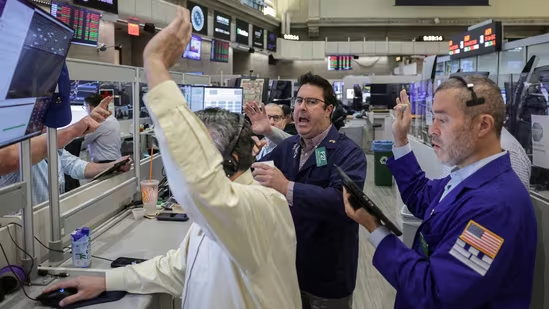
Why Is the US Stock Market Crashing Today? Dow Jones, S&P 500 and Nasdaq Tumble as Wall Street Losers Mount - The stock market is down sharply today, and the reason cuts straight to the heart of everything Wall Street has been quietly worrying about for months. Friday morning's monthly U.S. jobs report showed employers added 172,000 jobs in May — more than double the 80,000 economists had expected. That single data point flipped the narrative on interest rates overnight, sent Treasury yields jumping, and triggered a painful selloff that's now dragging the Dow Jones, S&P 500, and Nasdaq deeply into the red.The Nasdaq Composite is the hardest hit, falling nearly 3.0% by midday. The S&P 500 is down 1.75%, and the blue-chip Dow Jones Industrial Average — which briefly set a new intraday record this morning before reversing — is off 0.79%. The broader question investors are now asking themselves is not just why the stock market is down today, but what it means for the weeks and months ahead.Why Is the US Stock Market Down Today? Dow Jones, S&P 500 and Nasdaq Crash as Wall Street's Biggest Losers Lead Massive SelloffBefore Friday's open, investors were cautiously optimistic. The Dow and S&P 500 had come into the week with modest gains, and the Dow had even closed at a record high on Thursday. Then the May employment report landed. U.S. employers added 172,000 jobs last month, nearly twice what analysts had penciled in. The unemployment rate held steady at 4.3%, as expected. On its own, robust job creation sounds like good news — and for the economy, it arguably is. But for the stock market today, it's a problem.The logic is uncomfortable but simple. A strong labor market gives the Federal Reserve less political and economic cover to cut interest rates. Lower rates make borrowing cheaper, juice corporate earnings, and push investors toward stocks. Higher rates — or even the prospect of rates staying elevated longer — do the opposite. They make bonds more attractive and future corporate profits worth less in today's dollars. That's why stocks are down today, and why the reaction was so swift and severe."About 51% of investors now forecast the Federal Reserve will raise interest rates at its late-October meeting — up from roughly 34% just yesterday."— CME FedWatch Tool, June 5, 2026The 10-year Treasury yield — a benchmark that influences mortgage rates, auto loans, and the cost of corporate debt — jumped from 4.47% to 4.54% almost immediately after the report dropped. That's not a dramatic move in isolation, but in a market that had been pricing in rate cuts, it's a signal that the timetable just got pushed back again.Key data points: Dow Jones Industrial Average: 51,155.19, down 406.74 points (-0.79%) S&P 500: 7,451.30, down 133.01 points (-1.75%) Nasdaq Composite: 26,038.96, down 792 points (-2.95%) 10-Year Treasury Yield: 4.54%, up from 4.47% May Jobs Report: 172,000 jobs added vs. 80,000 expected Unemployment Rate: 4.3% Fed rate-hike probability: 51% versus 34% a day earlier West Texas Intermediate crude: $90 per barrel, down 3.2% Brent crude: $93 per barrel, down 2.1% Gold: $4,365 per ounce, down 3.1% U.S. Dollar Index: 100.02, up 0.6% Bitcoin: briefly below $60,000, later around $61,300Why Tech Stocks Are Getting Hit the Hardest — AI Names Lead the Nasdaq DeclineIf you're wondering why the Nasdaq is falling so much harder than the Dow today, the answer lives in one word: duration. Technology stocks — particularly the high-flying AI names that have dominated headlines — are what analysts call long-duration assets. Their valuations are built on expectations of earnings far into the future. When interest rates rise, or even when rate cuts get delayed, those future profits become less valuable in present terms. The math punishes tech more brutally than almost any other sector.Broadcom (AVGO) is already down 5.5% Friday, continuing a painful slide after its 13% drop on Thursday. Marvell Technology (MRVL) is off more than 11%. Arm Holdings (ARM), Micron Technology (MU), Advanced Micro Devices (AMD), and Intel (INTC) are all falling between 7.5% and 10%. The S&P 500 Information Technology sector is down roughly 4.6% on the day — by far the worst-performing sector in the index — with just four of its 73 components trading in positive territory.All of the Magnificent Seven tech giants are lower today except Apple (AAPL). NVIDIA (NVDA) is down more than 5%. These aren't small companies suffering from company-specific bad news. These are some of the largest and most widely held stocks in the world, and they're all moving in the same direction for the same macro reason: rates aren't coming down as fast as the market hoped. NVIDIA (NVDA): -5.2% Broadcom (AVGO): -5.5% Friday after a 13% Thursday drop Intel (INTC): -8.7% Marvell Technology (MRVL): -11.3% Nokia (NOK): -12.5% Plug Power (PLUG): -10.8% BlackBerry (BB): -9.7% SoFi Technologies (SOFI): -7.4% Ondas (ONDS): -11.2% Lululemon (LULU): -8.5%, lowest level since 2018Bitcoin Below $60,000 and Crypto Stocks in Freefall — What the Market Is Really SayingThe stress in the stock market today isn't confined to equities. Bitcoin briefly fell below $60,000 for the first time since October 2024, before recovering slightly to around $61,300. Cryptocurrency-tied stocks are experiencing some of the sharpest declines of any group: Strategy (MSTR), Robinhood Markets (HOOD), MARA Holdings (MARA), and Coinbase Global (COIN) are all down between 7% and 12%.There's a straightforward read here that's worth sitting with. When risk appetite collapses — when investors decide they need to be more cautious — the assets that have climbed the highest on the back of speculative enthusiasm tend to fall the hardest. Bitcoin and crypto stocks fit that profile perfectly. They're not just down because rates moved. They're down because the mood has shifted, and in shifting moods, the highest-risk bets get unwound first.Oil is also falling, with West Texas Intermediate crude sliding 3.2% to $90 a barrel. Gold futures are off 3.1% to $4,365 an ounce. The U.S. dollar index is up 0.6%. Taken together, these moves paint a picture of a market digesting a more hawkish interest rate environment and deciding, across asset classes, to reduce exposure to anything that benefited most from cheap money.Lululemon's Warning and What Corporate America Is Quietly Telling InvestorsBuried beneath the macro drama, Lululemon Athletica (LULU) added its own troubling note to the day's narrative. The athleisure brand slashed its full-year revenue forecast on Friday, now guiding for $11 billion to $11.15 billion in annual sales — flat to slightly down from last year. That's a significant step back from the $11.35 to $11.5 billion it had previously guided. Shares plunged nearly 8.5% to around $115, their lowest price since May 2018, wiping out gains that had taken years to build.Interim co-CEO Meghan Frank pointed to a softening at the tail end of Q1 and the start of Q2, citing negative media coverage and social media commentary, along with mixed results from recent product launches. JPMorgan cut its price target on the stock to $149 from $173 following the announcement. Lululemon has now lost nearly half its value since the start of 2026. This isn't just one retailer's problem — it's a signal that the consumer, particularly the discretionary spender, is starting to pull back. When the stock market is already down on macro fears, corporate guidance cuts of this magnitude add fuel to an already burning fire.What the Iran War, Geopolitical Risk, and Rate Uncertainty Mean for Where Markets Go NextThe jobs report was the match, but the kindling has been building for months. Bill Adams, Chief U.S. Economist at Fifth Third Commercial Bank, pointed to the ongoing Iran War and the closure of the Strait of Hormuz as structural headwinds that the market has been underpricing. Real average hourly earnings have declined for two consecutive months, meaning workers are earning more in dollar terms but less after inflation — a quiet squeeze that rarely ends well for consumer spending or corporate revenue growth.
Why is the US stock market down today? Dow Jones, S&P 500 and Nasdaq crash big as strong jobs report, rising Treasury yields and AI stock selloff shake Wall Street — here are today's biggest gainers and losers
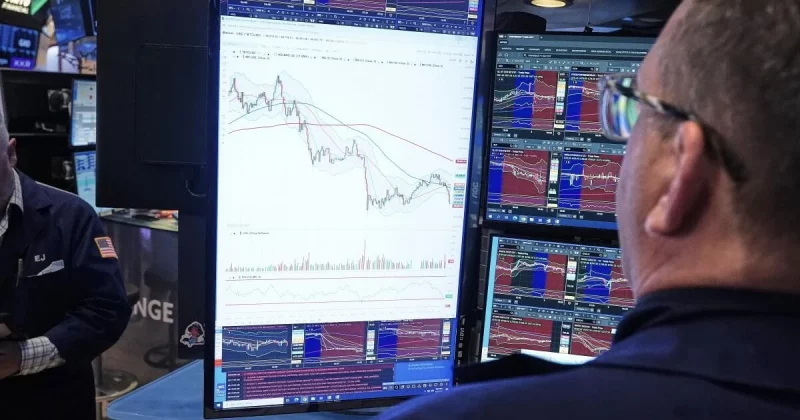
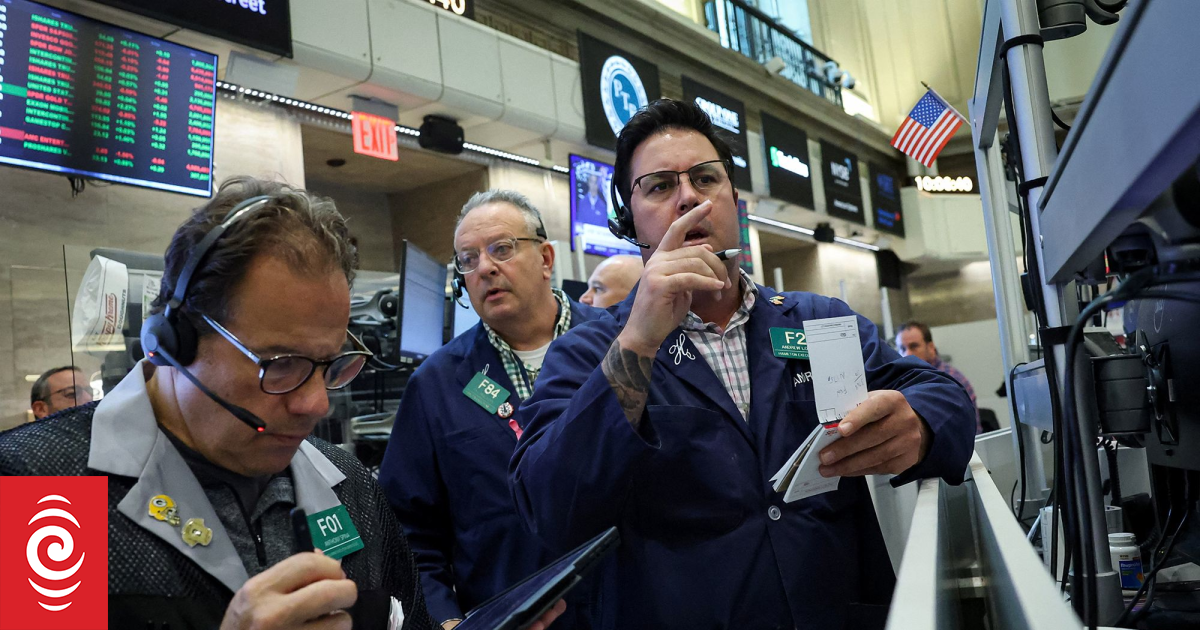
Why is the stock market down today? A hotter-than-expected jobs report erased any lingering hope for near-term Federal Reserve rate cuts — and the US stock market is paying a steep price for that reality check. The Dow Jones fell more than 400 points, the S&P 500 lost 1.8%, and the Nasdaq tumbled nearly 3%. AI stocks led the decline, with Nvidia, Intel, Marvell, and Broadcom losing billions in market value.
1,323 words~6 min read