LONDON -- Two investigational drugs for lupus with encouraging primary phase II results yielded more good news from follow-on studies, reports here indicated.
The Toll-like receptor (TLR) inhibitor enpatoran showed no diminution and perhaps some increase in efficacy for patients with cutaneous and systemic lupus with 48 weeks of additional treatment beyond the original 24 weeks, and no new safety concerns arose, according to Eric Morand, MBBS, PhD, of Monash University in Melbourne, Australia.
The other study involved the anti-B cell agent ianalumab that is being tested in systemic lupus (and a variety of other conditions). Edward Vital, MBChB, PhD, of the University of Leeds in England, reported data collected after treatment had stopped in a phase II trial and after B-cell populations had rebounded. With a median of 44 weeks of post-treatment follow-up, not only did biomarker responses continue unabated, clinical indices also showed little loss of efficacy.
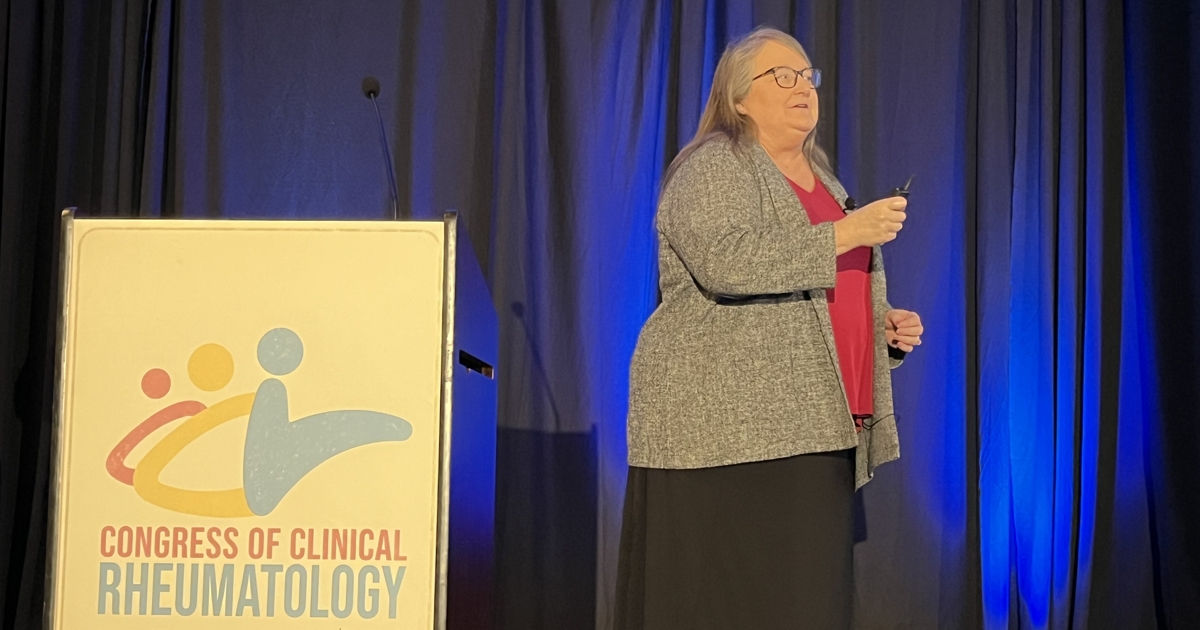
Both studies were presented at the European Alliance of Associations for Rheumatology (EULAR) annual meeting. Enpatoran is a small-molecule inhibitor of TLRs 7 and 8, while ianalumab is a bifunctional biologic that promotes antibody-mediated B-cell death while also deactivating remaining B cells by inhibiting B-cell activating factor, or BAFF.