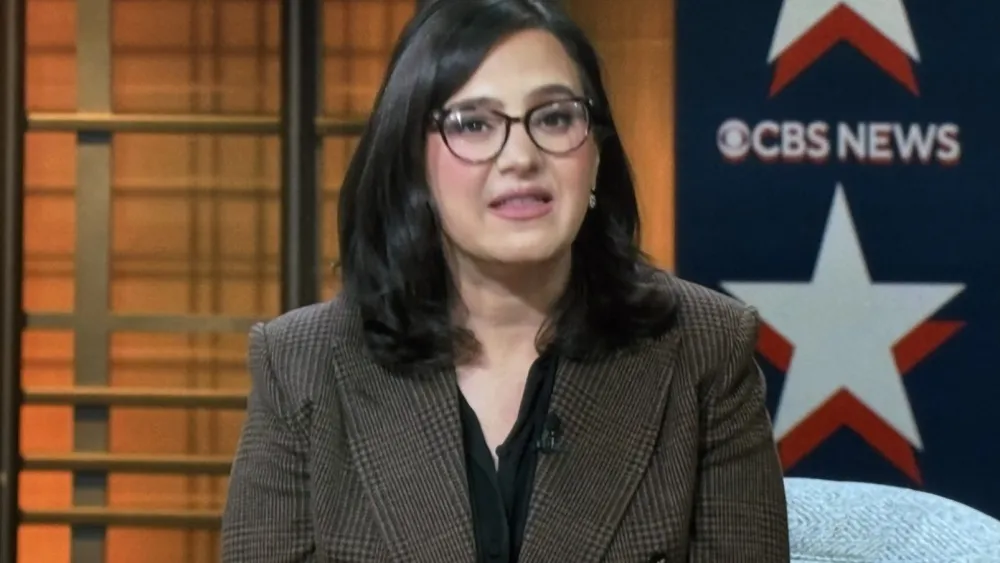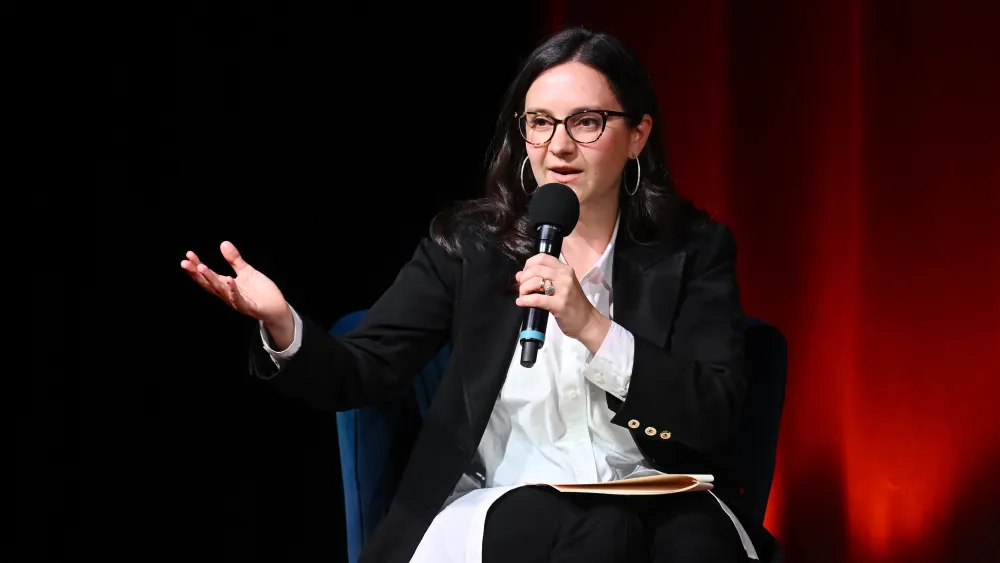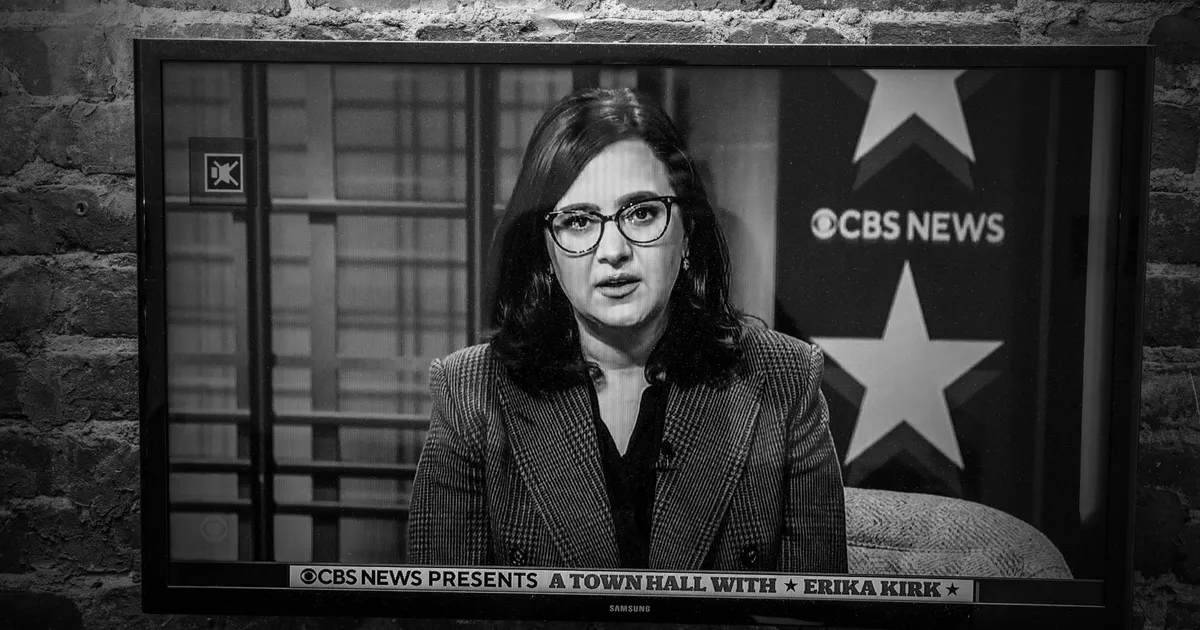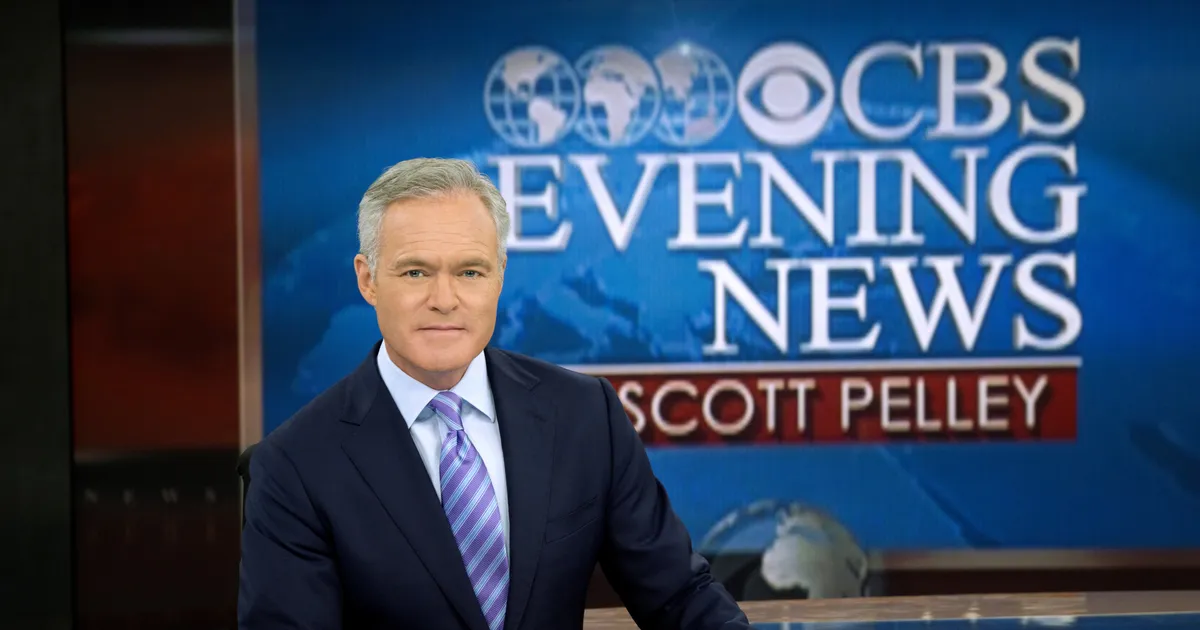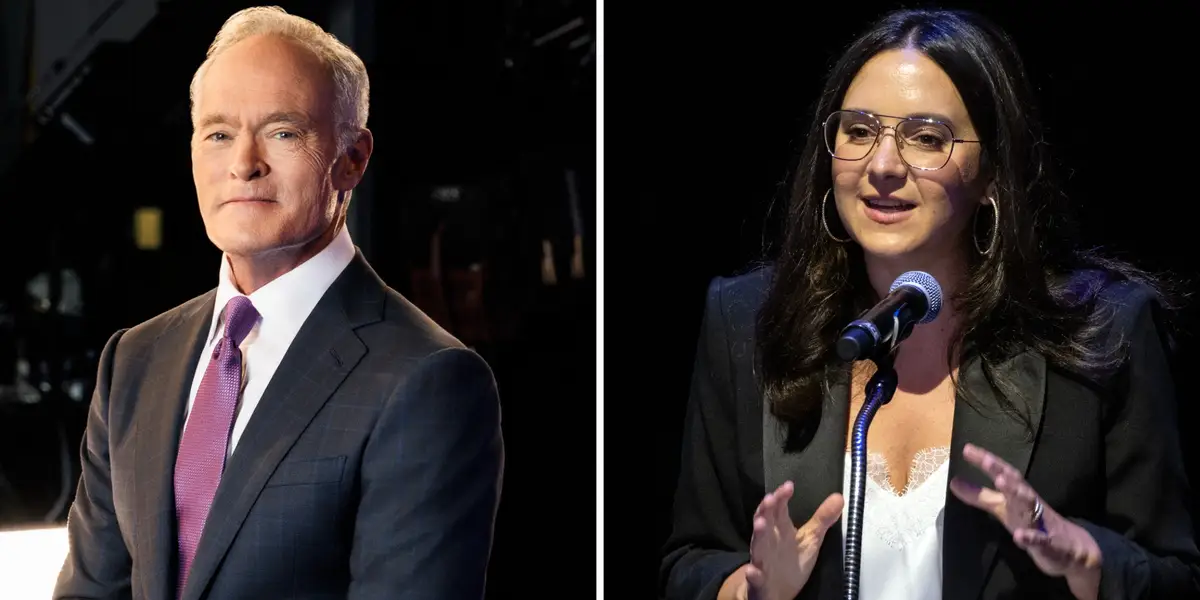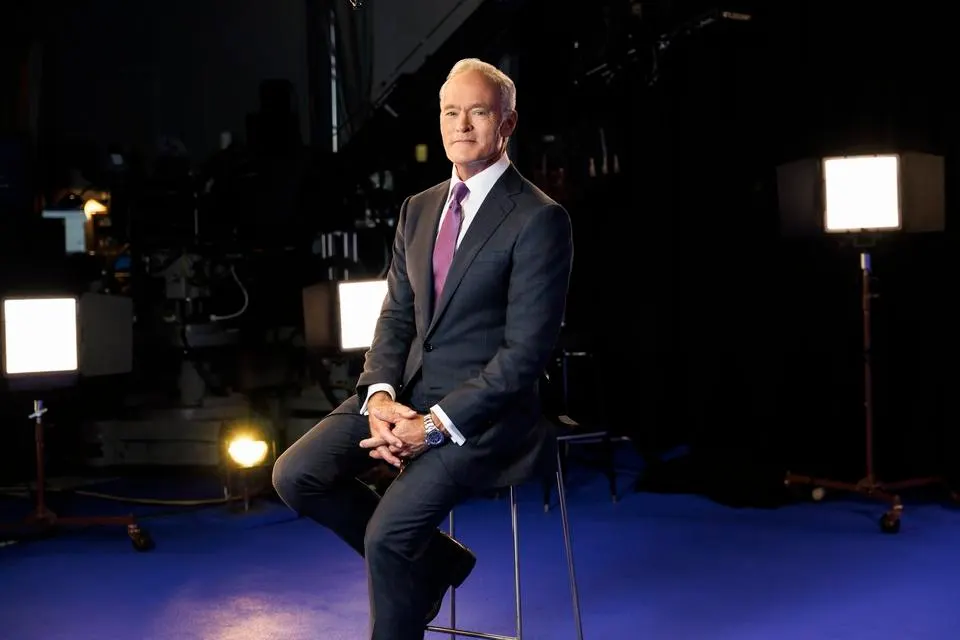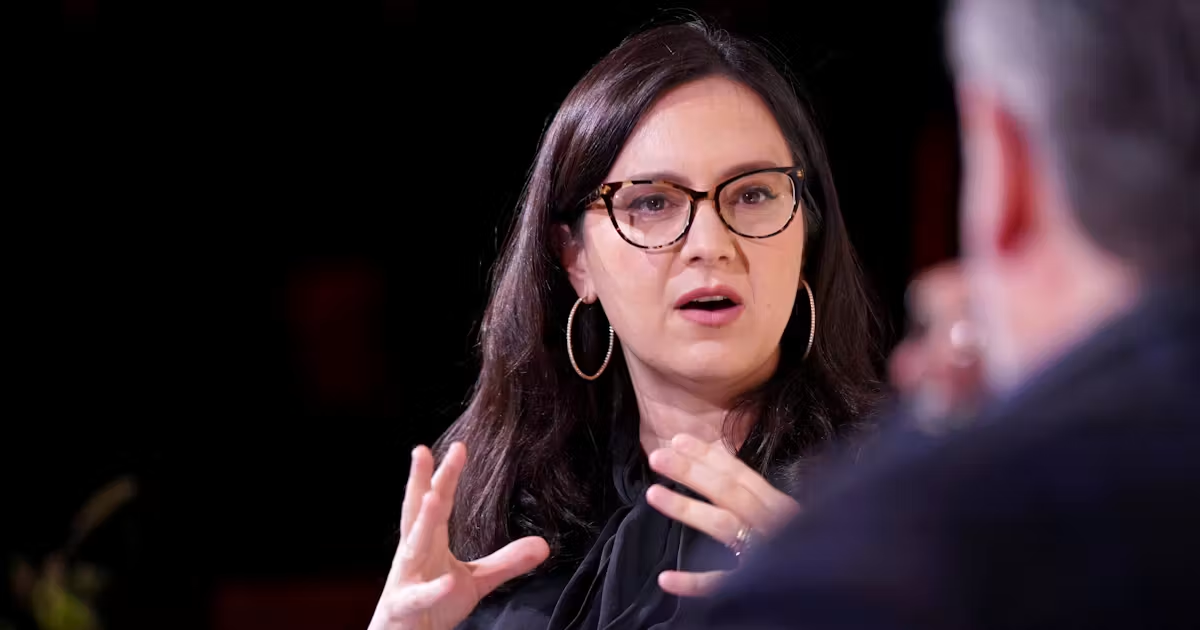
Everyone is up in arms, and rightly so, about what Bari Weiss is doing to CBS News in general and 60 Minutes in particular. The firing of Scott Pelley will reverberate in American journalism history as a symbolic execution of the single most groundbreaking and successful news program in the annals of U.S. broadcast television. Two of the program’s other prominent on-air correspondents were fired, as well, and we’ve seen countless news stories this week about the chaos and turmoil that has resulted. Three of the show’s remaining correspondents—Bill Whitaker, Lesley Stahl, and Jon Wertheim—reportedly huddled this week to discuss their next move; Stahl is currently out of contract.This is a tempestuous time at one of the nation’s most staid journalistic institutions. But let’s back up a minute to appreciate how we got here. How did someone like Weiss, with no broadcast news experience, get put in charge of the network with the longest and proudest news tradition in the country? Well, we know the answer to that question. David Ellison, head of Paramount (which owned CBS), hired her last October, three months after the Trump administration approved the takeover of Paramount by Ellison’s company, Skydance. Before that, of course, Weiss had started up the very successful Free Press newsletter, devoted mainly to attacking left-wing wokery and cancel culture for dedicated subscribers.But the pivotal moment, or actually moments, in her career came before that. The first was her hiring, in April 2017, by The New York Times. The second was her famous departure from that same paper, which she cynically and shamelessly used to get a bevy of wealthy, angry, rich men to stake her to the Free Press. You know that saying about how sometimes liberals are so open-minded that their brains start falling out their ears? Weiss’s ascent provides a lesson in how liberal institutions can sometimes place such value on proving that they’re open-minded that other liberal values, like standing for actual liberal things in the world, get tossed aside. On April 12, 2017, as the nation’s most important newspaper was settling into the first Trump era, the honchos of the Times made an announcement. They were hiring Bret Stephens away from The Wall Street Journal. Stephens was, of course, conservative in outlook. He made for the third conservative at the generally liberal op-ed page, after longtimer David Brooks and the comparatively youthful Ross Douthat.Well … OK, then. Brooks had been at the paper since the 1990s; Douthat since 2009. One could maybe, possibly justify adding a third after Trump’s election, to “understand” the conservative mind and the sentiment apparently flowing across this great land (even though that sentiment won 2.8 million fewer votes than liberal sentiment, but never mind that). Mind you, though, that it sure isn’t as if The Wall Street Journal and The Washington Times and the New York Post started making an effort to understand the liberal mind after Barack Obama won. The Journal has one nonconservative columnist, William Galston of the Brookings Institution, who is a friend of mine and can fairly be described as liberal-centrist. The Washington Times and the New York Post, from what I can see, have zero.But fine. Stephens. One might have thought that would have been enough. But no! A mere two days later, on April 14, came the beaming announcement that the Grey Lady was nabbing its second Journal opinionista of the week and hiring Weiss: “It is with great excitement today that we announce that we’ll be expanding the desk’s range, voice, and reach with the hiring of Bari Weiss.” The announcement explained that Weiss would be “commissioning the kinds of quick, off-the-news pieces that are such a critical part” of our yadda-yadda-yadda and would be doing so with the “signature verve and humor” so evident in her Journal oeuvre.That’s one of those eye-of-the-beholder questions. Here is her Journal corpus, at least the written part of it. Look, we’re all predictable to some extent, your humble servant included. I wouldn’t deny it for a second. But Weiss’s Journal pieces were predictable in a specific way that allows us reasonably to question precisely what the nation’s, nay the world’s, most important liberal opinion page found so alluring in them. Just sample these headlines: “The PC Police Outlaw Make-Believe”; “Is That Libidinous Latina Taco Gay or Bi?”; “Camille Paglia: a Feminist Defense of Masculine Virtues.”A representative piece, from June 2015, called “Love Among the Ruins,” chides those celebrating the Supreme Court’s decision that legalized gay marriage. Oh, don’t misunderstand—Weiss supported the decision, of course! But she found it troubling that the messages “blowing up” her phone were wholly focused on Obergefell v. Hodges with not one person taking time to decry the recent mass shooting in Tunisia or the terrorist attack in France.In other words: “The left” is so obsessed with its narrow, woke agenda that it doesn’t care about mass shootings or terrorism. It’s gibberish. Obviously, people can celebrate something they support without feeling some overwhelming, Dostoyevskian guilt about suffering on the other side of the world. Besides, I am 100 percent certain that if she’d bothered to look, she could have found quotes from Democratic politicians and human rights groups and other wokesters denouncing those tragic events. But the key to writing a column like that is not bothering to look. Smart liberals know that conservative trick and know not to indulge it.But anyway. They hired Weiss. You would have thought that would have been enough. But no! Two years later, the Times hired a young conservative firebrand named Adam Rubenstein, who also had The Wall Street Journal on his résumé. Nothing unusual happened for a while. Then, in the wake of George Floyd’s murder in the summer of 2020, the Times ran the instantly infamous op-ed by GOP Senator Tom Cotton arguing that it was time for the military to restore order. That contention, when put that way, is controversial but not necessarily objectionable. But many of Cotton’s particular assertions were extreme. To take one example, addressed by the Times in a later editor’s note: “For example, the published piece presents as facts assertions about the role of ‘cadres of left-wing radicals like antifa’; in fact, those allegations have not been substantiated and have been widely questioned. Editors should have sought further corroboration of those assertions, or removed them from the piece.”Editors also should have done more to square the case he made in his op-ed with the rhetoric he’d previously deployed to make the same case, in which he called for the invocation of the Insurrection Act (which the piece cited) and further recommended that “no quarter” be given to targeted demonstrators. As David French pointed out, “no quarter”—which mean enemies should be killed on the battlefield rather than be taken prisoner—“has been a war crime since Abraham Lincoln signed the Lieber Code in 1863.” By not forcing Cotton to reconcile the position in his op-ed with the more incendiary ideas that inspired it, the Times editors laundered his original demand for violent extremism into erasure.Rubenstein edited the piece, encouraging the inclusion of photos of federal troops protecting Black students in the 1960s South, as if people protesting the violent, nine-minute murder of a citizen were analogous to racist hordes denying rights to other citizens. A huge controversy ensued.Weiss apparently had nothing to do with the piece, but she cynically seized on the opportunity the fracas presented to resign, citing a deeply inhospitable workplace. She announced her decision on her website, in a roughly 1,500-word letter to the Times’ publisher, rebuking him for allowing other Times employees to say rude (and admittedly sometimes quite vicious, if her account was accurate) things about her.The letter went into several details that in most workplaces, probably including The New York Times, are typically thought and assumed to be private and confidential. But naturally, to some, revealing these behind-the-curtain anecdotes marked Weiss as a truth-teller and a martyr. And this, along with her general profile of alerting the elites to the latest lunacy at the Dalton School (and her rabidly pro-Israel stance), is what made her a hero to men like David Ellison. She started a Substack originally called “Common Sense,” which morphed into the Free Press after she raised capital from people like Marc Andreessen, David Sacks, Bobby Kotick, and Howard Schultz. The first three are all Republicans (Andreessen was once a Democrat), and Schultz is an independent.For her own part, Weiss always used to call herself a centrist-liberal or a sane liberal or some such thing. That may have been true at some point, to some extent. But now, it’s quite clear that she is not just conservative, she’s MAGA. Maybe not in her heart, but overwhelmingly in her actions, and it’s actions that matter. She was placed at CBS by Ellison to crush the left and advance Donald Trump’s agenda, so it’s no surprise that that is precisely what she’s doing. And no matter her level of incompetence, she’ll stay there as long as she’s doing that—and as long as she’s not killing the stock price.And it all can be traced back to that week in April 2017, when The New York Times decided it had to be broad-minded in the wake of the election of the most narrow-minded man to occupy the White House since Andrew Johnson—or maybe ever. And now the chief beneficiary of the paper’s broad-mindedness is advancing that narrow-minded man’s agenda while destroying the country’s most venerated television news operation. Oh, and Adam Rubenstein? Whatever became of him? He shared Weiss’s sharp instinct for self-promotion. He quit the Times six months later and took to the website of The Atlantic to write a self-pitying piece about the brouhaha that his own sloppy editing caused.And today? Well, the day after Ellison named Weiss head of CBS, CBS announced the hiring of Rubenstein as deputy editor, where he is reportedly part of Weiss’s “inner circle.” Take that, Walter Cronkite. Editor’s PickHoly Damage Control, Batman: CNN originally reported late in the day Wednesday that the Justice Department was opening a probe into whether E. Jean Carroll, the New York woman who successfully sued Donald Trump and won $88.3 million in damages for sexual abuse and defamation, lied during the legal proceedings against Trump, and that Andrew Boutros, the U.S. attorney for the Northern District of Illinois, would be leading the investigation. Then, on Thursday, Boutros said, Hey, not me!, categorically denying that he was investigating Carroll.This is extraordinary on so many levels. First and foremost, it’s shocking and disgusting that the Trump administration would even contemplate doing this.It’s important to dip briefly into the facts here. Yes, in a 2022 deposition, Carroll misrepresented the fact that Democratic billionaire Reid Hoffman donated to her defense fund. Her lawyer, Roberta Kaplan, has said that Carroll recalled later, sometime in 2023—it seems worth bearing in mind that she was in her late seventies at the time—that she had received some outside donations and that she told Kaplan, and Kaplan immediately told Trump’s lawyers. Those lawyers tried to pounce on this new information to cast doubt on Carroll’s credibility, but the judge barred Trump’s lawyers from using it at trial. Two juries subsequently found Trump liable for both sexual assault and defamation. That’s the background. Here’s the important part, as detailed by Lisa Rubin in a recent MS NOW column: Trump appealed, twice, trying to get appellate courts to agree that Carroll was lying, and he lost both times. First, a three-judge appellate panel upheld Trump’s conviction and believed that Carroll just forgot: “Ms. Carroll plausibly represented that she had forgotten about the limited outside funding,” the panel wrote. Second, eight of 10 active judges on an appellate panel in June 2025 denied a request for rehearing by Trump’s lawyers. (And even just last month, a third appellate panel denied a rehearing of the defamation case.)If you look at that June 2025 ruling I linked to above, you’ll see an interesting name listed as counsel for “defendant-appellant”: Todd Blanche. This, of course, is the same Todd Blanche who is running the Department of Justice today. When Trump fired Pam Bondi as attorney general and stories came out that Trump had been displeased with her lack of zeal about going after his enemies, you, like me, probably wondered how anybody could possibly be more of an unethical, corrupt, cowardly lickspittle than Bondi was. She brought—or tried to bring—prosecutions against Trump antagonists Letitia James, James Comey, John Brennan, Fani Willis, and more. When career prosecutors declined to bring those cases, she fired them and brought in incompetent hacks to do Trump’s bidding. In some cases, federal judges found these hacks to have been installed illegally.Bondi was venally corrupt, on an absolutely Wagnerian level. Just this week, in fact, a retired chief justice of the Florida Supreme Court, backed by 120 judges, attorneys, and law professors, brought a blistering ethics complaint against Bondi demanding that she be investigated and disbarred. That complaint is mostly about her handling of the Epstein files because, remember, she behaved indefensibly there too.So how could anyone be more corrupt than that? I’ll tell you exactly how, through Trump’s eyes: They could succeed where Bondi failed. That was her crime. Not obviously and serially violating departmental ethical canons. Her crime was not doing it well.Hence, Blanche. The fact that his name was on that appellate denial—that he was one of Trump’s lawyers in the Carroll proceedings—means he has personal skin in this game, which in turn means that there’s no way on earth this should be happening on his watch. And indeed, he is said to have “recused” himself on the matter of the Carroll investigation. So it was tossed to Boutros, in Chicago.But Boutros, as I noted above, says he’s not investigating Carroll. He maintains that he’s only investigating Hoffman’s nonprofit, American Future Republic. It’s based in Chicago, you see, so there’s the veneer of justification. But this just raises the question: What has American Future Republic done wrong? It’s allowed to donate money to a legal defense fund. It’s a 501(c)4, not a (c)3, the basic difference being that a (c)4 is allowed to be more directly political (also that donations to a (c)4 are generally not deductible as charitable contributions). GuideStar records show that the group did donate $7 million to Kaplan’s former law firm in 2020. That is by far its largest single donation. But even so, so what? The material question here isn’t whether Hoffman partly or even wholly paid for Carroll’s defense. The question is whether she lied about it. Three different panels of judges believe she did not.What’s really going on with this investigation, one sniffs, is this. Trump is running out of appeals here. As Lisa Rubin wrote in the column I cited above: “In other words, Trump is facing down the increasingly real possibility of paying Carroll more than $88 million, before interest, with only the Supreme Court to potentially rescue him.” So he and his current lawyers are trying to resuscitate the issue that a judge prevented them from using at the original 2023 trial. That’s not necessarily a crazy, last-ditch legal strategy for a person faced with writing that kind of check. The problem, though, is that the person is the sitting president of the United States, and “his current lawyers” are the U.S. Department of Justice, which he has corrupted. And by the way, if you want to know more about this Boutros fellow, just read Michelle Goldberg’s column today about his ghastly attempt to prosecute six people, including onetime Democratic congressional candidate Kat Abughazaleh, on felony conspiracy charges. The case fell apart last week after prosecutors admitted to misconduct before the grand jury. As Goldberg put it, “If Trump didn’t manufacture scandals on such an industrial scale, the case that collapsed last week in Chicago would have been a huge story.”So many things would have been huge stories under any other presidency. Trump’s purchase of Dell stock and the awarding of a large Pentagon contract to the company. White House intervention to get a $620 million contract funneled to a company affiliated with Don Jr. The ongoing ICE scandals, with Democratic pols being prevented from being able to inspect horrid conditions at ICE’s detention camps. The new homeland security secretary vowing to cancel international flights to certain liberal cities. The plainly illegal effort to put Trump’s face on a new $250 bill. Any one of those, in normal times, would be a major scandal. And those were just this week.I pondered writing about each of those. I chose the Carroll matter because it’s not only obviously corrupt but another cannon blast at the rule of law and the independence and integrity of the Justice Department. And because it’s something new: Are investigations into liberal nonprofits to become a regular thing now? So far, Trump has used the DOJ completely unethically, but he’s used it just to go after a handful of personal enemies. If he and Blanche open up the gates to start harassing liberal groups on a much wider basis, then we’re truly in tinpot dictator territory. It can, and will, get worse.This article first appeared in Fighting Words, a weekly TNR newsletter authored by editor Michael Tomasky. Sign up here.Latest From Politics
Why The New York Times Is Wholly Responsible for Bari Weiss’s Rise
She was at The Wall Street Journal and should have spent her career there. But the Times decided she was … interesting. Why do liberals do this?
6,627 words~30 min read