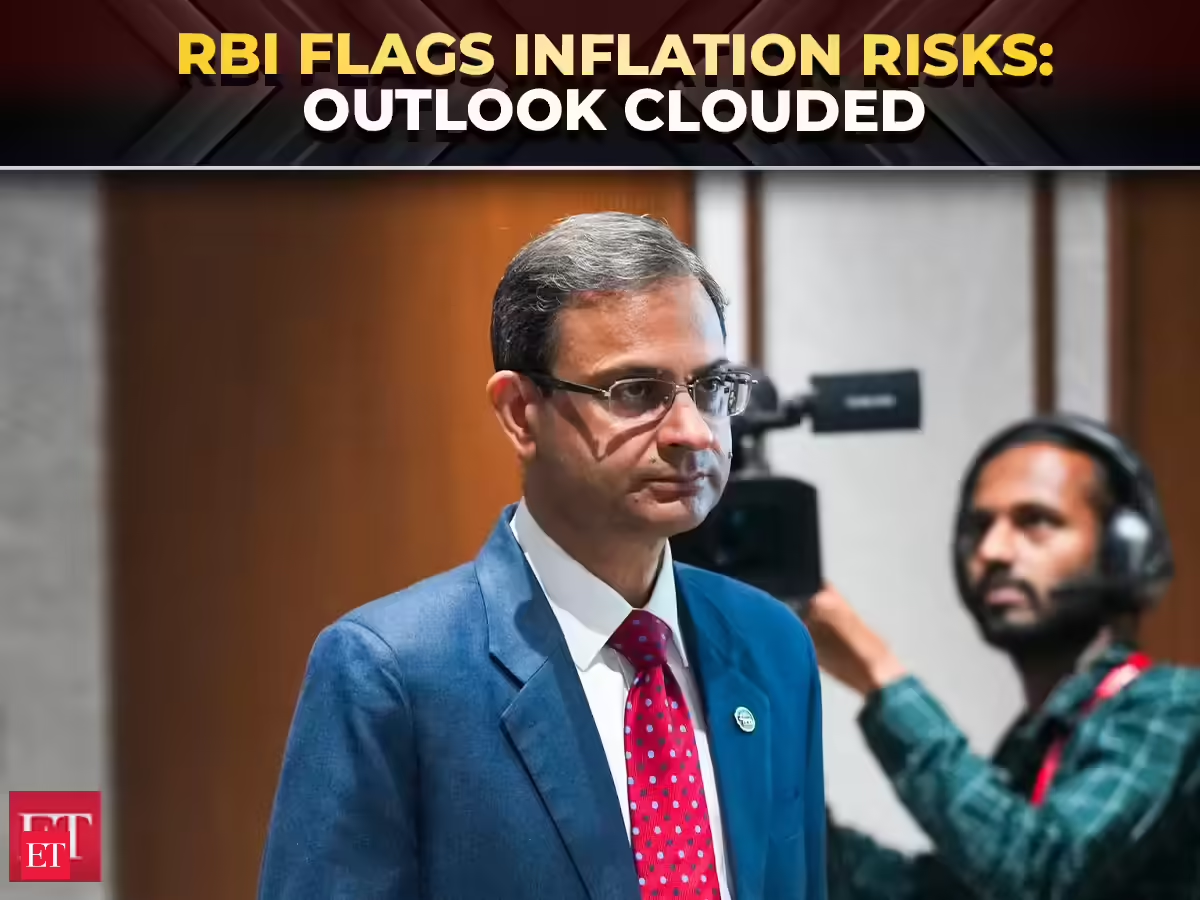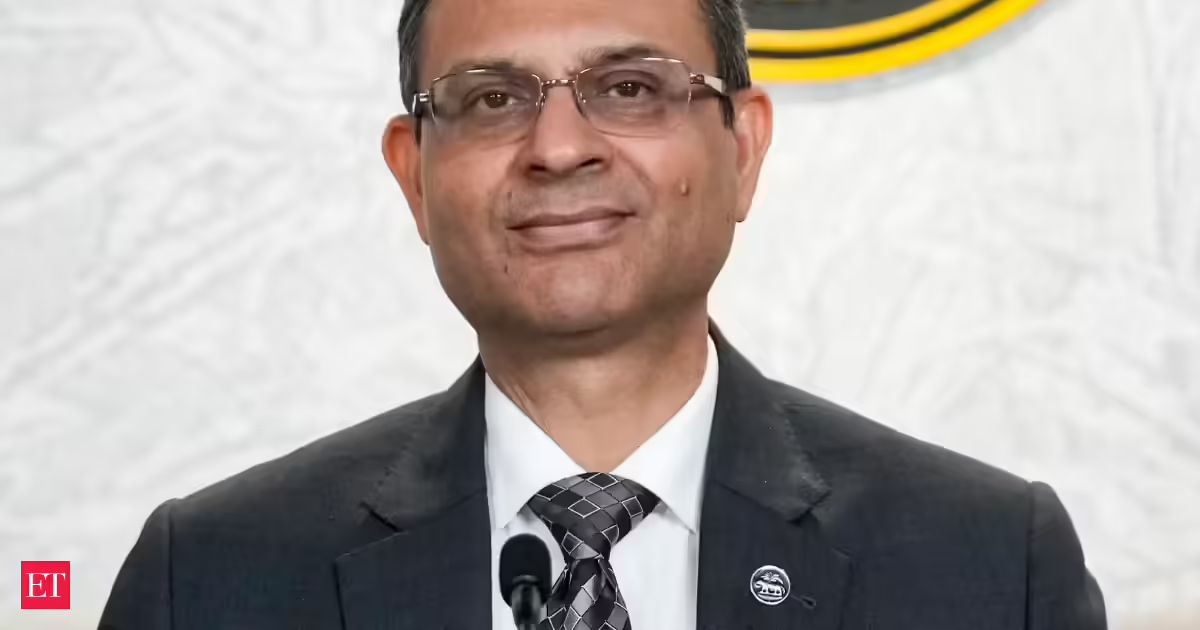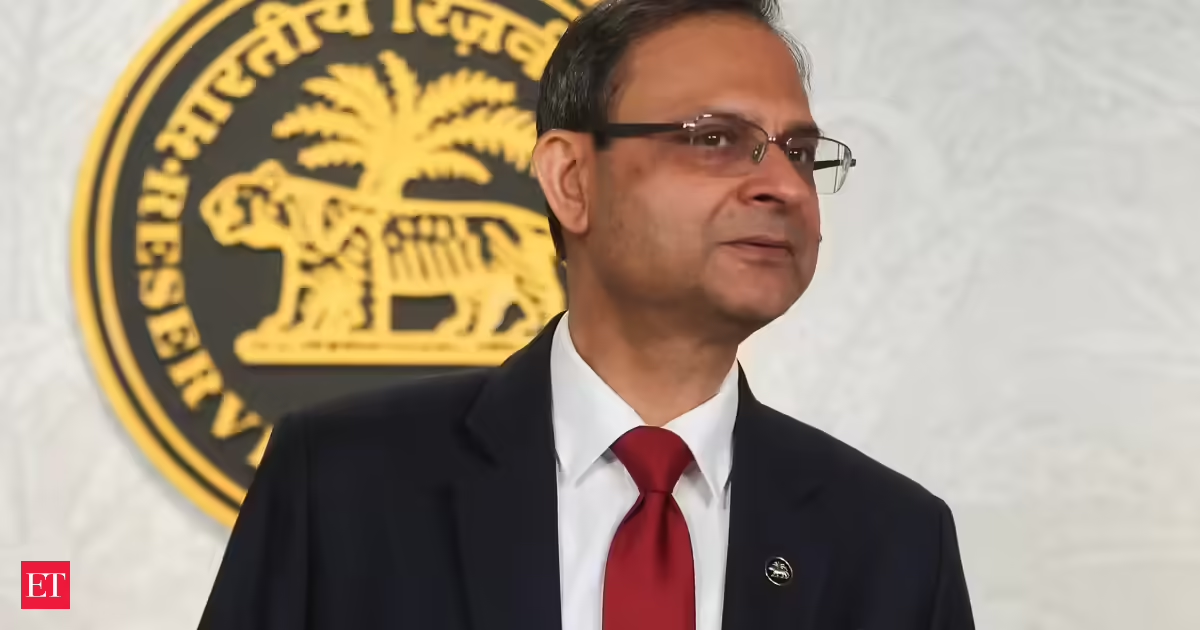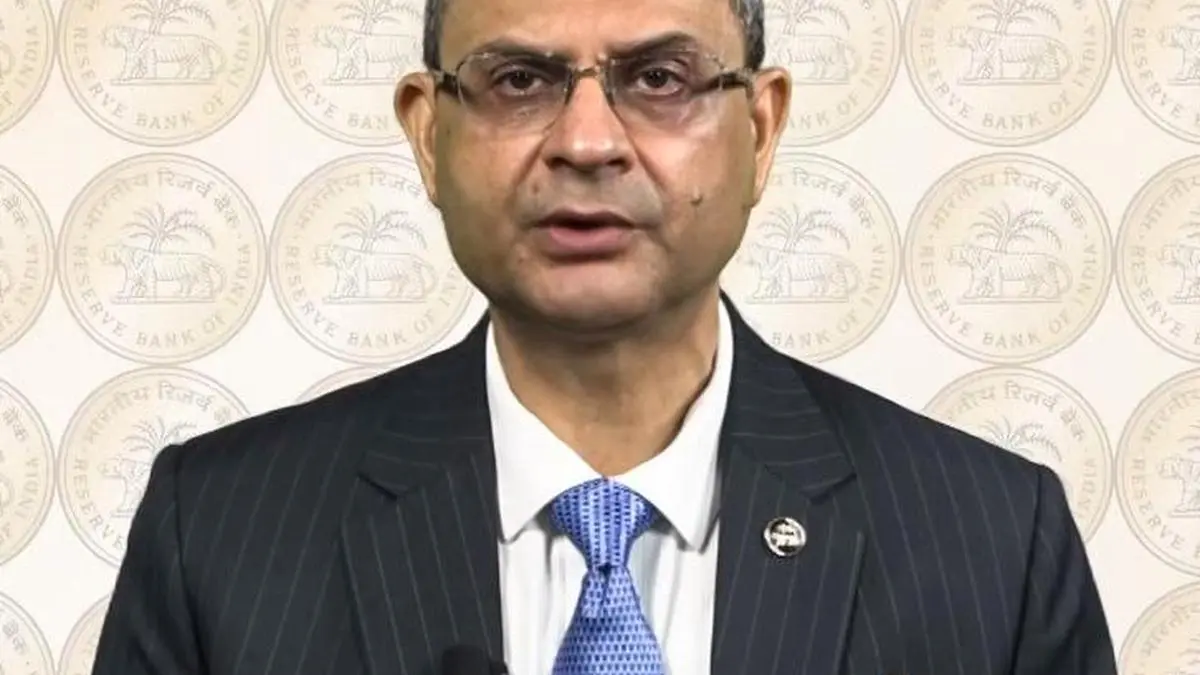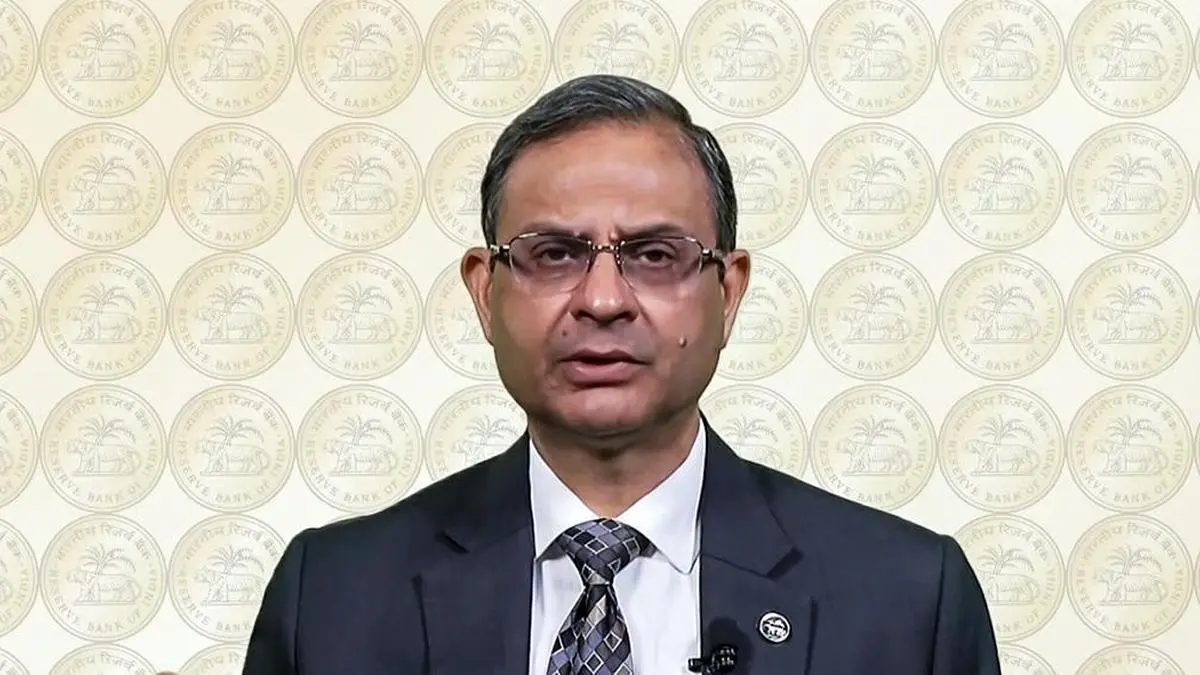
Reserve Bank of India Governor Sanjay Malhotra
| Photo Credit:
Reserve Bank of India Governor Sanjay Malhotra on Friday defended the central bank’s policy stance, reiterating its commitment to the 4 per cent inflation target while stressing the need to look through temporary supply-side shocks. Addressing the post-policy press conference, he also expressed confidence about stronger capital inflows and clarified the rationale behind PSU-focused ECB swap facility. Excerpts:On capital inflows from the measures takenWe are not targeting any particular amount, but we do expect healthy flows both from ECB and other various measures that have been announced today. And there were other measures which were taken even earlier whether it is in terms of the liberalised ECB scheme that we brought in and the measures that I mentioned in my monetary policy statement with regard to government initiatives in terms of the trade agreements etc. All those put together, we are quite confident of very healthy, a much better view this year as compared to what it would have been otherwise.On inflation and the 4% target levelIt is a target which is sacrosanct for us. It is a target which the government has given to us. The target is not in abeyance at all. It remains 4% and that is what our endeavour is. But keep in mind that this target is to be met over a period. It is a medium term kind of a target, and it is not advisable to take action for each and every small or large, especially small, deviations from the target because that can have consequences which can be disproportionate for growth. So, our target remains the same. It is 4%.We have to watch and see as to whether this shock supply, because it is a supply shock, whether its effect is going to persist or whether it is going to wane away. We will be very watchful if inflation is getting generalised, building into expectations and accordingly take action.It is neither possible nor is it advisable to have it pegged in a very small range and that is why we have this range. The range of 2-6% is primarily for this purpose. While the endeavour, the focus, the target is 4%, but there can be fluctuations around that and if they are really fluctuations, and the effect and inflation is coming down on its own, then we do not want to apply monetary policy tools, which will have other adverse consequences.On the updated list for upper layer NBFCsSee, the list is there already. So it continues till the time we have a new list…. we’ll do it shortly.On differential rates of interest on depositsWe have a very consistent and a very clear policy for deposits as to when they can have differential rates. I think for certain categories of people like senior citizens and then depending on tenor and things like that you can have differential rates, but they have to be transparent at the same time. You have to display them to everyone clearly and any differential rate beyond that, if someone is giving, is certainly not acceptable.On swap facility for ECBs only for PSUsThe public sector entities are a special category, and they are more in areas where we feel the needs of the economy are more ..and the benefits are also passed on to the general public because they are catering more to public utilities, infrastructure. So the benefits go to a much larger section of society when we give it to the public sector undertaking.If you give it to private, then the benefits are not as widely dispersed as they are when we give such kind of a benefit to the PSUs.On Access to MythosTo the best of my knowledge, it has not yet been given. There is talk, there are discussions on cloud and other, hopefully we will get. This is an item that has been engaging our attention, both at the government level and at the financial sector, inter-regulatory forum level. India has been included as one of the countries that will be part of this project with select corporates and financial entities having access to the project. But the details of which are still fully awaited. And once this opportunity opens up, how exactly to make use of it in consultation with government and with other regulators, we will take further steps.Published on June 5, 2026