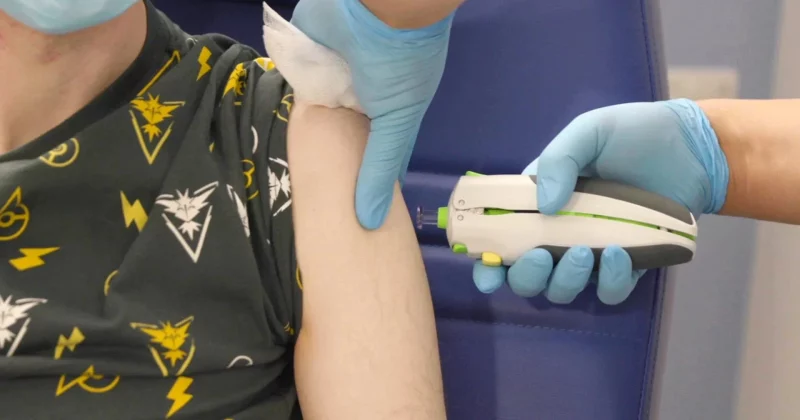
As bad a reputation as artificial intelligence has gotten in the public eye as of late, it’s helping to push medicine further. Case in point, an experimental pan-coronavirus vaccine developed with AI has just passed a phase I trial in the UK. Scientists at the University of Cambridge used AI to find a kink in the armor of coronaviruses, including SARS-CoV-2, the cause of covid-19. In healthy human volunteers, the vaccine candidate appeared to be safe and generated an immune response to multiple coronaviruses. The researchers are also hoping to use their platform to develop broadly effective vaccines against flu and the Ebola virus. “We’ve overcome the problem of traditional vaccines, which have limited protection,” said study author Jonathan Heeney, a researcher from the Lab of Viral Zoonotics at Cambridge, in a statement from the university. “It means we can escape the constant cycle of chasing the virus variants circulating in humans and updating the vaccines to try to catch up, like a dog chasing its tail.”
The universal holy grail of vaccines Vaccines train the immune system to recognize a germ before it actually infects us. This can be done by exposing the body to a weakened or killed version of the pathogen or a piece of it, known as an antigen. Some vaccines can provide sustained and even lifelong immunity, typically because the germ doesn’t change enough in meaningful ways to avoid this recognition. Yet other germs, like coronaviruses and influenza viruses, mutate constantly, shifting the parts of themselves that today’s vaccines use for training. As such, these vaccines have to be constantly updated and taken to ensure a decent level of immunity. To get around this limitation, some scientists are trying to develop universal vaccines that rely on distinct, rarely changing antigens found in a wide range of the target virus group.