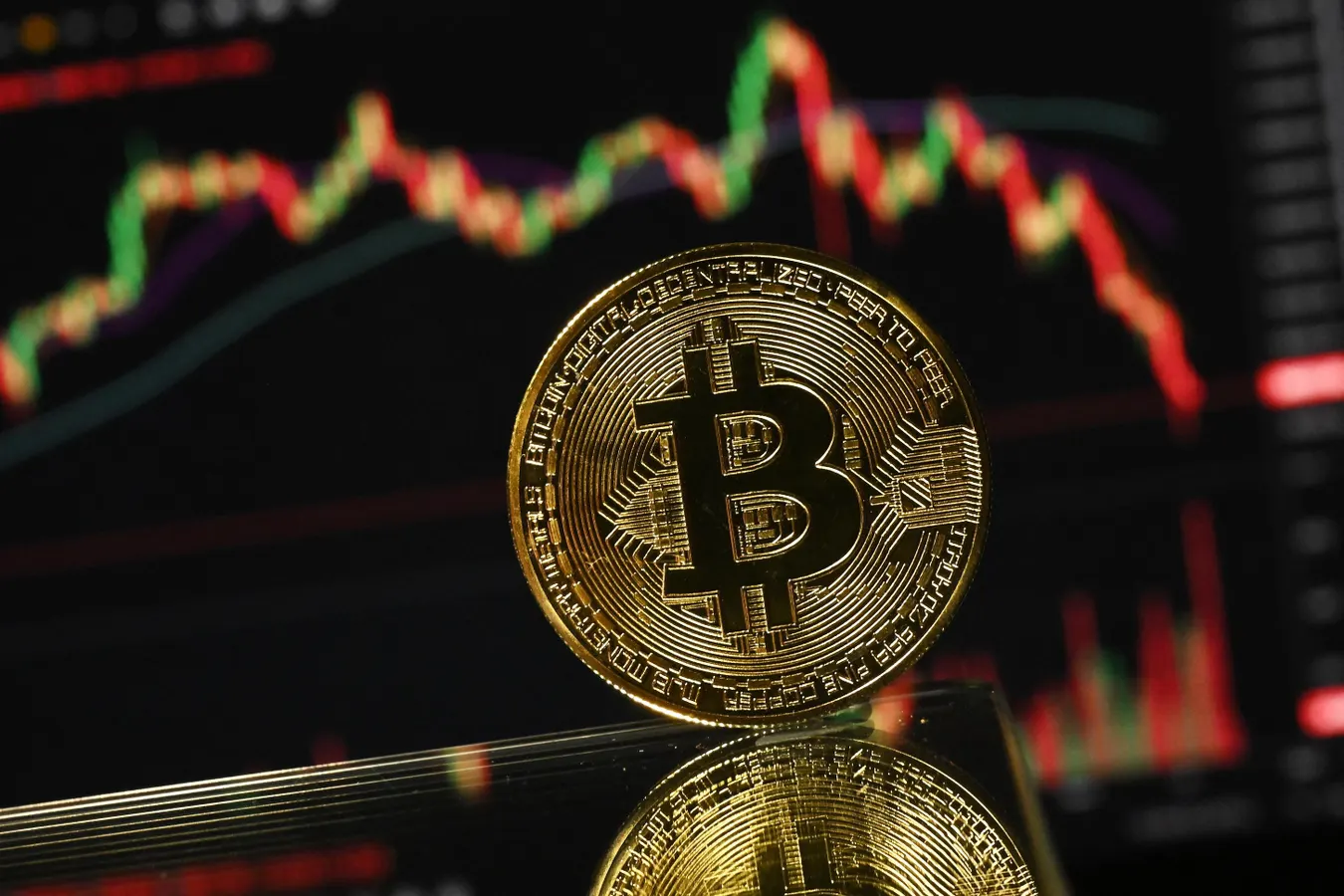
Bitcoin is heading for its worst performance for this point in the year in at least a decade, as booming AI stocks and a series of glittering upcoming new listings such as SpaceX lure away capital from the world's largest cryptocurrency. Its price has tumbled around 15 per cent this week, the most since November 2022, when trading platform FTX imploded. At around $63,000, bitcoin has lost a third in value so far in 2026, more at this point in the year than at any time since at least 2015, LSEG data shows.Adding to the pressure, Michael Saylor's Strategy, the largest corporate holder of bitcoin, disclosed on Monday that it had sold some of the holdings for the first time since 2022."It is instructive to see how assets can struggle as they move from being the flavour of the month to being suddenly out of fashion," RBC BlueBay Asset Management chief investment officer, fixed income, Mark Dowding said in a blog.Here's how the landscape for bitcoin, which hit record highs above $125,000 late last year, is shifting.Bitcoin Price CrashesBitcoin is around 40 per cent lower than where it was when U.S. President Donald Trump took office in January 2025, having vowed to make the U.S. the crypto capital of the world. A slew of crypto-friendly appointments to key roles in regulatory and financial roles boosted bitcoin sentiment at the time.But with big institutional players and investment banks heavily involved, as well as liquid exchange-traded products, the very things that made bitcoin so appealing as a potential portfolio diversifier - its high volatility and lack of correlation with other asset classes - have diminished.Crypto options trading platform Deribit's DVOL index of implied volatility in bitcoin options is currently around 47, its highest since early April, but not far above a record low around 31 struck in late May. Since its launch in 2021 until around April last year, the index barely fell below 50.In terms of correlation, prior to 2020, bitcoin had no set relationship with the S&P 500. But for most of the last six years, the two have moved in lockstep. This relationship has flipped into deeply negative territory recently, as the AI-driven stocks bull-run roars on, while bitcoin lags.Rise of StablecoinsGone are the days when bitcoin accounted for most of the crypto market. The ecosystem now buzzes with large rival coins, such as ether, solana and BNB, and smaller "alt-coins", which now make up a fifth of the total market, according to CoinGecko.The rise of stablecoins, pegged to a fiat currency such as the U.S. dollar, have also hurt bitcoin's market share.According to CoinGecko, bitcoin accounts for 56 per cent of the crypto market, compared with 63 per cent a year ago. The market share of ether and alt-coins has remained roughly steady, while stablecoins now account for almost 13 per cent of the market, versus roughly 7 per cent a year ago.Even on a daily basis, volume in top stablecoin tether is more than that in bitcoin and ether together, while volume in runner-up USDC is equal to that in the next 10 coins combined, according to CoinGecko data.Cryptocurrency InvestorIt's also not just other cryptos with which bitcoin must compete for investor cash. When the AI story began to take off, with the launch of ChatGPT in late 2022, bitcoin benefited from investment flows seeking out all things tech-related.AI now dominates stock markets, with money piled into the hyperscalers rolling out datacentres, the nuts-and-bolts makers of semiconductors, chips and even copper wire.In the last year, U.S. semiconductor stocks have surged 170 per cent; bitcoin has lost 40 per cent. The capital going into AI-related stocks has to come from somewhere.Investors are pulling cash out of the big bitcoin ETFs at the fastest pace on record, with over $2.7 billion in net outflows in the week to Thursday, LSEG data show. This brings the net outflow for 2026 so far to $3.1 billion.The four largest semiconductor ETFs - VanEck's Semiconductor ETF, the Roundhill Memory ETF, State Street's SPDR S&P Semiconductor ETF and iShares Semiconductor ETF - have pulled in over $3 billion in the first week of June alone and a whopping $21 billion in the year to date.
Bitcoin soon to become a thing of the past? What is wrong with world's largest cryptocurrency which hit record highs above $125,000 a few months back?
Bitcoin price is around 40 per cent lower than where it was when U.S. President Donald Trump took office in January 2025, having vowed to make the U.S. the crypto capital of the world.
701 words~3 min read