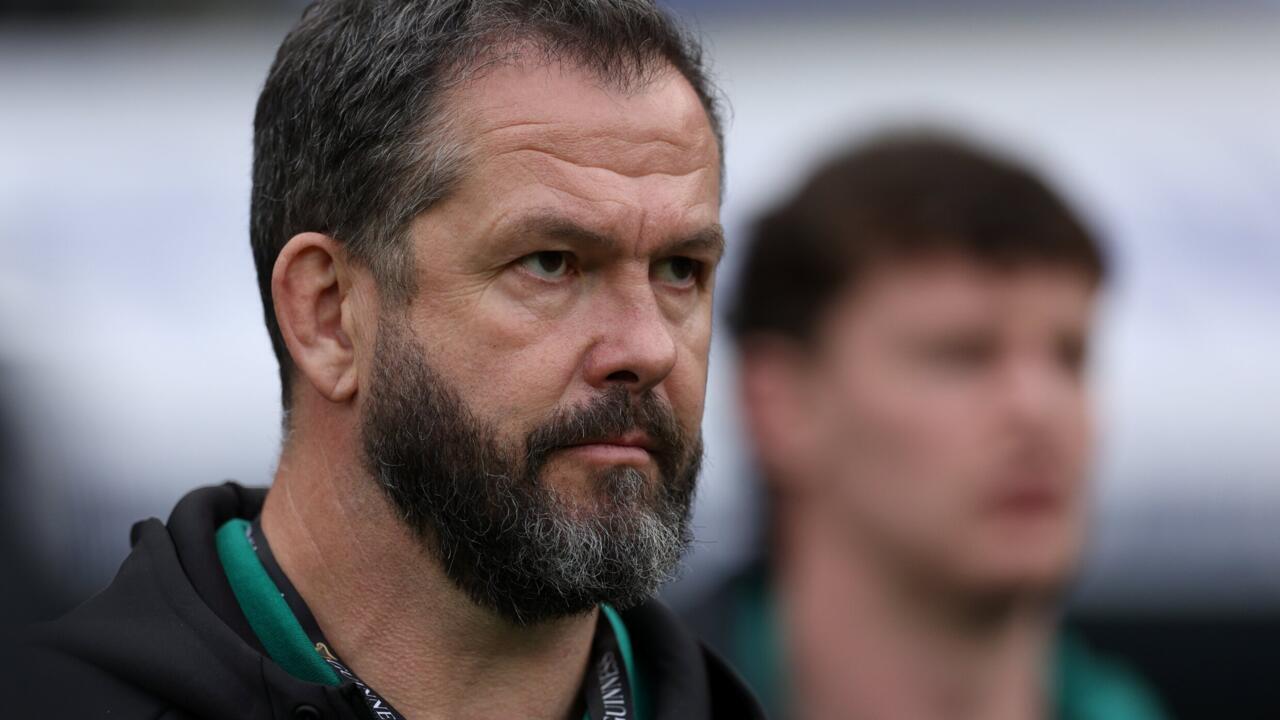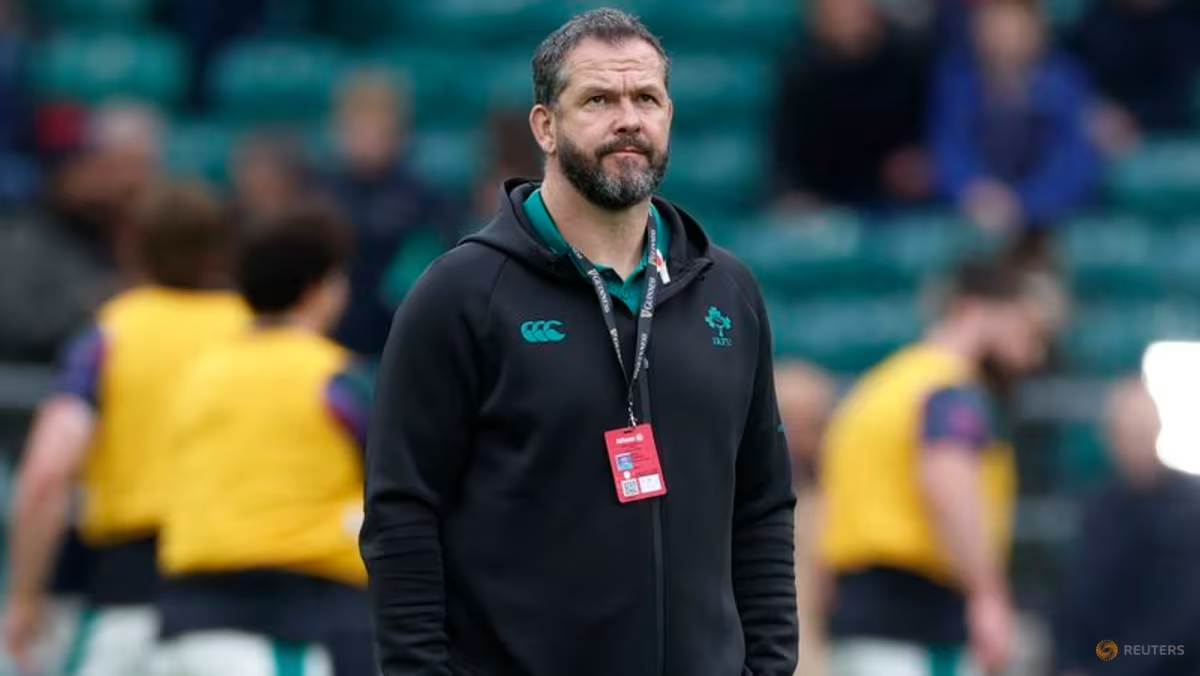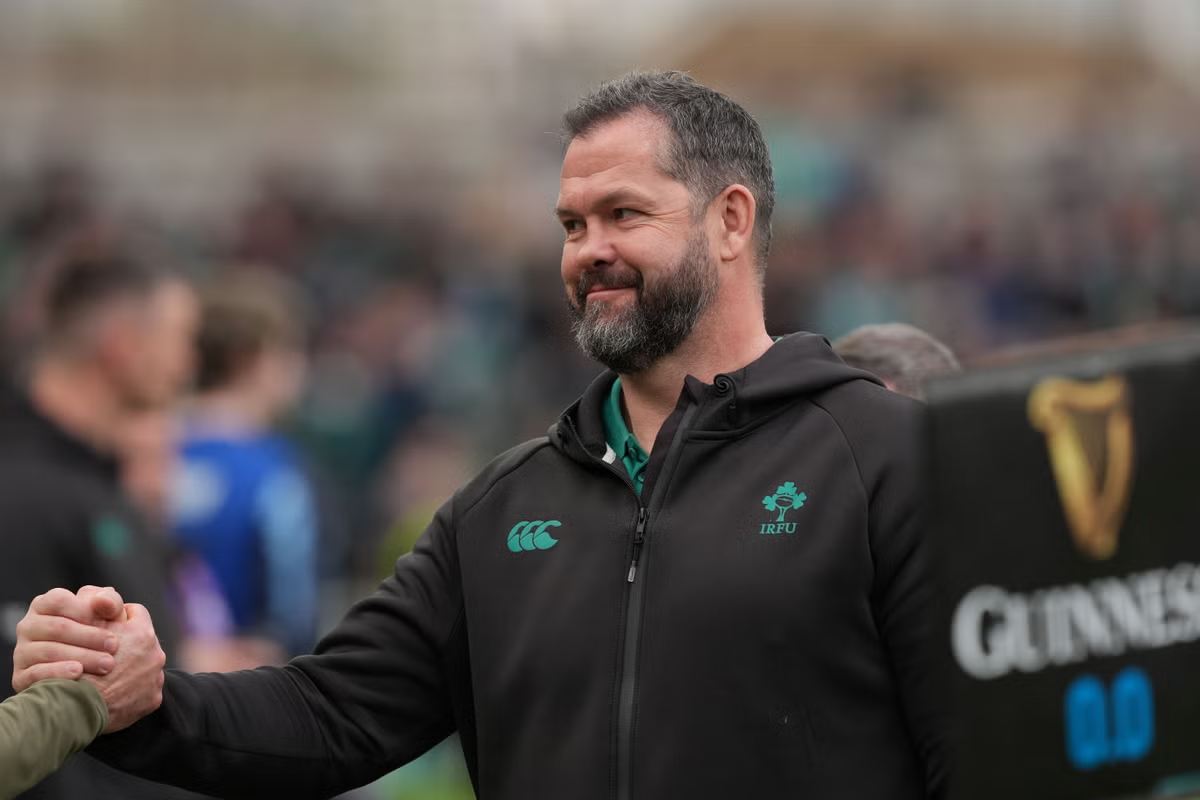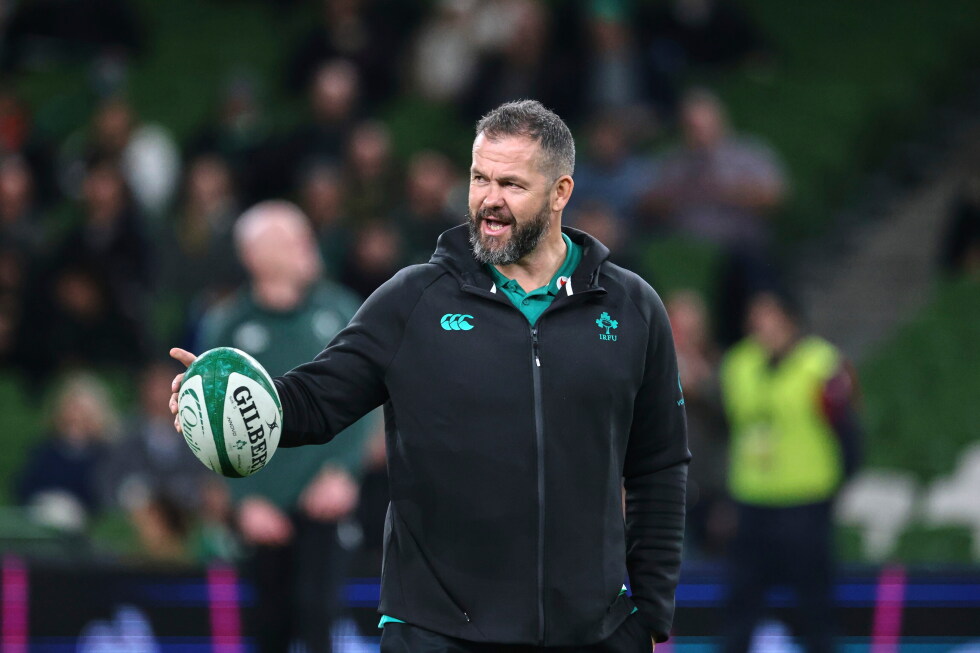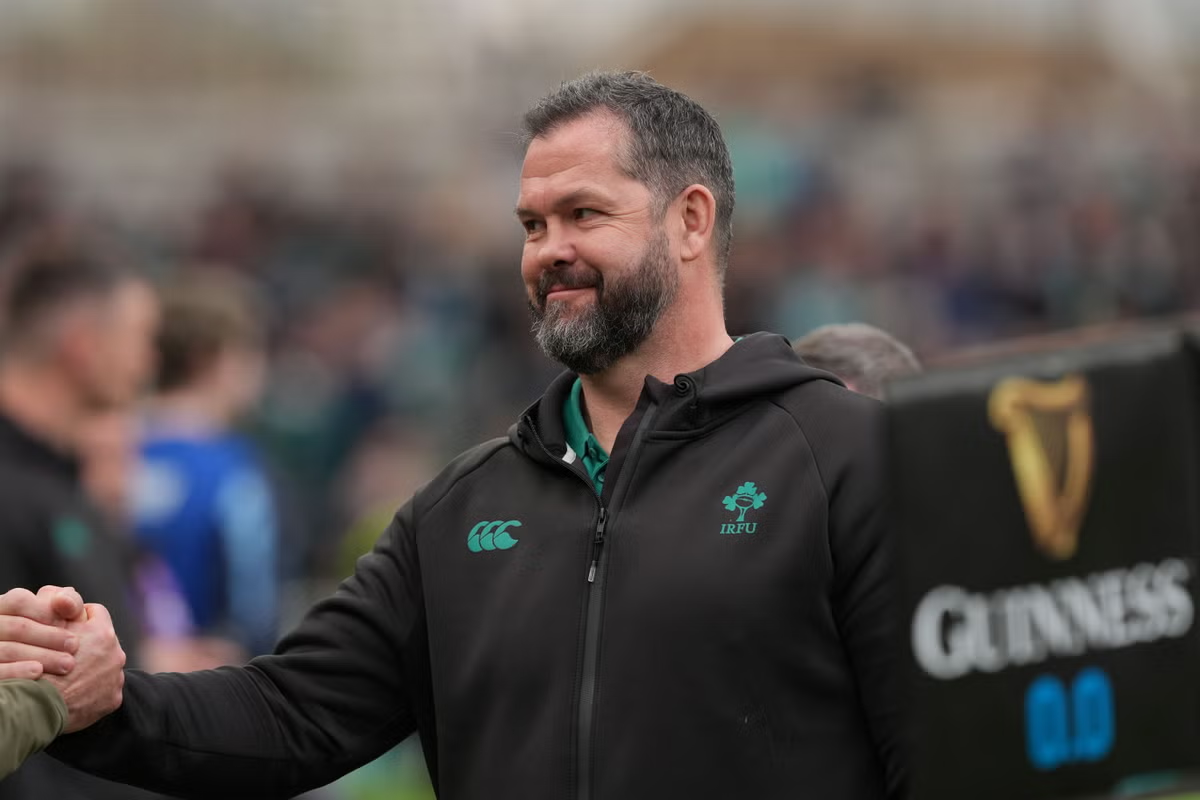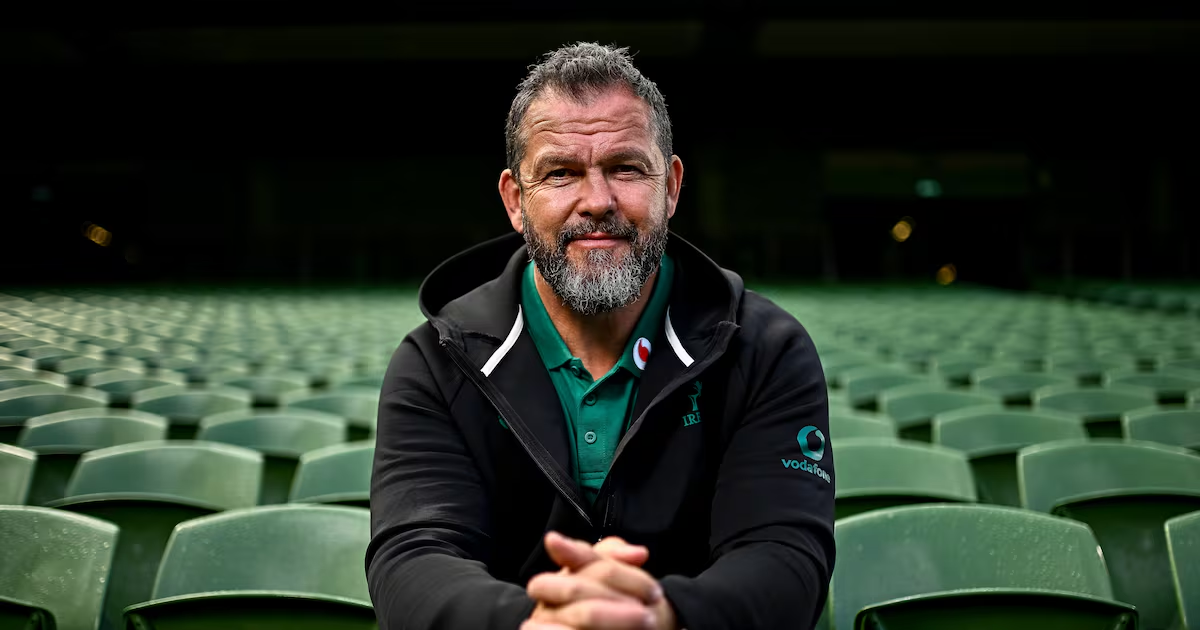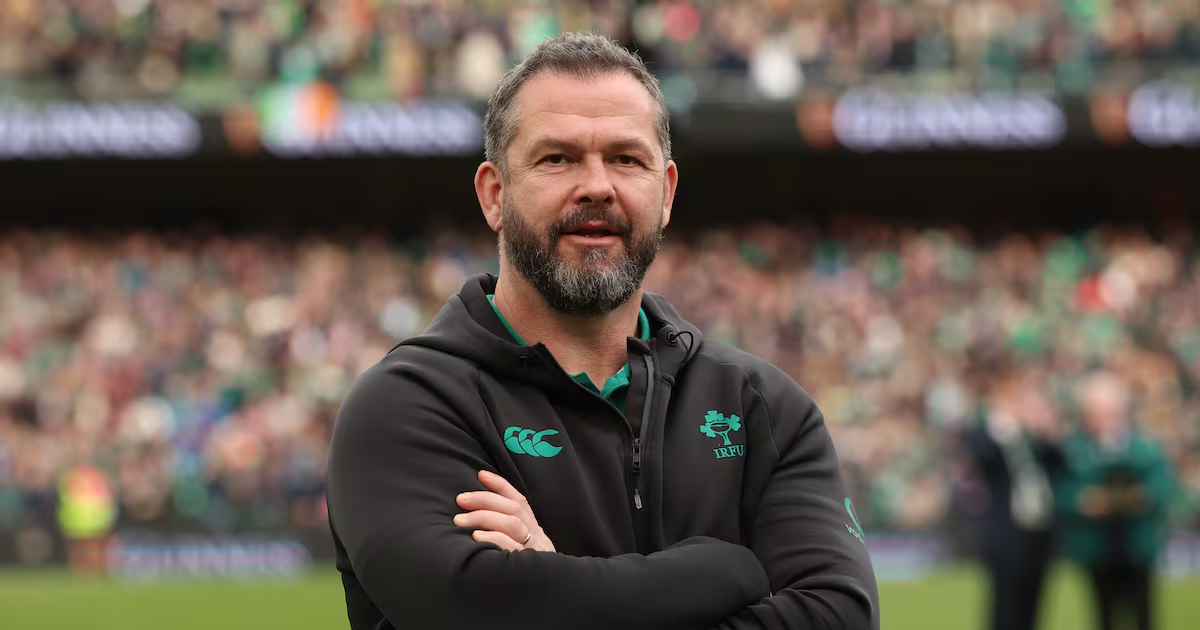
Ireland’s head coach must continue to reinvent himself if he is to be successful until the 2031 World Cup Andy Farrell has signed a contract extension to remain as Ireland head coach until the conclusion of the 2031 World Cup. Photograph:: Liam McBurney/PA Wire Fri Jun 05 2026 - 16:54 • 6 MIN READHow many times have Madonna and Andy Farrell come up in the same conversation?Upon spitting out the cornflakes on Friday morning when reading the year attached to Andy Farrell’s contract extension (2031), a much, much older family member brought up the musical comparison. “He’ll have to be like Madonna. Sure wasn’t she the queen of reinventing herself?”How would I know? Google says that she once want on a tour that was entitled Re-Invention, so maybe there’s something to it.By the time Farrell comes to the end of his latest Ireland deal, he will have been the figurehead of Irish rugby for 12 years. This after just over three years as an assistant to Joe Schmidt. The success that has seen the IRFU comfortable in making Farrell their longest-tenured head coach is clear, but so is one obvious pitfall.Sport, if not life itself, is littered with stories of partnerships that endure past their sell-by date. There is a reason why, depending on the country, divorce rates can be as high as 40 per cent. People get fed up with listening to the same voice.In sport, leading tacticians in one era become stale overthinkers in the next. Only the most adaptable coaches survive for long periods working in the same organisation with familiar players. The IRFU are banking that Farrell can be such an innovator. What is the evidence to suggest they are right?Ireland head coach Andy Farrell celebrates with his captain Caelan Doris. Photograph: Liam McBurney/PA Firstly, the good stuff. It’s pretty clear why the IRFU have jumped at the chance to keep a man who has presided over plenty of on-field success. Since replacing Schmidt atop the tree, Farrell has led Ireland to one Grand Slam, an additional Six Nations title alongside three more Triple Crown successes. Ireland have also won a series in New Zealand and drawn a two-match tour away to South Africa. In the first of what will eventually be three World Cups with the Wigan man at the helm, Ireland fell short to the All Blacks at the quarter-final stage again. Plenty believe Ireland should have won that game, Jordie Barrett’s knee proving to be a deciding margin.Farrell has led Ireland in 59 total matches (there have been 66 Irish games during this period, Farrell missing seven while on his Lions sabbatical). Ireland have won 46 of these, for a winning percentage of 78.In this era, Ireland have never finished lower than third in the Six Nations. That consistent level of prize money is important to the beancounters on Lansdowne Road.Amid Wales’ downturn in recent years, Farrell was won seven of eight contests since taking over in 2020. Ditto Italy, against whom Ireland have a perfect record since 2020. Add to that list Scotland, Farrell winning all eight of his matches.England is arguably the most impressive record. Under Farrell, Ireland have never lost at home to their rivals across the Irish Sea. Against a better-resourced union, not to mention his former employer, Farrell has won six of eight matchups. Against the Springboks, the two-time defending World Cup champions, Farrell has won three times out of five. One victory coming at the 2023 World Cup which South Africa went on to win.There are two teams against whom Farrell has a losing record. Despite a memorable series win in New Zealand, Ireland have lost four of their seven contests against the All Blacks. Closer to home, France remain Irish rugby’s great white whale. Farrell has only won twice in seven attempts against Fabien Galthié’s side, mirroring Leinster’s recent inability to overcome French opposition in European finals.What, then, of longevity? Rassie Erasmus has been in charge of the Springboks since 2018. He will also be in situ at the 2031 World Cup in America but has already won two Webb Ellis trophies in just over eight years. South Africa are the current model for sustained success in rugby, but sport as a whole has plenty of examples of longevity ending badly.Arsene Wenger is widely said to have stayed at Arsenal long past his peak. Bill Belichick’s time with the New England Patriots, despite six Super Bowl victories, ended with the team sporting a losing record. Ditto Greg Popovich who won five NBA titles with the San Antonio Spurs (Popovich stepped away during the summer after a stroke saw him miss much of last season).All three teams have achieved success under new management. Arsenal have just won the Premier League, while the Patriots and Spurs were in the respective finals of their sport.In rugby, Warren Gatland ended a 12-year stint as Welsh head coach with a Grand Slam and World Cup semi-final appearance. His return, three years later, came with the country in the midst of a historic low ebb. He was criticised for his failure to quit while ahead.On these shores, Schmidt coached Ireland for six mostly fruitful years, only for the 2019 Six Nations and World Cup campaigns to end things on a low. Players are on record saying the environment became too intense.With Leinster, Leo Cullen is learning the difficulty of remaining in situ for a lengthy period with fluctuating levels of success. Granted, Cullen and co have tried to evolve, most significantly with coaches and defensive playing style in a bid to (as of yet, unsuccessfully) end their European drought.Evidently, the IRFU are happy that Farrell has shown an ability to evolve effectively. The coaching staff has naturally changed, Andrew Goodman replacing Mike Catt in the attack bureau when the latter decided to move on. Come 2031, it seems highly unlikely that Simon Easterby, Paul O’Connell, John Fogarty and Goodman are the main advisers. Not for any lack of confidence in those individuals, but rather for the sake of varying the voices on the paddock given the loudest one is all but guaranteed to remain the same. Farrell-McNamara-Edwards for USA 2031, anyone?Ireland winger Jacob Stockdale competes with France's Matthieu Jalibert during the Six Nations. Photograph: Billy Stickland/Inpho Ireland’s playing style has seen significantly more upheaval. These pages have been awash with borderline obsessive analysis (it’s a fascinating topic) of Ireland’s desire to evolve from a possession dominant, phase-play team to one that kicks more and looks for improved transition attack in loose-ball situations.The first game of the Six Nations was a low point for this new Ireland. In order to have the scraps with which to attack on transition, you must first win the aerial contest. Against France, Ireland’s high ball work was abysmal (both wingers paid for this with their place in the XV a week on) and one of the world’s best counter-attacking sides blew their hapless opponents away.Fast forward to Twickenham and Rob Baloucoune and Tommy O’Brien began to win high balls. Ireland made good decisions off the resulting quick ball and cut England open. Much like hammering England in 2021 marked the start of the upturn of Ireland’s intricate, ball-dominant attack after a difficult start to his tenure, could a similar derailing of the chariot mark Farrell’s ability to catch up to the global transition trend? Add in the return of Ireland’s cutting-edge off set-piece against Scotland and all of a sudden this looked something more resembling a well-rounded attack.Replicating that form against New Zealand this summer will be the one step of measuring the success of Ireland’s evolution. Next year’s World Cup will be the ultimate arbiter. Thereafter, Farrell will have to do it all again. Plenty will be re-signed, but the list of players with contracts expiring post-2027 include names such as Aki, Furlong, Beirne, Henshaw, Hansen, Porter and Doris.Continuity is the great hallmark of the Irish system. A small population feeding into a four-team professional structure guarantees minimal churn in the playing group. The IRFU wants to mimic player continuity in the coaching box, rewarding a successful figure who knows the system intimately.The IRFU have doubled down on a man with a track record of winning matches, motivating players and, if even in a small sample, evolving tactical plans. Time will tell if this is the way to break the World Cup hoodoo. Set to coach at three global showpieces, Farrell will certainly have more opportunities than any previous Irish head coach to do just that. Unlike Madonna, he will get more than one Re-Invention Tour.IN THIS SECTION
Why did the IRFU make Andy Farrell their longest-tenured coach?
Ireland’s head coach must continue to reinvent himself if he is to be successful until the 2031 World Cup
1,432 words~7 min read