ST. PETERSBURG, June 5. /TASS/. The integration of countries within the Eurasian Economic Union (EAEU) makes it possible to overcome the consequences of the crisis in the Middle East and withstand external shocks, Russian Deputy Prime Minister Alexey Overchuk said at the St. Petersburg International Economic Forum (SPIEF).
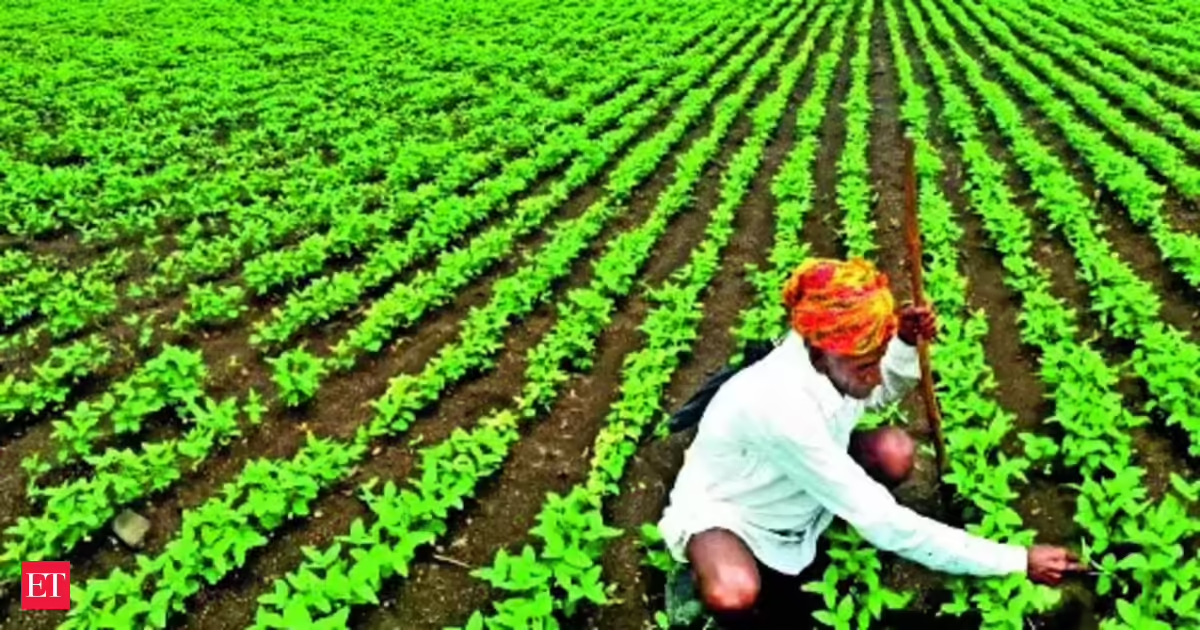
"Of course, we can’t ignore issues of the agro-industrial complex and food production in isolation from fertilizer supply and prices. We see fertilizer prices rising today, and we see how vulnerable they are to the well-known events, including in the Middle East. This is all part of the global economy; we are all interconnected, and the connections we have developed and continue to develop, the integration, is precisely what allows us to withstand these external shocks," he said.
According to UNCTAD forecasts, a slowdown in global trade is expected in 2026, Overchuk noted. "This is due, among other things, to geopolitical barriers, tariff wars, and fragmentation, with all of these negative processes intensifying. And if we look at the problems traditional food exporters are facing today, the United States and the European Union, we see that we are actually in a very good position here. I mean, our farmers have learned to successfully leverage their competitive advantages. This, of course, opens up a very good window of opportunity for us," he explained.