By GMA News Published June 5, 2026 11:43pm + Add GMA on Google Make this your preferred source to get more updates from this publisher on Google. Former Senate President Franklin Drilon and a legal expert on Friday said Senator Sherwin Gatchalian’s bloc was correct in citing a 1949 Supreme Court ruling to determine a Senate quorum.In the 1949 Supreme Court decision in Avelino v. Cuenco, the quorum did not depend on the total number of senators, which was 24. Instead, the quorum was based on the number of senators within the Senate's jurisdiction.Before the Cayetano bloc, Drilon first used this decision on May 5, 2015.“Sa decision ng Korte Suprema doon sa Avelino vs. Cuenco, kung saan sinabi ang quorum ay made-determine sa number of senators na siyang nasa jurisdiction ng Senado. Kaya po 24 minus seven ay 17 senators ang pagbabasehan ng quorum sa bilang,” Drilon said in a report by Maki Pulido on “24 Oras” Friday. (Based on the Supreme Court decision in Avelino v. Cuenco, it was established that a quorum is determined by the number of senators who fall within the Senate's jurisdiction. Therefore, subtracting seven from 24 leaves 17 senators as the baseline for calculating a quorum.)During the 2015 session, Senators Alan Peter Cayetano and Pia Cayetano were present and did not raise objections.The ruling in Avelino v. Cuenco was invoked again on Wednesday by the Gatchalian-led bloc. With Senators Jinggoy Estrada and Ronald ‘Bato’ Dela Rosa outside the Senate’s jurisdiction, the June 3 session successfully formed a quorum with 12 senators present out of the 22 remaining members.This basis of quorum, however, is being challenged by Senators Pia Cayetano and Loren Legarda.“‘Yung nagtatago at ‘yung nakakulong, nasa labas sila ng coercive powers ng Senado. ‘Yung 22 lang ‘yung pwede, theoretically, pilitin na mag-attend ng sesyon," UP College of Law Associate Dean Paolo Tamase said.(The one who is in hiding and the one who is detained are outside the coercive powers of the Senate. Theoretically, only the remaining 22 can be compelled to attend the session.)“Hindi nila pwedeng pilitin si Senator Bato dahil hindi nila alam kung nasaan siya, hindi rin naman nila pwedeng pilitin si Senator Jinggoy kasi nasa nasa judiciary na siya,” he added.(They cannot compel Senator Bato because they don’t know his whereabouts, nor can they compel Senator Jinggoy because he is already under the jurisdiction of the judiciary.)To create a quorum in Senate sessions, the high court says the head count should be a “majority of the house,” or the number of senators within the jurisdiction of the court who could be compelled to attend sessions.Tamase explained that this is different from the phrase “majority of all the members” (24 senators), which Cayetano and Legarda have been insisting.Tamase added that the phrase “majority of all the members” was only used in the Constitution for electing a Senate President.1935 and 1987 ConstitutionThe Avelino vs. Cuenco decision was made while the country was still using the 1935 Constitution.However, Tamase pointed out that the 1987 Philippine Constitution lifted its definition of a quorum directly from the 1935 charter.“Tinitingnan natin yung teksto ng [1935 Constitution] upang unawain yung saligang batas sa [1987]. Ang thinking ay kung kinopya ng ‘87 yung ‘35 na wording, then yung intent nung mga nag-adopt ng Saligang Batas ay susundin natin yung lumang patakaran o yung lumang rule,” Tamase said. (We look at the text of the 1935 Constitution to understand the 1987. The thinking is that if the 1987 version copied the wording of the 1935 version, then the intent of the framers of the Constitution is for us to follow the old rule.“In that light, pareho yung teksyo nung ‘35 at ‘87 walang materyal difference ukol dito, at least, sa point ng quorum,” he added. (In that light, the texts of the 1935 and 1987 Constitutions are identical; there is no material difference between them, at least regarding the point of a quorum.)The 1935 and the 1987 Constitutions both state: “A majority of each House shall constitute a quorum to do business.” —Lyjah Tiffany Bonzo/LDF, GMA News
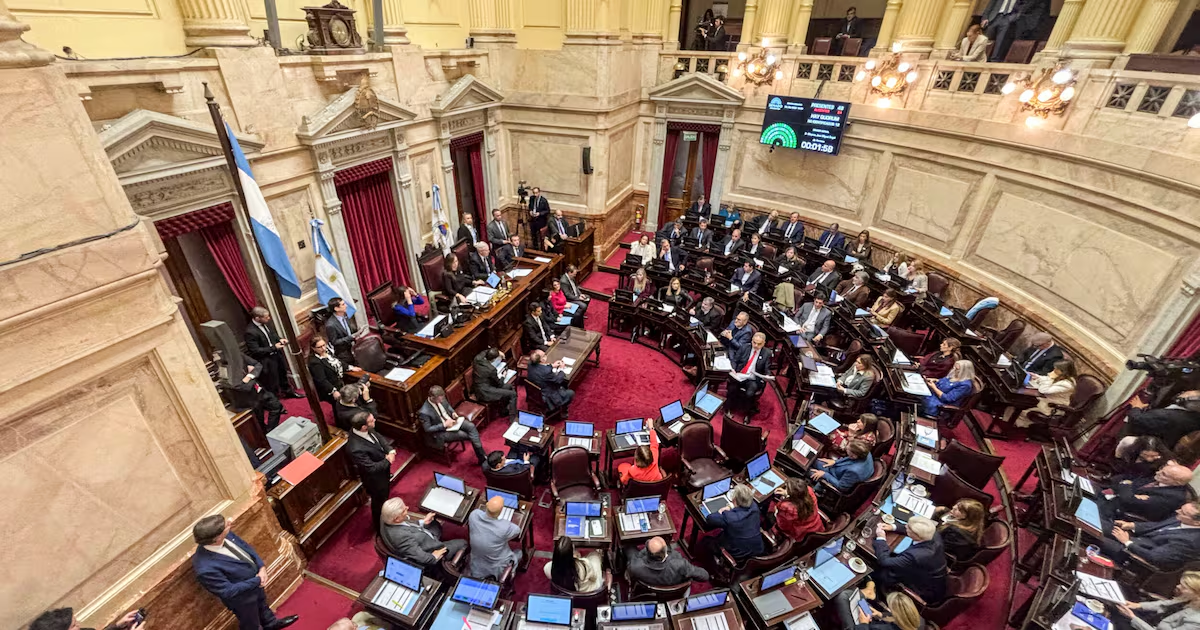
Drilon recalls May 5, 2015 session's quorum of 12
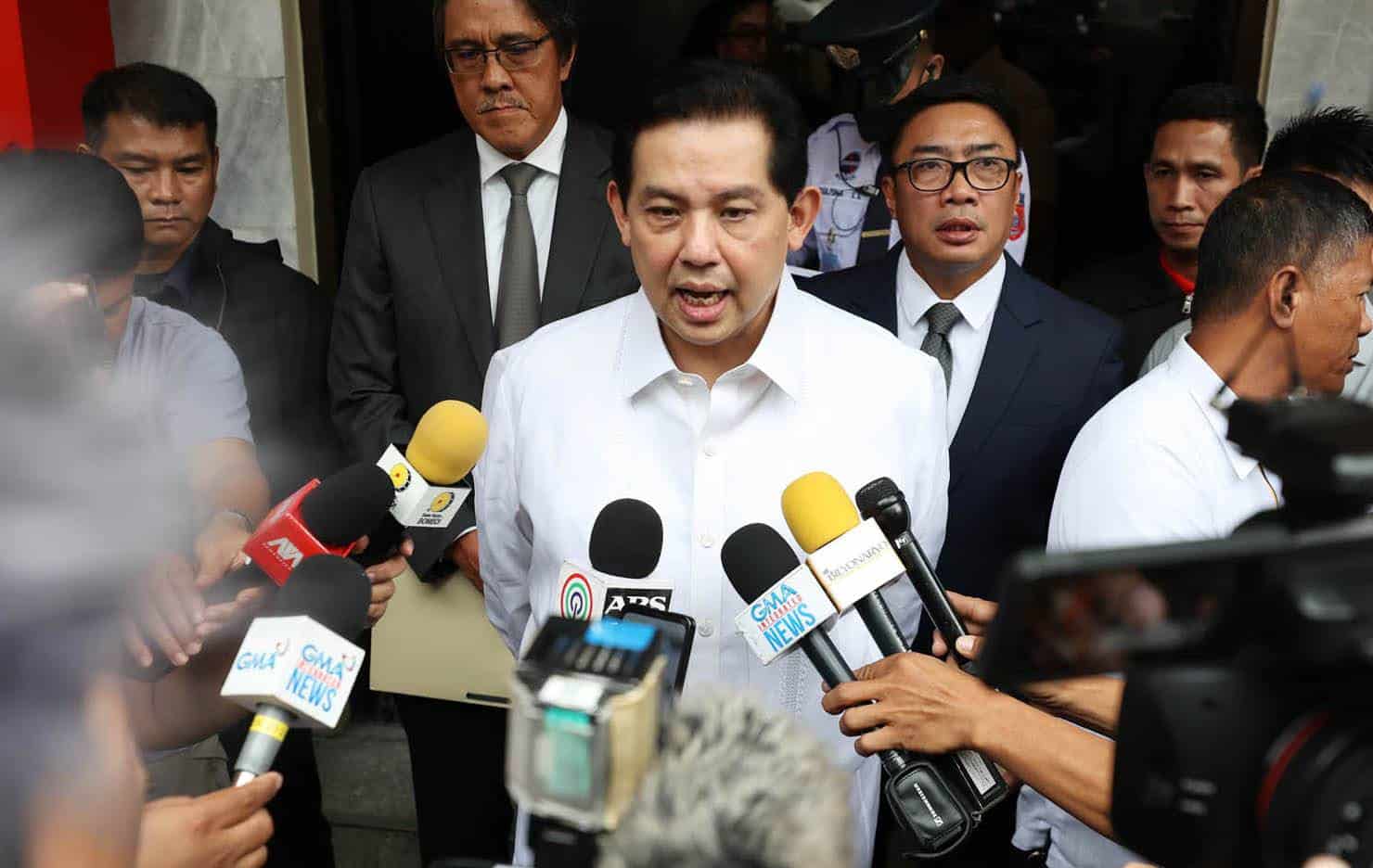
Former Senate President Franklin Drilon and a legal expert on Friday said Senator Sherwin Gatchalian’s bloc was correct in citing a 1949 Supreme Court ruling to determine a Senate quorum.
678 words~3 min read