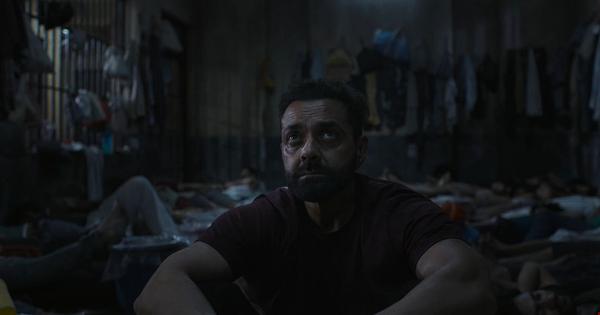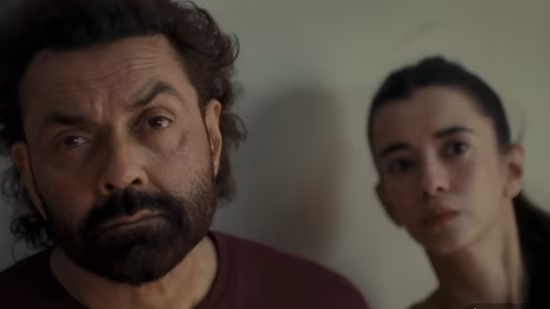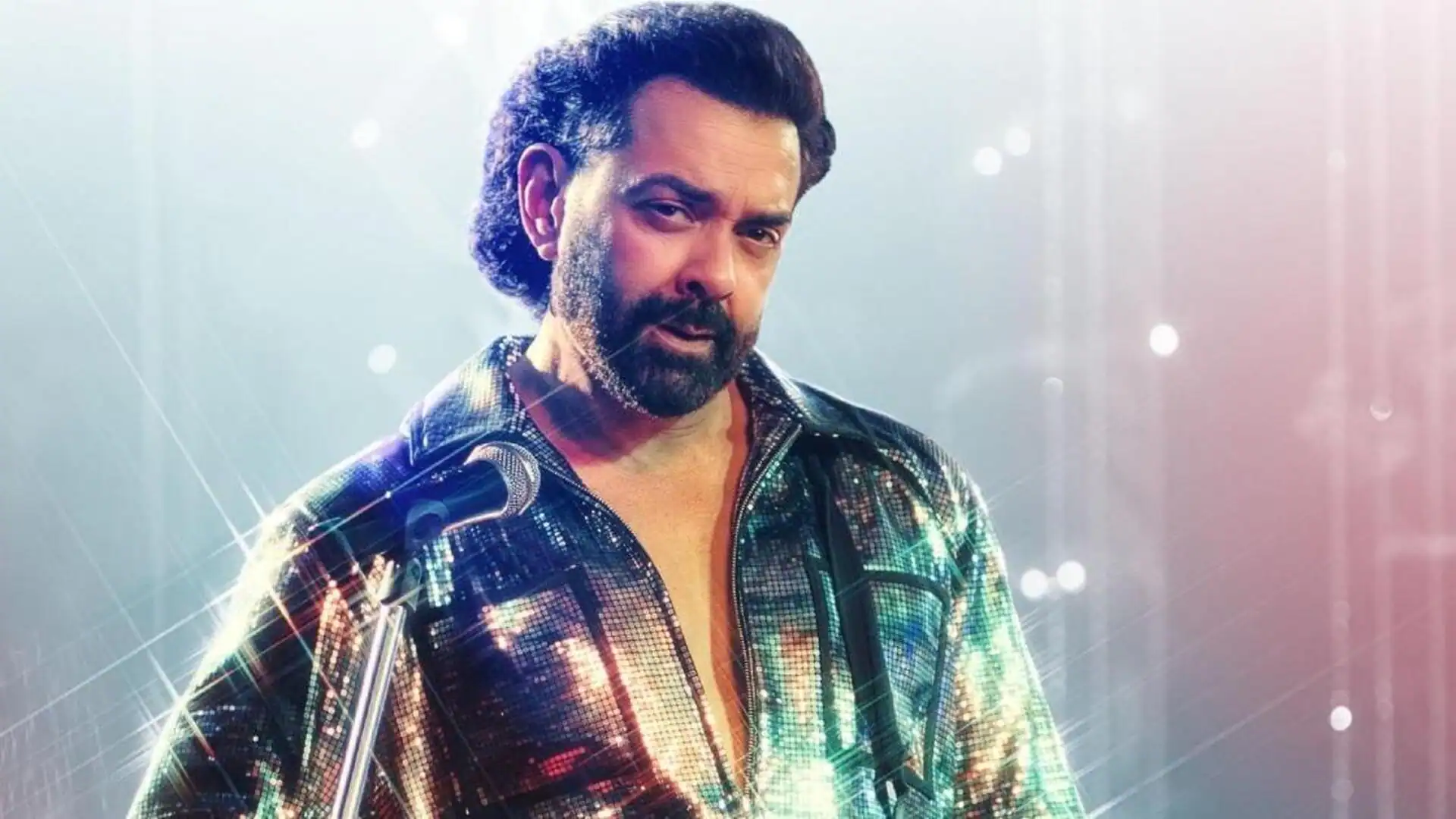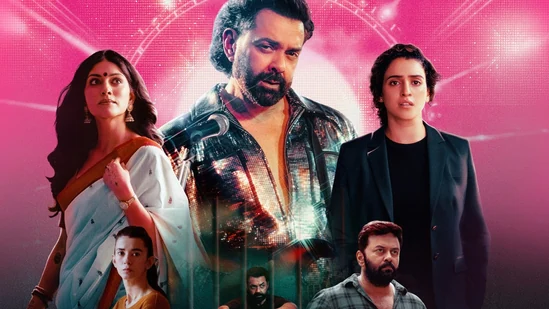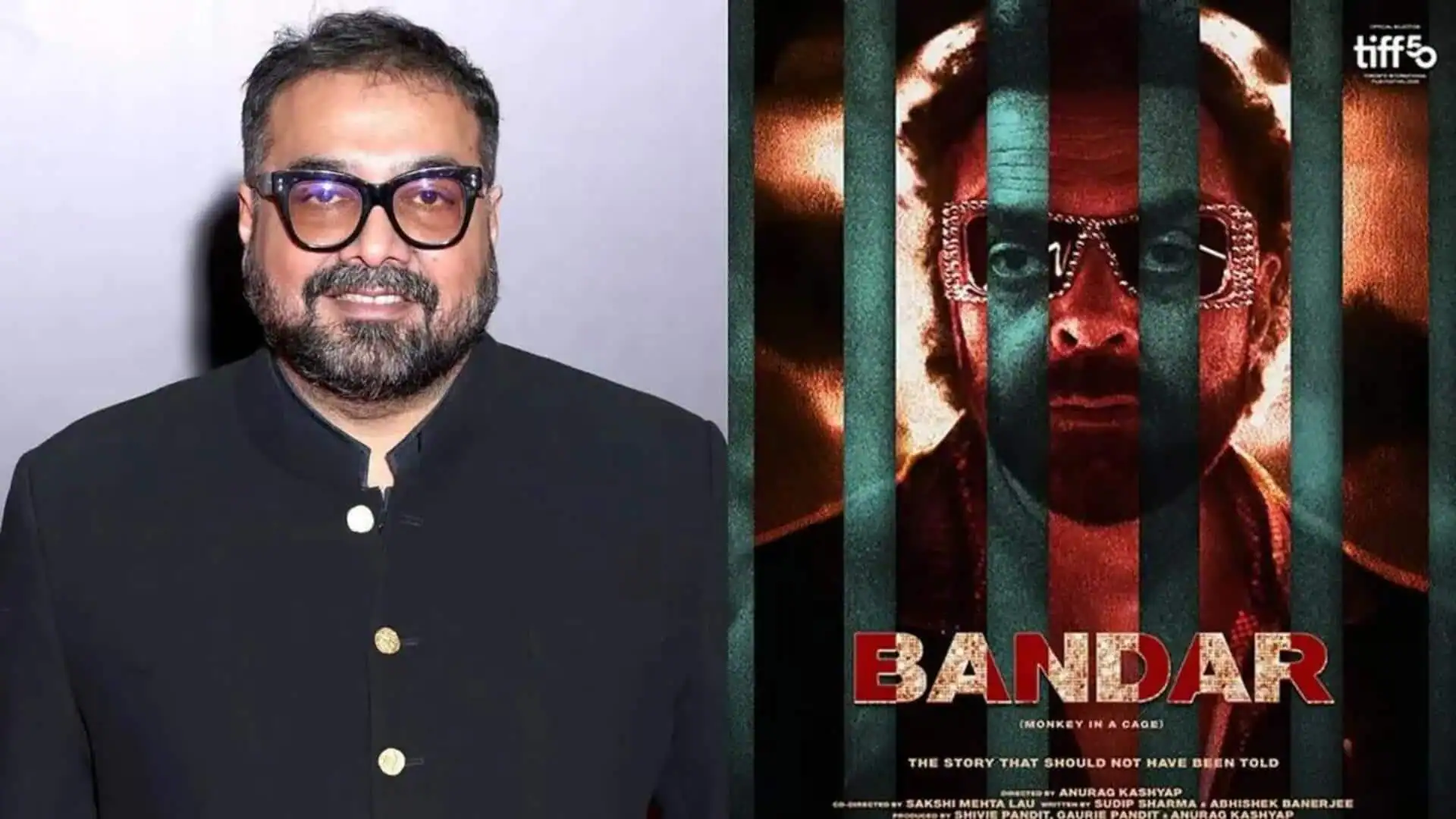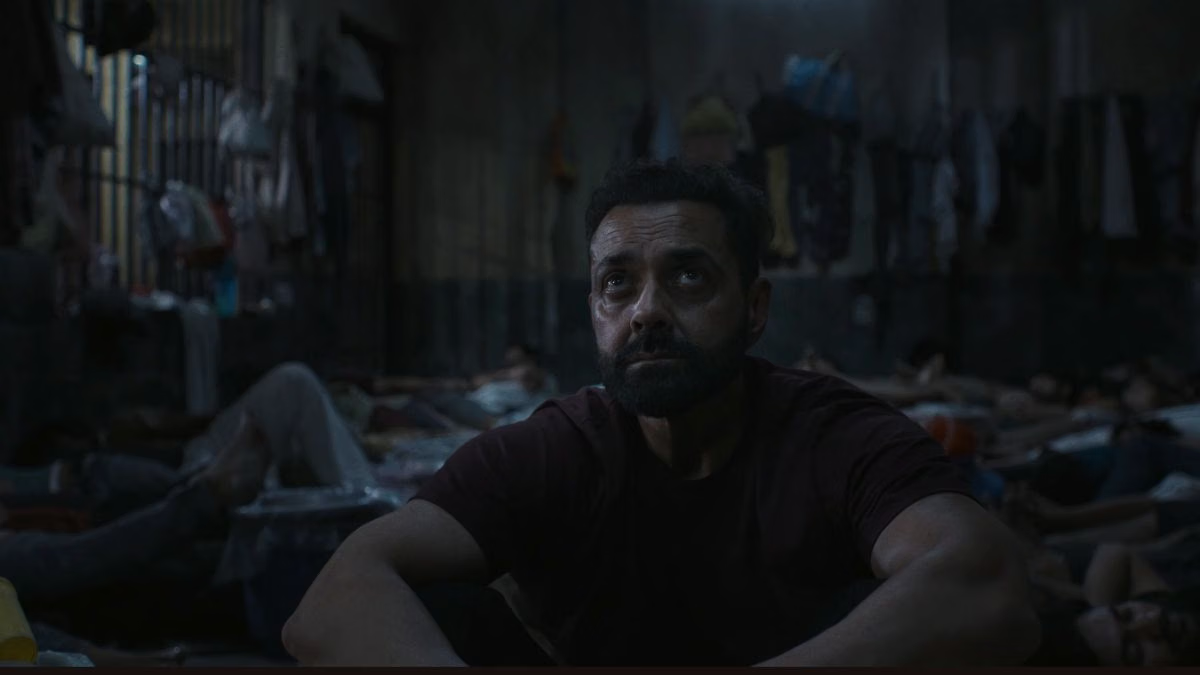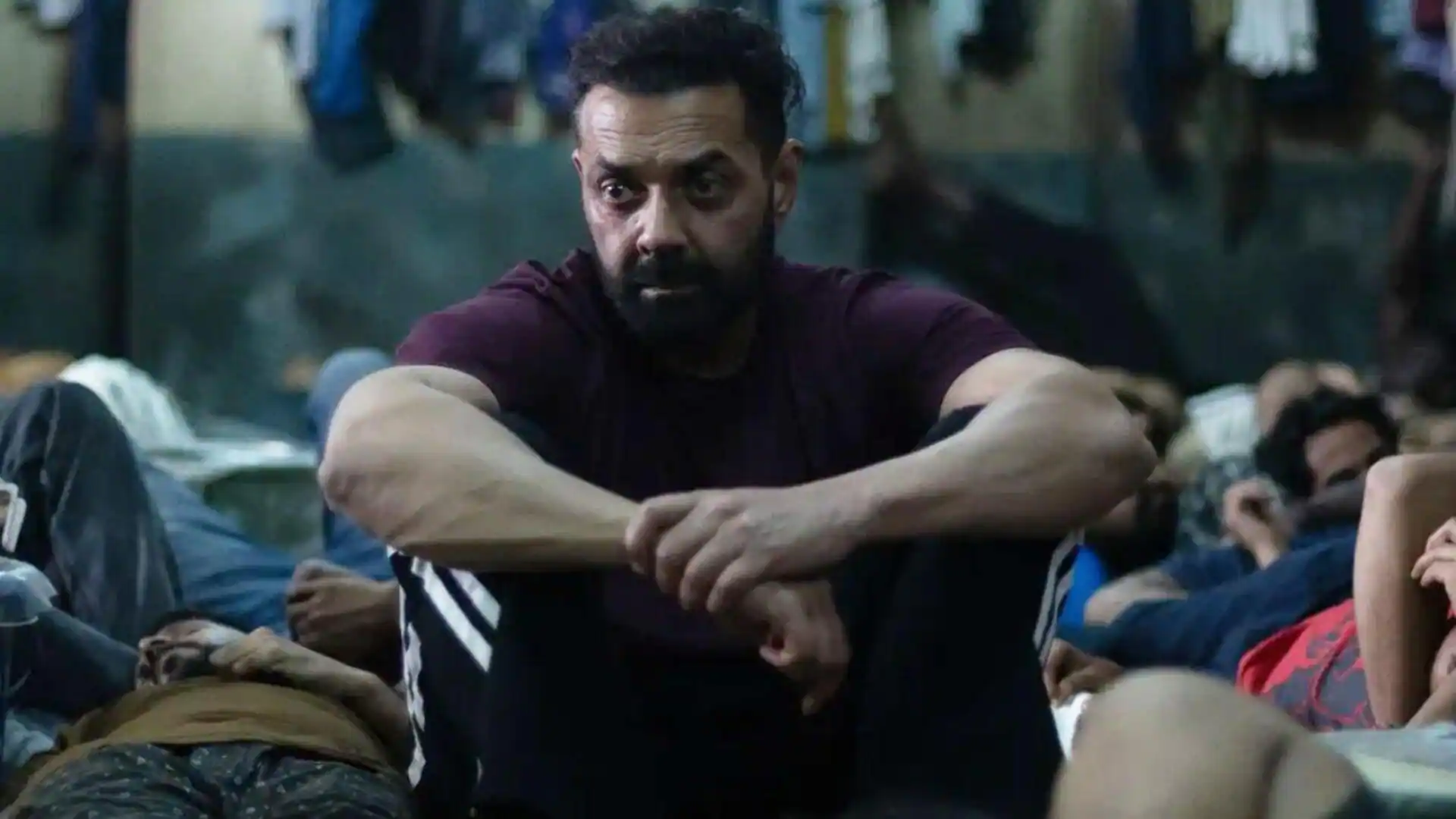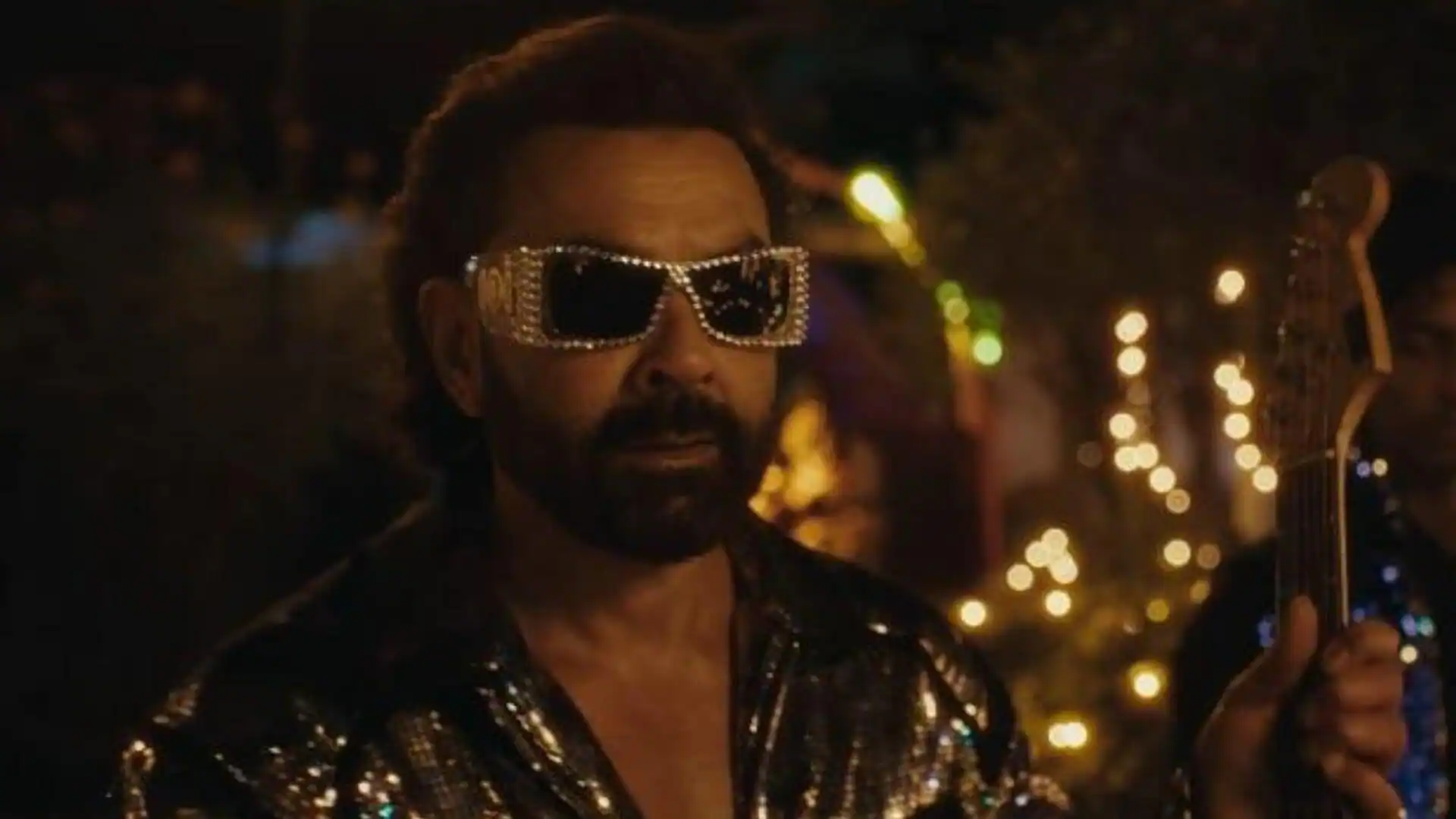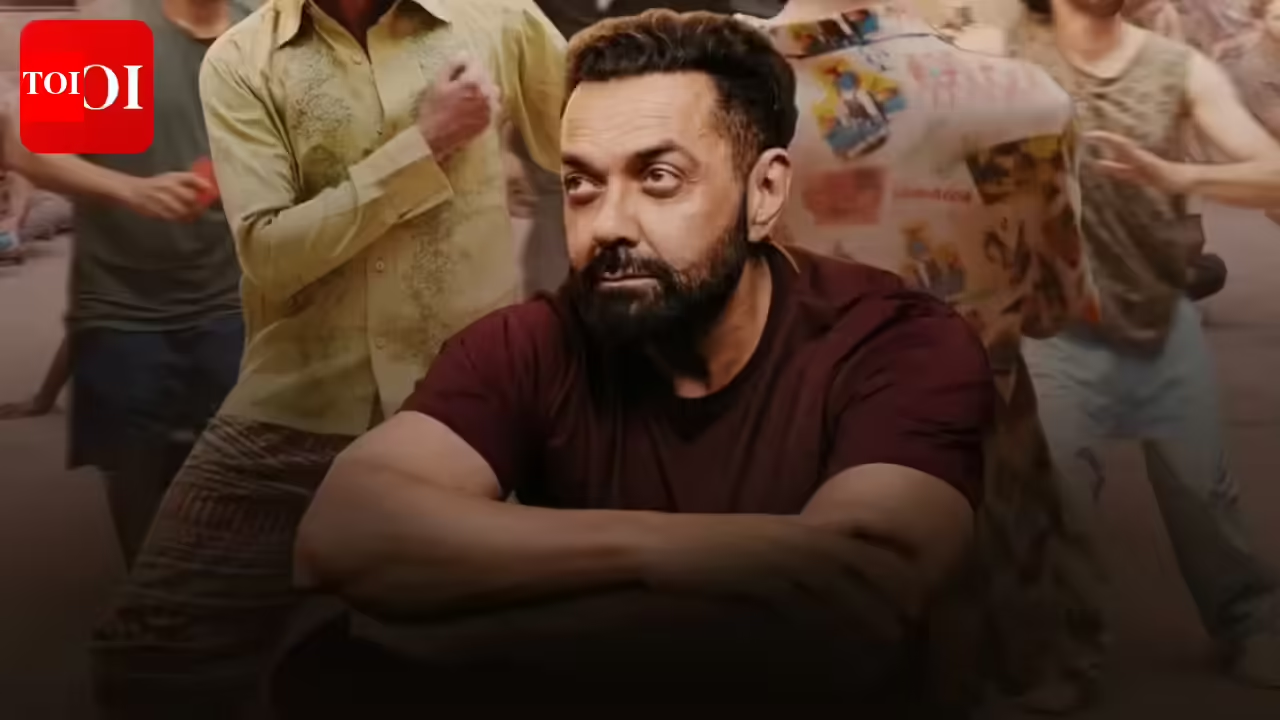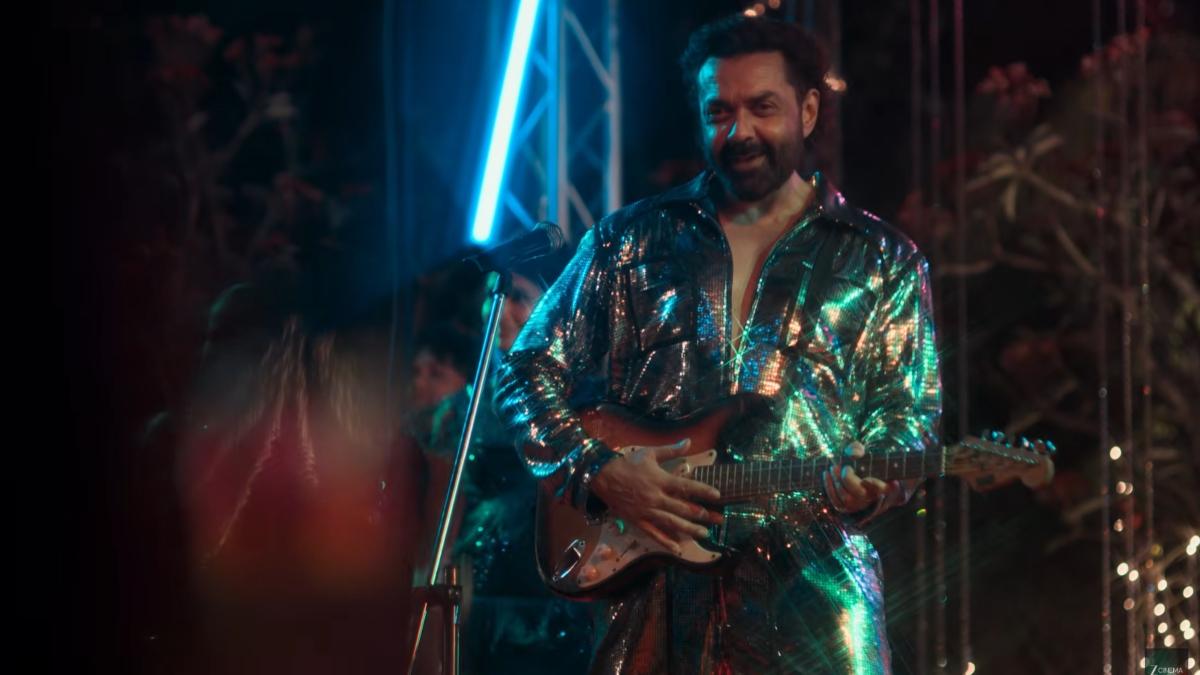
Almost two decades after Dev.D, Anurag Kashyap returns to conduct another autopsy of male entitlement, but in the post-#MeToo space, he has a far more treacherous, shifting terrain to navigate. The filmmaker’s cinematic identity is built on a refusal to provide clean moral answers, and Bandar initially promises to be his ultimate playground of gray before it stagnates.Samar Mehra (Bobby Deol), a fading, entitled television star, has his life systematically dismantled when his ex-girlfriend Gayatri (Sapna Pabbi) hits him with a rape accusation. Anurag, along with screenwriters Sudeep Sharma and Abhishek Banerjee, makes the audience sit with an agonising double vision, trapped between a deeply flawed, hollowed-out man-child and an erratic, unpredictable accuser. He denies the audience a clear hero to root for or a definitive villain to despise. The policeman invokes Bachchan to remind Samar, ‘no means no,’ but there is no one to tell Gayatri the boundaries of a consensual relationship. The film touches on humanity’s status between left- and right-swipes. When policemen cover his face to save him from the marauding media, Samar’s claustrophobic mind goes to the moment when he casually demanded to choke Gayatri for momentary physical pleasure.Bandar (Hindi)Director: Anurag KashyapCast: Bobby Deol, Sapna Pabbi, Saba Azad, Sanya Malhotra, Jitendra Joshi, Sukant GoelSynopsis: A fading star finds his social privilege and vanity instantly vanish when his ex-girlfriend hits him with an accusation of rape.As always, Anurag excels at building an electric atmosphere (elevated by Shivahari Verma’s background score), establishing pitch-black tension, and throwing the protagonist into an inescapable corner. Built on a sharp, dark comedic contrast between the protagonist’s extreme panic and the law’s staggering apathy, the police station scene (Jitendra Joshi is a hoot as the nonchalant Mumbai cop) is easily the most cohesive, tightly written sequence in the film.As Samar is caged in Taloja, the prison ceases to be a mere physical location and instead functions as a multi-layered metaphor for social isolation, systemic dehumanisation, and the destruction of the patriarchal ego. The writers build on fluid boundaries of consent and how they collide with the cold structures of class dynamics. Most alleged rapists in the prison feel they have been trapped and have formed a group to survive. The system doesn’t care to differentiate between monkeys. It puts them in a mirrorless cage to erase their identity with morning devotional chants playing mockingly over scenes of degradation. The film was shot much before cockroach gained national attention, but Anurag uses it as a political metaphor to suggest that when a citizen’s protective structures are stripped away, the state leaves him in a condition where he is no different from vermin.Apart from Gayatri, the other women in Samar’s life, Suhani (Sanya Malhotra), his sister, and his current girlfriend Khushi (Saba Azad), deny him any romanticised sympathy. With no patience for his outdated point of view, they move on or distance themselves from his toxic radius. Samar is left entirely alone in his opacity. Denied permission to wear the waist belt to keep his spine straight, he has to find ways to survive the system’s flattening weight.While Saba and Sanya feel like tangible characters, Anurag’s subversion or meta-casting of Bobby in Bandar mirrors how he weaponised John Abraham in No Smoking. Once again, he takes a mainstream hero celebrated for hyper-masculinity, strips away his commercial facade, and forces him into a claustrophobic trap. Perhaps, without telling him what he is up to. It seems Anurag casts actors with distinct acting limitations, but he doesn’t try to transform them. Instead, he treats their natural limitations as a character trait. So, while the context around the actor has changed, the actual physical toolkit of jaw-clenched anxiety, wide-eyed bewilderment, and helpless desperation is identical to the one Bobby has used throughout his career. For an international audience, Bobby in Bandar might represent a fascinating, minimalist exercise in de-glamourising a commercial star. For a casual fan, it is a thrilling subversion of the alpha energy he has been exuding in Bollywood. However, for a viewer who straddles both worlds, the performance feels largely flat, uncommunicative, and ultimately opaque. The goal, one feels, is not to make the audience see or underline that the actor is a monkey in the director’s hands.More importantly, when it comes to delivering a cohesive third act, Anurag, who has a history of fumbling his own setups, loses focus. Perhaps, deliberately, to emphasise the point of view of the predatory men in the show business who feel they have been framed by unhinged women.When a screenplay lacks the discipline to resolve its own thematic questions, the moral ambivalence becomes a burden. It seems the writers understand Samar better than Gayatri. Once the narrative shifts gears into a prison survival drama and institutional rot, Anurag drops the intricate interrogation of his characters’ minds and opens a class on the state of undertrials. While the brutal realism of the prison (by production designer Prashant Bidkar and art director Vivek Kerkar), the overcrowding, the cell hierarchy, and the filth grab us by the collar, after a point, it starts to feel like a narrative crutch to numb the viewer.Of course, the idea is to make the personal story feel smaller, more futile, and more haunting, but between the lines, it feels like the screenplay is operating as a megaphone for a specific cultural grievance, the cry of entitled men saying, “Look at us, too.”Bandar is currently running in theatres
‘Bandar’ movie review: Inside Anurag Kashyap’s mirrorless cage
‘Bandar’ movie review: A provocative piece of cinema that bravely tackles uncomfortable modern gender dynamics, even if it stumbles under the weight of its own ideological ambitions and casting choices.
902 words~4 min read