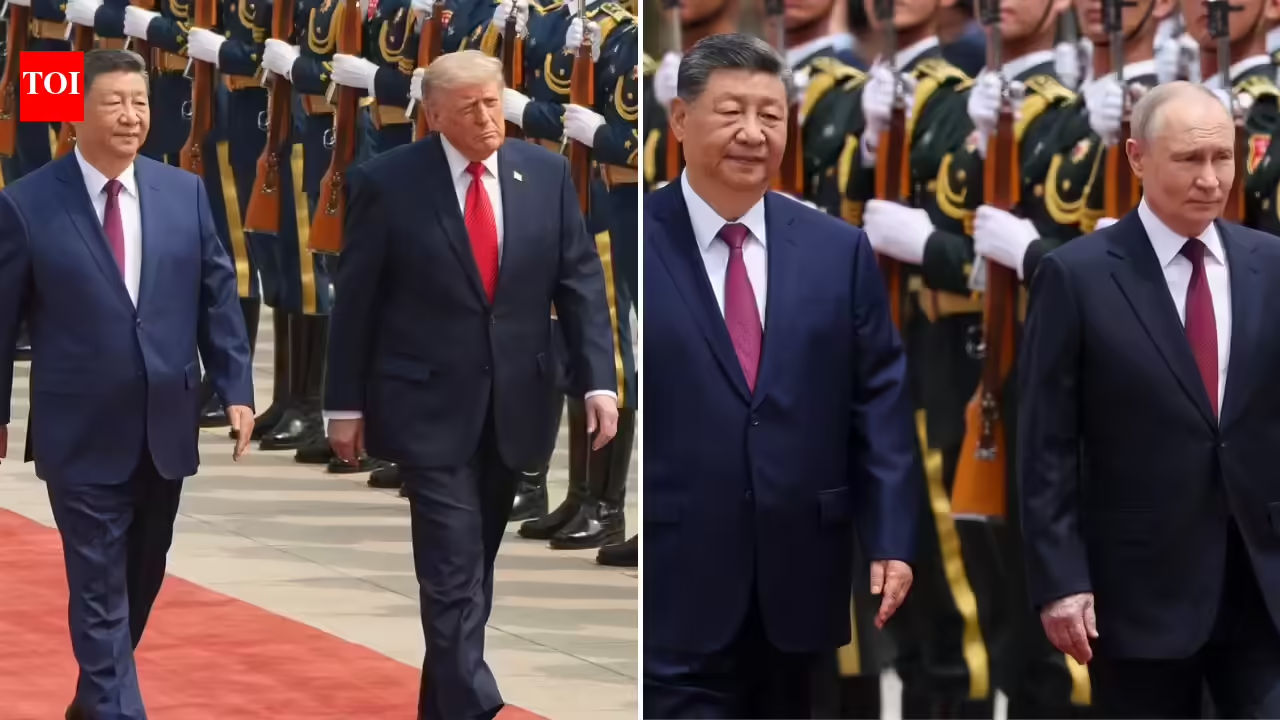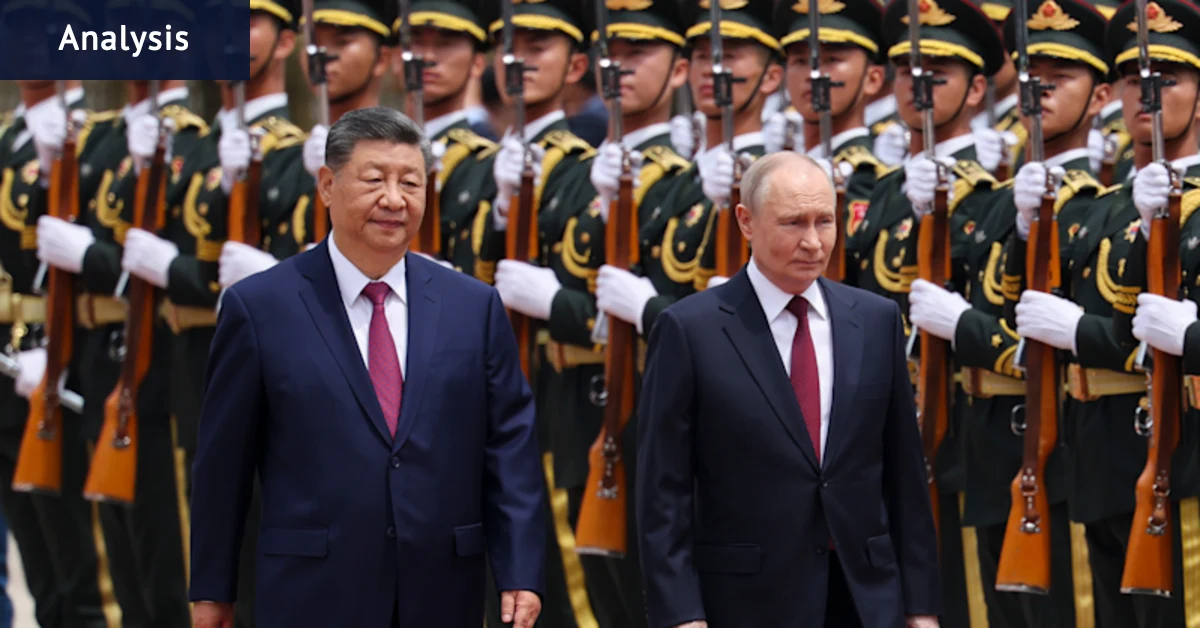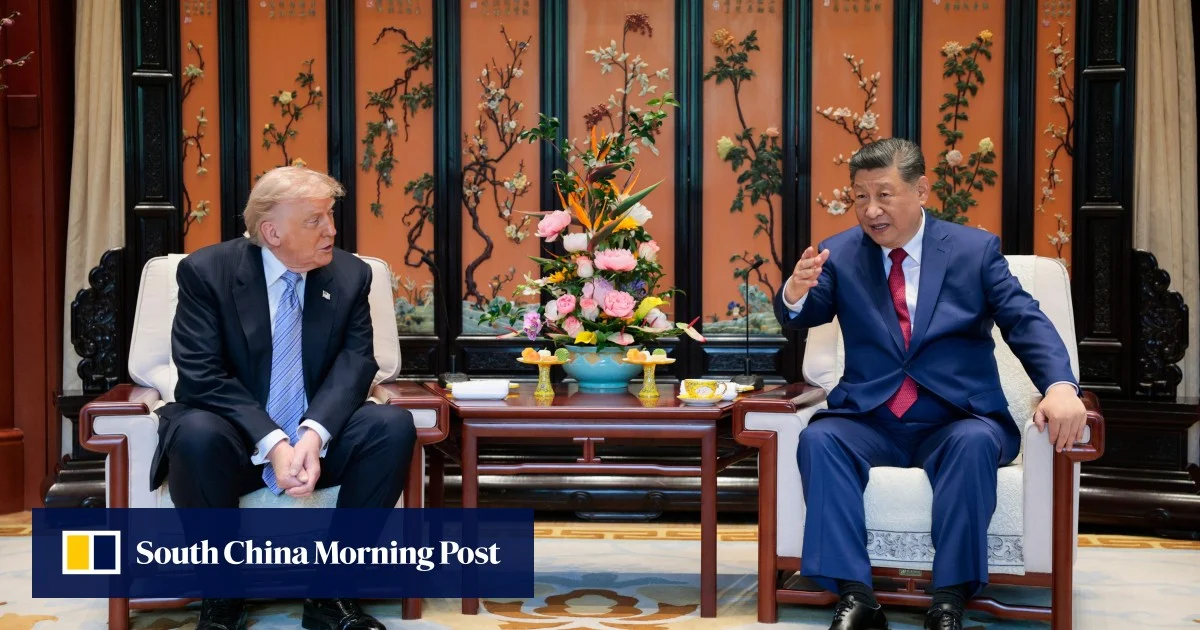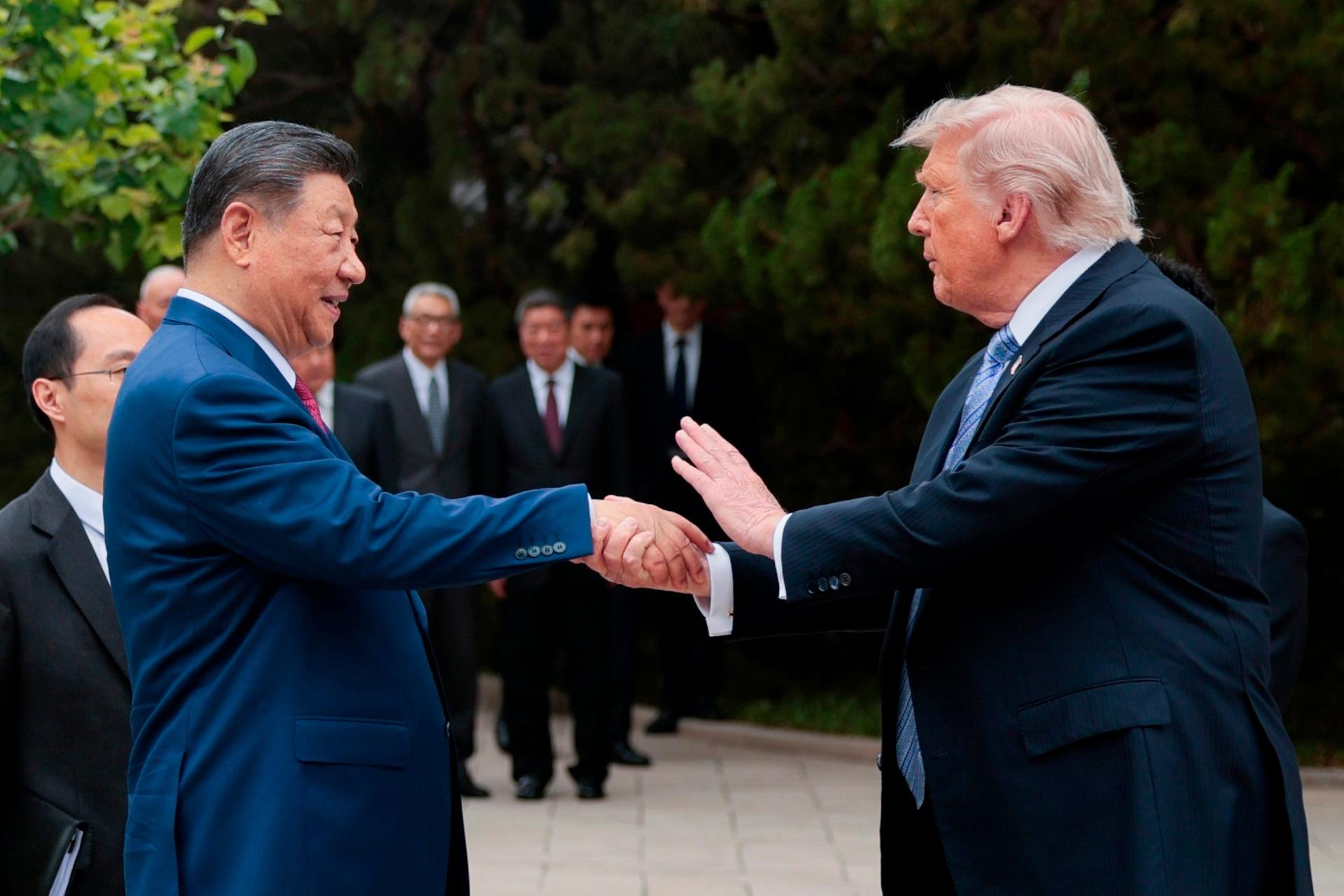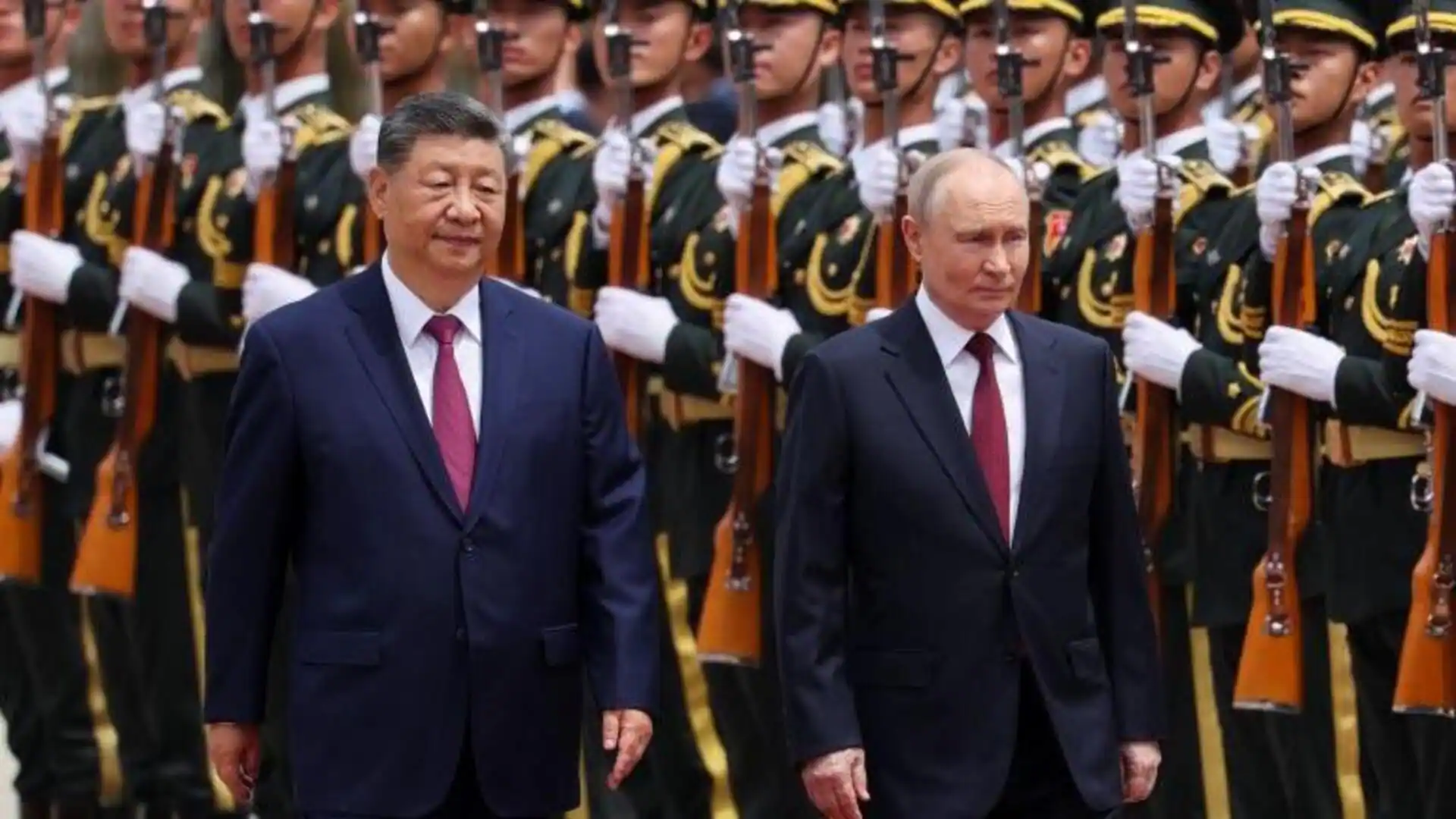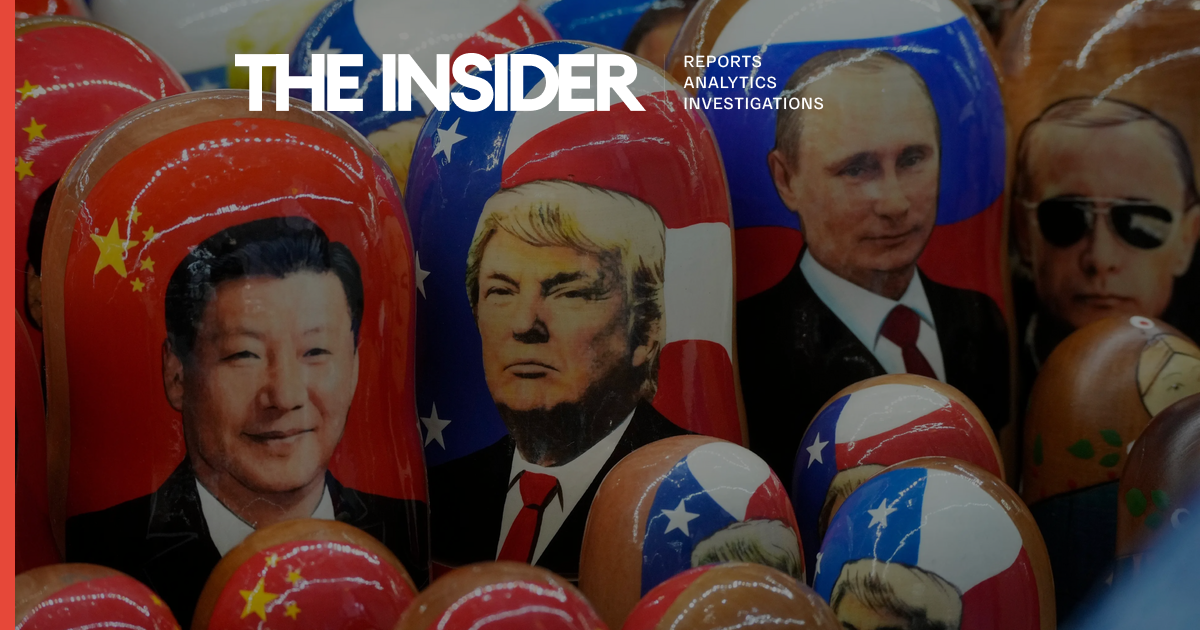
In May, Xi Jinping had a rare — and undoubtedly welcome — opportunity to place himself at the center of world politics when the leaders of the United States and Russia visited him one after the other. Such summits always draw attention, especially when they merge so neatly into one diplomatic sequence. Trump arrived in Beijing first, on May 14, accompanied by an entourage of billionaires and carrying a wish list that went largely unfulfilled. Putin followed on May 19, signaling that he hoped at last to move forward with the Power of Siberia 2 gas pipeline and to demonstrate his close relationship with Beijing; however, the Russian dictator appears to have achieved only the latter. Meanwhile, Xi emerged from the “diplomatic marathon” as the clear winner, having enhanced his image as the world’s most influential leader.Contents1.An inverted triangle2.Two summits, no news3.Deals reached, not reached, and imagined4.Just watchingAn inverted triangleThe concept of “triangular diplomacy” was first put forward by Henry Kissinger during the Cold War as a way to exploit weaknesses in the relationship between China and the Soviet Union. In that framework, Washington balanced Beijing against Moscow and Moscow against Beijing in an effort to create a more predictable and balanced strategic order. The United States sat at the top of the inverted triangle, while the other two powers were often compelled to cooperate with America, even if they did not exactly compete for Washington’s favor.Over the past week, that geometry appeared to have been turned upside down. Donald Trump and Vladimir Putin are, in effect, adversaries. They boast of close relations and mutual understanding, yet they are involved in conflicts across several theaters, from Ukraine to Iran. Nevertheless, both leaders felt compelled to make a “pilgrimage” to Beijing, creating a striking image for Chinese newspapers: the Middle Kingdom was becoming truly central, the site where superpower diplomacy takes place and the fate of nations is decided.Donald Trump and Vladimir Putin both felt compelled to make a “pilgrimage” to BeijingThe timing of the meetings, one after the other, looked symbolic and raised suspicions that Xi Jinping might have managed to arrange some kind of behind-the-scenes deals among the powers.Of course, the symbolism should not be overstated, no matter how elegant it may appear. Trump’s visit had been postponed from late March because of the war in Iran, while Putin’s visit had been planned in advance to mark the 25th anniversary of the signing of the Treaty of Good-Neighborliness between Moscow and Beijing.Two summits, no newsXi treated his guests differently, but the results of the two meetings were broadly comparable.With Trump, Xi was formal, distant, and generally restrained. He gave the U.S. president a lavish reception replete with a red carpet, honor guard, and choir, even showing Trump around Zhongnanhai, the seat of power for the Chinese Communist Party. During the walk, Trump asked the general secretary how often foreign leaders visited the compound. Xi replied: “Very rarely. For example, Putin has been here.” The remark seemed intended to remind his guest that Xi’s relationship with the Russian leader is much closer and more trusted than his ties to Washington.The summit’s outcome was even colder. The two sides did not quarrel, but they did not reach any substantive agreement. Each side issued its own account, and the two versions of events differed completely. The U.S. summary emphasized trade councils, commitments on rare earth elements, and “discussions” of the Strait of Hormuz. The Chinese side did not mention those issues, instead focusing on Taiwan and efforts to achieve “constructive strategic stability.”Trump left Beijing without even holding a news conference, ignoring reporters’ questions during his final press appearance.Donald Trump left Beijing without even holding a news conferenceBeijing also nearly came away with nothing, but it got lucky. After the visit, Trump openly “warned” Taiwan not to seek independence and said he could ultimately decide not to sell weapons to Taiwan. Although there is no indication of any concrete change in U.S. policy, Trump’s statement could be seen as a concession to China.Putin’s visit, at first glance, carried a different energy. Putin and Xi exchanged warm words and pledges of friendship several times and signed a joint declaration in which Xi again carefully criticized the United States as a “tide of unilateral hegemony.”The two leaders also signed 20 minor agreements covering cooperation in education, trade, and the extension of visa-free travel for Russians in China. It must be stressed that most of those documents are relatively insignificant and appear to have been signed mainly as part of an effort to give the summit weight.Critically, the most important deal for the Russian president, Power of Siberia 2, was not reached. The pipeline would significantly expand Russian gas exports to China, and the two sides said they had reached a “general understanding of the parameters,” with Kremlin spokesman Dmitry Peskov adding that there had been “progress.”That “progress,” however, has been stuck in the same place for more than a decade. Promises from Chinese diplomats of “more detailed studies and analysis” often amount to a polite “no thanks, not interested for now.”That is hardly surprising. Putin arrived in Beijing perhaps weaker than ever. For the first time since August 2024, Russia lost more territory in Ukraine than it captured, and sources connected to the U.S. president’s visit to Beijing said Xi allegedly told Trump that Putin “may yet regret starting this war.” Both the U.S. and Chinese sides denied that, of course, but the account may not be far from the truth. Support ratings for the Russian president at home continue to fall, while the state is introducing increasingly unpopular censorship measures.Xi allegedly told Trump that Putin “may yet regret starting this war” Beijing is also not especially interested in more raw materials from Russia. China already buys cheap Russian oil and gas and has become their largest importer, but the leadership in Beijing is seriously focused on diversifying its energy infrastructure and continues to invest heavily in alternative and green energy sources. The “green transition” is described in China’s latest five-year plan. In addition, for reasons of strategic security, Beijing prefers not to become overly dependent on any one supplier. Power of Siberia 2 does not fit very well into that policy.Deals reached, not reached, and imaginedAs usual, the most intriguing rumors around the Beijing summits concerned the possibility that this three-way diplomatic dance might ultimately lead to major deals on today’s biggest crises: Ukraine and Iran. For example, might the United States compromise on Taiwan in exchange for Chinese pressure on Russia to begin negotiations over Ukraine? Or could China help secure a cease-fire in Iran in exchange for some easing of U.S. technology restrictions?None of the participants announced any concrete large-scale deals, let alone signed them publicly, but there has still been plenty of speculation of varying plausibility. Some sources familiar with the contents of Russia-U.S. talks said Putin had allegedly proposed to Trump that Russia stop providing Iran with intelligence in exchange for similar steps by the United States toward Ukraine, a question that was actively discussed in March. At the time, Putin’s special envoy Kirill Dmitriev called the report false, but in May, it could have become an element in one of those behind-the-scenes deals.Beijing was not directly mentioned in those rumors, but Chinese companies often become the main sources of satellite data that reaches Iran. That means Beijing would have to be included in any such arrangement, even if only informally.Putin allegedly proposed to Trump that Russia stop providing Iran with intelligence in exchange for similar steps by the United States toward UkraineXi, in turn, would also benefit from such a “deal” by strengthening his image as the world’s chief diplomat and mediator. China also supports Iran, but repeated fuel supply disruptions caused by the closure of the Strait of Hormuz have created significant problems for Beijing.Another potential diplomatic maneuver that observers actively speculated about was a softening of U.S. policy toward Taiwan in exchange for some service from Beijing, whether mediation to open the Strait of Hormuz or concessions in the trade war.China is indeed concerned about another pending U.S. arms shipment to Taiwan, and that is likely to become a key issue during Xi’s visit to the United States this fall. In this case, however, it is difficult to present the deal as mutually beneficial to the entire “triangle.” Weapons not sent to Taiwan could sooner or later end up in Ukraine, creating a major risk for Russia and weakening Iran, one of Moscow’s main military suppliers in recent years.For now at least, it appears that no one has signed on to any mysterious plans — and apparently will not in the foreseeable future. That is not surprising given that the three sides have almost no points of overlap that could form the basis for reliable agreements.Beijing apparently lacks sufficient influence to push Vladimir Putin toward ending the aggression against UkraineOn Ukraine, Xi most likely has neither the leverage to quickly and significantly push Putin toward negotiations nor a reason to do so even if he could. Beijing may, of course, be concerned about the war’s effects on the global economy and the risk of secondary sanctions, but it continues to benefit from extremely cheap Russian energy, expects to profit from postwar reconstruction contracts, and is understandably drawing lessons from the war itself.On Iran, Trump said directly during his return flight that he did not “need Xi’s services” and did not actually expect help from China — completely contradicting his earlier remarks and later statements. Just a day later, the U.S. president said Xi was, in fact, ready and even happy to help.Russia, as the third party, is not especially interested in ending the war in Iran. The closure of the Strait of Hormuz has raised the price of Russian oil, strengthened the ruble, and distracted the unpredictable Trump from a possible decision to resume support for Ukraine.In the end, the meetings in Beijing were not about grand behind-the-scenes deals but rather highlighted just how fragile any mutual understanding among the three powers really is. Unfortunately, life as part of the triangle comes down to accepting mutual grievances and contradictions that none of the three leaders currently plans to resolve. Each side received enough — stability, image enhancement, and continuity — to maintain relations without settling any of the larger problems.Just watchingAt the same time, China still believes that the best — and least risky — diplomatic position is often simply to be the player with whom others are forced to talk, while taking on no irreversible obligations itself.This is not quite the same as Kissinger’s triangle, in which one power actively plays between two rival countries. China’s position is far more passive and perhaps even more sustainable in the short term. The problem is precisely that it is focused on the short term: elegant visits and the image of the world’s main political capital cannot resolve the real contradictions and problems in these relationships, which sooner or later will make themselves felt for China, the United States, and Russia alike.
The battle for Beijing: Who came out on top following visits by Trump and Putin to Xi Jinping?
In May, Xi Jinping had a rare — and undoubtedly welcome — opportunity to place himself at the center of world politics when the leaders of the United States…
1,843 words~8 min read