The GOP's massive cash influx for immigration enforcement came at a potentially risky political cost as the fall elections approach.Show Caption
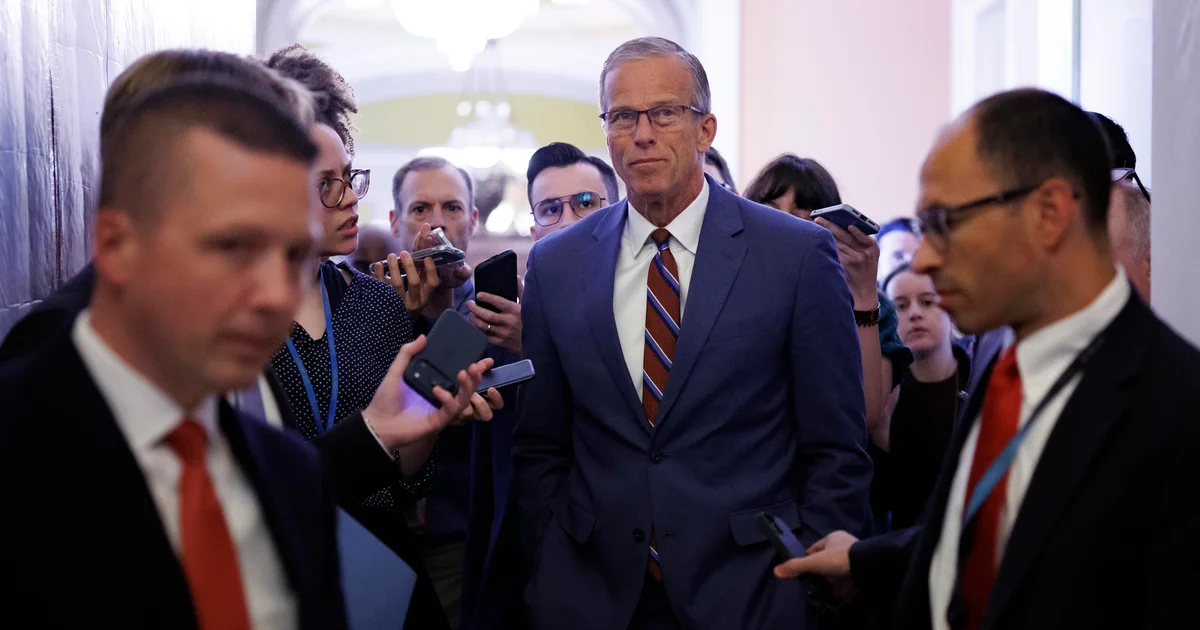
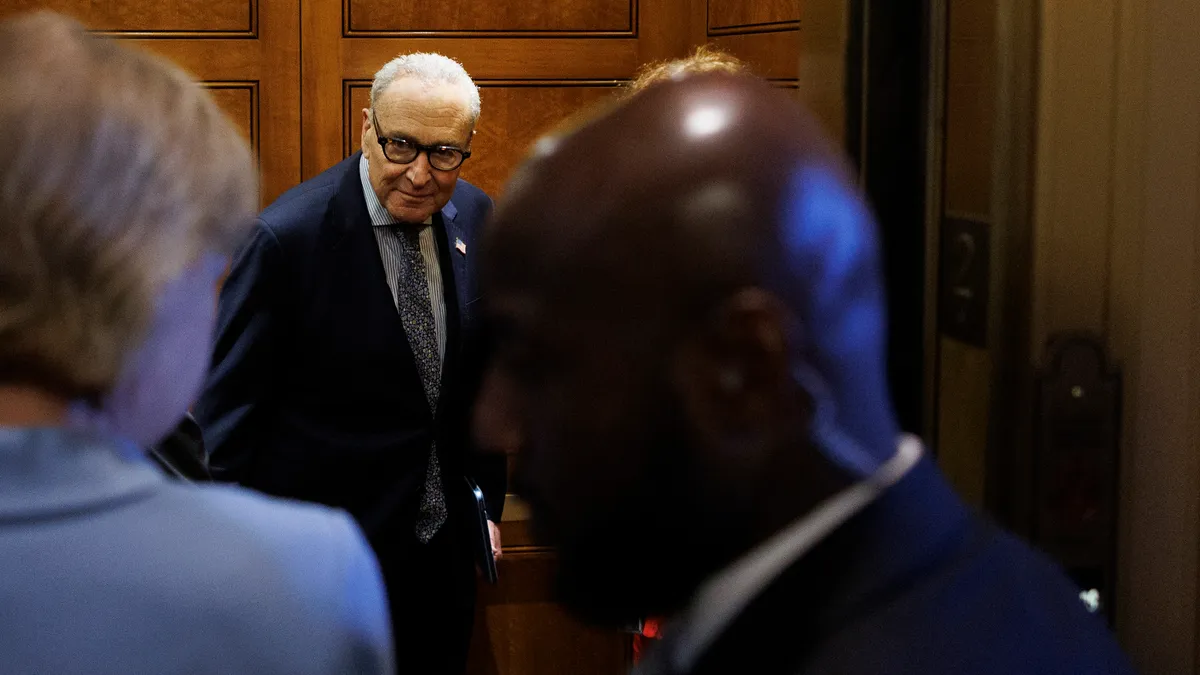
Democrats don't have much leverage in Washington these days – until they do.A small, but significant, political window opened up briefly this week, as Senate Republicans worked to pass a roughly $70 billion funding bill for Immigration and Customs Enforcement and Border Patrol. The massive, yearslong cash influx was ultimately approved on a mostly party-line vote in the early morning hours of Friday, June 5.But it came at a cost: In order to greenlight the legislation with just a simple majority, GOP lawmakers were forced to endure a litany of tough votes offered by their Democratic counterparts (and some within their own party).In the early morning hours, all sorts of measures were put on the table – officially banning the Justice Department's so-called "anti-weaponization" fund, fully scrapping funding for the White House ballroom, bolstering housing affordability for Americans, the list went on. It was all part of a consequential, though wonky, legislative process senators refer to as "vote-a-rama."The flurry of late-night Senate action highlighted which issues Democrats think could prove politically salient for them in the upcoming midterm elections – and where vulnerable Republicans felt a need to break from their party.“The Republican agenda is now written in black and white: a slush fund for Trump, tax dodges for Trump, a ballroom for Trump, and a private militia for Trump," Senate Minority Leader Chuck Schumer, D-New York, said in a statement. "For hard-working Americans? Nothing."The bill's passage also further cemented the Republican Party's resolve to support immigration enforcement no matter the cost, even amid heightened scrutiny of ICE in the second Trump era."Why are we here? Through the normal appropriations process, Democrats would not give the Border Patrol or ICE one dime," Sen. Lindsey Graham, R-South Carolina, said. "We had reforms. We had an agreement. And it just didn't work."Senate Majority Leader John Thune, R-South Dakota, mostly kept his conference united in opposition to the barrage of political pressure from Democrats.As votes dragged on until 5 a.m., Republicans only got more frustrated."Why do you guys continue to put up amendment after amendment when you know we're here to fund ICE and Border Patrol," Sen. Bernie Moreno, R-Ohio, said. "Let's get to the business at hand and end this charade."Subscribe to On Politics: Stay ahead of the midterms with our daily politics newsletter.Housing measures knocked downWith cost-of-living concerns top of mind for voters before November, Democrats tried to call up two housing affordability measures and attach them to the ICE bill.One came from New Hampshire Sen. Maggie Hassan, who offered a proposal that she said would've authorized funds through the federal Home Investment Partnerships Program to help build 7 million new homes."Building these homes will help address our housing shortage and help make housing more affordable," she said.That measure failed on a party-line vote. So did a separate amendment from Sen. Jack Reed of Rhode Island. He said his plan would've diverted funds for ICE and Border patrol to invest in more affordable housing.Congress isn't fully neglecting rising home costs, though. For months, the Senate has been egging the House to pass a broadly bipartisan housing reform bill called the 21st Century ROAD to Housing Act. Among other things, the legislation would bar some Wall Street landlords from purchasing more existing single-family homes."We want homes for people, not for corporations," President Trump said in his last State of the Union address in February.But experts have noted that policy won't affect large swaths of Americans, since large institutional investors own less than 1% of single-family homes.DOJ fund dramaThe biggest sticking point in getting the ICE bill passed overnight was the Justice Department's much-panned $1.8 billion "anti-weaponization" fund. Though Acting Attorney General Todd Blanche informed lawmakers this week the much-scrutinized fund would no longer go forward, Democrats and some Republicans still wanted a commitment codified in legislation. “We've got a sufficient number of Republicans who have been very clear that they've got concerns here," Sen. Thom Tillis, R-North Carolina, said earlier in the day.Sen. Bill Cassidy, R-Louisiana, worked late into the morning to try to come up with a politically feasible way to attach an amendment to effectively kill the fund. He eventually proposed a measure to reroute any of the payouts to law enforcement officers who defended the Capitol on Jan. 6. Ultimately, the effort failed without reaching the 60-vote threshold.He did succeed, however, in getting five other senators on his side of the aisle to vote with him.Cassidy's amendment wasn't the only one that further underscored GOP unease with the DOJ fund. Eight Republicans voted for a separate measure from Sen. Chris Coons, D-Delaware, to ban payouts from going to Jan. 6 rioters who assaulted police officers.That couldn't pass, either.Contributing: ReutersZachary Schermele is a congressional reporter for USA TODAY. You can reach him by email at zschermele@usatoday.com. Follow him on X at @ZachSchermele and Bluesky at @zachschermele.bsky.social.