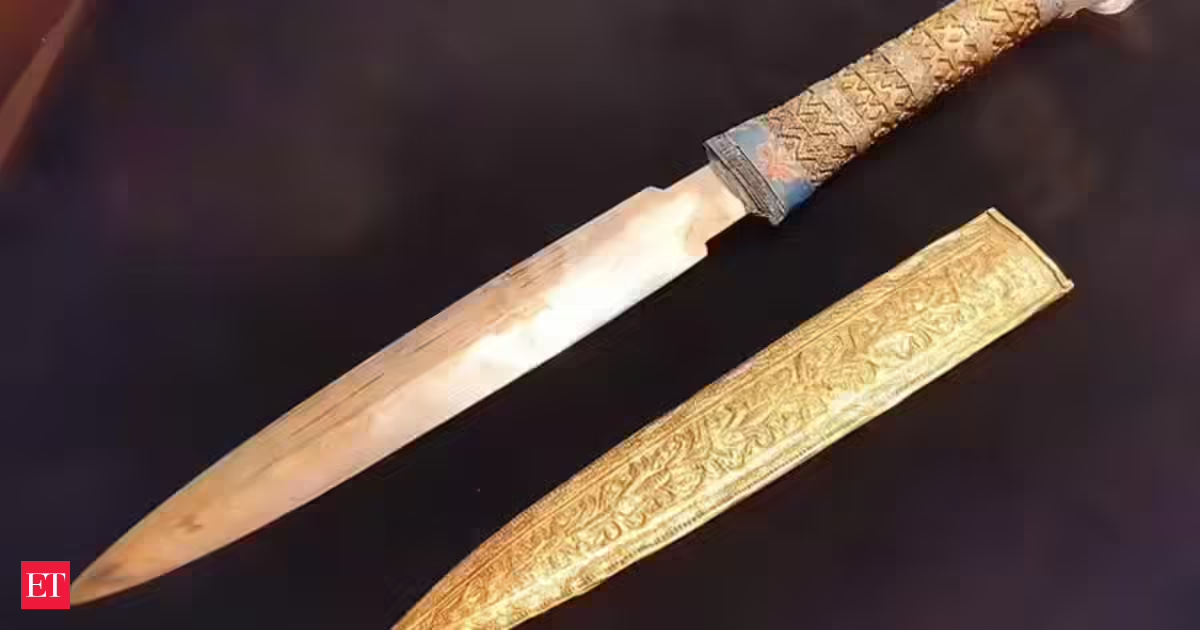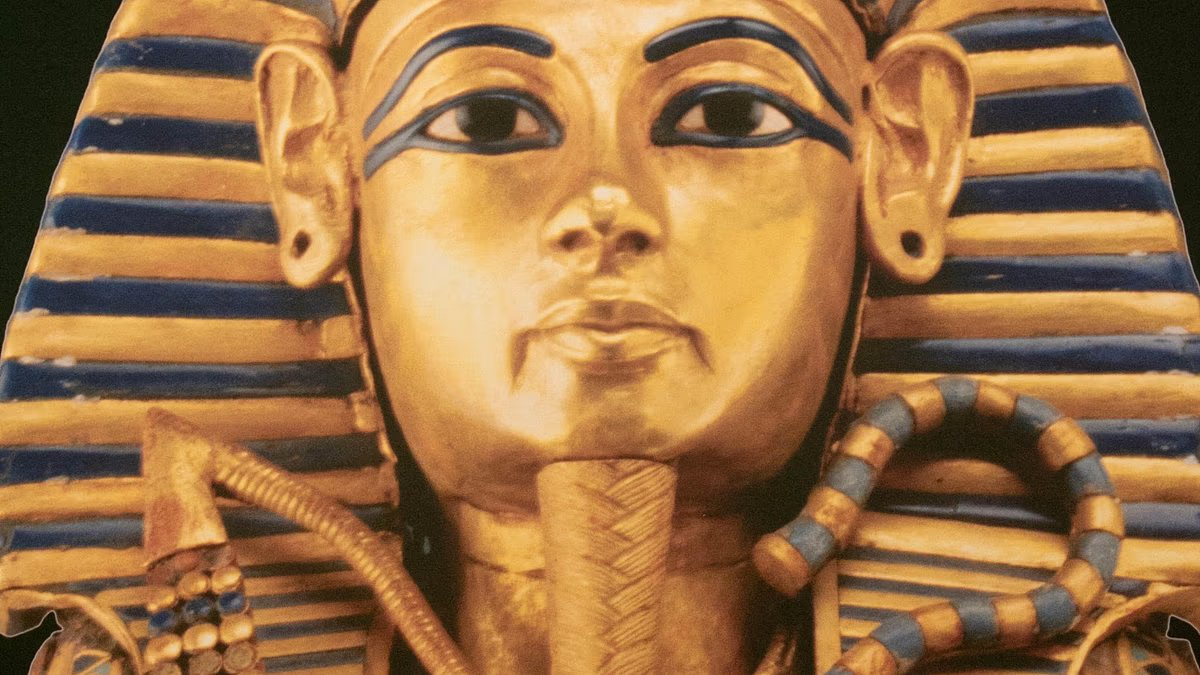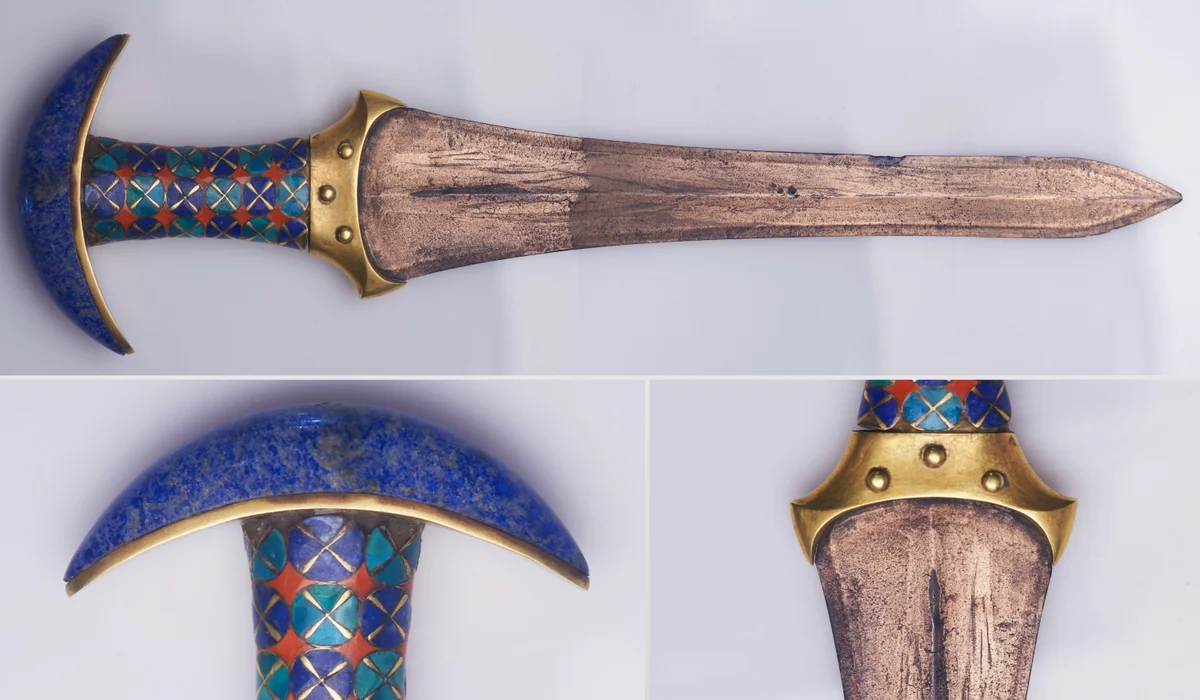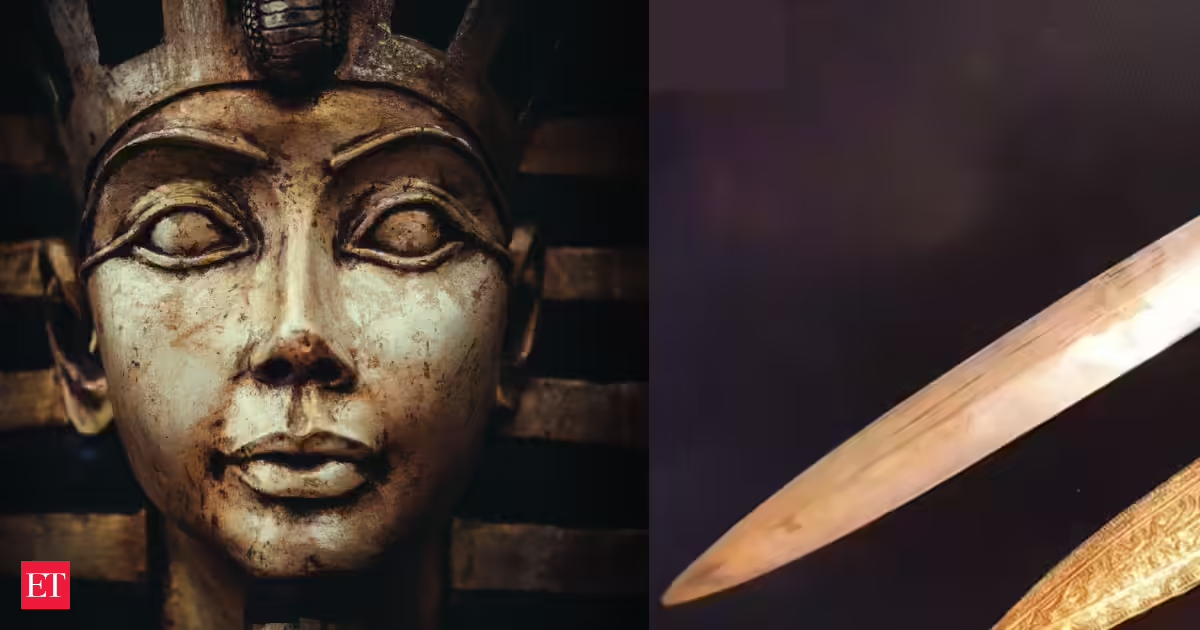
For nearly a century, one object found inside the tomb of King Tutankhamun puzzled historians and archaeologists alike. Hidden among the treasures buried with the young pharaoh was an elegant iron dagger that seemed completely out of place in ancient Egypt.At a time when Egypt was still firmly in the Bronze Age, iron was extremely rare. Large-scale iron smelting had not yet been developed, raising an intriguing question: how did an iron blade end up in the tomb of one of Egypt's most famous rulers?Read more: In 1943, he was trying to solve a World War II crisis, but a failed experiment accidentally created one of the most famous toys ever madeA groundbreaking scientific study has now provided a remarkable answer. According to researchers, Tutankhamun's iron dagger was forged from a meteorite that fell from space.Tutankhamun's Iron Dagger Mystery ExplainedWhen archaeologists discovered the tomb of Tutankhamun in 1922, they found two daggers wrapped within the mummy's burial wrappings.Read more: Scientists warn this common food habit could be ageing your heart & brain fasterOne featured a gold blade, which was not unusual for a royal burial. The second dagger, however, had an iron blade that immediately caught researchers' attention.The problem was simple: Tutankhamun ruled during the 14th century BCE, centuries before iron production became common in Egypt.This apparent contradiction sparked decades of debate among historians and archaeologists.Study Finds Tutankhamun's Dagger Was Made From A MeteoriteThe mystery was largely solved in 2016 when researchers published a study in the journal Meteoritics & Planetary Science.An international team of Italian and Egyptian scientists examined the dagger using a portable X-ray fluorescence spectrometer at the Egyptian Museum in Cairo.The technique allowed researchers to analyse the blade's chemical composition without damaging the priceless artefact.Their findings were extraordinary.The analysis revealed that the dagger contained approximately 11% nickel and 0.6% cobalt. These levels are far higher than those typically found in iron produced from Earth-based ores.Instead, the chemical signature closely matched that of iron meteorites, providing strong evidence that the weapon was crafted from metal that literally fell from the sky.Why Meteoritic Iron Was So Valuable In Ancient EgyptThe discovery sheds new light on how ancient Egyptians viewed rare materials.At the time of Tutankhamun's reign, iron was not a common metal. Unlike bronze, it could not yet be produced on a large scale from mined ore.Meteorites offered one of the few available sources of iron.Because such material was exceptionally rare, meteoritic iron became highly prized among elite members of society. It was often associated with power, prestige and religious significance.Rather than being an ordinary weapon, Tutankhamun's dagger was likely a luxury object reserved for royalty.Ancient Egyptians Had Used Space Metal BeforeThe use of meteoritic iron did not begin with Tutankhamun.Archaeological evidence shows that Egyptians had been working with meteorite-derived metal thousands of years earlier.One of the oldest known examples comes from the prehistoric Gerzeh cemetery in Egypt, dating to around 3300 BCE.Researchers studying a collection of tubular iron beads discovered that they too were made from nickel-rich meteoritic iron.Ancient craftspeople carefully hammered the metal into thin sheets before rolling them into beads used for jewellery.These objects demonstrate that Egyptians recognised the value of meteorite metal long before the Iron Age arrived.What The Gerzeh Beads Study RevealedA landmark study published in 2013 helped confirm the extraterrestrial origin of the Gerzeh beads.Scientists found unusually high concentrations of nickel, a key indicator of meteoritic iron.The findings suggested that prehistoric Egyptians deliberately collected and worked metal from meteorites, transforming celestial material into decorative objects.Together with Tutankhamun's dagger, the beads provide compelling evidence that ancient Egyptians were familiar with iron from space long before they mastered iron smelting.Tutankhamun's Dagger Changes What We Know About The Iron AgeThe dagger offers historians a fascinating glimpse into a transitional period in human technological development.History is often presented as a simple shift from the Bronze Age to the Iron Age. In reality, the transition was far more gradual.Before societies learned how to smelt iron from terrestrial ores, small amounts of meteoritic iron were already being collected and used for special objects.Tutankhamun's dagger represents this important intermediate stage.It does not prove that Egypt had developed advanced iron production during the Bronze Age. Instead, it shows that skilled artisans were capable of working with rare meteoritic iron when it became available.How Scientists Solved The Ancient Egyptian Dagger MysteryModern technology played a crucial role in solving the puzzle.The portable X-ray fluorescence device allowed researchers to identify the dagger's chemical fingerprint without taking samples or causing damage.By comparing the metal's composition with known meteorites, scientists could confidently trace its origin to space.The study demonstrates how modern scientific techniques continue to reveal new information about some of history's most famous artefacts.Why Tutankhamun's Space Dagger Still Fascinates ResearchersMore than 3,300 years after it was created, Tutankhamun's dagger continues to capture the imagination of historians, scientists and the public alike.The weapon combines royal history, advanced craftsmanship and an extraordinary cosmic origin story.Its existence reminds us that humanity's first encounters with iron may not have come from mines or furnaces, but from meteorites falling from the heavens.For ancient Egyptians, this rare "metal from the sky" was likely viewed as something special and sacred. Today, it offers a remarkable window into the origins of metallurgy and the ingenuity of one of history's greatest civilisations.
Egyptian Pharaoh Tutankhamun's dagger came from space? Scientists' 2016 discovery revealed the truth
Tutankhamun iron dagger: A mysterious iron dagger discovered in the tomb of King Tutankhamun has finally had its origin explained. Scientists found that the blade was forged from meteoritic iron, meaning the metal came from a meteorite that fell to Earth. The discovery helps explain how ancient Egyptians possessed iron centuries before large-scale iron smelting was developed. Highly prized and incredibly rare, this "metal from the sky" was likely reserved for royalty and served as a powerful symbol of status, prestige and divine connection.
878 words~4 min read