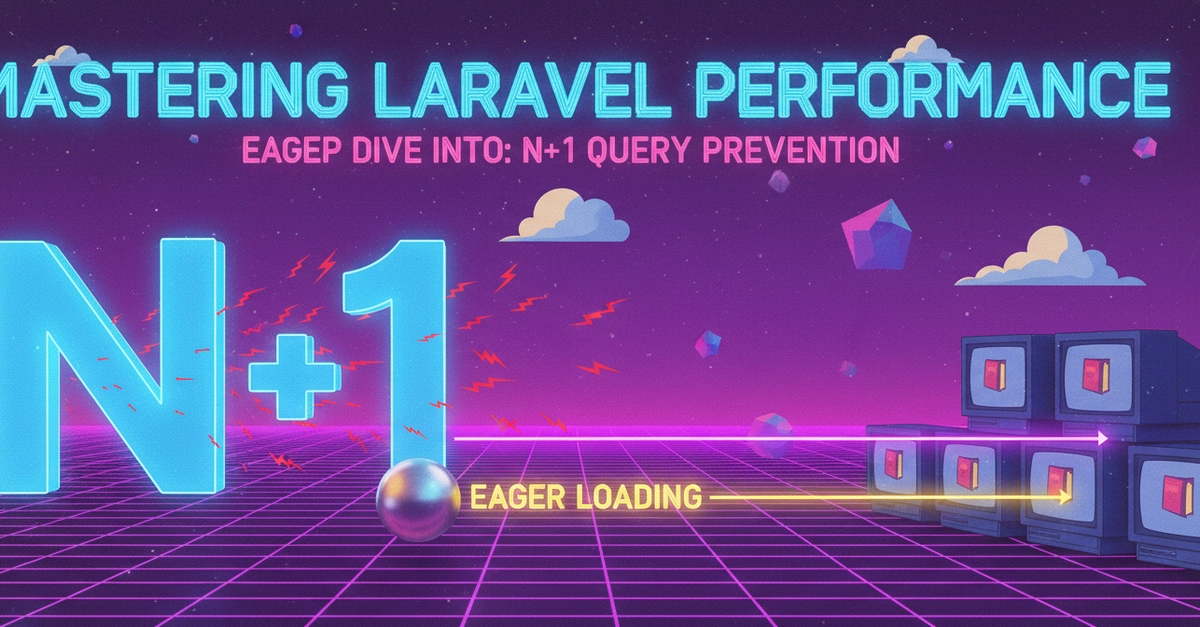
Mastering Laravel Performance: A Deep Dive into Eager Loading for N+1 Query Prevention
Introduction
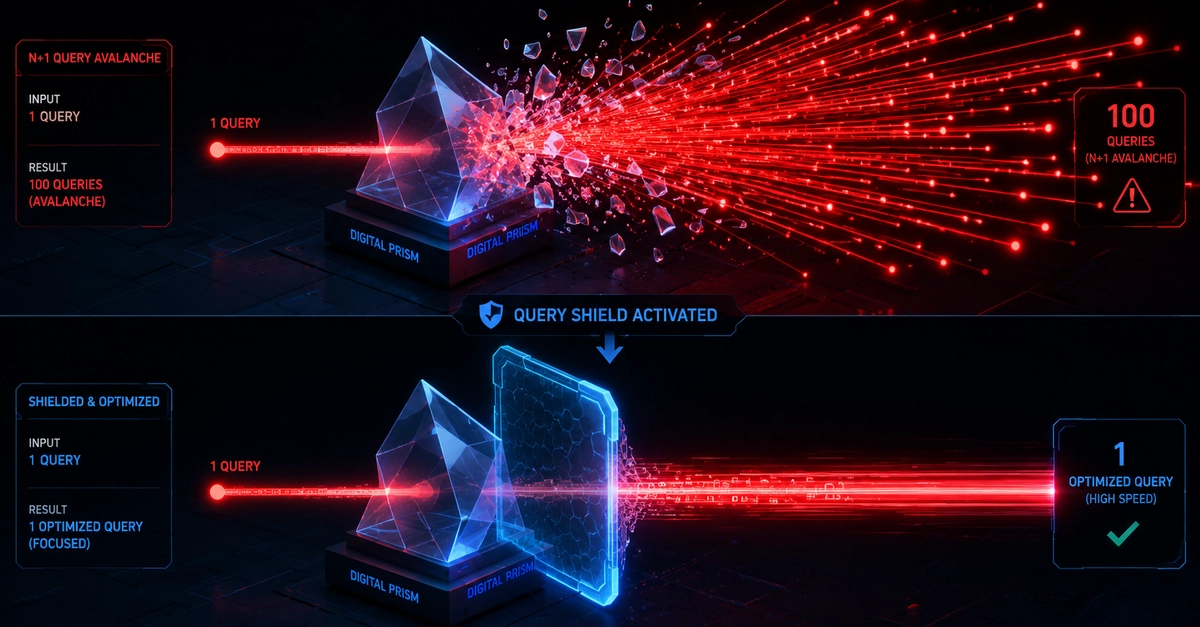
Laravel, renowned for its elegant syntax and developer-friendly features, empowers you to build robust web applications with impressive speed. However, even the most beautifully crafted Laravel applications can suffer from hidden performance bottlenecks. One of the most insidious and common culprits is the "N+1 query problem." This occurs when retrieving a collection of Eloquent models and then, within a loop, accessing a related model for each item. Laravel, by default, will execute one query for the parent models (the "1") and then N separate queries for each related model (the "N"), leading to a dramatic increase in database load and slow page renders. For scalable applications, this is a critical flaw.
Fortunately, Laravel provides an elegant and powerful solution: eager loading. By explicitly telling Eloquent to load relationships in advance, you can transform potentially hundreds of individual queries into just two efficient queries (or even a single join operation), drastically reducing database roundtrips and significantly boosting application performance. This tutorial will walk you through understanding the N+1 problem and implementing eager loading effectively.