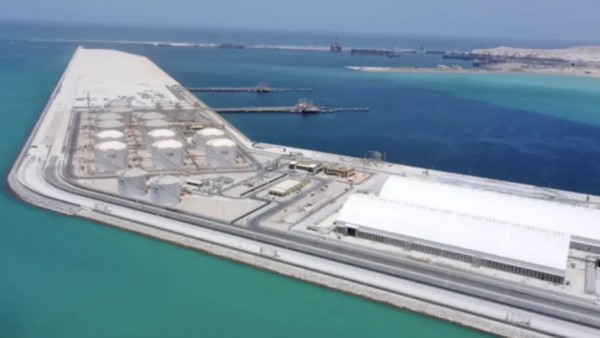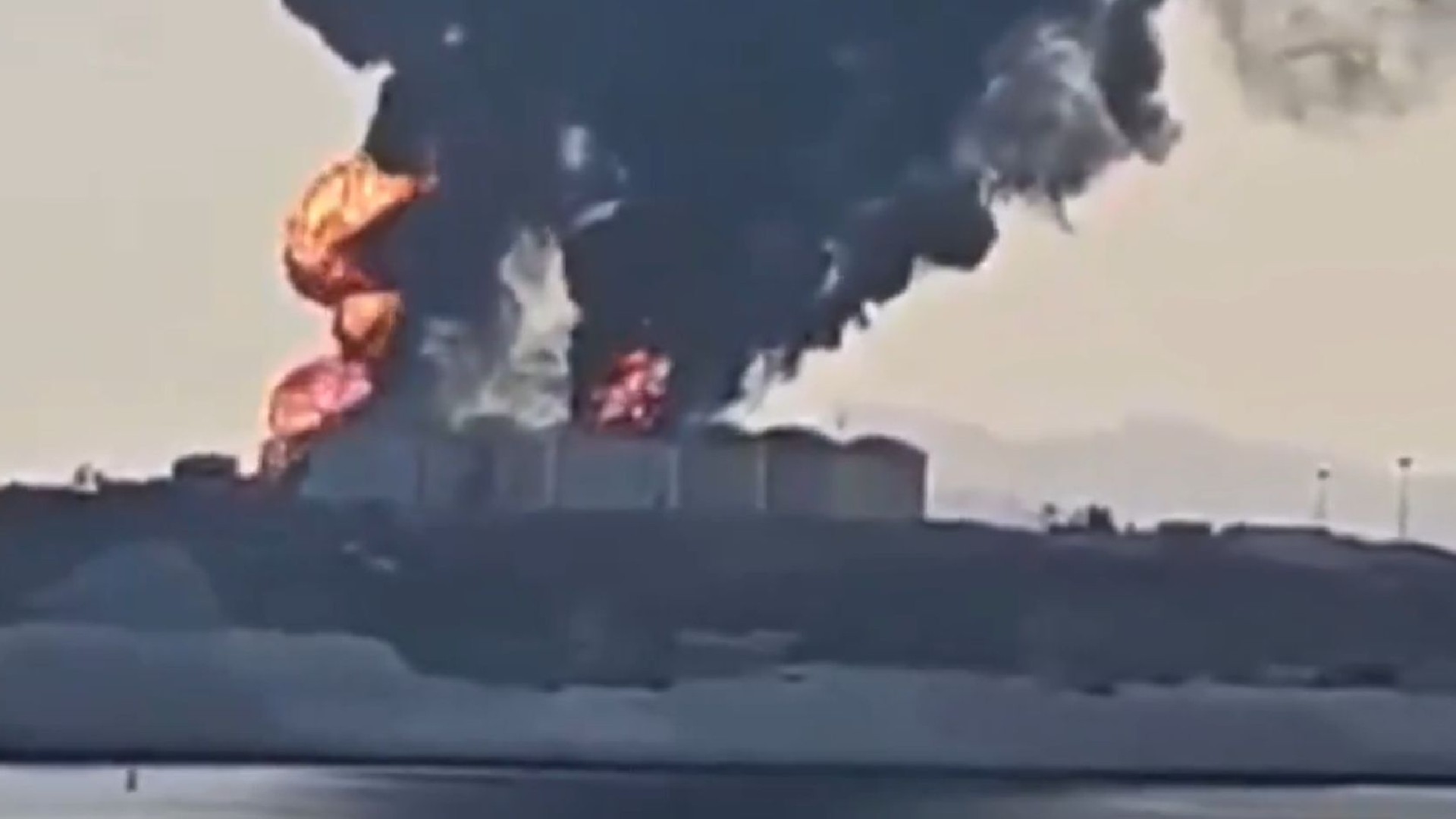
Oman said on Friday that operations at one of its key crude export hubs were running normally, rebuffing earlier reports about the suspension of oil loading activities at the port due to an alleged drone attack.What happened: Oman’s state-run news agency cited Petroleum Development Oman, a government-owned leading exploration and production company in the sultanate, as confirming that operations at Mina al-Fahal port in the northeast of the country “are proceeding normally.”The statement did not provide further details. It comes after three sources told Reuters earlier on Friday that oil loading operations at the port had stopped following an explosion near its mooring berths caused by an alleged drone attack.Videos circulating overnight captured the moment a drone hit Mina al-Fahal’s loading facilities, causing an explosion and a fire.تداولت وسائل إعلام ومواقع التواصل لقطات توثق لحظة استهداف ميناء الفحل في سلطنة عُمان بطائرة مسيّرة، وسط حالة من الترقب بشأن تفاصيل الحادث.وفي المقابل، أفادت وكالة الأنباء العُمانية بأن الميناء عاد للعمل بشكل طبيعي بعد توقف مؤقت أعقب الانفجار الذي وقع في الموقع.#عمان… pic.twitter.com/z4YFjibSYI— North Africa News (@northafrikanews) June 5, 2026
Omani officials have not confirmed that an attack has occurred. Iran has not commented.Why it matters: Mina al-Fahal is Oman’s main crude export terminal, through which between 800,000 and 900,000 barrels of oil are exported daily to global markets, particularly to Asian countries. According to the US Energy Information Administration, China is Oman’s largest export market, followed by Taiwan.Iran has launched hundreds of drone and missile attacks at neighboring Gulf countries, including in Oman, during its war with the United States and Iran that erupted Feb. 28, targeting US and Israeli military assets, but also key energy infrastructure and facilities in the region. Despite an April 7 ceasefire, some Iranian attacks have been reported in Gulf countries in the past weeks.On Wednesday, a missile and drone attack that struck the Kuwait International Airport killed at least one person and wounded 63 others. Kuwait blamed Iran for the attack, which it denied, saying the incident was caused by a US missile interceptor.US Central Command was quick to reject the accusations, saying instead that Iran “struck the civilian airport with drones in a deliberate, calculated, and unjustified attack.”Also on Wednesday, Iran’s navy said that it hit a US destroyer in the Gulf of Oman, claiming the ship housed the “command-and-control center” behind US attacks against Iranian commercial vessels. The claims were also denied by CENTCOM.Know more: Despite the Iranian attacks, Oman, a key US partner in the region, maintains balanced relations with Iran. The sultanate has played a key mediator role between Iran and the US and Israel, hosting several rounds of indirect talks in the days leading up to the war.However, Omani-US ties appear to be under strain, amid reports that the Trump administration is pressuring Muscat to cut its ties with Tehran over their alleged discussions about jointly managing navigation in the Strait of Hormuz.President Donald Trump had threatened to “blow up” Oman if it were to partner with Iran in asserting joint control over the key waterway.“Oman will behave just like everybody else, or we will have to blow them up. They understand that. They’ll be fine,” Trump said last week, responding to reports that Muscat and Tehran are discussing a fee system for vessels passing through the strait.Commercial traffic in the Strait of Hormuz has been severely disrupted by Iran’s de facto closure of the waterway in response to the joint US-Israeli offensive and by a US naval blockade of Iranian ports and vessels in the region.