Editorial
Fueled by the antek asing (foreign agent) rhetoric, harassment of activists and civil society organizations is sure to persist, if not escalate, in the country.
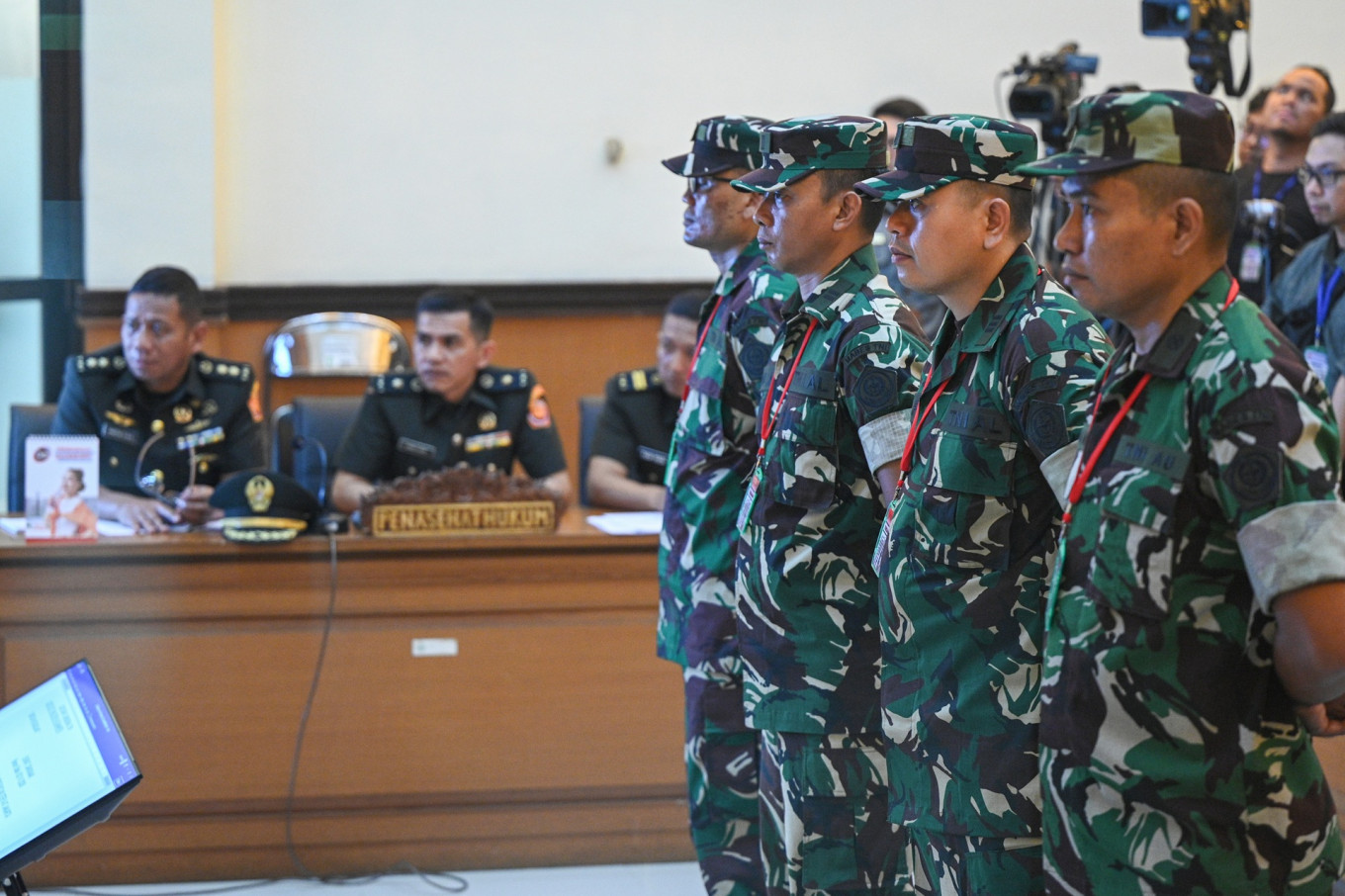
Defendants Second Sgt. Edi Sudarko (from left), First Lt. Budhi Hariyanto Cahyono, Capt. Nandala Dwi Prasetya and First Lt. Sami Lakka attend the indictment hearing against them in the case of acid attack against activist Andrie Yunus at the Jakarta Military Court in East Jakarta on April 29, 2026. (Antara/Fauzan)
The term antek asing (foreign agents) has become a favored weapon of President Prabowo Subianto’s administration to discredit critics. It functions less as an argument than as a slogan, one that burnishes nationalist credentials while deflecting responsibility for the country’s problems. Activists, civil society organizations and independent media that persist despite tightening restrictions on free expression, are routinely branded with this label.But this narrative is beginning to unravel. A recent joint study by Tempo, Kompas, Suara.com, Tribunnews and Drone Emprit does more than challenge the claim, it exposes its contradictions. The investigation found that so-called pro-Russia and pro-China actors actively amplified the antek asing narrative online during last August’s violent riots in Jakarta and other cities.