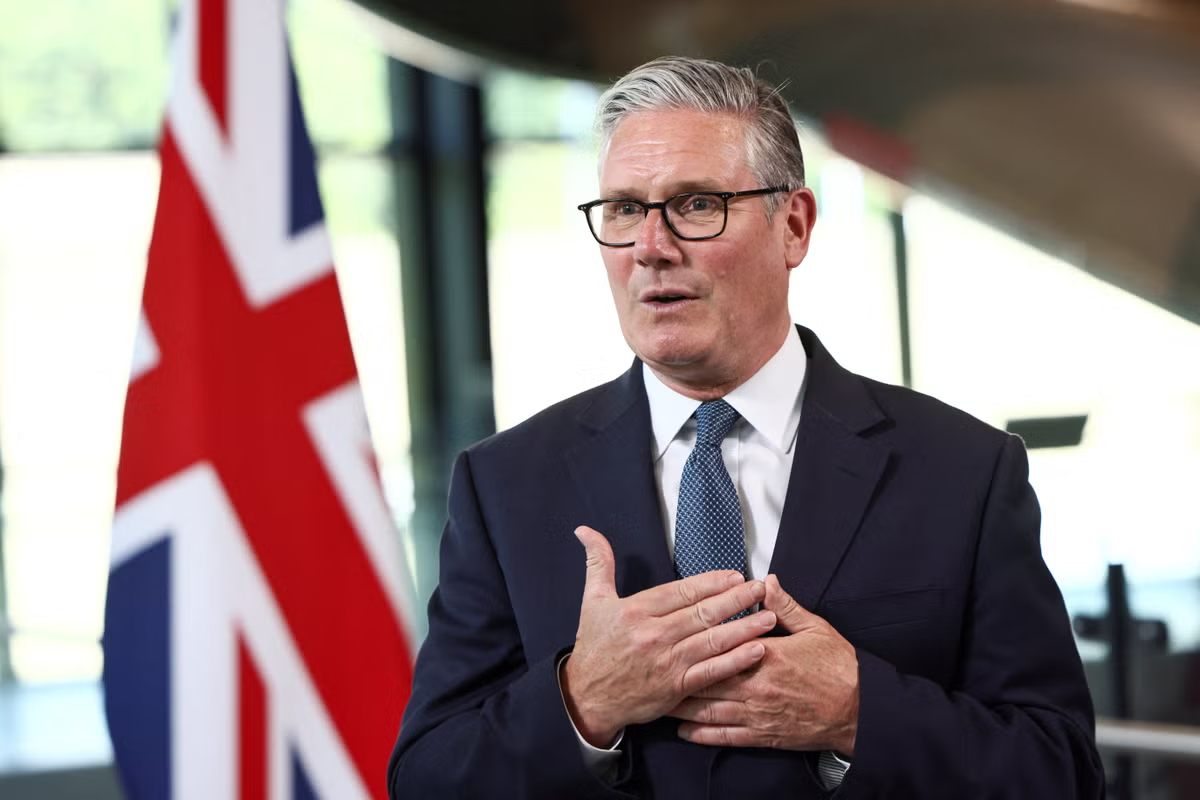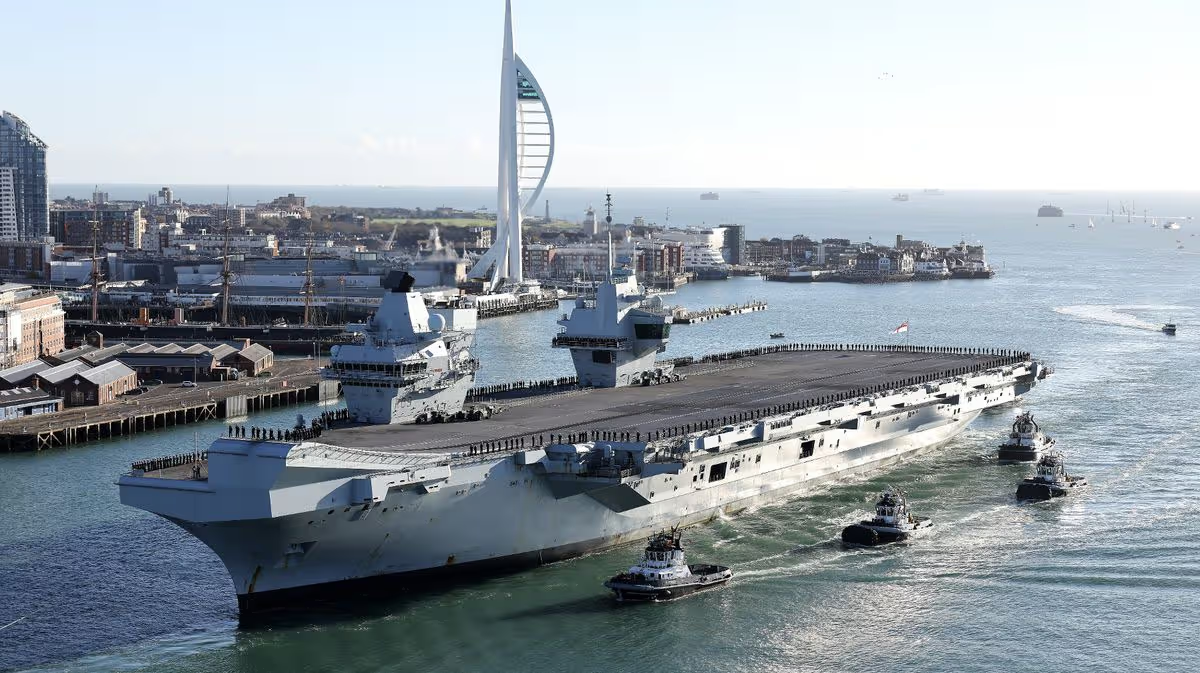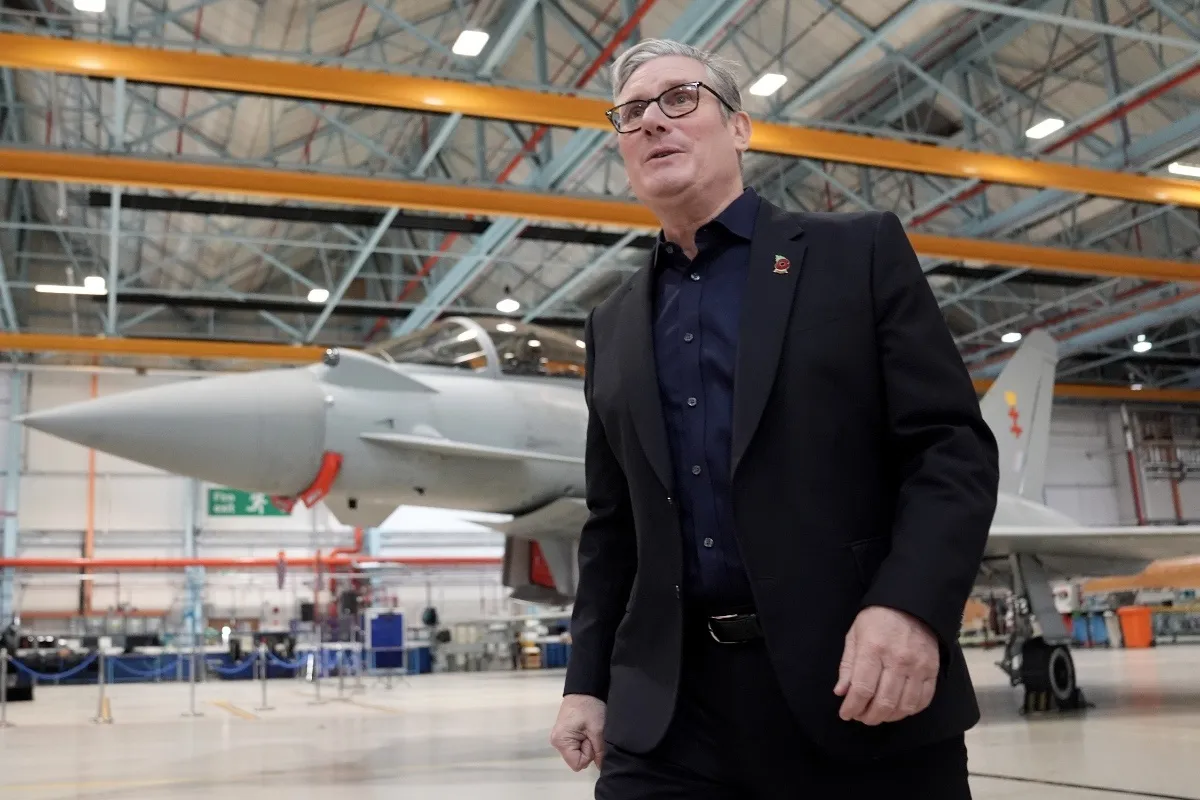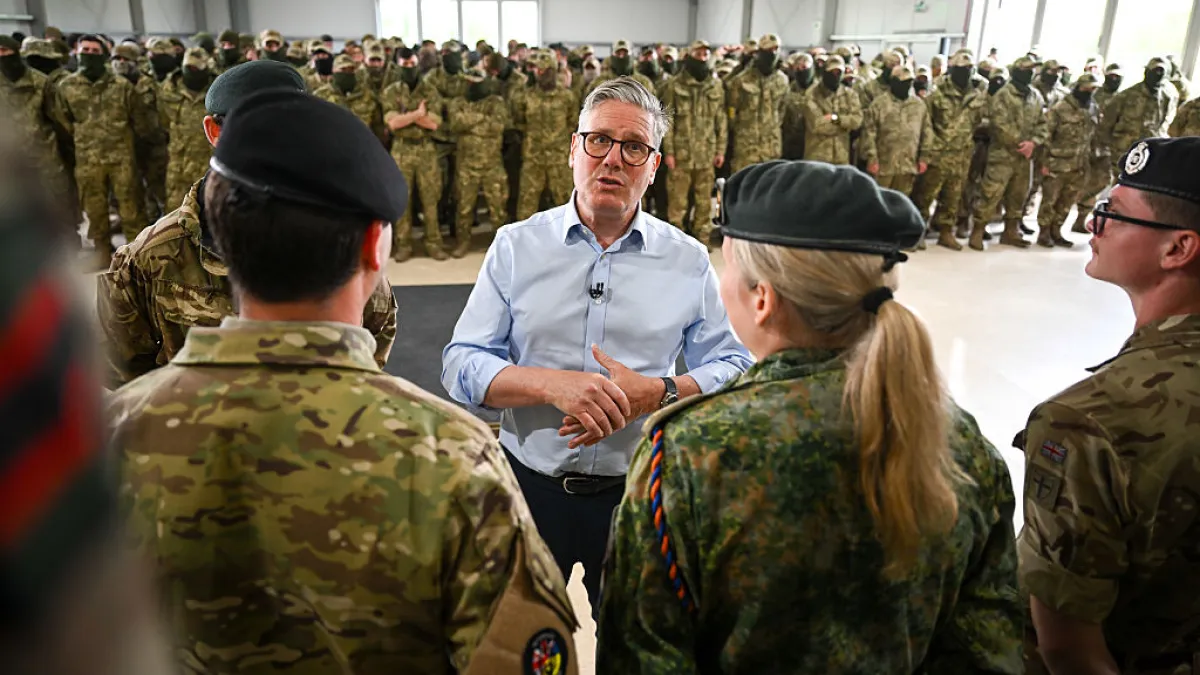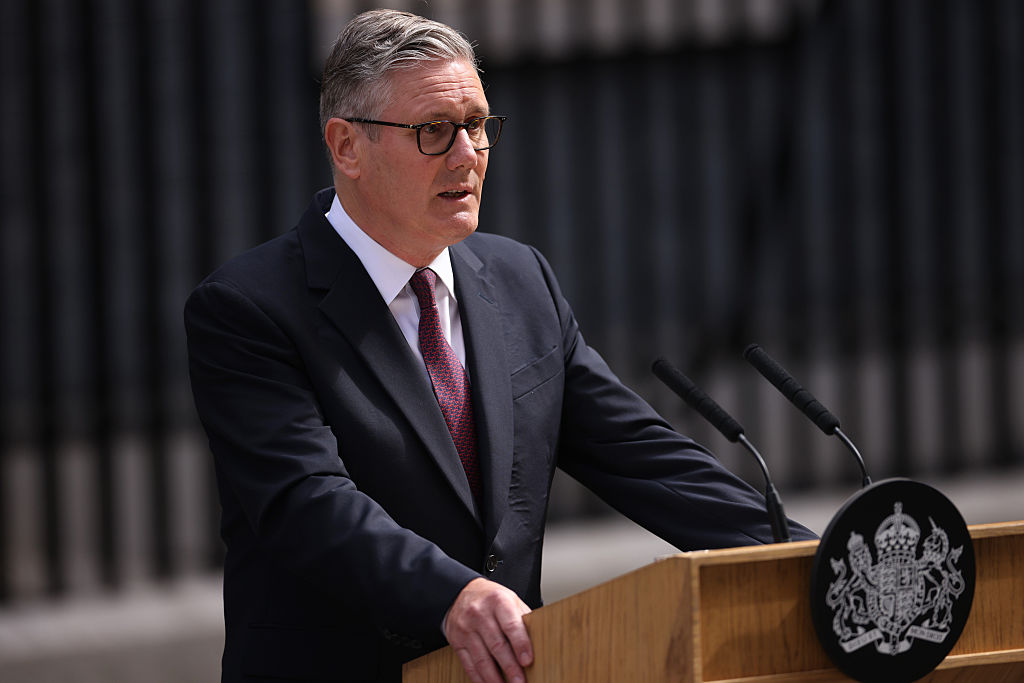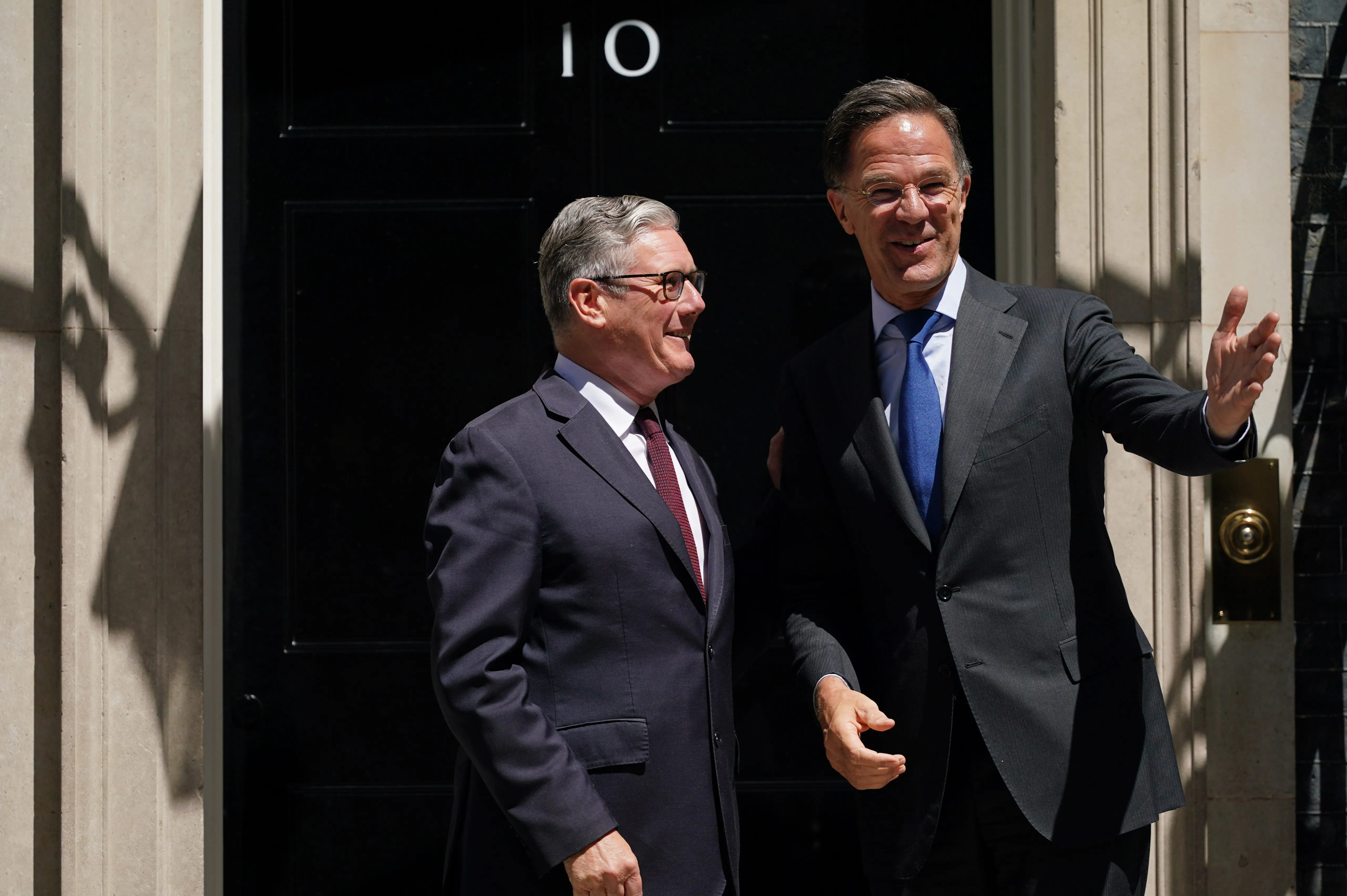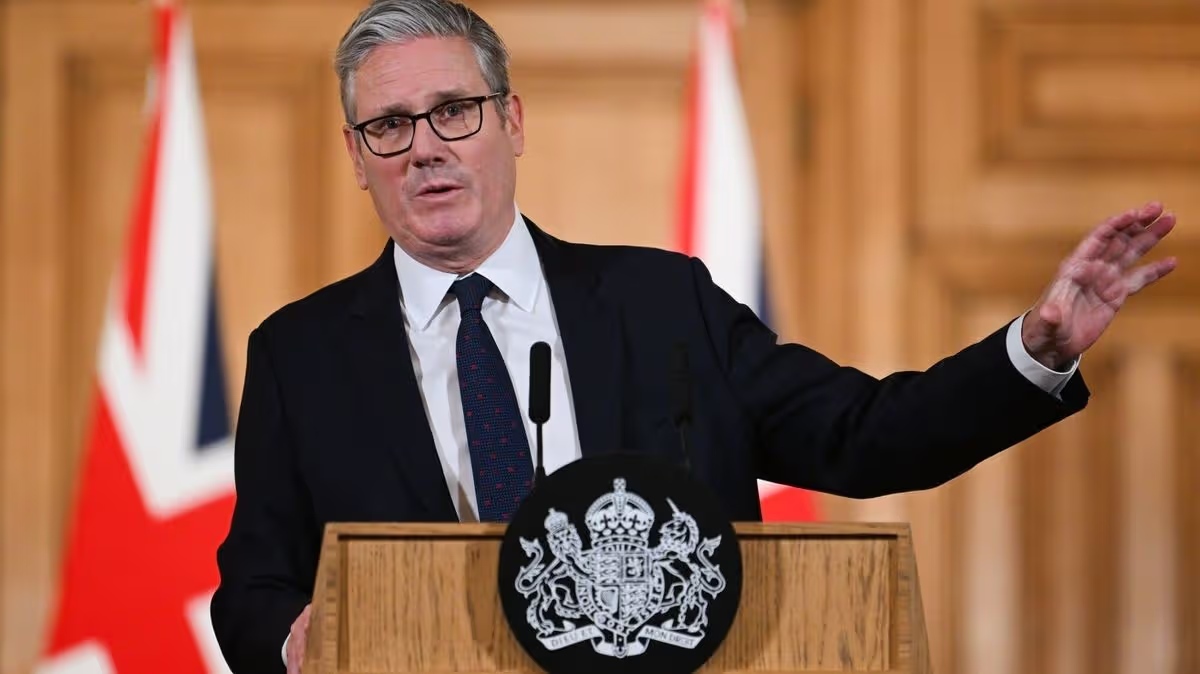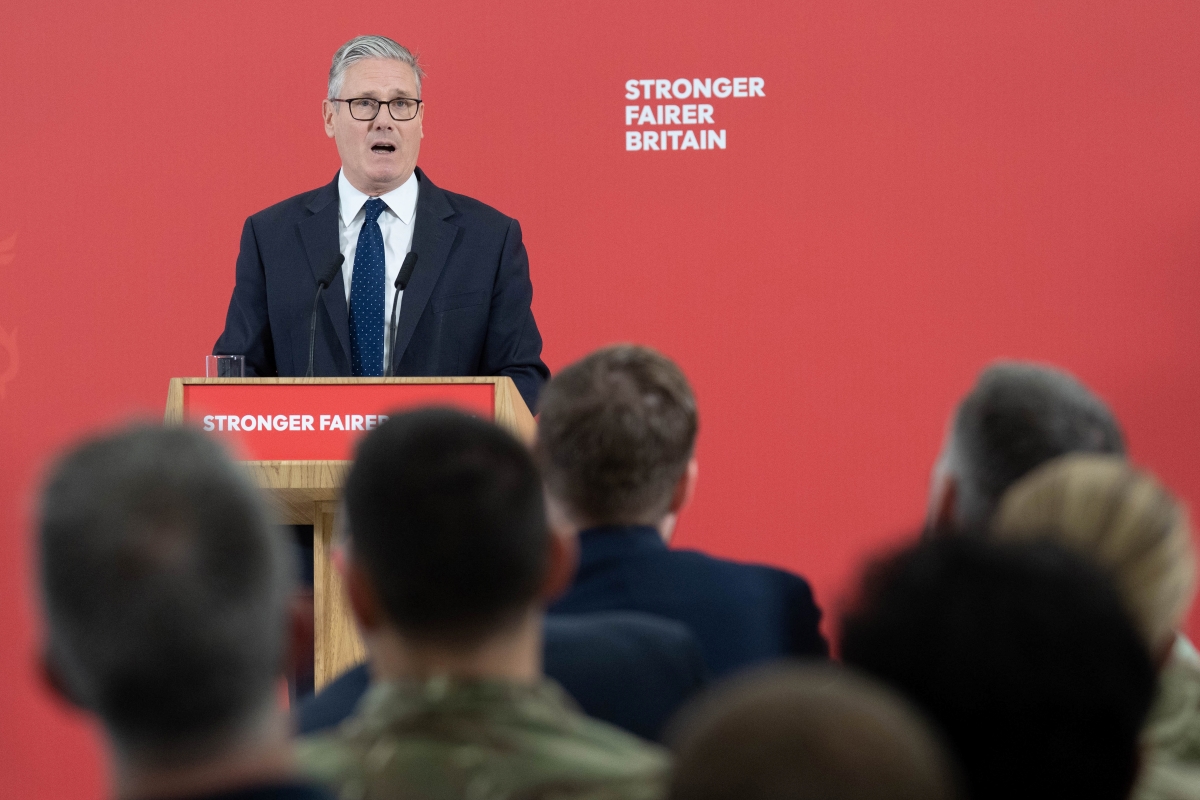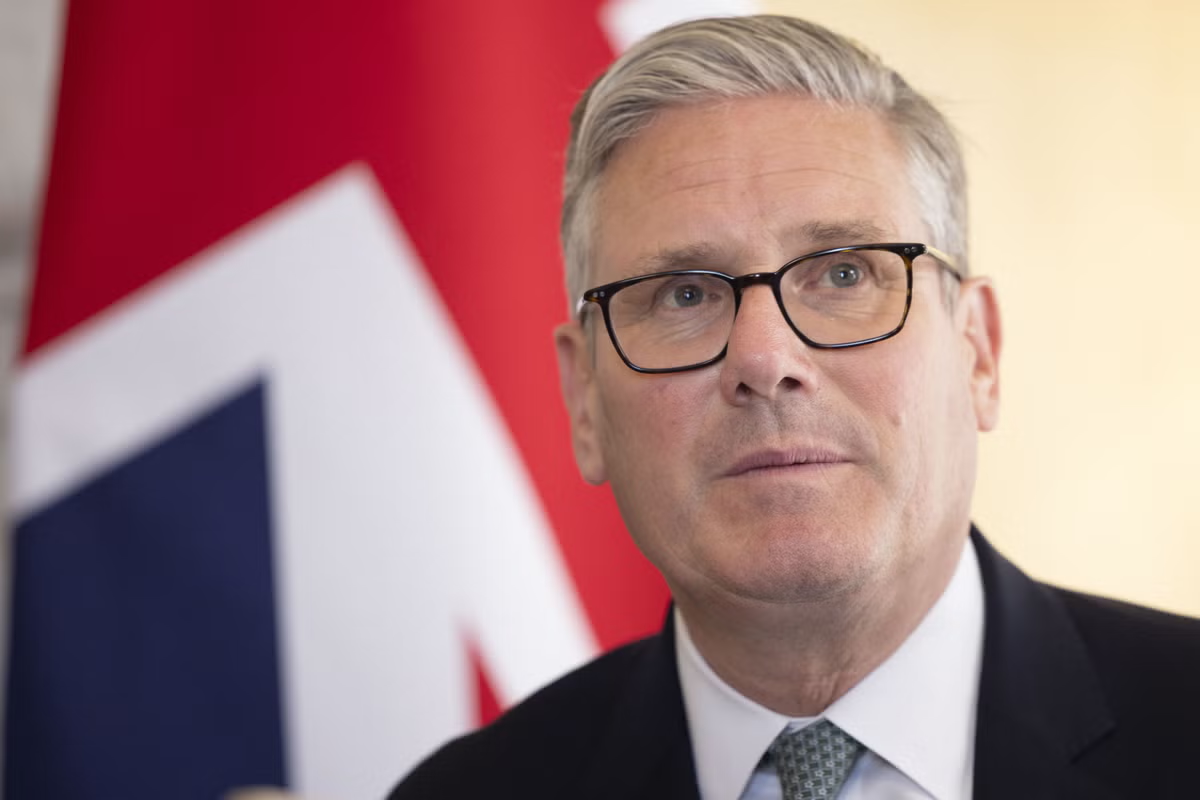
Keir Starmer today promised a 'step up' in defence spending as he confirmed a long-delayed investment plan will finally be published before a NATO summit next month.The Prime Minister has been under growing pressure to unveil the 10-year defence investment plan (DIP), which was originally supposed to be published last autumn.The DIP will set out how new equipment and defence infrastructure will be funded over the coming decade and follows last June's publication of the wide-ranging strategic defence review. Speaking during a visit to a defence contractor in Wiltshire on Friday, Sir Keir confirmed it would come before a NATO summit in Turkey on 7 July.A failure to publish the DIP prior to the gathering of NATO leaders - including Donald Trump - could have proved embarrassing for Britain, amid the US President's pressure on allies to boost their defence spending.Despite recent reports that Sir Keir and Chancellor Rachel Reeves have watered down the vital package by as much as £3billion, the PM stressed the DIP would represent 'another increase in spending'.'Now in order to put that strategic review into effect, we've got a defence investment plan, so that is the plan that says here's the money that goes with the capability,' he said.'We bring the two together, and it is another step up. It is another increase in spending, but it is necessary. It's the right thing to do to defend our country.' Keir Starmer promised a 'step up' in defence spending as he confirmed a long-delayed investment plan will finally be published before a NATO summit next monthThe PM added: 'We've been working on that defence investment plan for some time, very closely with our Armed Forces, as you would expect, because we need that interaction.'What is the capability that you most need in what time period with the MoD, and actually across government, because this is a cross-government priority,'And that will now be published before the NATO summit, which is in just a few weeks' time, a very important summit where countries across the world come together.'NATO, of course, being the single most effective military alliance the world has ever seen.'It had previously been expected the DIP would set out how an extra £18billion in defence spending will be invested over the next four years.But The Times reported this could now be reduced to just £15billion over the next four years, amid concern about the state of the public finances and economic impact of the Iran crisis.Earlier on Friday, the head of Britain's military said the threats to the UK are greater now than at any time since the Cold War.Sir Richard Knighton's warning comes as Vladimir Putin ramps up his threats against Britain, with Russian jets entering British airspace as many times in the first five months of 2026 as they did throughout the entirety of last year. The military chief said that Russia risks 'crossing a line' and described last year's strategic defence review - written by former NATO boss Lord Robertson in June last year - as a 'call to arms', urging the UK's Armed Forces to switch focus from short conflicts to longer wars such as in Ukraine. Sir Richard Knighton - the head of Britain's military - (pictured) has warned the threats to the UK are greater now than at any time since the Cold War A Russian Su-27 aircraft. Sir Richard Knighton warned that Russian jets have entered British airspace as many times in the first five months of 2026 as they did throughout the entirety of last yearSpeaking to Radio 4's Today Programme, Sir Richard said that the threat from Moscow was impacting the whole of Europe with NATO forces being scrambled 700 times in response to Russian activity. Just last week, a Russian drone hit a block of flats in Romania causing a fire and injuring two people.In April, British fighter jets were scrambled towards the Shetland Islands following reports of an unidentified Russian warplane flying outside British airspace. He said: 'We're seeing Russia probing, challenging and testing our defences, both traditional and through cyber attacks, trying to smuggle technology, and carrying out reckless sabotage and assassination attempts.''So Russia is raising the stakes and risks crossing a line.'In a daunting admission, Sir Richard added that the threats to Britain and its allies are now so high that it is the most dangerous period of his 35 year career.He continued: 'As a consequence it is important we enhance the capability of our armed forces alongside our allies to deter adversaries from doing something daft.'The strategic defence review set out clearly that the Armed Forces we have today have been shaped by the world we faced over the last 25 years but the world is changing and what is expected of defence is changing and we're expected to do different things as a consequence of that changing environment.' Sir Richard also said that drones and other autonomous systems are becoming 'increasingly important in the future of warfare', urging for more investment in the field.Drones have played a crucial part in the Ukraine war. Earlier this week, Kyiv carried out a daring drone attack on the outskirts of St Petersburg mere hours before a major economic forum in the Russian city designed to attract foreign investors. Pictured: A block of flats on fire in Romania following a Russian drone strike last week A British Typhoon FGR4 fighter jet. One of the jets set off over the coast of Scotland to intercept a Russian warplane in April Echoing Lord Robertson's previous claim that Britain's national security could be left 'in peril' if defence spending is not increased, Sir Richard said the government needs to 'spend more and do it fast'.He said: 'The Government has committed to spend more on defence as the Prime Minister says we need to spend more and do it faster. The challenge for ministers is to make those difficult trade-offs and I'm confident the Prime Minister and ministers understand the threats.'Lord Robertson is right that the world is changing and we need to enhance capability as the threat from potential adversaries grows.' It previously emerged that the MoD is facing a £28billion shortfall between now and 2030, with the Prime Minister said to have been given the dire financial assessment before Christmas.James Cartlidge, the shadow defence secretary, said it was 'extraordinary' that military chiefs are being asked to find cuts at a time of 'war on two fronts' in the Middle East and Ukraine.The senior Tory MP pointed to how Labour had spent around £3billion on lifting the two-child benefit cap, adding: 'Politics is always about what you prioritise.'Recent polling has found that Brits are split on whether to increase defence spending with many members of the public resistant to the trade-offs and cuts that might follow such an increase.Ipsos found that 37 per cent of Britons say government spending on defence and the Armed Forces should be increased, even if this means extra Government borrowing, higher taxes, or less money to spend on other public services. Recent polling has found that Brits are split on whether to increase defence spending with many members of the public resistant to the trade-offs and cuts that might follow such an increaseMeanwhile, 40 per cent think defence spending should remain the same and 15 per cent believe defence spending should be decreased. Around half of Brits would oppose an increase in defence spending if it meant a decrease in spending on public services or tax rises. Commenting on the findings, Caroline Paskell, Research Director at Ipsos in the UK, said: 'Our latest polling underscores the public's anxiety about the financial realities of funding Britain's armed forces, showing that while there is an in-principle desire for a strong military, it is not immune from the intense competing pressures facing other public services. 'For instance, since the peak in March this year there has been a measurable softening in the proportion of the British public who want to see military funding grow, although it remains higher than in 2022.'
PM confirms long-delayed defence plan will come before NATO summit
The Prime Minister has been under growing pressure to unveil the 10-year defence investment plan (DIP), which was originally supposed to be published last autumn.
1,335 words~6 min read