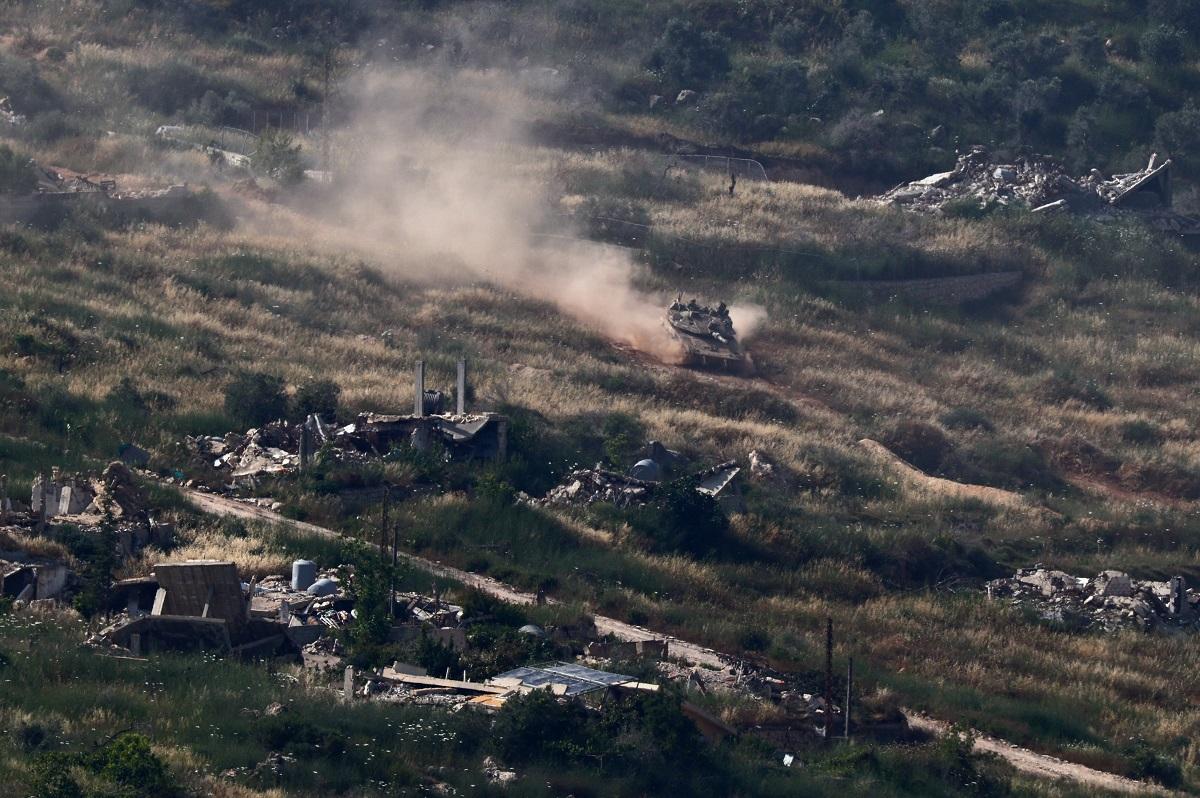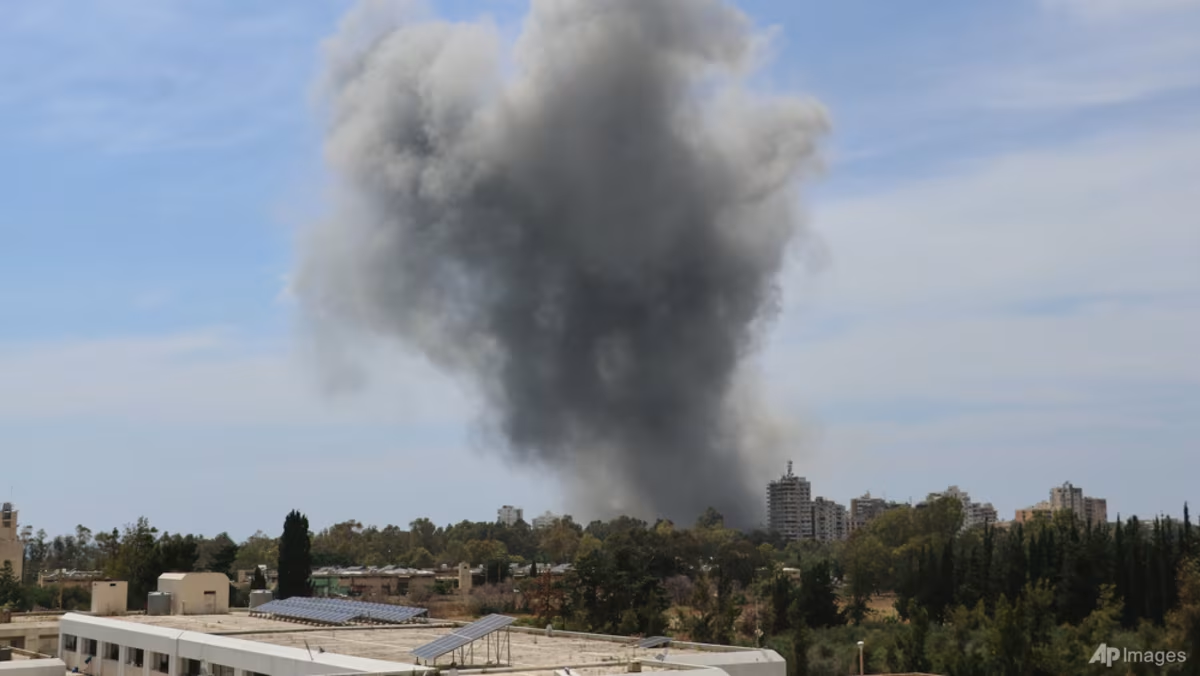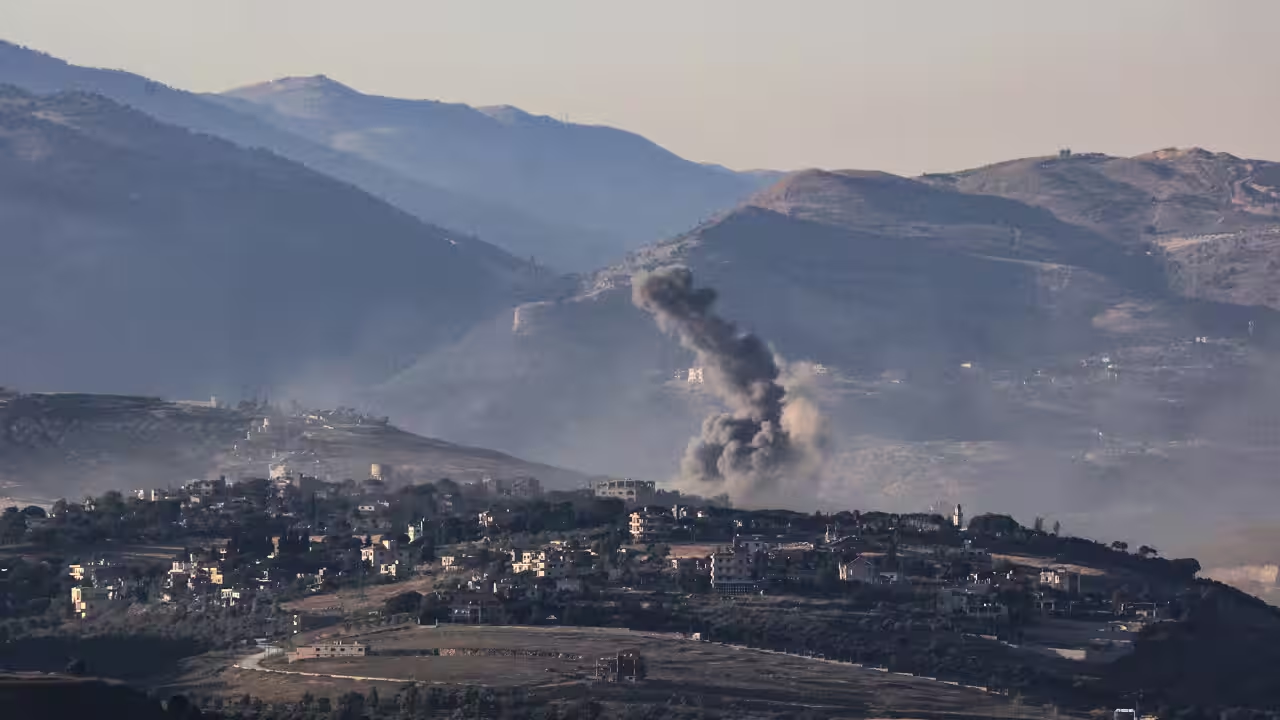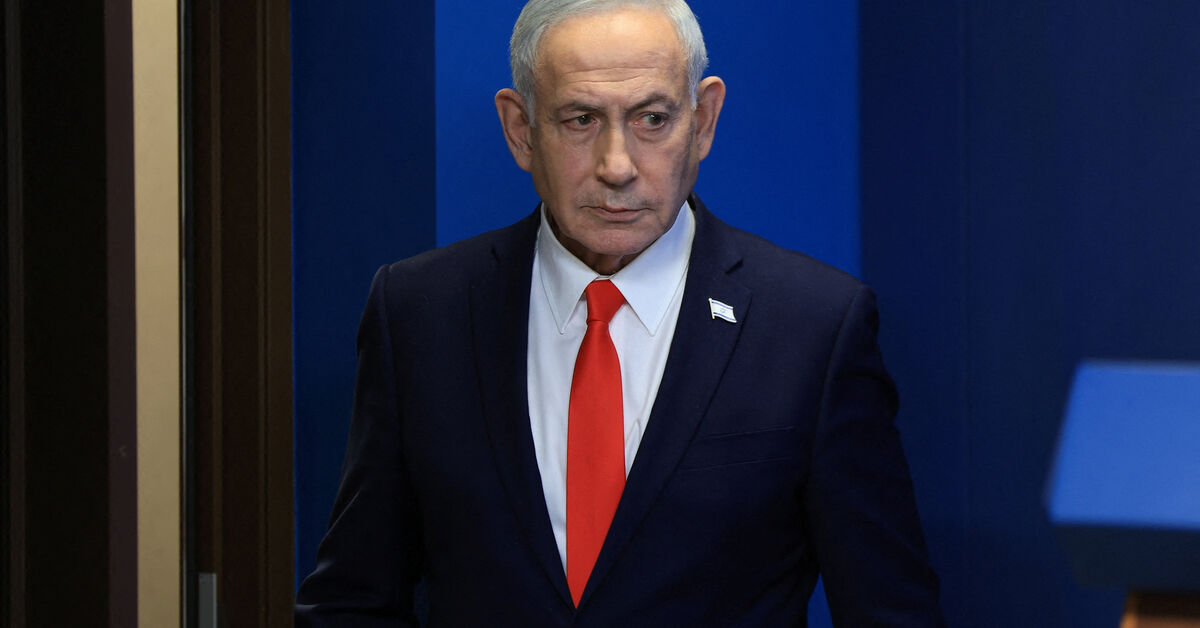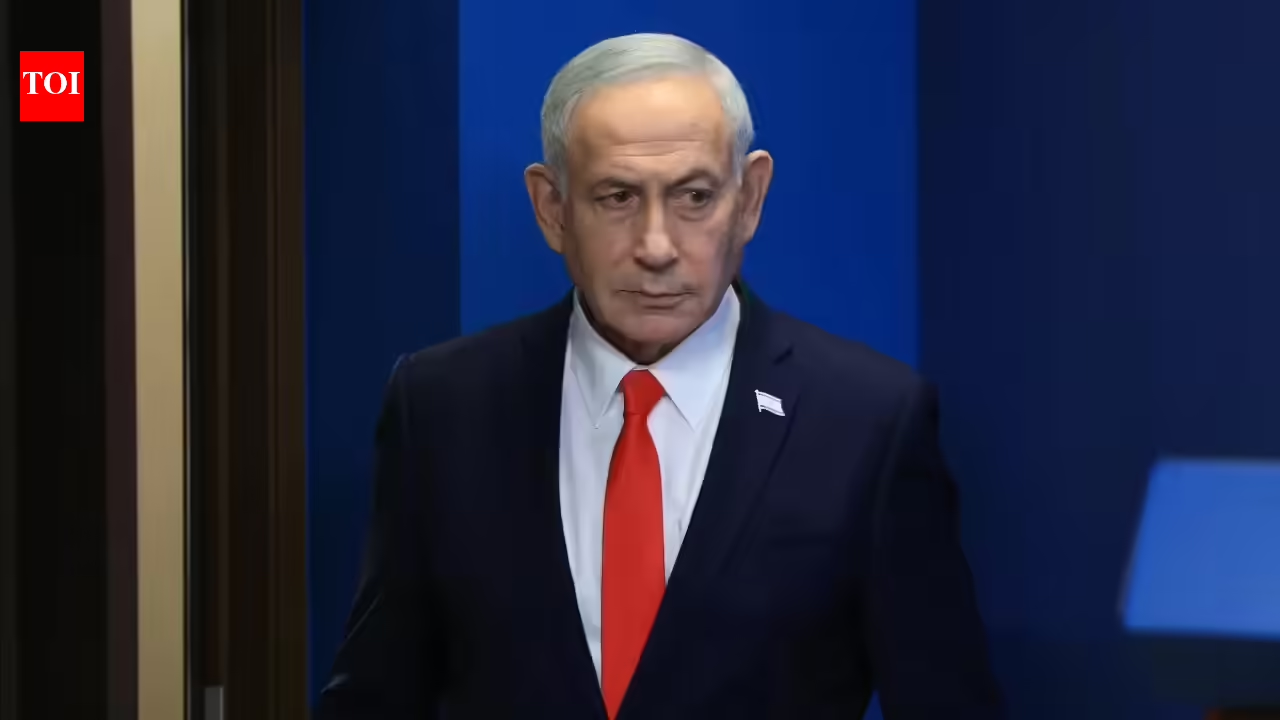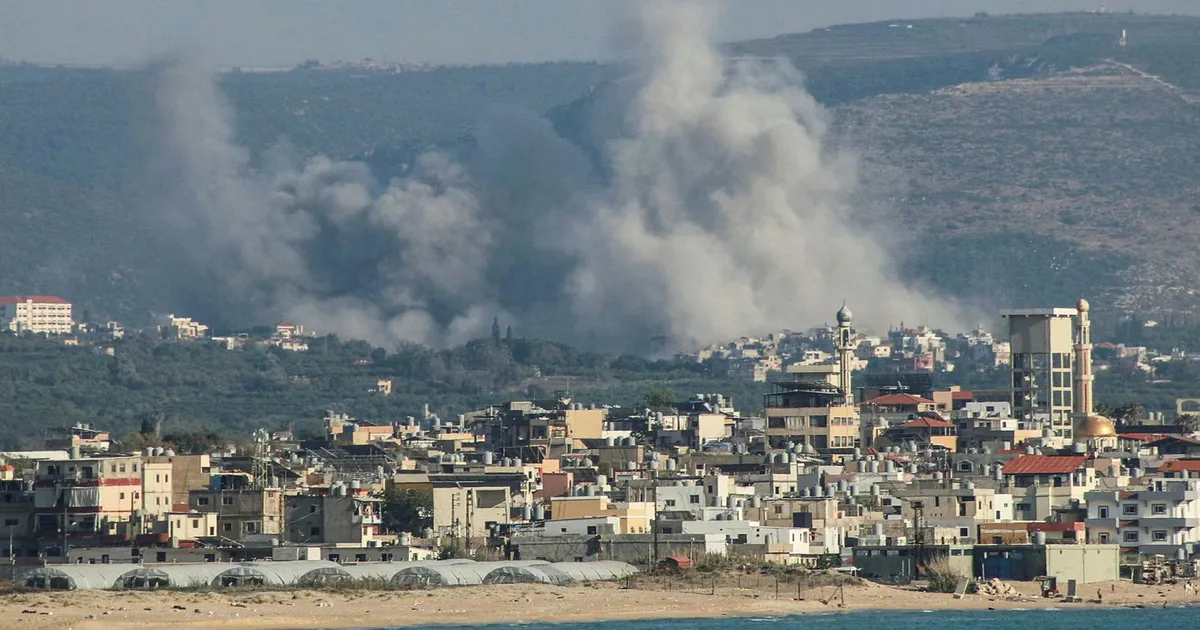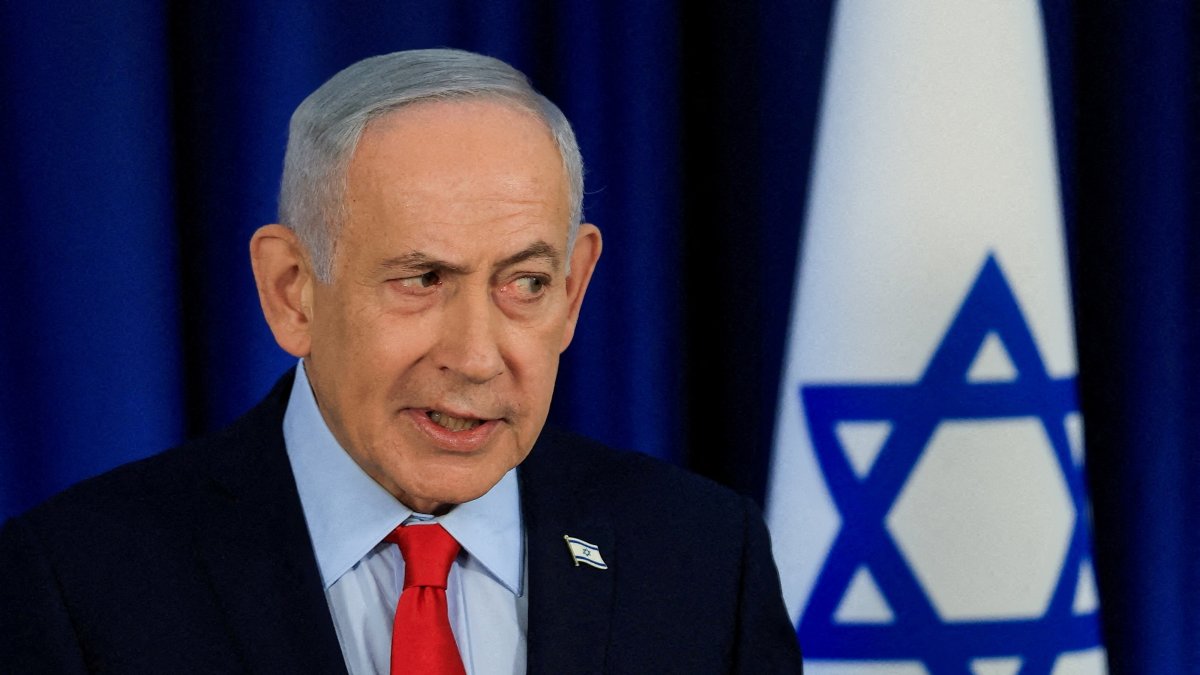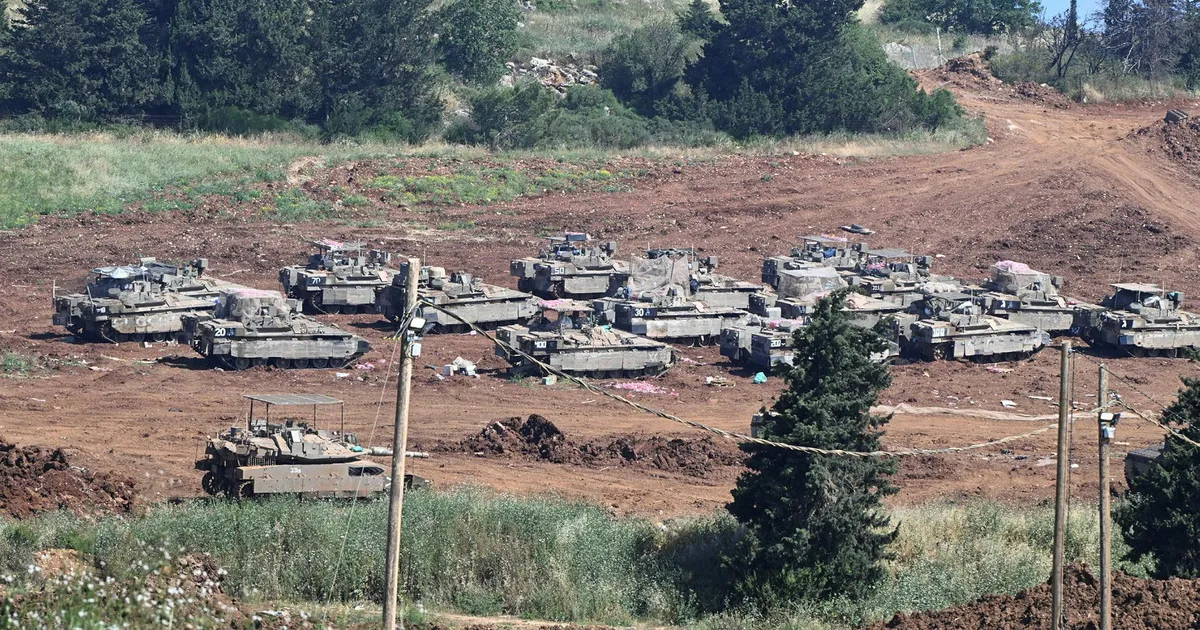
Current sectionIsrael NewsIsrael SecuritySpeaking with the heads of northern Israeli municipalities, the prime minister said that Iran continues to seek to advance plans for a Hezbollah invasion of Israeli territory. Meanwhile, Hezbollah militants and Israeli soldiers continued to exchange fire on Thursday, with one IDF soldier killed by an anti-tank missileShare to FacebookShare to XArticle printing is available to subscribers onlyPrint in a simple, ad-free formatSubscribeComments: Zen reading is available to subscribers onlyAd-free and in a comfortable reading formatSubscribeIsraeli forces on the northern border, last month. Credit: Rami ShllushIsraeli forces on the northern border, last month. Credit: Rami Shllush01:59 PM • June 05 2026 IDTPrime Minister Benjamin Netanyahu said on Thursday that Israel does not intend to withdraw from southern Lebanon in the foreseeable future."As they say, perhaps when Hezbollah is dismantled, we will reconsider our steps," he told the heads of northern Israeli municipalities. According to the prime minister, Israel will continue to hold a "buffer zone" stretching from Ras al-Bayada in Lebanon to Mount Hermon and to the Yarmouk within Syrian territory.Netanyahu also claimed at the meeting that Iran continues to seek to advance a plan for a Hezbollah invasion of Israeli territory. "The Iranians believe this will be a fundamental component of the destruction plan; it is based on an invasion of the territory," he said. "To truly stop this," he added, "we have concluded that we need security zones: separation and security areas on the other side of the border. This is a fundamental change. Since October 7, there have been several fundamental changes we are implementing: initiative, attack, stratagem and buffer zones."The prime minister told participants in the meeting that the military intends to destroy a fortress deep in Lebanon that has previously posed a threat to Metula, Israel's northernmost town, and is now under IDF control. He described it as "floors upon floors of such a strange fortress. We haven't seen anything like it in Lebanon, in Gaza, anywhere. It is in our hands and is about to be eliminated."Smoke rising after an Israeli bombardment close to the Beaufort Castle in southern Lebanon, Thursday. Credit: ReutersSmoke rising after an Israeli bombardment close to the Beaufort Castle in southern Lebanon, Thursday. Credit: ReutersThe United States announced on Wednesday that Lebanon and Israel had agreed to implement a cease-fire contingent on Iran-backed Hezbollah ceasing fire and evacuating its fighters from areas of southern Lebanon near the border.An Israeli source who spoke with Haaretz on Thursday confirmed that Israel does not intend to withdraw from the areas south of the Litani River. The source said Israel agreed not to attack Hezbollah in exchange for the organization ceasing its attacks against its forces. The source added that the army would respond to any threat against it with significant force.However, Hezbollah militants and Israeli soldiers continued to exchange fire on Thursday. An armored officer in the 7th Brigade, identified as 21-year-old Eitan Shmuel Lemberg, was killed north of the Litani River by an anti-tank missile strike. In response, the air force and artillery forces attacked Hezbollah targets in the area, the IDF stated.A source in Lebanon told Haaretz that Hezbollah also agreed to implement the cease-fire if Israel stopped its attacks against it. According to the Israeli source, this was also the Israeli delegation's understanding in Washington. However, the Lebanese source claimed that the conditions set by the organization for its agreement remain unclear.The Lebanese source's remarks contradict the statement by Hezbollah Secretary-General Naim Qassem, who rejected the cease-fire agreement. "As long as our villages are bombed – northern Israel will not be safe," Qassem proclaimed on Thursday. He added that Israel must cease fire in all of Lebanon, and that IDF forces must withdraw from its territory. "We have not committed to anyone not to resist aggression and not to respond to it," he stressed.Displaced residents of southern Lebanon waving a flag featuring Hezbollah leader Naim Qassem as they return to their villages after the April cease-fire. Credit: Hassan Ammar/AP Displaced residents of southern Lebanon waving a flag featuring Hezbollah leader Naim Qassem as they return to their villages after the April cease-fire. Credit: Hassan Ammar/AP Speaking to reporters in the Oval Office on Thursday afternoon, however, U.S. President Donald Trump claimed that "Hezbollah didn't reject anything. They called us, and they said, 'How about stopping?'"Less than an hour after Qassem's speech, sirens sounded in northern Israel due to a drone infiltration. The military reported that several impacts were identified in the area where soldiers were operating in southern Lebanon. Later, additional sirens sounded in Israel's north. According to the army, two rockets were fired at fighters in south Lebanon – one was intercepted, and another rocket fell near them.A UNIFIL official told Haaretz that no Hezbollah attacks were recorded until 4:00 P.M. Until then, IDF attacks were noted, the source said, but with reduced intensity. He said UNIFIL did not observe the razing of buildings in south Lebanon by IDF forces, unlike in recent weeks.According to a Lebanese source, Beirut fears that the ceasefire will not hold, given the upcoming elections in Israel and a series of other developments that could distract U.S. President Donald Trump from the region in the coming months. "Although the Lebanese government proposed these talks, and Israel only agreed to them after Lebanon was not initially included in the cease-fire signed between the United States and Iran, the government in Lebanon feels it has very few cards and no allies," the source said.The source added that the clause in the agreement stating that "pilot zones" would be established, over which the Lebanese army would have exclusive control and responsibility, is essentially a compromise between Lebanon's demonstrated unwillingness to confront Hezbollah and U.S. Secretary of State Marco Rubio's idea to arm several battalions in the country's army to combat the organization. According to him, it is unclear whether the Lebanese army will succeed in maintaining the current situation in the areas north of the Litani River, which have been designated as demilitarized of Hezbollah weapons.In the NewsNetanyahu Says IDF Won't Withdraw From Southern Lebanon in the Near FutureReport: Israel Secretly Deployed IDF Troops to Azerbaijan Amid Iran WarPoll: Eisenkot Party Continues to Rise, Blocs Remain DeadlockedGerman Shipping Company Hires Former IDF Chief to Advance Its Zim AcquisitionSolution to Hezbollah Drones Exists – Is the IDF Ready for the Next Threat?Remembering and rebuilding two years laterICYMIFar-right Israeli Ministers Join Thousands at Israel Day Parade in New YorkWho Built the Biblical-era Fortresses in the Deserts of Israel and Jordan?Israel's Solution to the Gaza Problem Is Well Underway'Fucking Crazy': Trump Lashes Out at Netanyahu Over Lebanon, Report Says'Israel Is Unstoppable, We Need Other Countries to Get Us Out of This'The Paradigm That Led to Oct. 7 Didn't Collapse, It Was Fiction From the Start
Netanyahu says IDF won't withdraw from southern Lebanon in the near future
Speaking With the Heads of Northern Israeli Municipalities, the Prime Minister Said That Iran Continues to Seek to Advance Plans for a Hezbollah Invasion of Israeli Territory. Meanwhile, Hezbollah Militants and Israeli Soldiers Continued to Exchange Fire on Thursday, With One IDF Soldier Killed by an Anti-tank Missile
1,128 words~5 min read