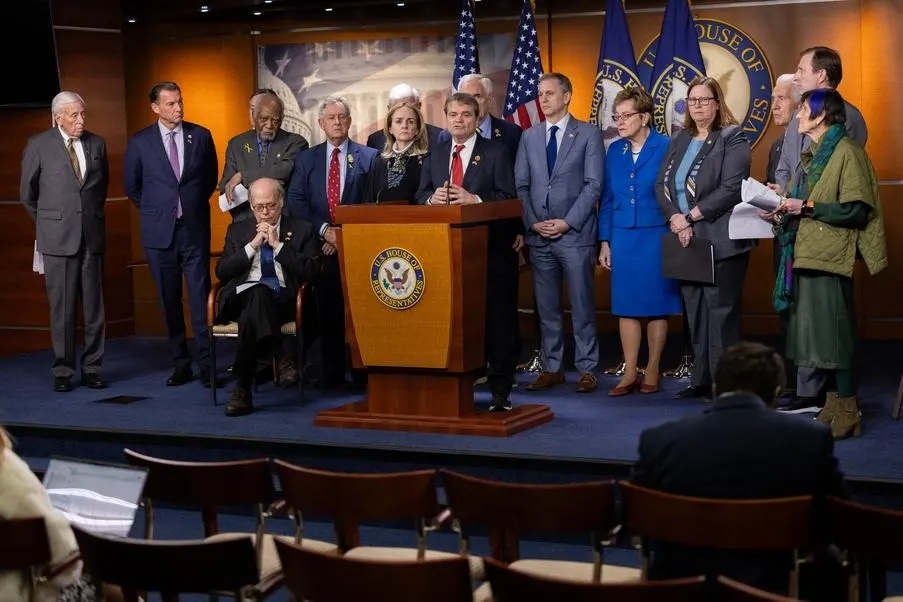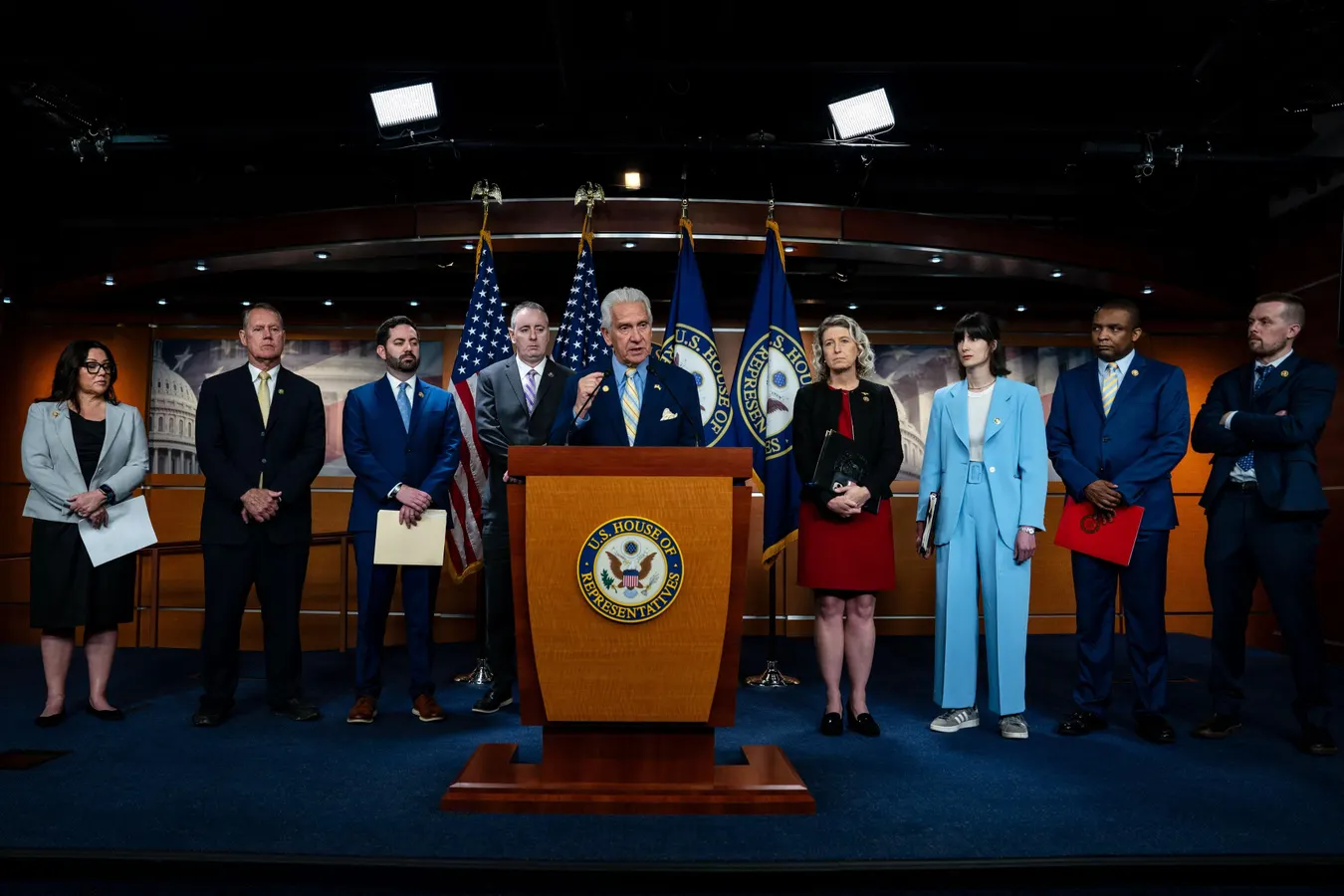
WASHINGTON, DC - MARCH 6: Rep. Jim Costa (D-CA) during a news conference on Capitol Hill on March, 6 2024 in Washington, DC. The bipartisan news conference discussed foreign aid funding for Ukraine, Israel and Taiwan. (Photo by Kent Nishimura/Getty Images)Getty ImagesFollowing a June 3 procedural vote to advance a new Ukraine aid package through a discharge petition, the House of Representatives voted on the Ukraine Support Act on the evening of June 4. The bill passed 226-195 with bipartisan backing.The Ukraine Support Act (H.R. 2913) establishes a reconstruction trust fund for Ukraine, directs the U.S. International Development Finance Corporation to prioritize support for Ukraine, provides $8 billion in military financing loans to Ukraine, and extends the Ukraine Security Assistance Initiative through 2027. The bill also proposes new sanctions on Russian officials, Russian oil and mining companies, the Russian state-owned company Rosatom, its subsidiaries, and multiple Russian financial institutions.Having been passed by the House, the Ukraine Support Act will now proceed to the Senate. The bill will require the support of at least 60 senators to pass. If the Senate approves the legislation, it will be sent to U.S. President Donald Trump for his consideration and potential signature. It would then become law.The vote on new U.S. aid to Ukraine comes at a critical time in the Russia-Ukraine War, as Bloomberg and Reuters reported last month that Ukraine is running low on air-defense supplies. Earlier this week, the BBC, CNN, and other outlets reported that the Russian Federation launched drone and missile attacks on cities across Ukraine. PBS reported that dozens of civilians were killed, and more than one hundred were wounded.In response to the June 2 attacks, Ukrainian President Volodymyr Zelenskyy posted on X that “if Ukraine is not protected from ballistic and other missile strikes, [then] these attacks will continue.” He added that assistance from the United States is “absolutely necessary,” and that Ukraine is “counting on the support of [its] partners” as it defends itself against Russia’s ongoing full-scale invasion since February 2022.Given the events in Ukraine, some members of the House of Representatives have sought to highlight the urgency of aid to Ukraine, a topic that has not been discussed in Congress since April 2024. While speaking on the House floor on June 3, Democratic Representative Gregory W. Meeks from New York stressed that the House vote was a “statement on whether this Congress and all of its members stand with and support Ukraine and the people of Ukraine.” Meanwhile, Republican Representative Don Bacon from Nebraska posted on his X account on June 3 that the United States had “waited long enough to help Ukraine,” adding that this was America’s “Churchill vs Chamberlain moment.”MORE FOR YOUAlthough the bill has passed the House, it still faces obstacles in the Senate. The Hill reported on June 4 that it was unlikely the Ukraine aid bill would be taken up by Republican Senate Majority Leader John Thune. Additionally, AP News reported on June 4 that the Senate would likely not approve the House’s proposed aid to Ukraine “unless Trump gives the bill his endorsement.” AP News also noted that some Republicans argue a new U.S. aid bill for Ukraine could undermine ongoing negotiations between Congress and the White House to produce stronger sanctions legislation against Russia.But attitudes toward aid to Ukraine may be shifting. While speaking with reporters at the U.S. Embassy in Singapore on May 30, U.S. Secretary of Defense Pete Hegseth stated that the United States would “find a way” to help Ukraine. Meanwhile, during a congressional testimony on June 3, U.S. Secretary of State Marco Rubio revealed that the Trump Administration was finalizing a new $400 million military assistance package for Ukraine. These remarks from senior Trump Administration officials suggest that the White House may be reconsidering its approach to aid to Ukraine amid Russia’s ongoing full-scale invasion since February 2022. How this will impact the Ukraine Support Act as it reaches the Senate, however, remains to be seen.Finally, a Pew Research Center poll published on April 23 surveyed Americans about the Russia-Ukraine War. The survey, which polled Republicans and Democrats, found that 54% of Americans said that the Russia-Ukraine War is at least somewhat important to them personally. Additionally, 29% of Americans surveyed said that they believe the U.S. does not provide enough support to Ukraine, while an additional 26% said that America is doing enough to help Ukraine. Furthermore, 51% of Americans said Russia is an enemy of the United States. The findings from this Pew Research Center report suggest that, as Russia’s full-scale invasion of Ukraine enters its fifth year, most Americans still remain invested in the Russia-Ukraine War and view Russia as an adversary to U.S. interests.In short, Ukrainians and supporters of Ukraine will be pleased with the House’s decision on June 4 to pass a new bipartisan aid package for Ukraine. With the Ukraine Support Act now before the Senate, the debate over U.S. support for Ukraine enters a new and uncertain phase. How senators respond, and whether Trump ultimately weighs in, will shape the trajectory of American policy toward the Russia-Ukraine War.
House Passes New Ukraine Aid Bill, Setting Up Senate Showdown
The House has passed the Ukraine Support Act, providing new defense aid to Ukraine and sanctions on Russia via a discharge petition. The bill now heads to the Senate.
852 words~4 min read