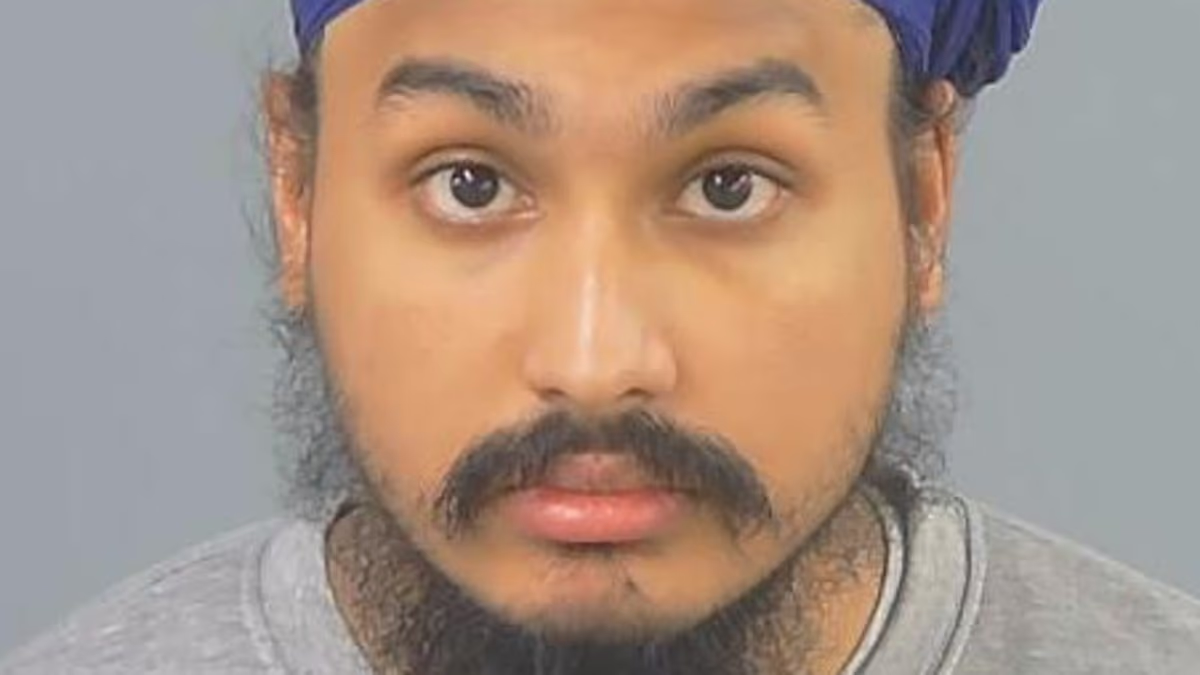
A 39-year-old man who stabbed his ex-partner 17 times in a “ferocious” knife attack at the office building where she worked has been jailed for 26 years.Anwar Ashraf was convicted after a trial at Winchester Crown Court following the attack on Carla Skeites using a kitchen knife which happened at the premises 3600 Parkway in Whiteley, Hampshire, at about 9am on 30 April 2025.He had previously pleaded guilty to wounding with intent to cause grievous bodily harm and possession of a knife but he had denied that he wanted to kill her.The court heard that the defendant, of Southsea, had told police after the attack: “What would you do if your partner cheated on you? How would you react?”Judge Paul Dugdale imposed an extended sentence on Ashra with a five-year period on licence once released from custody and issued a restraining order for life.He told him: “You carried out what can only be described as an horrific, ferocious attack on her and it is the level of ferocity that causes this court real concern.”He added: “It’s a miracle that she survived, it’s not clear if she will ever be near to how she was before and it’s not clear if the pain she suffers every day will go away.”Addressing Ashraf, who the court heard had a drinking problem and was suffering from a mental health crisis, he added: “It’s all very well talking about alcohol addiction and addictions but we have to take responsibility for our actions.“You knew the effects it could have on you and the effects have been devastating.”In a victim impact statement read to the court, Ms Skeites said she still suffered flashbacks and nightmares and was undergoing counselling for anxiety.She described being in hospital in 10 days following the attack and not knowing if she would survive the emergency surgery.Ms Skeites said: “Asking the question to the many amazing medics ‘Am I going to die?’ and not getting told the answer you need to hear in that moment but being told ‘We are doing everything we can for you’, The reality hit me that I may not have woken up from surgery.”She continued : “I find myself not being able to trust people and I now question whether they will harm me too. Right now I wish I could escape it all.”Ms Skeites added: “I know I should hate Ash for what he has done, maybe in time I will but right now I feel more sadness than hate.“I feel sad that he felt his only option was to ruin his life and nearly take mine.”Giles Bedloe, prosecuting, told the trial that Ashraf had become “obsessed” with Ms Skeites and accused her of “cheating” on him despite the relationship having ended several months previously and Ms Skeites not being in a new relationship.Mr Bedloe said that on the morning of the attack Ms Skeites was preparing for a training presentation at the travel agency where she worked when she received a message that Ashraf was outside the building and had asked to see her.He had “bombarded” her with 49 phone calls before turning up at the premises, and “circling in the shadows” as he waited to see Ms Skeites.He said that Ms Skeites went to see him and after a “brief conversation, she told him to leave her alone and go away” before “randomly he hugged her” and he followed her back into the lobby as she tried to move away from him.He added: “She was telling him he needed to leave. Suddenly, he said ‘I have a knife’ and showed her a black-handled kitchen knife.”Mr Bedloe said the victim later described the attack saying: “Before I knew it, he was stabbing me”.The prosecutor said that the defendant was restrained by members of the public with one man kicking his legs to knock him over before blocking his exit.The court heard that Ashraf had a habit of drinking a bottle of whisky or vodka each day and had gone to a retreat in India and to Dubai in bids to solve his drinking problem.Nick Tucker, defending, said that Ashraf, a father of two, had “struggled” since being abused as a child and suffered from depression.He said: “It was something of a mental health crisis, he had very little sleep in the week preceding the attack and his thinking had become rigid and obsessive and although he has not been formally diagnosed with any mental illness, all the evidence points to him having some form of mental health crisis.”He added that Ashraf had “expressed remorse” for Ms Skeites’ suffering following the attack.Simon Clark of the Crown Prosecution Service said: “This was a sustained and violent attack carried out in a place where the victim should have felt safe. Anwar Ashraf sought to downplay his actions by saying he only wanted to scare the victim, but the nature and scale of this attack showed a clear intent to cause fatal harm.“Prosecutors refused to let him evade responsibility by pleading guilty to a lesser offence, and ultimately secured a conviction for attempted murder. Today’s sentence reiterates the CPS’s commitment to tackling violence against women and girls, and we will continue to prosecute those responsible robustly.”
Man who stabbed ex-partner 17 times in ferocious office attack jailed for 26 years
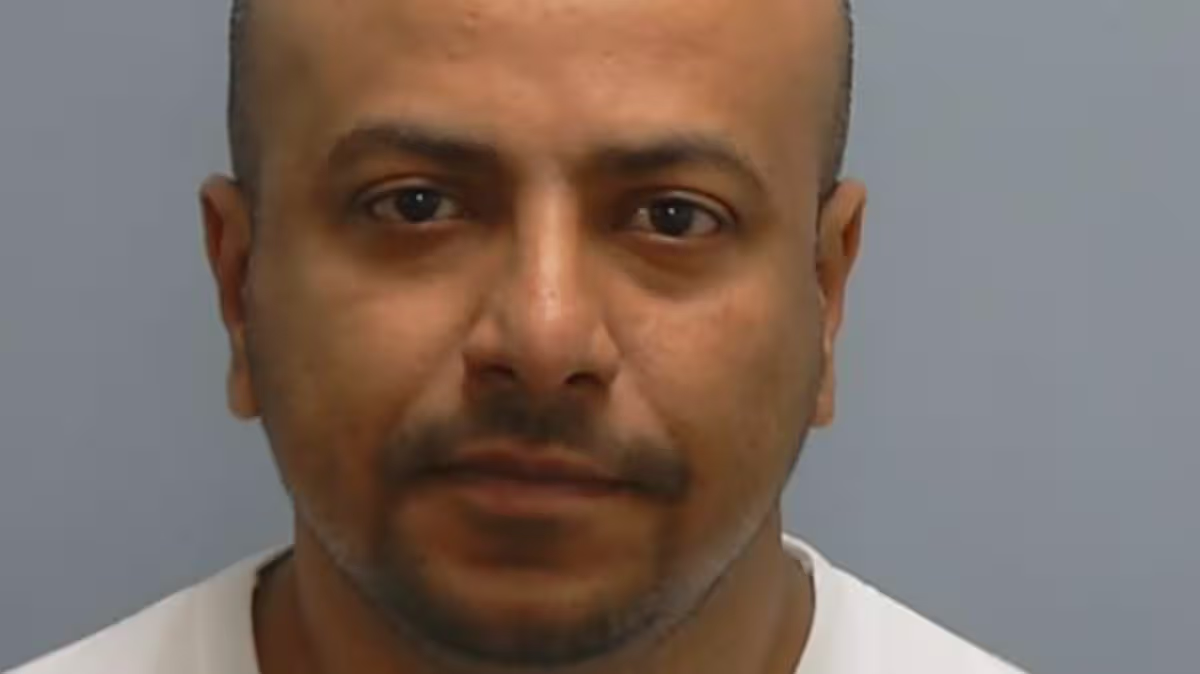
Anwar Ashraf had previously pleaded guilty to wounding with intent to cause grievous bodily harm and possession of a knife
866 words~4 min read