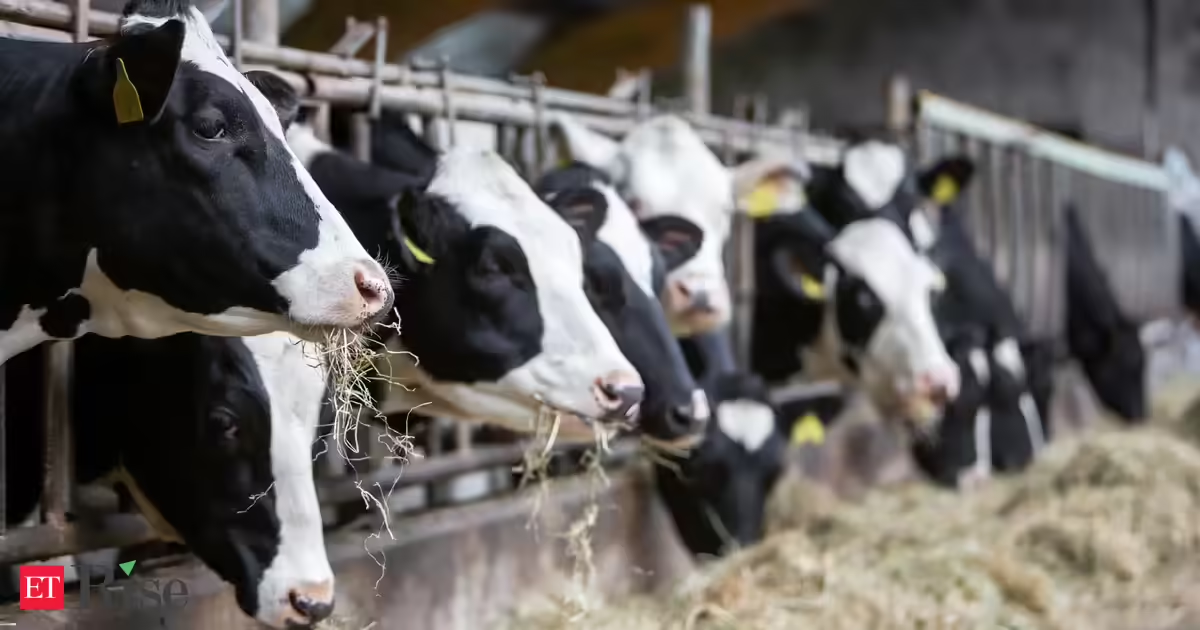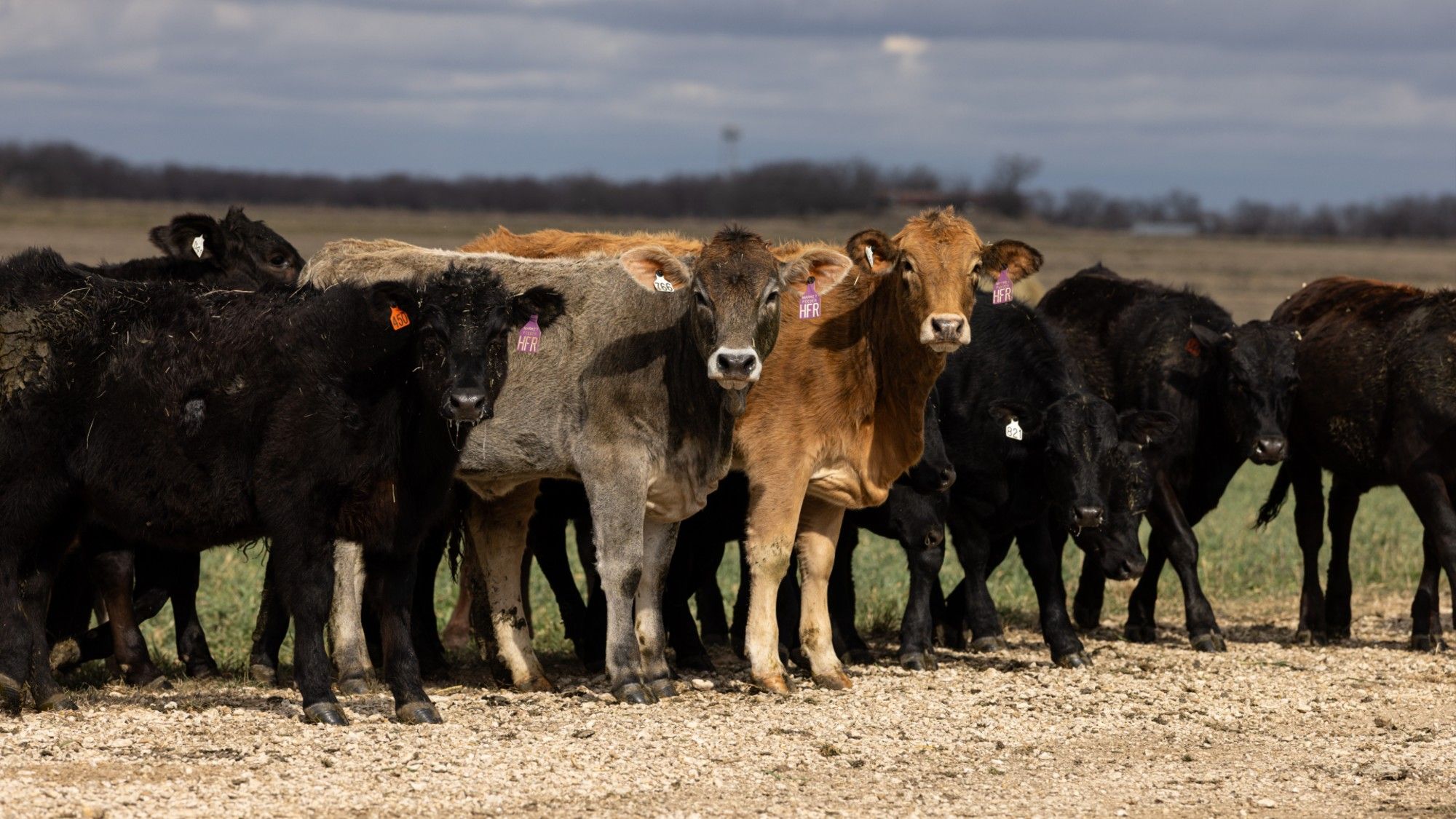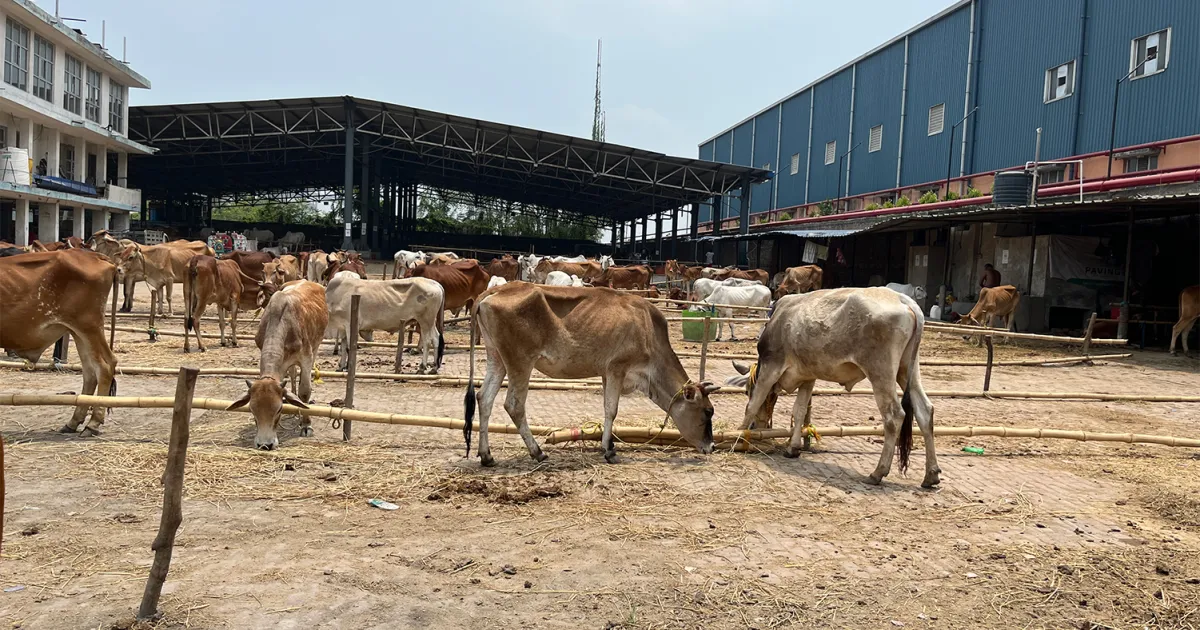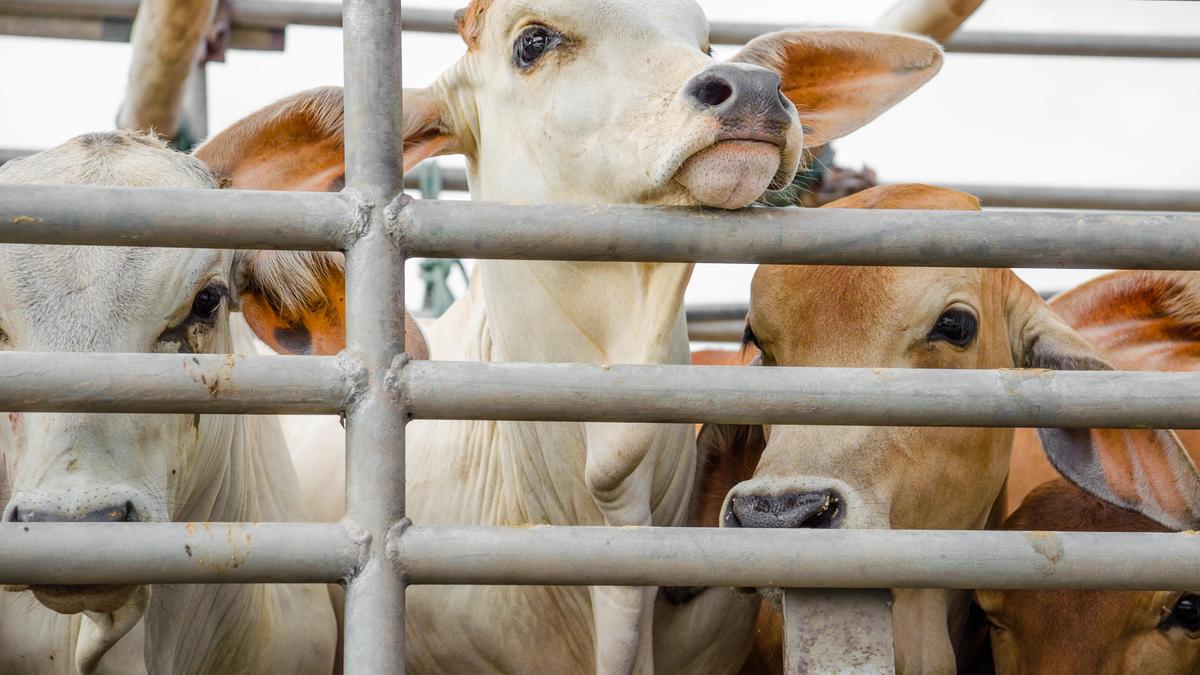
Image for representation.
Beef, a staple on the dining tables of thousands of Kerala households, is becoming increasingly expensive and harder to find as disruptions in cattle supply from neighbouring States trigger a crisis in the meat trade.A sharp rise in the blocking and seizure of cattle trucks in these States, especially Andhra Pradesh, has severely affected the supply of cattle for slaughter, pushing Kerala’s private meat industry into a difficult situation. Industry representatives warn that unless the disruptions are addressed, the shortage is likely to worsen in the coming weeks.Mark of protestAs a mark of protest against the growing challenges, all private meat outlets and slaughterhouses in the four central Travancore districts of Kottayam, Idukki, Pathanamthitta and Alappuzha will remain closed on June 6 and 7, according to the Meat Industries Welfare Association.Kerala depends heavily on cattle brought in from other States to meet its demand for meat. However, cattle transported to the State are increasingly being stopped and seized on various pretexts, including the raising of emotional and political issues, particularly in Andhra Pradesh in recent months.“There is no support coming from the authorities despite the growing challenges faced by the industry,” said M.A. Salim, president of the Meat Industries Welfare Association.Under existing regulations, cattle transported by road are required to be accompanied by health certificates. However, industry representatives claim that following a decision by the Andhra Pradesh government that such certificates are no longer mandatory, instances of unauthorised seizures have increased. They also allege that transporters are often forced to pay hefty sums to criminal groups under the guise of ensuring hassle-free movement of cattle.The impact is already visible in districts such as Kottayam, one of Kerala’s largest beef-consuming regions after Malappuram and Ernakulam. “Around 700 cattle, yielding an average of 150 kg of meat each, are usually brought into Kottayam every week. But with the rise in illegal seizures, we are now struggling to bring in even half that volume,” Mr. Salim said.Prices upThe resulting supply crunch has pushed beef prices sharply higher, forcing many families to reduce consumption or leave the item off their menus altogether. Given beef’s status as an affordable source of protein for a large section of the population, the issue has begun drawing attention at the administrative level, with several panchayats exploring ways to intervene in price regulation.Traders, however, argue that attempts to regulate prices alone will not address the underlying problem. They contend that local bodies have failed to provide adequate infrastructure for the meat trade even as they seek to control retail prices.Official estimates show that Kerala’s total meat requirement for 2024-25 stands at 880.33 MT. Of the 523 MT of meat produced within the State, poultry accounts for the largest share at 237.41 MT (45.45%), followed by buffalo meat at 158.96 MT (30.41%) and cattle meat at 101.10 MT (19%). With livestock production historically falling short of consumption needs, Kerala has long remained dependent on imports from other States, particularly cattle, to meet its meat requirements. Published - June 05, 2026 04:52 pm IST