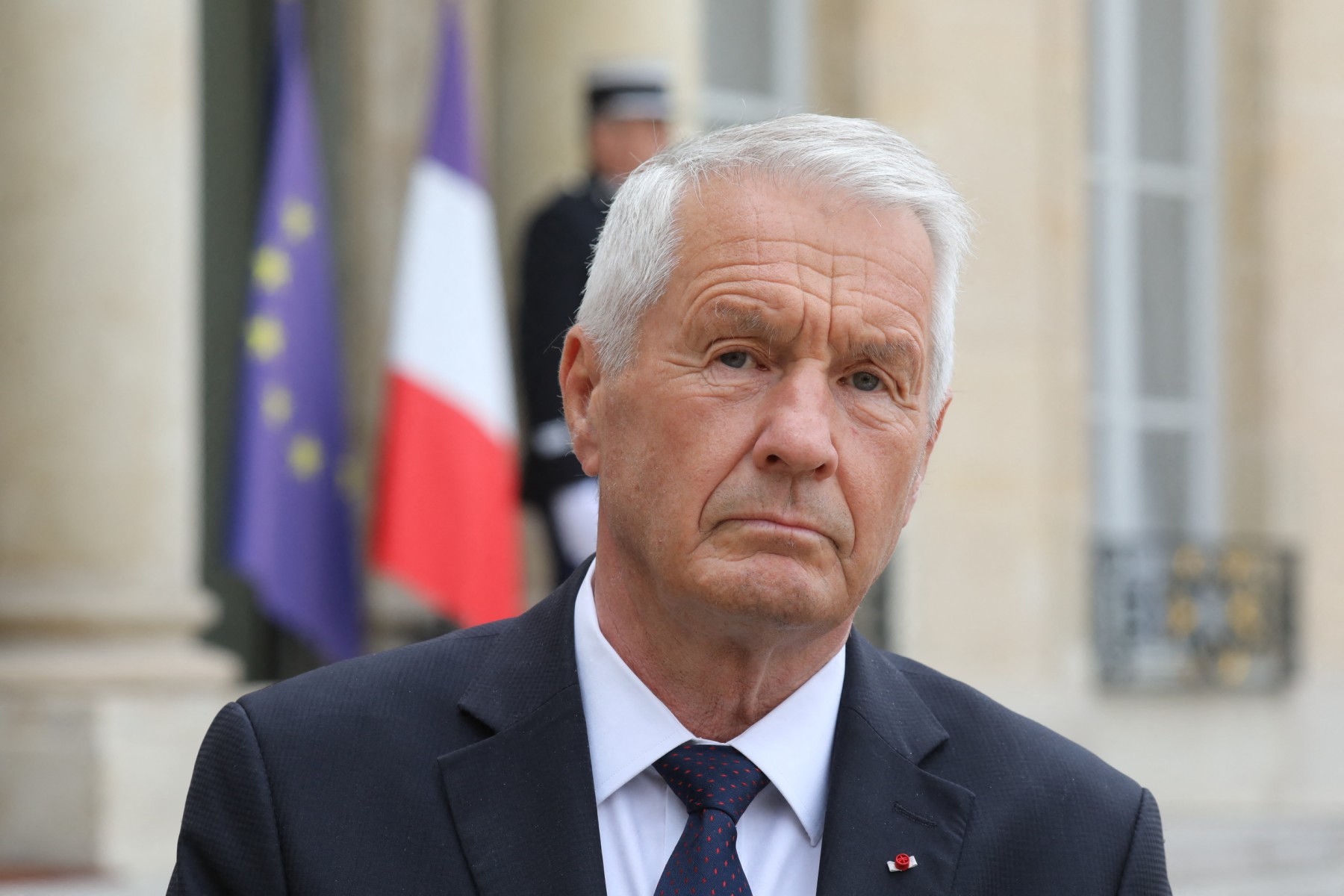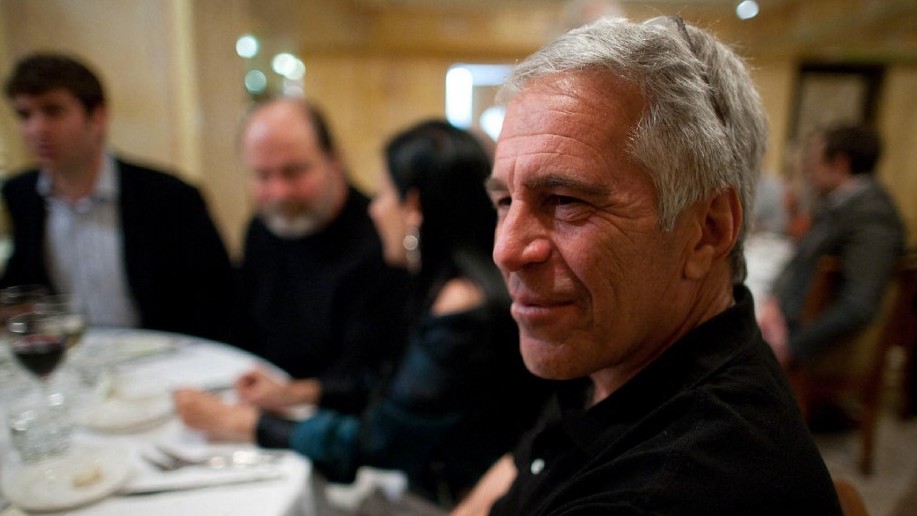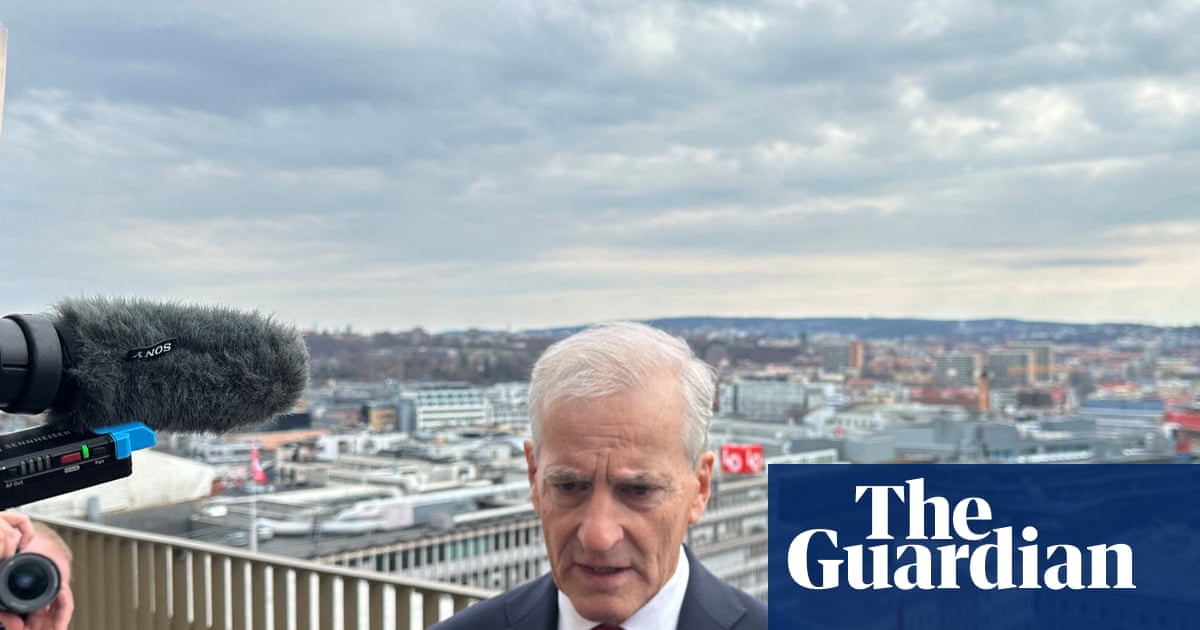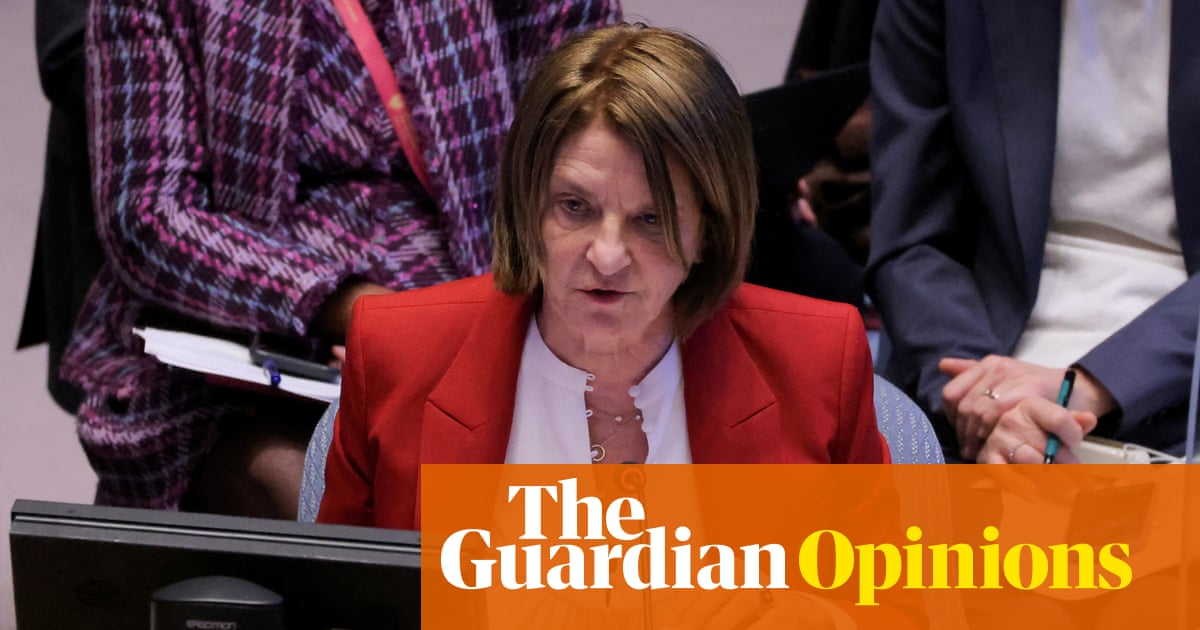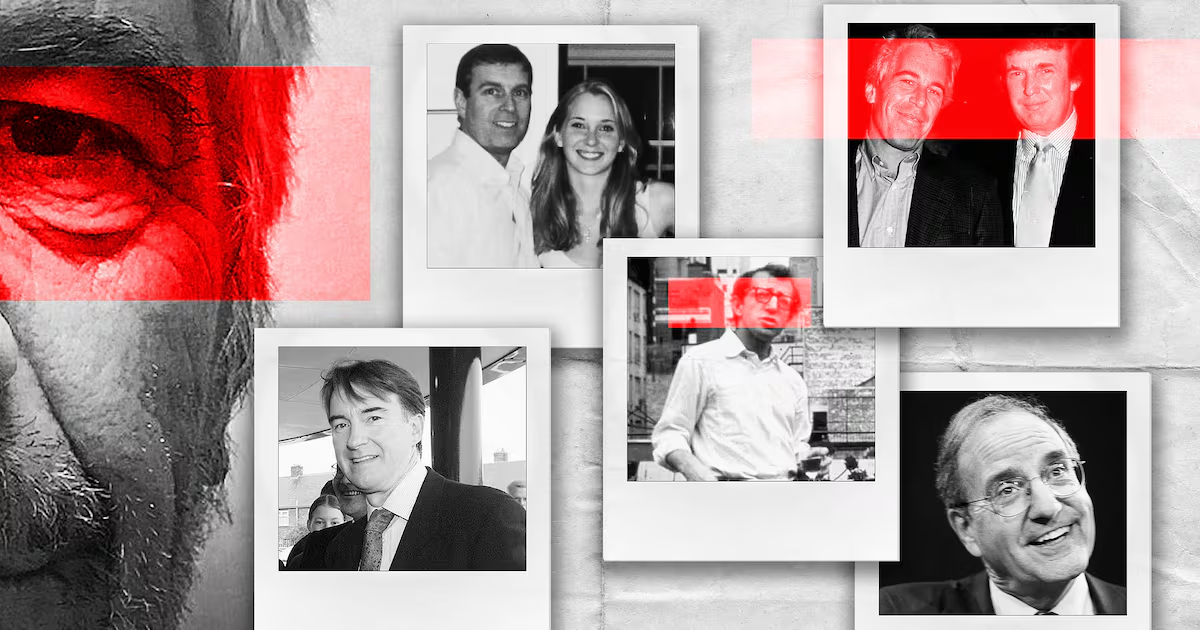
It took a couple of days before we realized. Perhaps we were too busy, pouring over the correspondence between Jeffrey Epstein and Norwegian elites, to notice. At first, we read newspaper reports, written by journalists who seemed to find the names of prominent Norwegians who had been in contact with Epstein every 30 minutes or so. “I have been in Tirana (Albania) extraordinary girls,” our former prime minister Thorbjørn Jagland wrote to the New York financier in 2012, when Epstein was a known sex-offender involved in the trafficking of minors. Back then, Jagland was the secretary general of the Council of Europe and chairman of the committee that awards the Nobel peace prize. The emails revealed that Jagland had stayed in Epstein’s properties around the world and planned to visit his infamous island on multiple occasions; Epstein had also paid for Jagland’s medical treatments, and they had discussed a loan to allow Jagland to buy a property in Oslo.Eventually we started accessing the files ourselves, searching for new misspellings of famous Norwegian last names as they were being discovered and posted online. We used the U.S. Department of Justice’s own website, and then “Jmail,” the Gmail-looking tool created by internet artist Riley Walz, which allowed people to search through the released portion of the emails as if you had entered Epstein’s own inbox. “You tickle my brain,” our future queen, Crown Princess Mette-Marit, wrote to Epstein in 2012. “Missing you Sir,” wrote former minister of foreign affairs and then head of the World Economic Forum Børge Brende in 2018. The subservient tone was characteristic of Epstein’s Norwegian network. When Epstein wrote to Brende from jeevacation@gmail.com that “Davos can really replace the UN,” Brende responded enthusiastically: “Exactly — we need a new global architecture. World Economic Forum (Davos) is uniquely positioned — public private.”Did it mean that Norwegians are especially bad people? At the very least, it seemed that our elite didn’t mind mingling with known sex offenders while plotting the break-up of the United Nations. That last part really stung, because few countries love the U.N. as much as Norway does. Assuming that other countries must be having the same experience as us, we eventually started checking foreign news outlets too. That’s when it dawned on us. They were writing about the Norwegians too.Norway is used to leading the way in international rankings. We regularly top the charts on various indices of human development, happiness and economic progress in general. Had there been a measurement of Epstein Associate Per Capita (EAPC), Norway’s ratio would have been through the roof too. And while we are used to explaining our various successes as a country — our egalitarian national ethos, Lutheran work-ethic and social democratic corporatist institutions tend to come up — how were we to explain this?Did it mean that Norwegians are especially bad people? At the very least, it seemed that our elite didn’t mind mingling with known sex offenders while plotting the break-up of the United Nations. That last part really stung, because few countries love the U.N. as much as Norway does. The organization’s first general secretary after its founding in 1945 was Norwegian, and as a small country dependent on an international law that protects the small from the mighty, Norway has invested heavily in making the U.N. work. The interiors of the chamber where the powerful U.N. Security Council holds its meetings in the New York U.N. building was a gift from Norway. Every October, schools and kindergartens across the country celebrate human rights and international cooperation in the annual “U.N. day.”At a deeper level, the implicit bad-ness that comes with our high EAPC-ratio hurt even more. Norwegians have been conditioned to think the opposite: that there is something particularly good about our country, and by extension, about us. Some degree of exceptionalism exists in most nations, these “imagined communities” united by shared misconceptions about their own past. Norwegians, though, have been raised to think especially highly of their own culture — perhaps because we’re such a very small country, not even counting 6 million inhabitants, whose many successes have given us an outsized sense of moral largess. The Epstein revelations shattered that self-image.✺Let me try to explain.In her New Year’s Day address in 1992, then Prime Minister Gro Harlem Brundtland told Norwegians: “It is typically Norwegian to be good.” I was only six years old at the time, and as I grew up, it did seem plausible to me that I belonged to a nation that was indeed good. Both “good at things” — which had been Brundtland’s intended meaning of the phrase, as she tried to rally optimism in the face of the ongoing banking crisis by invoking the successes of Norwegian athletes — but also “good” in that other sense: morally good.The year after Brundtland’s speech, Norwegian diplomats were central in brokering the so-called Oslo accords for peace in the Middle East. No small feat. Norway also took on diplomatic peace-making assignments in Sri Lanka, Colombia, Nepal, and many other countries. At the 1994 Winter Olympics Norway hosted in Lillehammer, wewon an almost embarrassingly large share of the gold medals. We weren’t embarrassed by this at the time. We had not yet realized that Norway’s dominance in winter sports was mostly a result of being one of the few countries in the world to see the winter Olympics as the actual Olympics. Back then that didn’t matter. We won everything from skis to peace, and it felt good to be Norwegian.Having become an independent nation only in 1905, Norway also distinguished itself by never having had any colonies. Norwegian involvement in the transatlantic slave trade was conveniently blamed on the Danes who ruled us in various ways until 1814, after which we were given to Sweden as a prize for beating the Danes in the Napoleonic Wars. Consequently, Norwegian nationalism has historically been tied to independence and popular democratization movements. In some ways this is like many postcolonial nations in the Global South, although Norway’s claims to being a postcolonial country recently freed from the shackles of foreign domination are difficult to sustain in the face of its treatment of indigenous people like the Sámi. Norway was itself a colonizer, and programs oppressing indigenous cultures and languages were in place well into the 1960s.Much of the commentary in Norwegian media in the wake of the Epstein files tells a similar story: A naïve type of innocence has finally been lost. Norway was never good or different, this story goes; it was all a collective delusion of grandeur. Norway has taken several important steps in recent years to reckon with this historical reality, not least a truth-and-reconciliation commission launched in 2018. But the country’s self-image of a good nation has become more and more difficult to maintain every time it has been revealed to profit directly from either environmental destruction, climate change, war or a combination of all three. With the Epstein files, a feeling that has long been souring appears to now be way past its expiry date.Take our once respected monarchy, for instance, which was instigated through a popular referendum as part of national independence in 1905. The revelations from the Epstein files coincided with Crown Princess Mette-Marit’s son being put on trial for multiple accounts of rape and sexual assault, and also the recent marriage of her sister-in-law, Princess Märtha Louise, to a Californian shaman who has claimed that amulets sold through his website can cure COVID and that he can cleanse the vaginas of women who have had many sexual partners. For years, Märtha has shamelessly used her position in the royal family to sell books and courses about how to speak to angels. It used to be other royal families that were embroiled in scandals; Norway has turned out to be more like the rest of the lot in this regard too.Much of the commentary in Norwegian media in the wake of the Epstein files tells a similar story: A naïve type of innocence has finally been lost. Norway was never good or different, this story goes; it was all a collective delusion of grandeur. It was something we told ourselves, or rather were told by our elites, who at the end of the day turned out to be just as corrupt as all other elites.The notion of goodness plays an important part in this discourse. The controversial historian Terje Tvedt has argued that a “regime of goodness” rules Norway, leading to enforced multiculturalism and money wasted on development aid. Going even further, the right-wing populists of Fremskrittspartiet (the Progress Party) have long claimed that Norway is in fact a “tyranny of goodness.” Its staunch anti-immigration position once made the party unpalatable, but since joining a government coalition in 2013, it has devoured the conservative base and is currently polling as the country’s largest political party. The party has used the Epstein revelations to bolster its argument that Norway’s political elites are essentially corrupt. The dream of the small social democratic nation that lives by example and is a force for good around the world? It was just that, the party insists: a dream.In this view, the presence of prominent Norwegians in the Epstein files unmask timeless truths about elites, social democracy and even goodness as such. What this story does not account for, however, are the many things that have changed in Norway since Brundtland’s famous declaration that Norwegians are “good.” The most important of which being the creation of something called the Government Pension Fund Global.Since 1992, Norway became almost unbelievably wealthy. It did this through direct ownership of licenses to extract oil and gas, control of a majority share of the national oil company Equinor (formerly Statoil) and the taxation of foreign oil companies at a whopping 78 percent. In 1996, the Norwegian government deposited its first profits from oil extraction into a pension fund invested abroad; the Government Pension Fund Global has grown exponentially in the years since. Today, the fund is the world’s largest sovereign wealth fund, holding and profiting from more than $2 trillion in stocks, bonds, infrastructure and real estate.In some ways, Norway’s sovereign wealth fund is what happens when an already wealthy and well-functioning social democratic country becomes unbelievably rich. On the surface, things carry on more or less like before, but both the wealth itself, and the knowledge of it, threatens to explode the social democratic order. But while this gigantic fortune helps fund Norway’s public sector, Norwegian average living standards have not increased in the same dramatic fashion. Despite being almost incomparably wealthier, quality of life in Norway is fairly similar to that of its neighboring countries. Norway limits public spending of revenue from the oil sector through a widely praised “fiscal rule” that caps the annual use of the fund at 3 percent of its size (this is believed to be the expected yield). While politicians regularly say that the fund is helping Norway save for future generations, others argue it also has a different function: to avoid overheating the Norwegian economy by introducing too much money into it. This makes some sense: The alternative would be to become like Qatar, where the fossil fuel wealth means that most citizens neither pay much in taxes, while almost all labor is carried out by an underclass of migrants living in parallel societies.In some ways, Norway’s sovereign wealth fund is what happens when an already wealthy and well-functioning social democratic country becomes unbelievably rich. On the surface, things carry on more or less like before, but both the wealth itself, and the knowledge of it, threatens to explode the social democratic order. And while Norway has been careful not to spend too much of its money domestically, large investments in international organizations have helped cement its role on the global stage.Indeed, Norway used its new global role as negotiator-nation in the 1990s to cultivate an image as a “humanitarian superpower.” This chimed well with Norway’s previously mentioned love-affair with the U.N., and as billionaire-controlled foundations such as the one belonging to Bill Gates and his former wife Melinda became increasingly important in global giving, it also offered an opportunity for a small subset of the Norwegian elite to rub shoulders with billionaires. That’s at least part of the story behind how so many Norwegians became embroiled in the Epstein scandal: The money, combined with Norway’s international aspirations and changes in the global policy world, meant that Norwegian ex-politicians entered into the network of a Wall Street financier who abused and trafficked underaged girls.Take Terje Rød-Larsen. Larsen was among the chief architects of the Oslo Accords (which did no such thing as create peace in the Middle East — in fact, researchers later showed that it was also a bad deal for the Palestinians, whose then-leaders were pressured into it by the Norwegians). In 1996, Rød-Larsen was made Minister of Planning and Coordination in Thorbjørn Jagland’s Labour party government but held the position for only 35 days until he was forced to resign amid a tax avoidance scandal. He then became a sort of private-practicing diplomat in a world in which the boundaries between peace-making, development aid, finance and, in the end, human trafficking were increasingly blurred.In 2005, Rød-Larsen became the president of the New York-based think tank International Peace Institute (IPI), whose biggest funders included the Norwegian government and foundations linked to Jeffrey Epstein. Rød-Larsen held the position for 15 years; he resigned in 2020 when his connections to Epstein became publicly known. Sources in the ministry of foreign affairs have since revealed to Norwegian media that IPI acted as a sort of event planner for Norway at the U.N. At the instructions of Epstein, Rød-Larsen also gave jobs at IPI to young Eastern European women and wrote letters in support of their applications for visas to the U.S. and Switzerland. Several of the women in question have since come forward as victims of Epstein.Norwegians have big TVs and tiled bathrooms with underfloor heating but, like elsewhere, most people are only a few paychecks away from severe financial difficulties. Perhaps what we are learning, is that there are certain things money just can’t buy — both domestically and internationally.In 2017,Epstein financed a Broadway musical about the Oslo Accords process that celebrated the role played by Rød-Larsen and his ambassador-wife Mona Juul. The play “Oslo” went on to win a Tony award and was turned into an HBO film in 2021. Leading scholars of the Oslo process describe the play as “highly problematic.” Through IPI, Rød-Larsen and Epstein also set up a Mongolian Advisory Board, whose main function seemed to be getting millions of dollars out of the Mongolian government in return for advice from former Israeli Prime Minister Ehud Barak and discredited Harvard economist and former Clinton-adviser Larry Summers. Epstein also lent Rød-Larsen money on several occasions and even included Rød-Larsen’s children in his will before his death in 2020.Both Jagland and Rød-Larsen and Juul are now charged with corruption, while Børge Brende has had to step down from his leadership role in the World Economic Forum. We may never know exactly what Epstein’s Norwegian associates and connections knew of his many crimes, but none have been especially convincing in their explanations thus far.✺The corrupting effects of wealth are well known, also in Norway. One of the country’s bestselling books of non-fiction last year was called Landet som ble for rikt (The Country That Became Too Rich). In it, however, Martin Bech Holte, an economist and former head of the consultancy firm McKinsey in Norway, did not suggest curbing rampant levels of inequality — recently reported to be at 1912 levels — or otherwise restore the country to some social democratic golden age. Instead, he claimed that the country’s oil wealth was making average Norwegians too lazy and argued for huge cuts in public spending and the scrapping of social programs that have existed for 50 years.Norwegians have big TVs and tiled bathrooms with underfloor heating but, like elsewhere, most people are only a few paychecks away from severe financial difficulties. Perhaps what we are learning, is that there are certain things money just can’t buy — both domestically and internationally.This is part of what makes it confusing to live in Norway. We are constantly talking about how wealthy we are as a country. Norges Bank Investment Management has a big counter on its website, showing the ever-changing (and seemingly ever-growing) worth of the Government Pension Fund Global, with the inscription “for future generations” below it. A documentary series about the traders employed by the fund was recently aired on public television, and the only thing they mention more often than AI is how all this financial activity is in service of the welfare state. And yet, even though public spending is higher in Norway than most countries, the welfare state is considered by many to be in crisis. Teachers, nurses and doctors across the country regularly sound alarms about being overworked and underfunded, and many end up leaving their public jobs in frustration at impossible conditions. Norwegian salaries tend to be high compared to other countries, at least in traditionally lower-income jobs, but Norwegian households also have some of the highest debt-rates in the world. Norwegians have big TVs and tiled bathrooms with underfloor heating but, like elsewhere, most people are only a few paychecks away from severe financial difficulties. Perhaps what we are learning, is that there are certain things money just can’t buy — both domestically and internationally.The Epstein revelations and the existential crisis that’s ensued have made me nostalgic for the 1990s, when Norway’s politicians claimed we were a “good” country and we believed them. But we are not the only ones being forced to rethink what we stand for. Our national identity crisis has coincided with another, much larger one. In many ways, the Western world is suffering one giant come down from the excesses of the boisterous 1990s and its many assumptions. There never really was a rules-based world order after allandhistory didn’t end. The world did not become more peaceful and democratic, despite the efforts of Norwegian peacemakers. Untangling the optimism from the lies of that period is a difficult task. And while unmasking the insidious, corrupting effects of power and wealth is an important endeavor, recent events suggest that we might not like what comes after hypocrisy either.I’m not quite ready to live in a “post-good” world. Norway was, perhaps, never “good.” The label was always performative, aspirational — an attempt to make something true by the act of saying it. But aspiring for a common ideal is not the worst thing we could be doing right now.This piece has been updated.
It Used to Feel Good to Be Norwegian — The Dial
The Epstein files shattered that.
3,120 words~14 min read