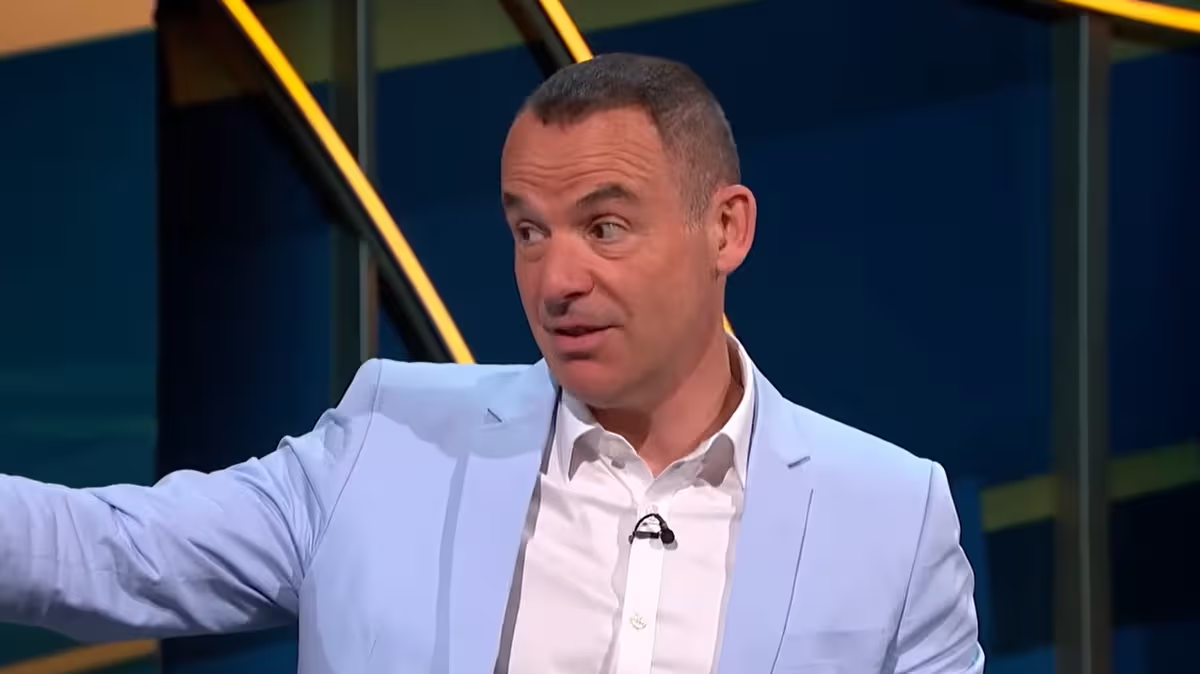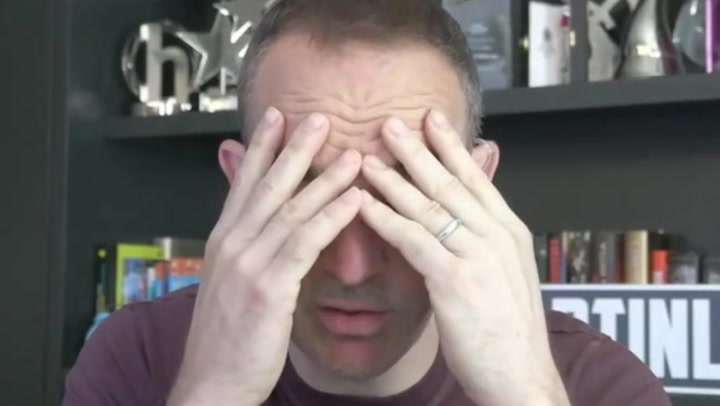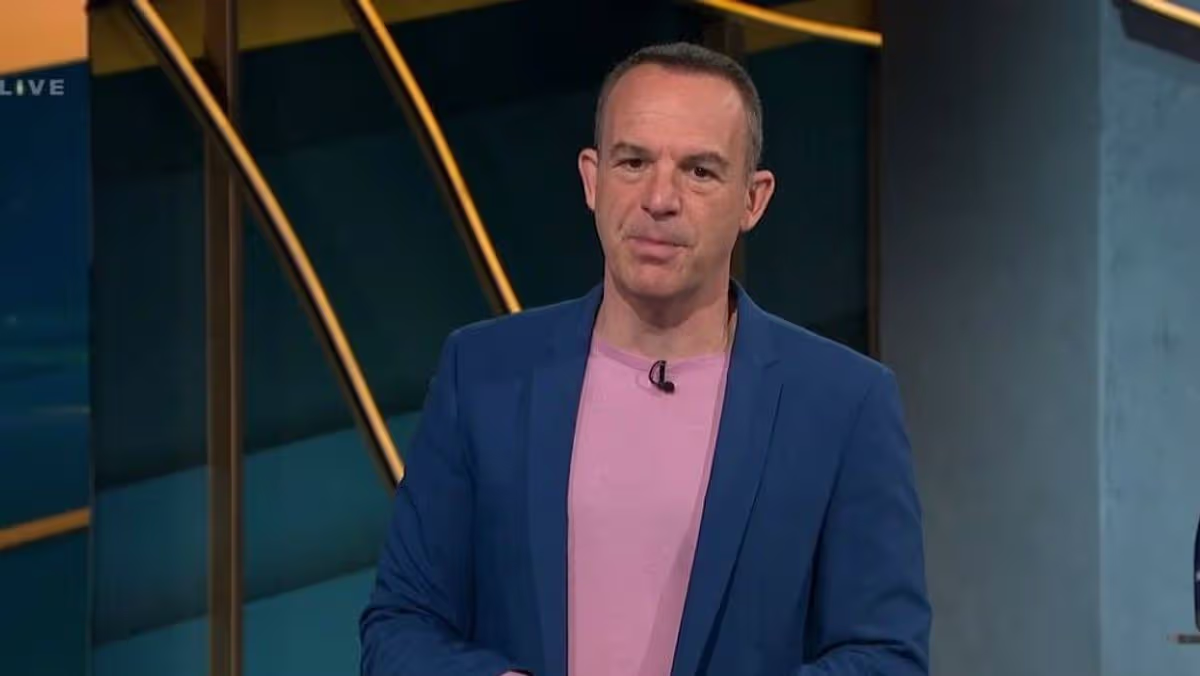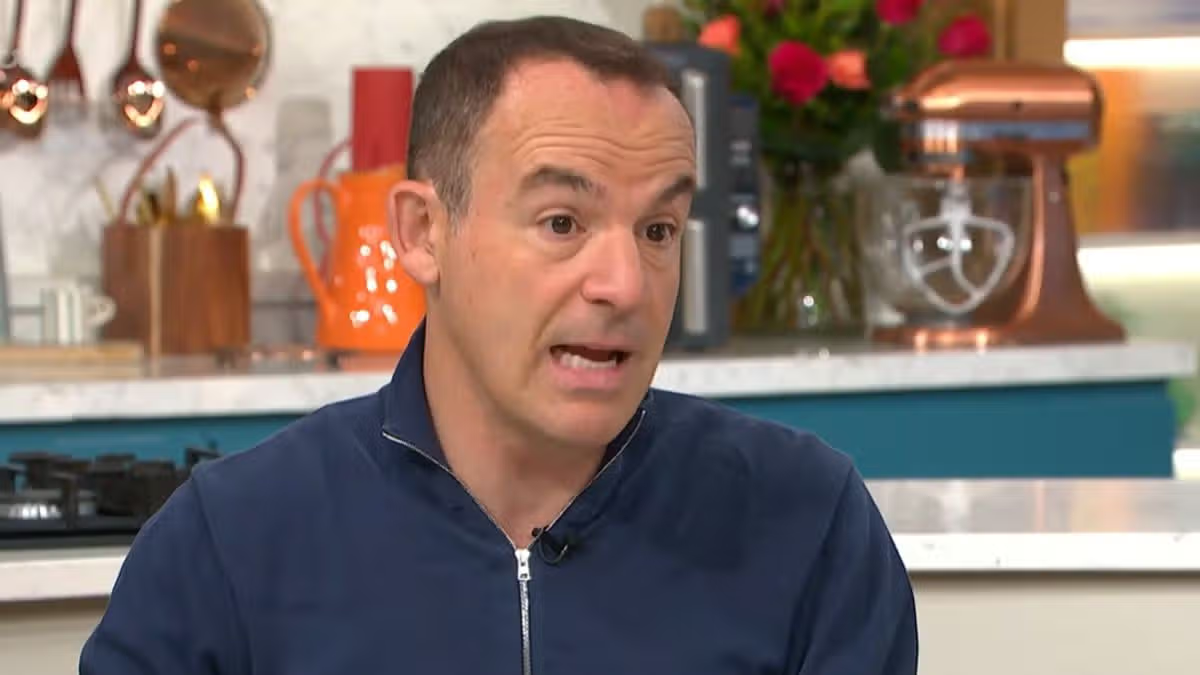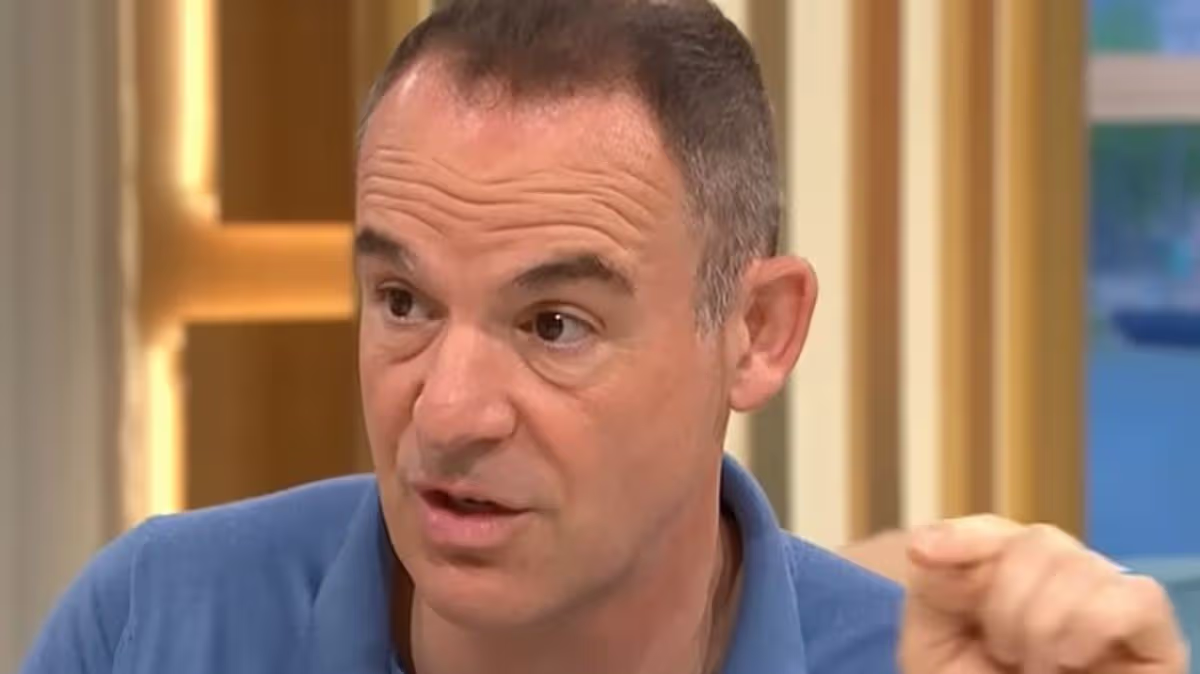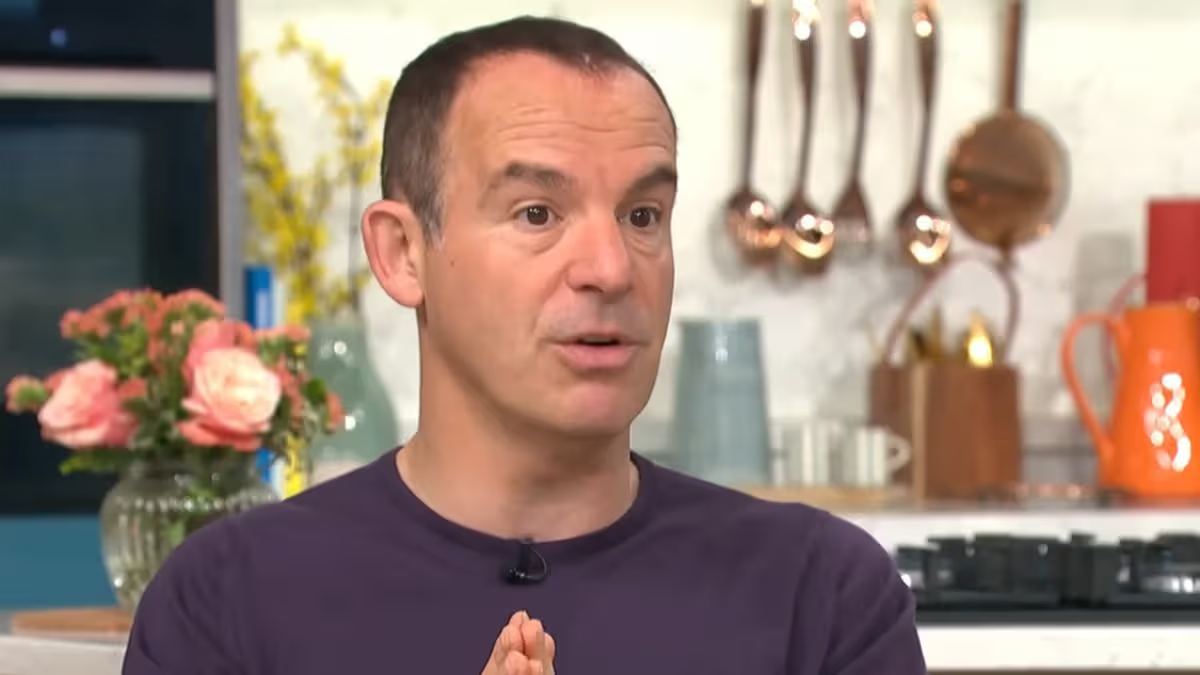
Martin has explained why the decision is so importantNeil Shaw Assistant Editor (Money and Lifestyle)11:09, 05 Jun 2026Martin Lewis drew on his personal experience for a recent piece of urgent financial advice.Life insurance is a subject many people would rather avoid, but personal finance guru Martin Lewis says facing it is one of the most important things a parent can do. Discussing it on ITV's This Morning, the MoneySavingExpert founder explained that the cover exists "primarily to protect your loved ones from a lack of income" if the main earner dies. For Martin the subject is personal. "One in 29 children, a typical class size, lose a parent before they grow up," he says. "I was one."Martin Lewis tragically lost his mother, Susan Lewis, when he was just 11 years old. She died following a road accident involving a lorry while she was out horse riding, just three days before his 12th birthday. He has frequently spoken out about how devastating the loss was, describing it as "the end of my childhood" and explaining how it left him with deep, long-lasting scars and severe grief throughout his teenage years.Martin Lewis sensitively discusses his stepmum moving inBecause of his personal experience, he became a patron of Grief Encounter, a UK charity that works to support bereaved children and their families. He has used his platform to openly discuss childhood bereavement and advocate for better emotional support for young people going through similar traumas.Alongside the grief, he points out, there is usually a financial blow too, and that is precisely the gap life insurance exists to fill. The need is widespread. Financial Conduct Authority figures show only around 28% of adults held life insurance in 2024, with the sharpest declines among 25 to 44 year olds, the very people most likely to have young children and a mortgage. The regulator has also found that 58% of adults hold no pure protection product at all, and is pressing insurers to help close what it calls a persistent protection gap.Martin Lewis stops show to talk about dealing with griefThere are three main types to understand, setting aside investment style life assurance plans. Level term cover pays a fixed lump sum if you die within a set period, such as £200,000 at any point in the next 20 years. Decreasing term, or mortgage, cover is designed to clear your home loan, so the payout falls as the debt does.Whole of life cover, by contrast, is taken out mainly to help with an inheritance tax bill rather than to replace lost income. For most families, Lewis is unequivocal about which to pick. "The cheapest, easy way to protect your family is level term life insurance," he says. Beyond that it largely comes down to finding the lowest price, provided the insurer is reputable.So how much should you take out? The aim, says Lewis, is to leave behind enough to replace the income that disappears when you do. Where nobody relies on your wages, no partner and no children, he sees no reason to take out a policy at all. Where there are dependants, he suggests a lump sum large enough to clear outstanding debts, including the mortgage if it is not insured separately, and to keep the household bills covered.As a rule of thumb he points to "cover 10 times the main breadwinners income." Shortening the term brings the cost down, though he would generally want it to run until the children have finished full time education. Smokers and those with serious health conditions pay more, and Martin notes that anyone who has since given up nicotine, vapes and patches included, may now find a cheaper deal, as long as their health has not worsened.Good Morning Britain - Martin Lewis leaves Kate Garraway in tears after opening upThe savings on offer can be considerable, and the first one is a matter of mindset. "Never think of life insurance as a monthly cost," Martin says. "You may be paying it for 20 years, so every £1 a month cheaper is a saving of £240."His advice is to shop around hard rather than going straight to a single insurer, because in such a competitive market that is rarely the cheapest route. Even comparison sites can sting, he warns, because while they may surface a cheap policy they often "take a huge whack of commission from the insurer." His free guide to finding the lowest premium sits at mse.me/lifeinsurance. A few further moves, easy to overlook, can save families thousands more. One of the biggest is writing the policy in trust. Doing so keeps the payout outside your estate, so it usually escapes the 40% inheritance tax, and it reaches your loved ones faster because it avoids the probate process. Most insurers arrange it free, yet few people ask.The rule for couplesCouples should also weigh two single policies against one joint policy. Two separate policies often cost much the same as a single joint one, but they can pay out twice rather than once, and each partner keeps their own cover if the relationship ends. And whatever you decide, never cancel existing cover until the replacement has been fully accepted and is active, since any change to your health in between could leave you paying far more or unable to get cover at all.Howard Gregory, life insurance expert at Life Pro, says there are three proven ways to bring the price down. "The single biggest lever is your age when you start," he says. "Premiums roughly double for every decade you wait, so locking in cover in your twenties or thirties fixes that lower rate for the whole term. Over a 20 or 25 year policy that can mean paying far less than someone who delays."His second tip is to sort out your smoking status before you apply. "Smokers are typically charged two to three times what a non-smoker pays for identical cover, and most insurers treat vapers as smokers too. If you have been completely nicotine-free for 12 months, it is well worth getting fresh quotes, because the drop in premium can be dramatic."Article continues belowFinally, he warns against assuming any one insurer is cheapest. "The same person can be quoted wildly different prices for exactly the same cover, so comparing across the whole market is where the real savings sit. It is also worth revisiting an older policy every few years, as your circumstances or the market may have shifted in your favour."
Martin Lewis family tragedy prompts important advice
Martin has explained why the decision is so important
1,076 words~5 min read