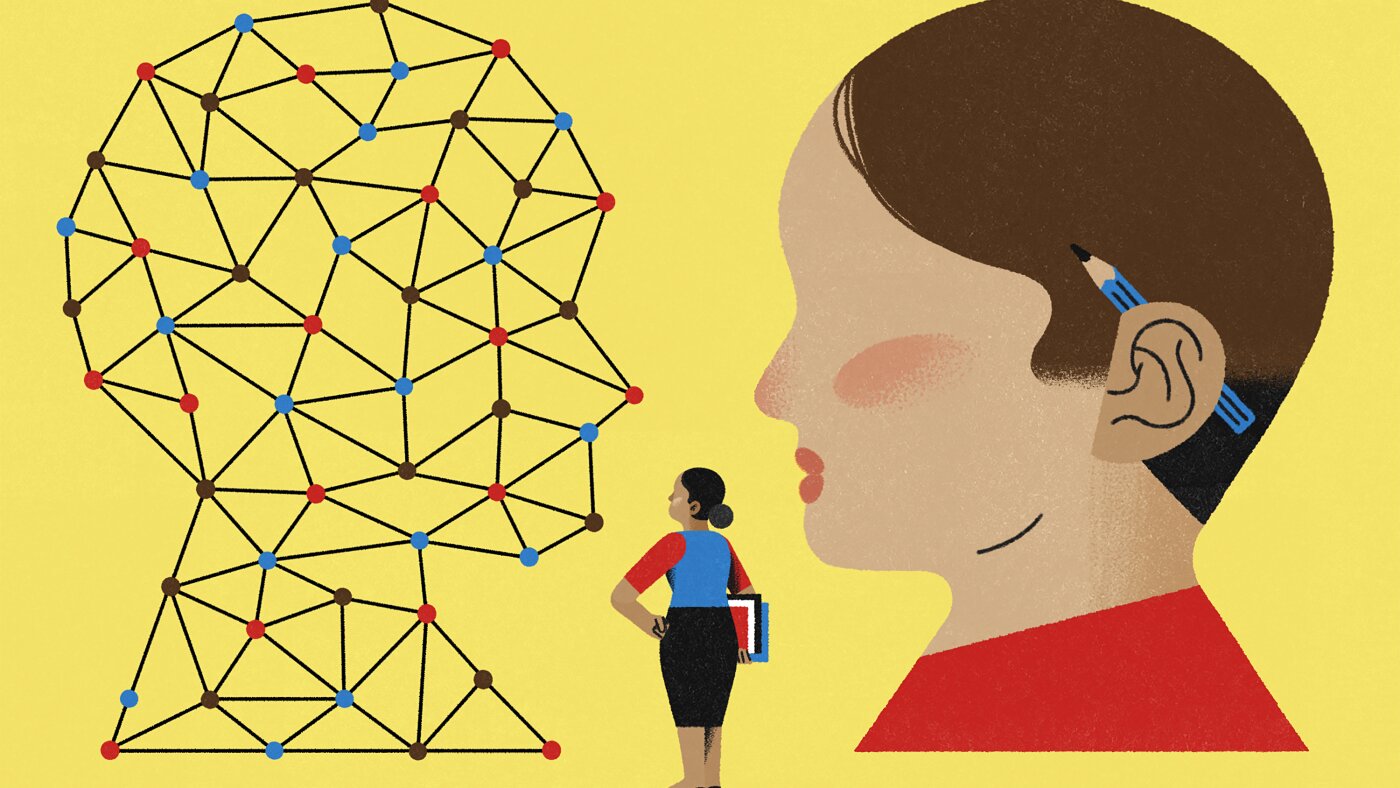
Gracia Lam for NPR
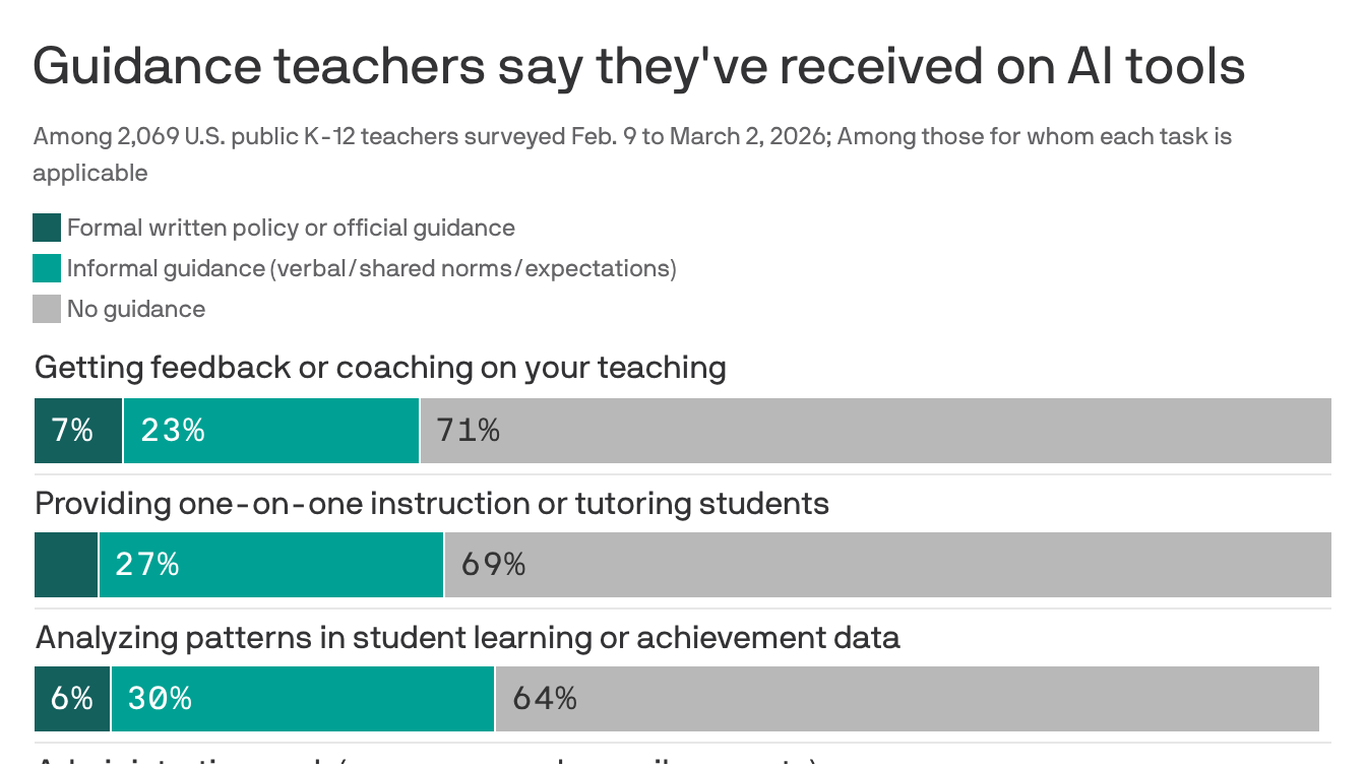
The effects of artificial intelligence on learning are still largely unclear. But a new NPR/Ipsos poll of K-12 teachers found that nearly 3-in-4 believe AI has bigger implications for education than past innovations like the internet or computers. The nationally representative poll surveyed 545 respondents and paints a complex picture of teachers' views on AI: Many are using it to save time and improve their teaching materials, but a majority of teachers are worried AI is making it harder for students to learn to think for themselves.
"We're in an environment where teachers feel like this is going to fundamentally reshape the future of education moving forward," says Mallory Newall, a senior vice president at Ipsos. "They have serious concerns about AI's impact on how they relate to their students and how students relate to each other." And schools have a role to play: A resounding majority of polled teachers — nearly 8-in-10 — think schools should teach responsible use of AI. "To me, that sends a very clear message that teachers are acknowledging that AI is having humongous implications on education as we know it," says Newall. "It's not going away. And so now is the time to act." More of a teacher's helper than a classroom tool The poll shows students aren't widely using AI in the classroom – at least not yet. A little more than half of teachers say the technology isn't being used in class by students at all, while about 2-in-5 teachers say students are using it in class at least once a week. Meanwhile, a majority of teachers polled — 6-in-10 — say they've used AI themselves to help with work tasks. Loading...