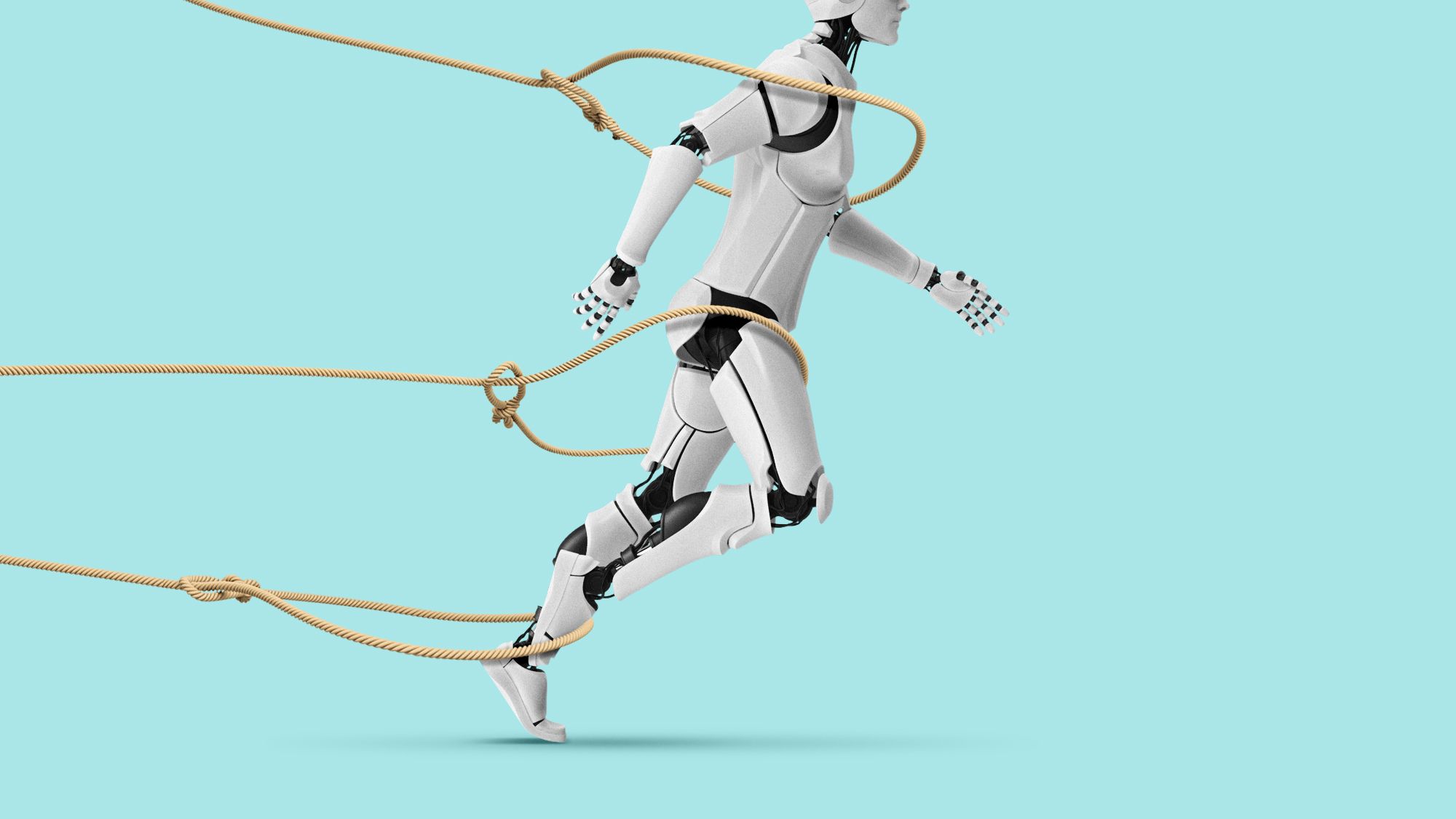
The most practical AI safety feature is not a manifesto. It is a brake pedal that actually works when the system starts doing something expensive, risky, or hard to unwind.
That idea felt especially current this week. BBC reported Anthropic co-founder Jack Clark warning that AI is approaching a point where it could develop with less human input. Reuters reported Sam Altman's argument that the United States should not require blanket government approval before models are released. OpenAI also published a new biodefense piece, a reminder that frontier models are being evaluated against increasingly serious real-world misuse scenarios.
Those stories are usually framed as policy drama: speed up, slow down, regulate, do not regulate. Builders should read them differently. The useful question is simpler: if your app suddenly gets access to a much stronger model tomorrow, what control would let you slow it down without shutting down the whole product?
The brake pedal is a product requirement
Most teams already understand feature flags, rate limits, rollback plans, and incident response for normal software. AI products need the same muscle, but tuned for model behavior instead of only server behavior.