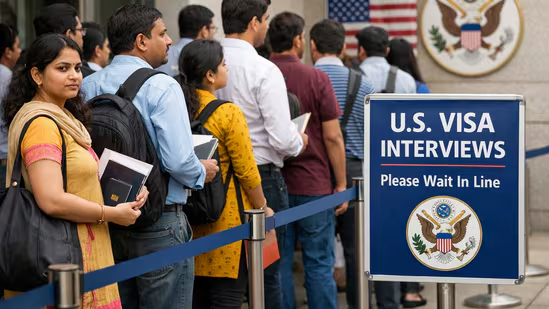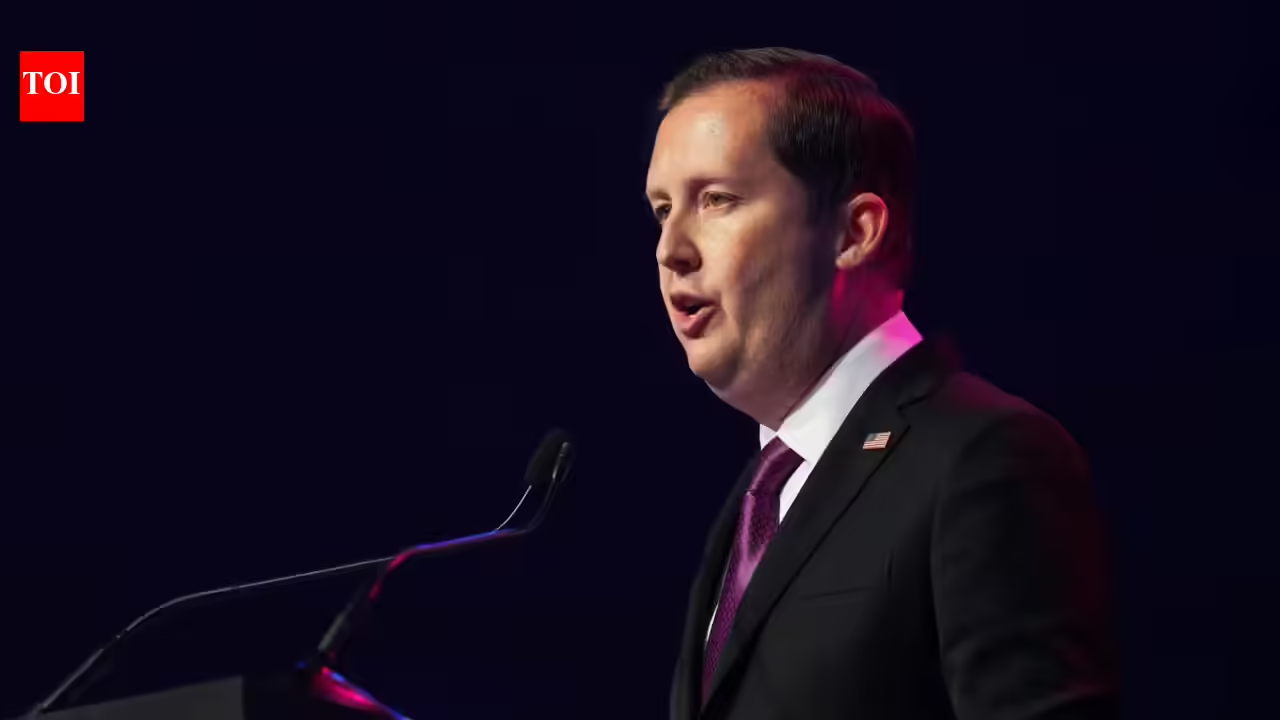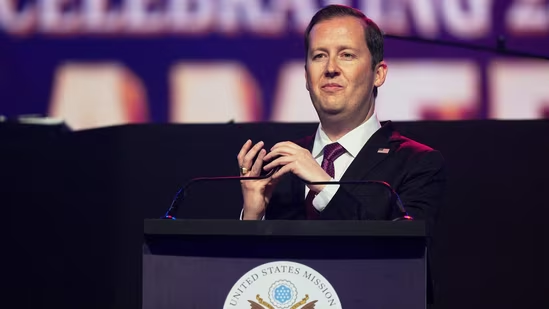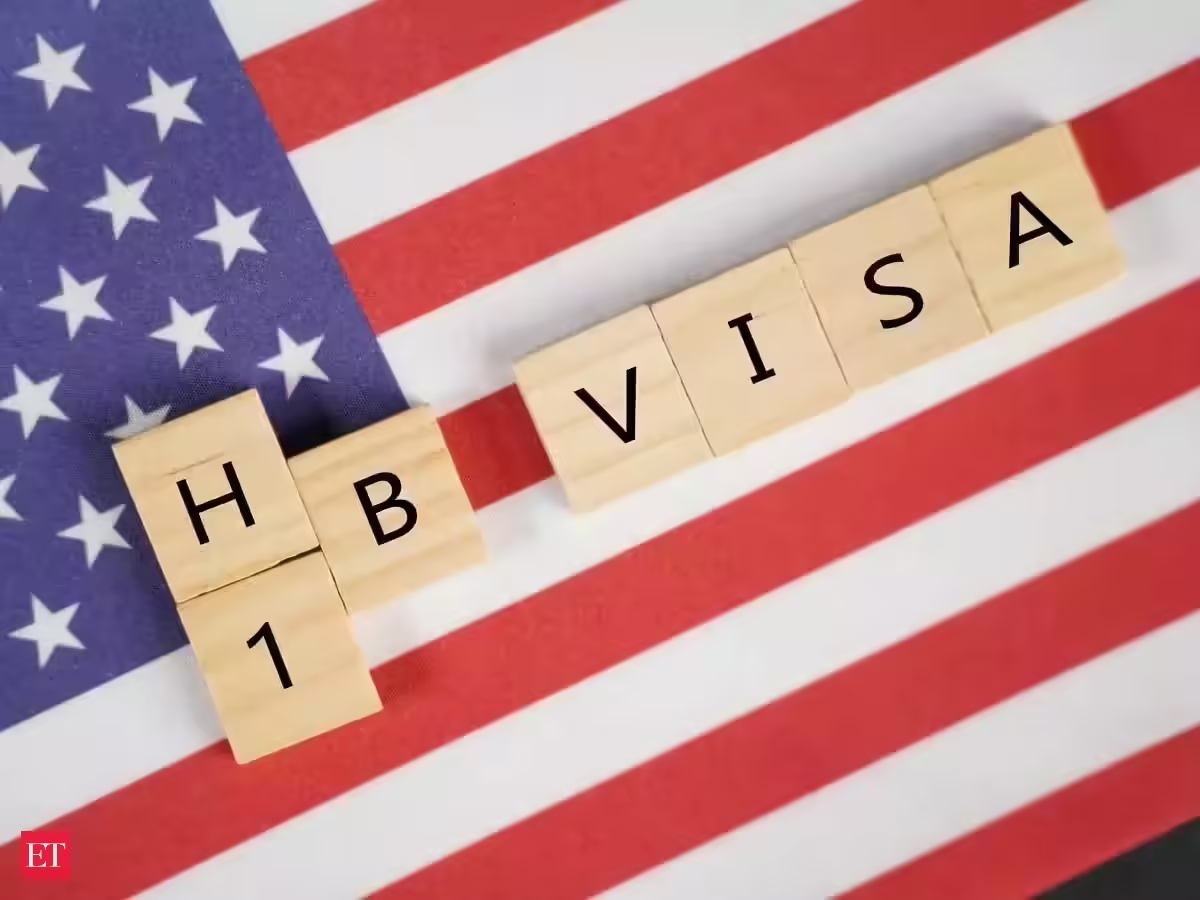
US visa laws do not target India and are being applied consistently across countries, a senior US State Department official said, addressing concerns among Indians in the United States over H-1B visas and immigration policies.Speaking during a roundtable interaction organised by the New York Foreign Press Centre, Andrew Pigott said the US is implementing global visa laws with clear and consistent guidelines.Responding to a question from PTI, Pigott said previous US administrations had applied visa laws inconsistently."That is no longer the case. We are consistently applying visa law across the board. I think that will offer clarity. There are no visa laws that target India. These are global visa laws that are being implemented with clarity, clear instructions that are being applied across the board," he said.Balancing immigration and jobsPigott said the United States, like other countries, wants to ensure that employment opportunities generated within its borders benefit its citizens while continuing to support investment and economic growth."We also are clear, as in any country, that if you are going to create a job in the United States, we want to make sure that Americans have opportunities there, and every country has a similar mentality," he said.At the same time, he said the US would continue to facilitate the movement of people required for investment, worker training and business operations."We're going to facilitate and allow ways that people need to come in to facilitate investment, to train workers, and make sure that visa policies are in place to allow that to happen," Pigott said.He added that the US seeks to balance access to jobs for Americans with the need for workers who support economic activity and investment.Indians remain largest H-1B beneficiariesThe remarks come as Indian professionals continue to dominate the H-1B visa programme. According to the US Citizenship and Immigration Services (USCIS), Indians account for about 71 per cent of approved H-1B applications in recent years, followed by China. Most beneficiaries work in technology, engineering, medicine and research.The Trump administration has tightened immigration policies, including stricter rules for legal and illegal entry and changes to the H-1B programme. Last year, US President Donald Trump announced a USD 100,000 fee on new H-1B visa applications seeking expedited processing, a move that created concern among many Indian workers and applicants.Over 200,000 applicants paid USD 100,000 feeThe issue received fresh attention this week when Department of Homeland Security Secretary Markwayne Mullin told a Senate Appropriations Subcommittee that more than 200,000 H-1B applicants had paid the USD 100,000 fee during fiscal year 2026.Mullin said the DHS had received around 286,000 H-1B applications so far this fiscal year."We had 286,000 applicants a year to date for the H-1B visas, out of those, over 200,000 of them paid USD 100,000 to be able to come in because it allows us to process them in a little bit faster of a manner," he said.According to Mullin, applications filed through the premium route are processed in about 15 days, compared with around seven-and-a-half months under the standard process.Calls for exemptions in healthcare and educationThe fee was discussed during a Senate hearing on workforce shortages in rural America.Senator Susan Collins cited the example of a hospital in Presque Isle, Maine, which paid the fee to recruit a surgeon from overseas. She argued that healthcare providers in underserved communities face different challenges from companies hiring highly skilled workers in sectors with larger domestic labour pools."Would you be willing to consider carving out an exemption for medical professionals from this fee when a community can demonstrate that there is not a medical professional available?" Collins asked.Mullin said he would examine whether additional flexibility could be provided in such cases and consider whether applications linked to critical workforce shortages should receive different treatment.Collins said there was a clear distinction between hiring technology professionals and recruiting doctors for remote communities."I would suggest that there's a huge difference between bringing in a computer expert from another country to work in wealthy California and Silicon Valley versus a much-needed surgeon to work at a rural hospital in northern Maine," she said.The discussion also extended to teacher shortages. Republican Senator Lisa Murkowski of Alaska said she would continue discussions with the DHS regarding H-1B visas for educators in rural school districts."I'll follow up with you about the issue that I raised previously with regards to H-1B visas for teachers," Murkowski told Mullin.Pigott made his remarks during a discussion with a select group of international journalists on Thursday.
US visa laws do not target India; H-1B rules part of global framework, clarifies State Dept official - The Economic Times
A senior US State Department official stated that US visa laws are applied uniformly across all countries, including India, dispelling concerns about H-1B visas and immigration policies. The US aims to balance job opportunities for its citizens with facilitating necessary foreign talent for investment and economic growth.
741 words~3 min read