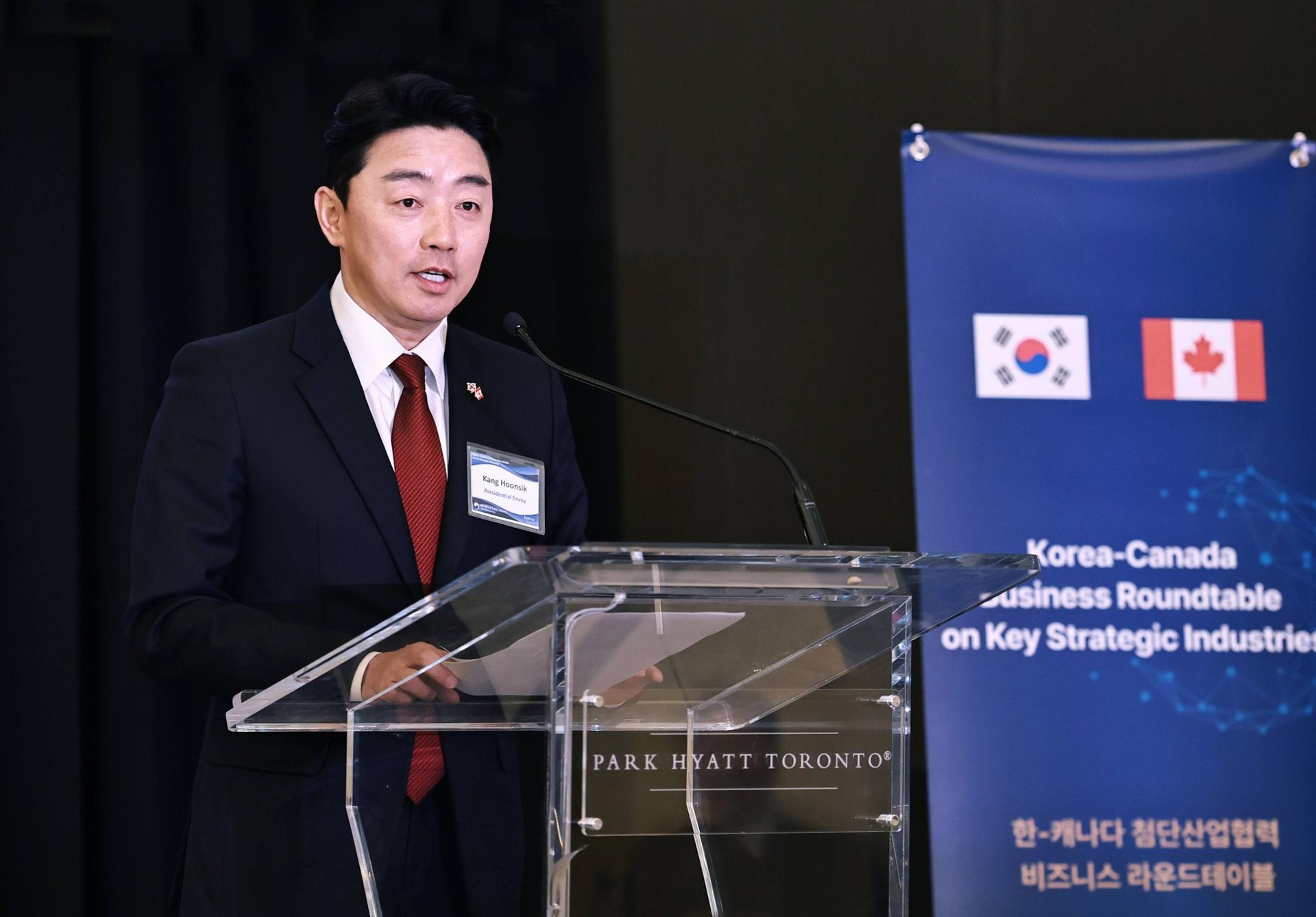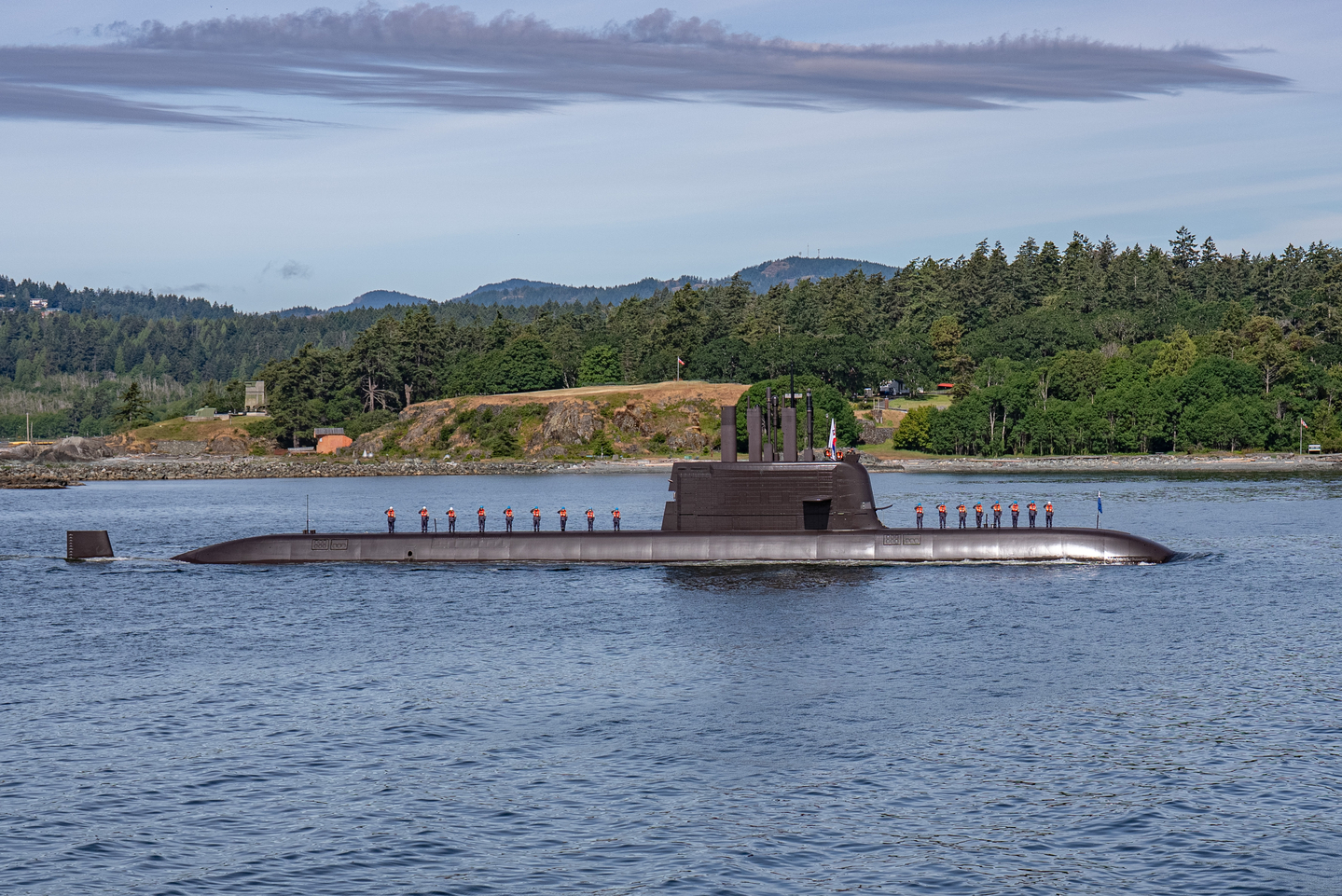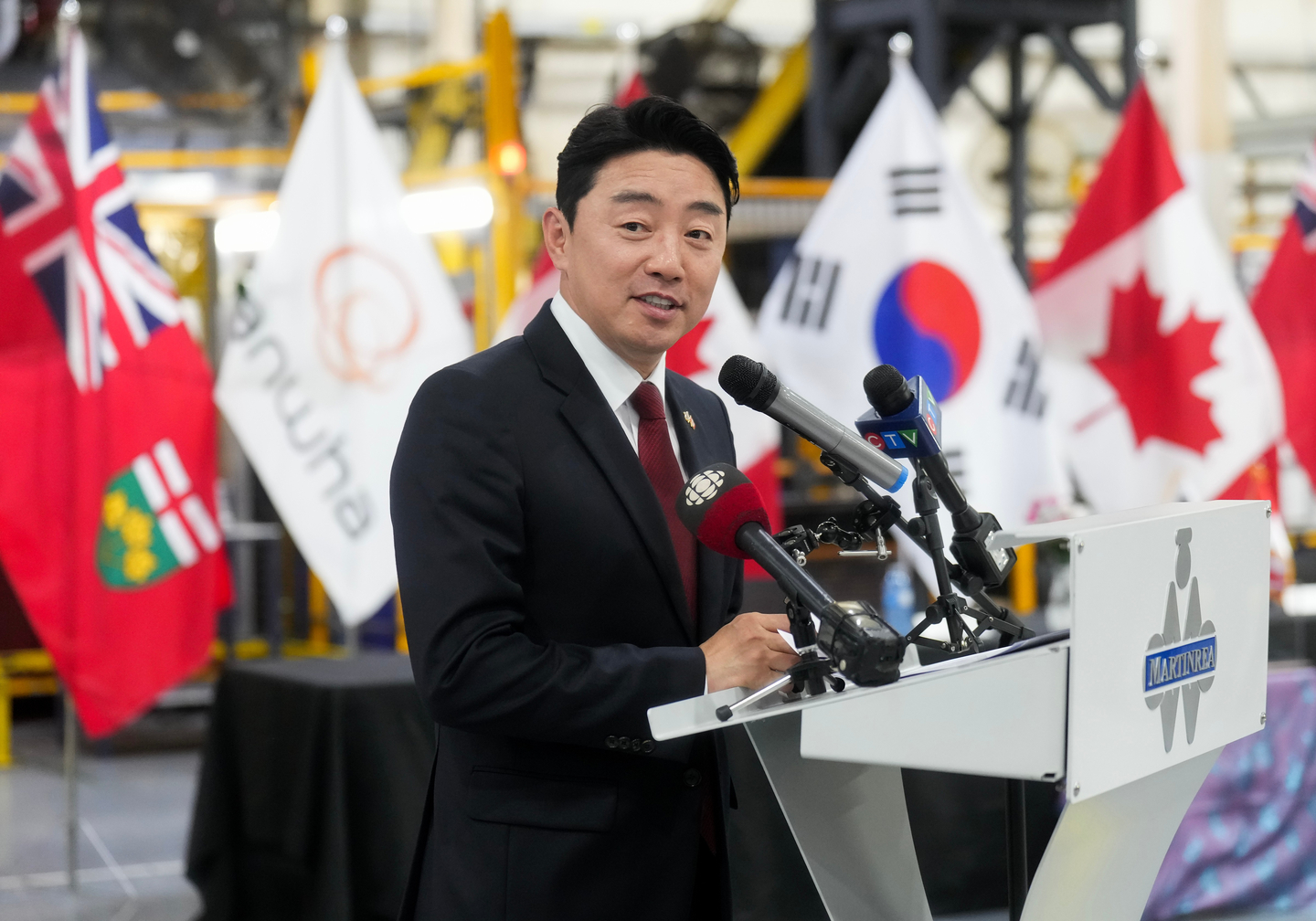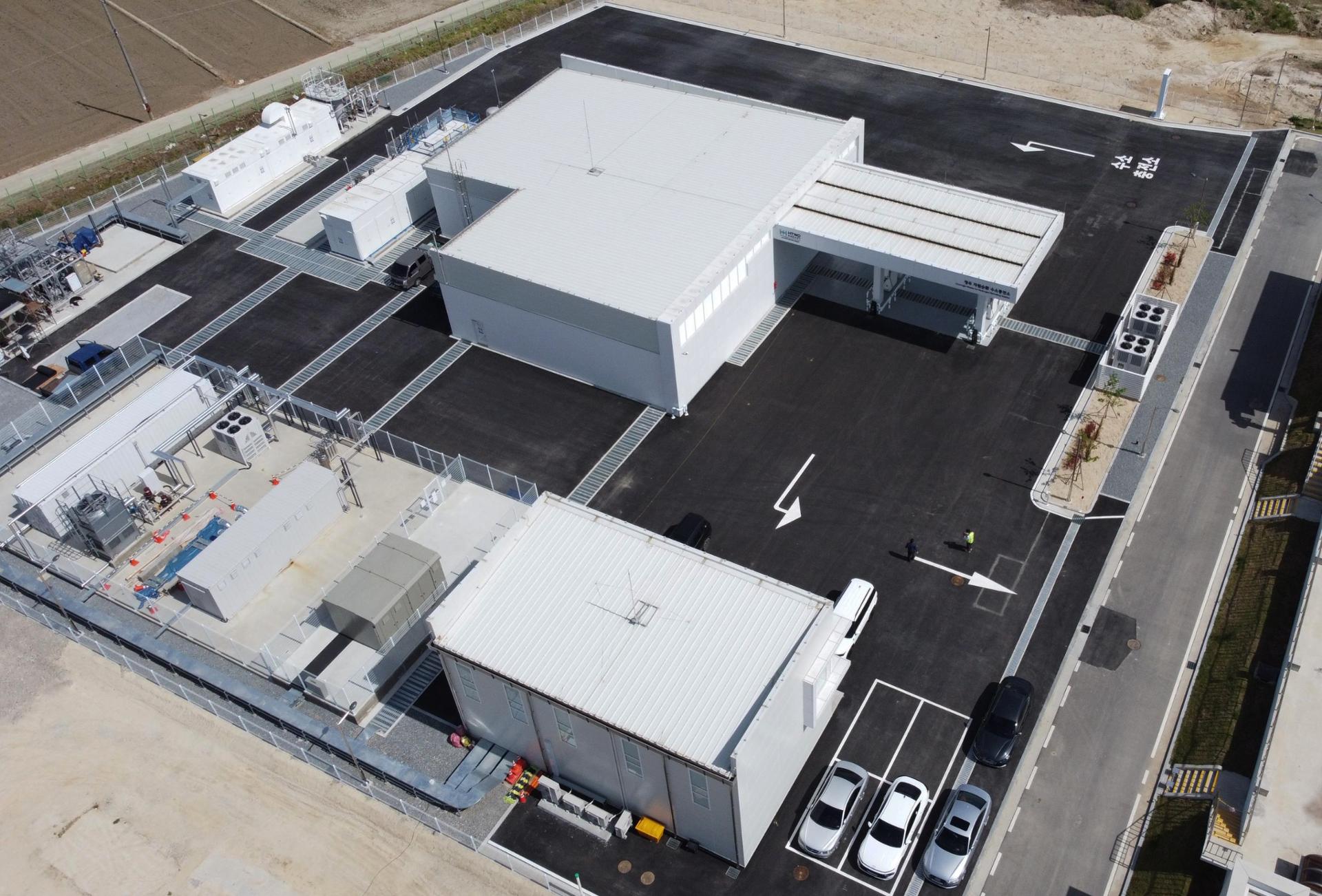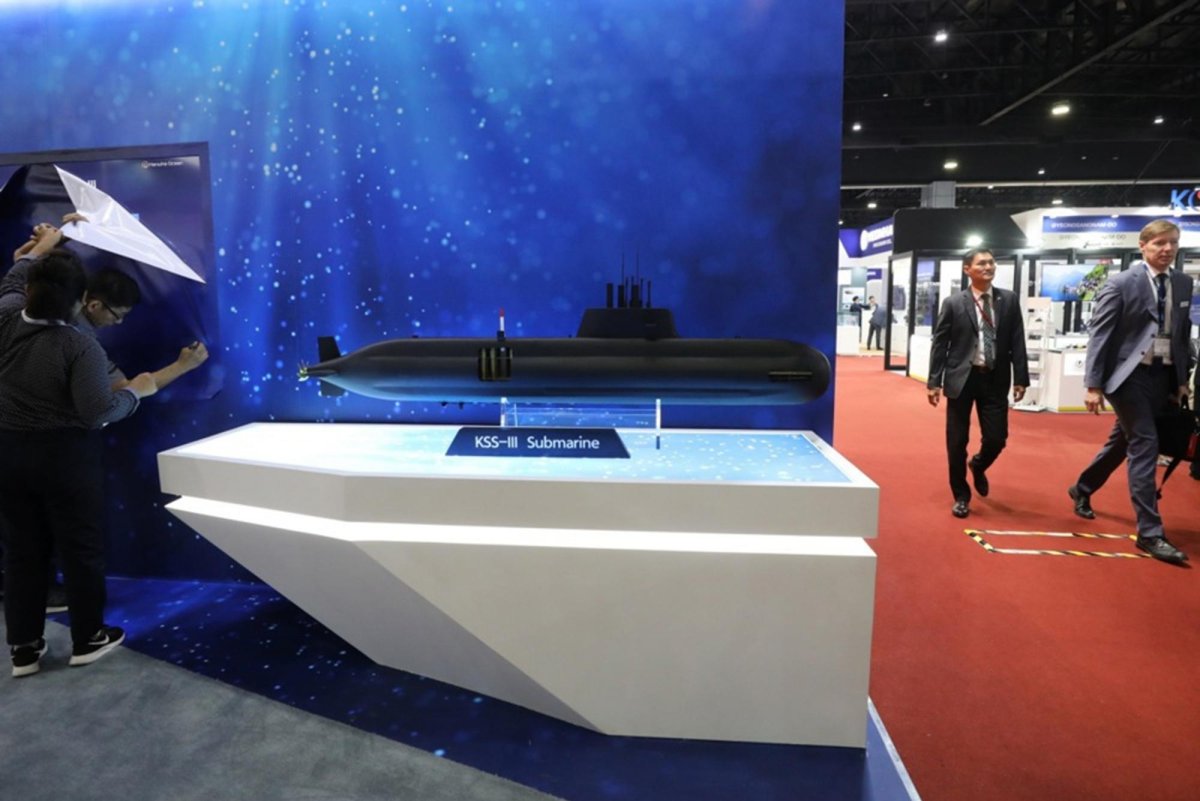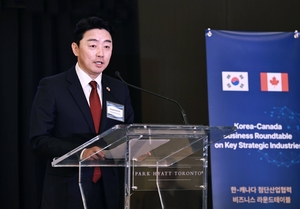
Chief Presidential Secretary Kang Hoon-sik speaks at the Korea-Canada Advanced Industry Cooperation Business Roundtable held in Toronto on June 1 during his visit to Canada as President Lee Jae Myung’s special envoy for strategic economic cooperation. (Kang Hoon-sik’s post on Meta) Korea has pitched a 3.4 trillion won ($2.2 billion) hydrogen truck investment package led by Hyundai Motor Group to the Canadian government as part of its bid to secure the country’s next-generation submarine contract.In an interview with Canada-based broadcaster CTV News on Wednesday, Chief Presidential Secretary Kang Hoon-sik revealed details of the initiative, dubbed “Project Beaver,” which aims to establish a hydrogen mobility ecosystem in Canada using technology developed by Hyundai Motor Group. Kang was visiting Canada this week as President Lee Jae Myung’s special envoy for strategic economic cooperation.Under the proposal, the first phase would begin in 2030 with the construction of a liquefied hydrogen production plant in British Columbia. The plan also includes launching 32 hydrogen refueling stations across British Columbia and Alberta, and setting up a hydrogen vehicle manufacturing facility in Ontario.Following 2035, the network would add more than 160 hydrogen refueling stations nationwide, forming the backbone of the country’s large-scale hydrogen transportation infrastructure.Kang underscored that Project Beaver could create approximately 9,000 jobs by fostering a domestic hydrogen truck industry in Canada.Describing the project as “a Korean brand built with Canadian raw materials and Canadian-made components,” Kang said Korea opted to propose hydrogen trucks rather than consumer electric vehicles. He cited Washington’s pressure on automakers to shift production to the US, and the challenge of competing with China’s dominance in Canada’s EV market.Referring to Stellantis as an example, Kang said, “The US told Stellantis it would be more advantageous to move production to the US. Korean companies face similar pressures.” Stellantis announced in October that it would relocate production of certain Jeep models from Ontario to Illinois.Kang also argued that Korea would face a fierce challenge in Canada’s EV market due to China’s strong position in the sector. He noted that Prime Minister Mark Carney had pledged during a visit to China to allow imports of a certain volume of Chinese-made electric vehicles.Korea’s deepening commitment to Canada comes amid intensifying competition among global shipbuilders to secure the Canadian Patrol Submarine Project, a program aimed at modernizing Canada’s submarine fleet.Estimated at up to 60 trillion won, the program has attracted bids from major players, with Korea’s HD Hyundai Heavy Industries and Hanwha Ocean forming a consortium to compete against rivals such as Germany’s ThyssenKrupp Marine Systems.
Korea proposes Hyundai-led W3.4tr hydrogen project for Canada submarine bid
Korea has pitched a 3.4 trillion won ($2.2 billion) hydrogen truck investment package led by Hyundai Motor Group to the Canadian government as part of its bid t
420 words~2 min read