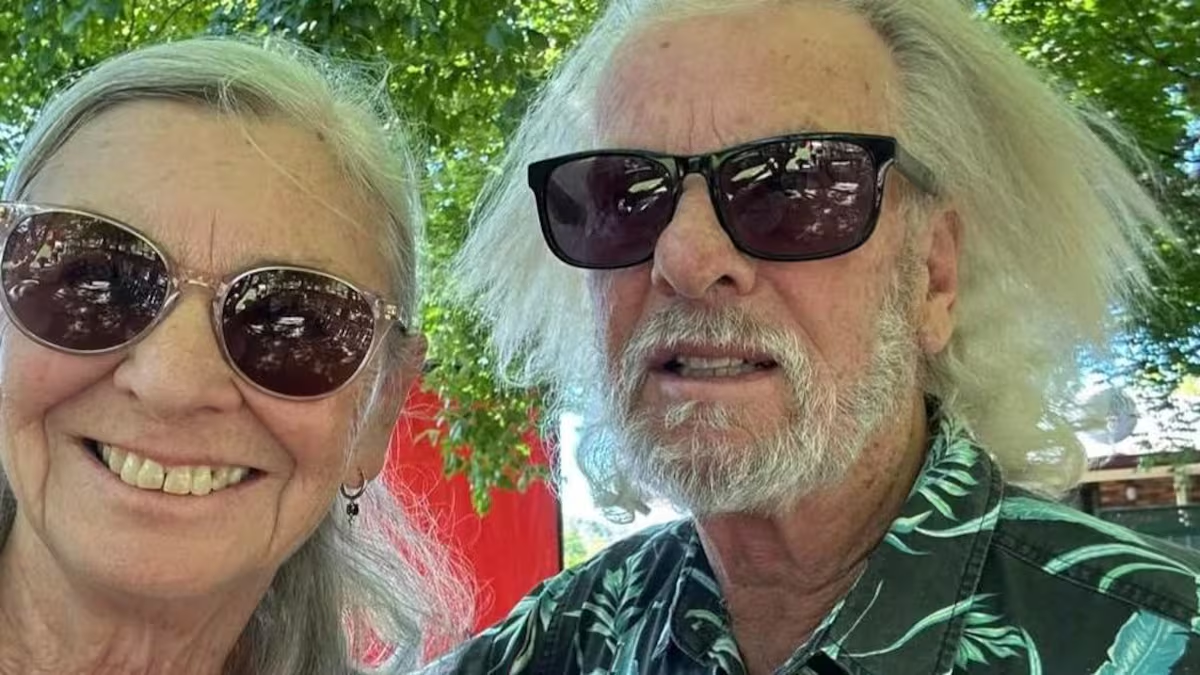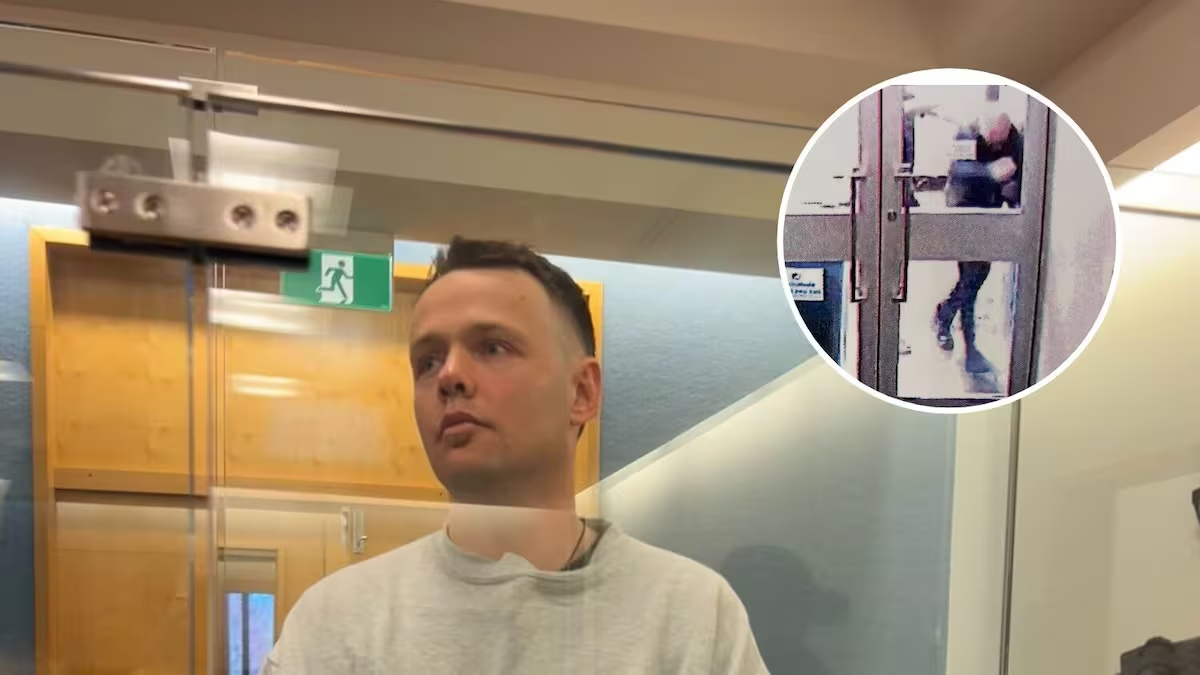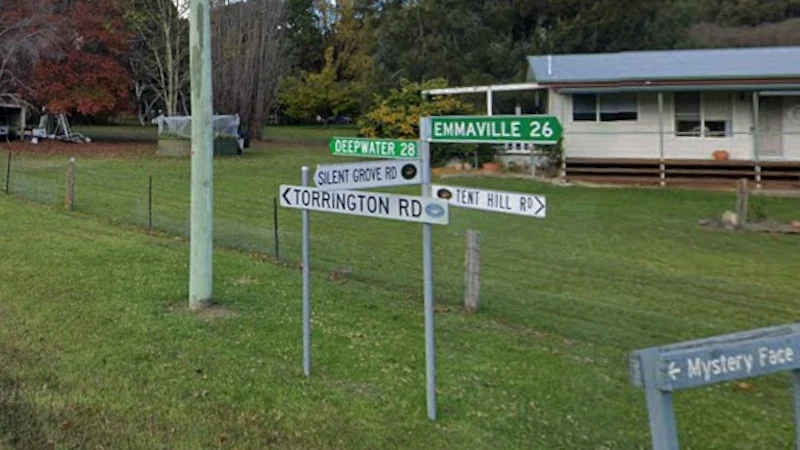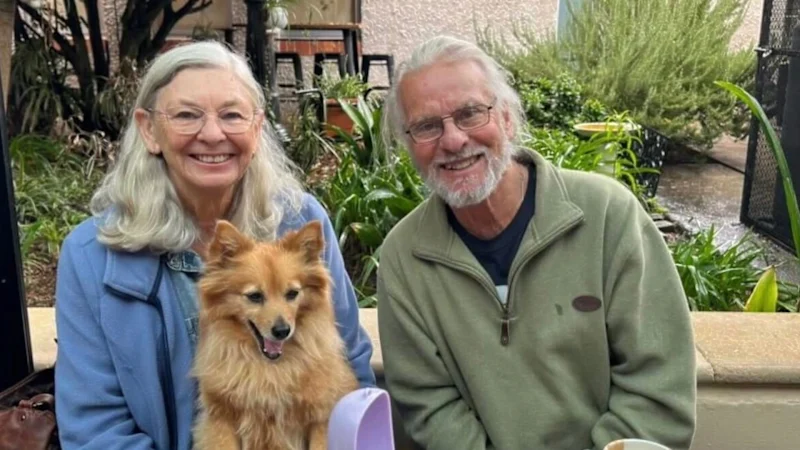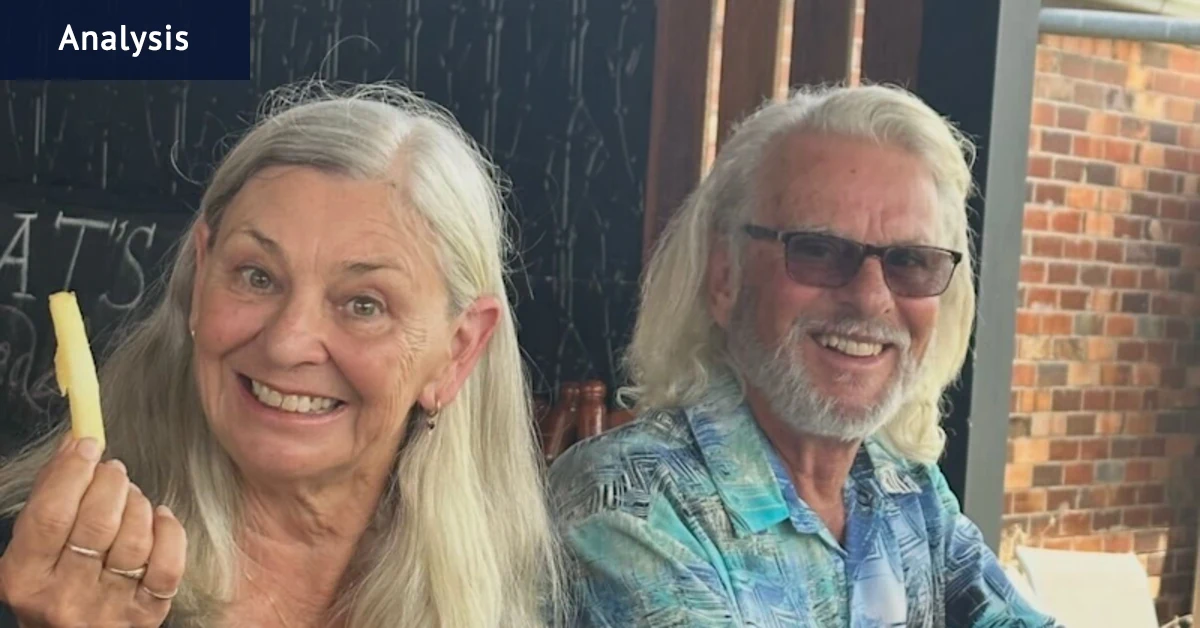
June 5, 2026 — 3:45pmA violent home invasion in a rural NSW community has brought renewed attention to the law of self-defence after an elderly resident shot the alleged intruder in the stomach in an effort to protect himself and his wife.Keith Blessing, 75, and wife Di were at their Torrington property, 65 kilometres south-west of Tenterfield, when Joshua Dylan Trethewey, 34, allegedly forced entry into the home on Tuesday night, stabbing the woman in the chest and slashing the man across the abdomen.Keith and Di Blessing were allegedly attacked at their Torrington home in rural NSW. Keith grabbed a knife from the kitchen, police claim, and wounded Trethewey, who retreated to the verandah.Keith, a licensed gun owner, called Triple Zero, loaded a rifle and shot Trethewey in the stomach when he tried to come back inside, police say. He is not expected to be charged for shooting Trethewey.Trethewey has been charged with two counts of wounding with intent to murder.‘Easy to have 20-20 hindsight’Professor Arlie Loughnan from the University of Sydney’s law school said the law of self-defence had been “simplified in the last two decades or so”.In NSW, a person may not be criminally responsible for an offence such as assault or murder if they were acting in self-defence, but there are important limitations.They must have believed at the time their actions were necessary to defend themselves or another person, which is a subjective test. Loughnan said the law takes how people perceived their circumstances seriously, because “it’s easy to have 20-20 hindsight but it is not fair to judge by this standard”.Both Di and Keith underwent emergency surgery on Thursday.FacebookSecond, their acts must also be a “reasonable response in the circumstances” as they perceive them. What is reasonable is considered objectively.Loughnan said that a hypothetical she gave students about reasonableness was “when the person has some small weapon, but you come at them with an AK-47” rifle.“That is when a person can get moved into excessive self-defence,” she said.A person who uses “excessive force” and kills their attacker may be found not guilty of murder but guilty of manslaughter because their response was not reasonable.“That’s available to [a] murder [charge] only; if successful, it reduces murder to manslaughter,” Loughnan said.An image of the Blessings’ home from when it was last sold in 2016.DomainIf a person was only seeking to protect property or prevent a criminal trespass, rather than protect a person, they cannot rely on self-defence in a murder trial but can rely on it as a defence to a lesser charge, such as assault.“If you’re ‘merely’ protecting property, you wouldn’t be able to rely on self-defence to justify lethal force,” Loughnan said.Loughnan said the accused had an “evidentiary burden” to raise the issue of self-defence, and “if that’s satisfied, the prosecution must disprove the defence” beyond reasonable doubt.Excessive self-defenceIn 2020, Sydney man Blake Davis stood trial for murder over the samurai sword killing of home invader Jett McKee, following a botched robbery attempt by McKee.Davis had told the court he was acting to save his girlfriend, Hannah Quinn. The court heard that McKee burst into their home in 2018 wearing a balaclava, pointed a fake pistol at them, punched Davis to the eye with knuckledusters, and threatened to kill them.Hannah Quinn and Blake Davis outside court in December 2020.Edwina PicklesA Supreme Court jury found Davis not guilty of murder but guilty of manslaughter, a verdict the presiding judge said was “consistent with a case of excessive self-defence”.Justice Natalie Adams sentenced Davis in 2021 to a maximum of five years and three months in prison, with a non-parole period of two years and nine months.“I must sentence Mr Davis on the basis that although Mr Davis believed it was necessary to strike Mr McKee in the head with a samurai sword in order to defend Ms Quinn, this was not a reasonable response in the circumstances as he perceived them,” Adams said.On the day of the violent home invasion, McKee had consumed “a toxic to lethal dose” of the drug ice, the court heard.‘Reasonable force’ for citizen’s arrestIn 2016, Newcastle man Benjamin Batterham was charged with murder over the death of Ricky Slater, who broke into Batterham’s family home early in the morning and stole items from his daughter’s bedroom. His family were not home.A Supreme Court jury found Batterham not guilty of murder and manslaughter. He received a confidential damages settlement from the state of NSW after bringing a wrongful prosecution claim.Benjamin Batterham (left) leaves Newcastle Local Court with solicitor Peter O’Brien during his proceedings.Brodie OwenThe court heard that Slater fled with Batterham in pursuit after he was discovered in the home. Batterham used the mobile phone of a passer-by to call Triple Zero.Batterham eventually caught Slater and held him on the ground with his arm around his neck, described by the Crown as a chokehold. Medical evidence suggested Slater’s methamphetamine use and pre-existing cardiac disease may have contributed to his death.Supreme Court Justice Desmond Fagan said in a 2019 decision on legal costs that Batterham “acted lawfully and reasonably in chasing Ricky Slater”, and in calling police and restraining him until they arrived.He said it did not appear that the restraint applied by Batterham was excessive, aside from punches that medical experts said had not caused his death.Not proven that acts caused deathFagan said that in some public discussion of the case it had “been assumed ... it raises a question as to whether a citizen acts within the law if, in apprehending a person caught committing a serious offence, the arrest and restraint cause death”.But he said that “no such issue arose” because it was not proved that Batterham’s acts were, in fact, a contributing cause of Slater’s death.“The law is clear that only reasonable force may be used in an arrest,” Fagan said. “The outcome of this trial, where the verdict is consistent with the jury not having been satisfied that the restraint was causative of death, is not in tension with that rule.”Start the day with a summary of the day’s most important and interesting stories, analysis and insights. Sign up for our Morning Edition newsletter.From our partners
Keith Blessing shot an alleged home invader. How far are you allowed go to in self-defence?
A violent home invasion in a rural NSW community has brought renewed attention to the law of self-defence.
1,026 words~5 min read