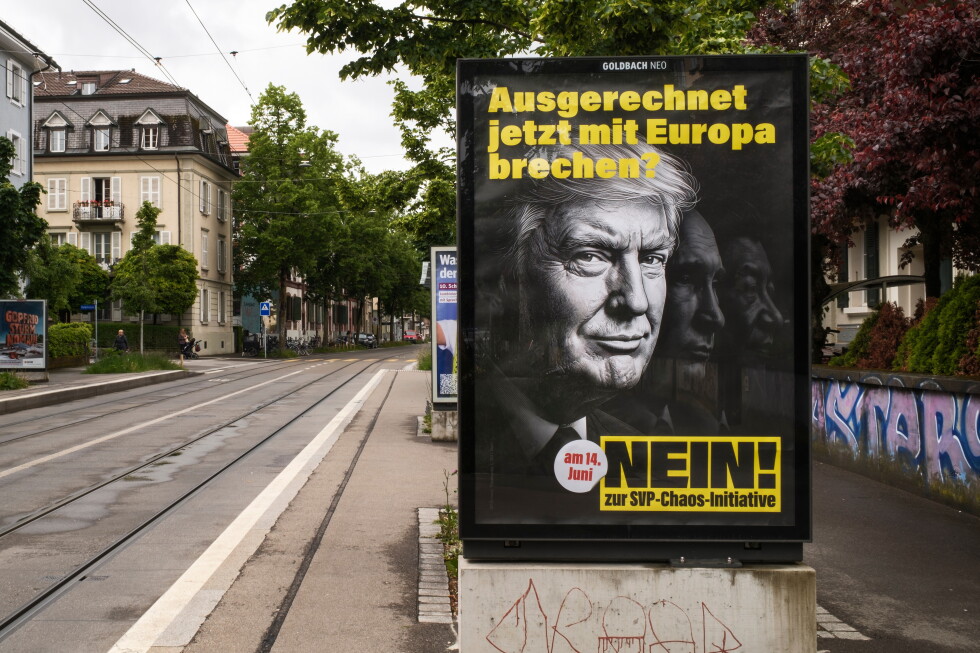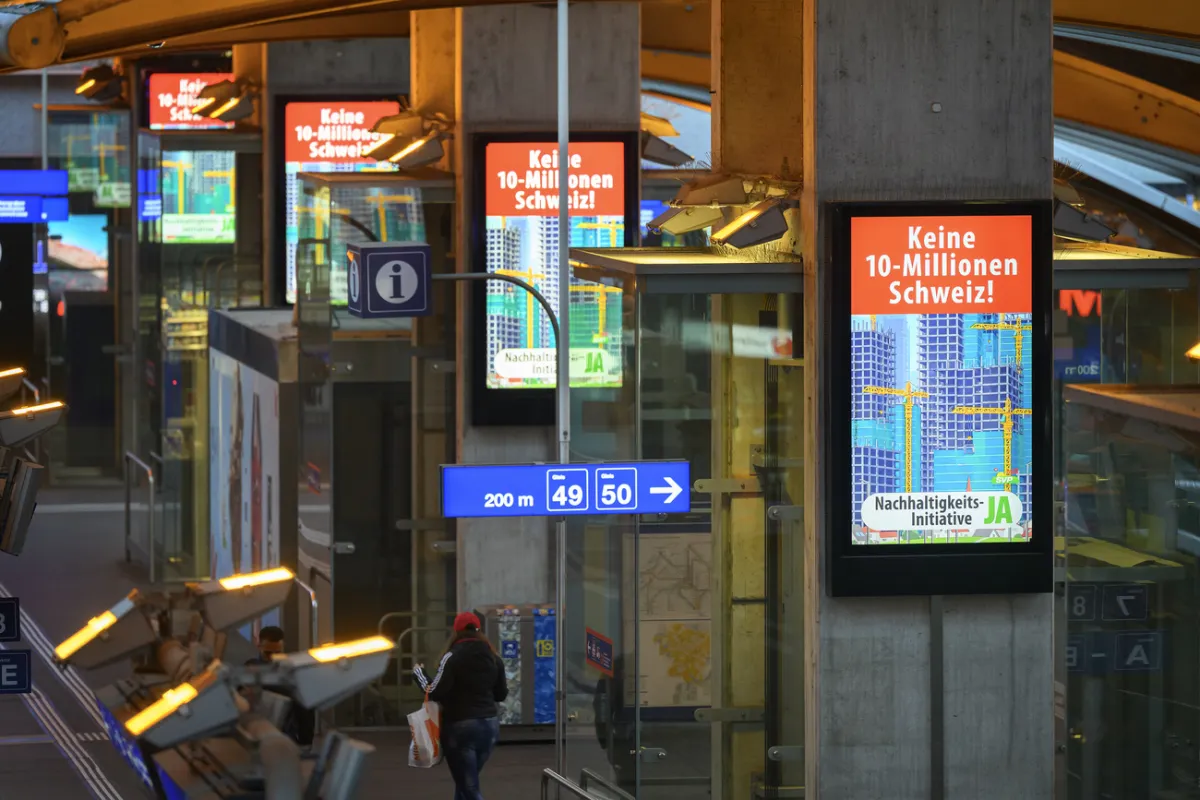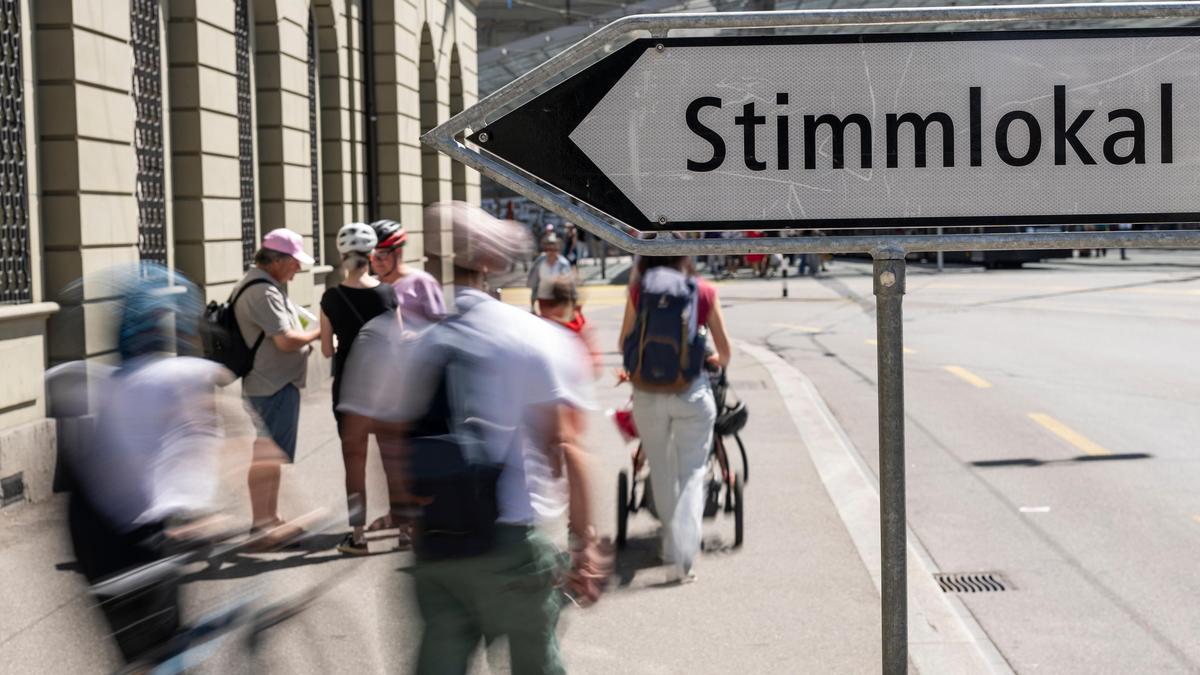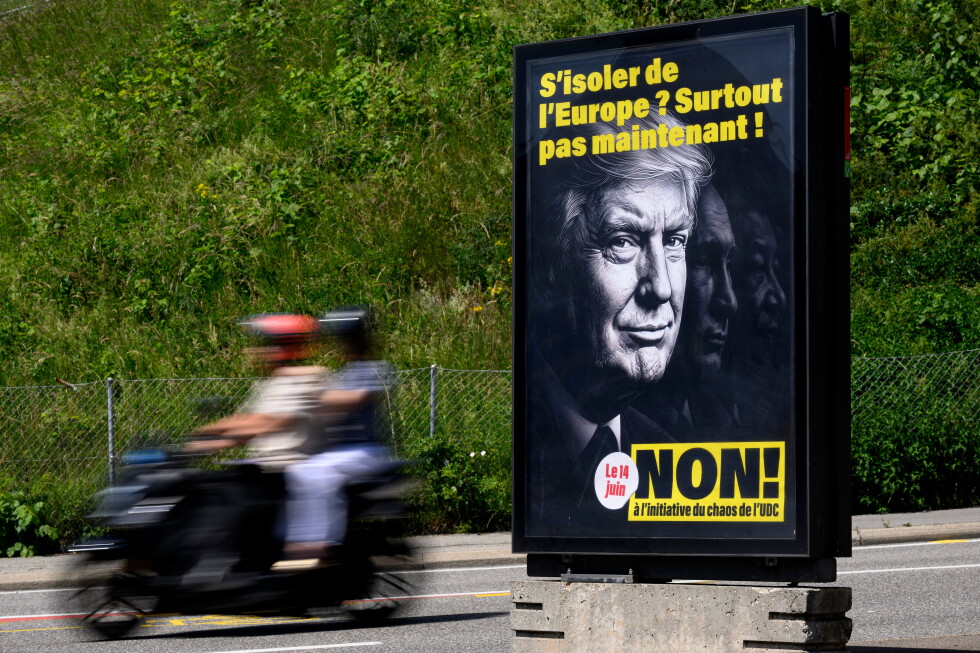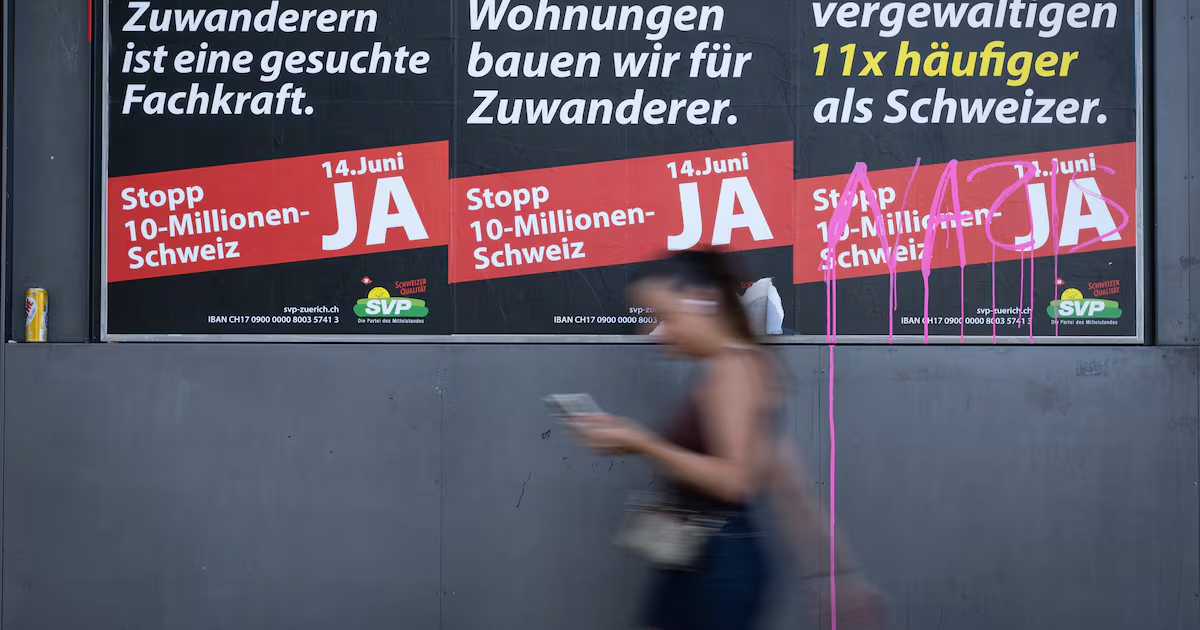
Right-wing Swiss People’s Party seeks backing for throttling immigration, asylum and foreign national family reunificationsA woman passes by posters campaigning for the Yes vote at June 14's vote on the initiative launched by the hard-right Swiss People's Party to cap the population at 10 million, an anti-immigration proposal that is fracturing public opinion in the wealthy Alpine nation, in Zurich. Photograph: Sebastien Bozon/AFP via Getty Images Fri Jun 05 2026 - 06:37 • 4 MIN READAnyone who claims Ireland is full has clearly never been to Switzerland.With 9.1 million people squeezed into a landlocked area that is about 40 per cent smaller than Ireland, Switzerland is the world’s 51st most densely-populated country, with Ireland ranked 111th.The Swiss population has surged by a quarter in the last quarter century alone, largely thanks to bilateral free movement and labour treaties with the European Union. But when is enough, and is it time to think about closing the door?This is the proposal being put to Swiss voters in a week’s time in the “No 10 Million Switzerland!” initiative, backed by the populist right-wing Swiss People’s Party (SVP). Under the Swiss system of direct democracy, popular initiatives can be put to a vote if the attract 100,000 backers within 18 months. The June 14th vote is on whether to cap the population at 10 million, at least until 2050, by throttling immigration, asylum and foreign national family reunifications. This self-described “sustainability initiative” says a population cap would ease pressure on housing, healthcare, education and transport infrastructure.The proposal has been denounced as “extreme” by most Swiss political parties, its 26 cantons as well as main industry and social partners: the wrong idea at the wrong time, in a world of growing trade and security uncertainty.“At times like this we need stability and dependable partnerships,” said Beat Jans, a member of Switzerland’s federal council, or cabinet. “The EU is and remains our most important economic and political partnership. We cannot collapse the bridge to Europe, but that is exactly what this initiative wants.”In a lively television debate on Wednesday evening, SVP politician Manfred Bühler, whose party backs the initiative, said the vote was “really about limiting migration”.“Everyone’s focusing far too much on this 10 million,” he said, “when that’s more of a symbolic value.”That belated admission caused ructions in the debate, with others pointing to the number in the initiative’s name – and its very precise provisions.“It would be like a full car park: before someone new comes in, someone else has to leave,” said Jans.If passed the initiative could kick in within five years, when the Swiss population is forecast to reach 9.5 million. Then, legislators would be obliged to start working on withdrawing from bilateral EU agreements and other international treaties.Stephen McGonigle says a Yes vote would be 'devastating' Critics say this would set in motion a series of chain reactions equal to the 2016 Brexit vote. Those complex and interlocking consequences are apparent for Athlone-born watchmaker Stephen McGonigle.Based in Switzerland for 30 years, McGonigle says a Yes vote would have “devastating” effects throughout the multibillion Swiss watch industry, not to mention the rest of the economy.A poster for a Yes vote. Emotion plays a key role He sees echoes in the “Ireland-is-full” debate and sympathises with frustrations of Irish people on talk radio, unable to find a house or commuting two hours to work.“When everything is so tough it is easy to blame someone like outsiders,” he said, “but this is a much harder argument to make here because the Swiss have a fabulous life, they really do. Things are so much easier here.”Hardship is clearly relative, though, and, as in previous similar votes, emotion has played a key role. One Yes poster shows Swiss people struggling to keep a sinking boat afloat as EU flag-wavers with devious smiles climb aboard.Meanwhile the Yes camp devised the German compound word “Dichtestress” to describe the stress caused by high population density.Also in the mix is talk of “paved-over” Swiss landscapes and real frustrations over previously unthinkable: the struggle for a seat on a train or a wait for a doctor’s appointment.That, in turn, taps into low-level resentment towards a quarter of the Swiss population that are foreign nationals, rising to a third in the biggest city, Zurich.Yes campaigners point out that these are real issues in a country where each year 68,000 more people arrive than leave or die.For Yes campaigner Dominic Dobler, critics refuse to engage with the initiative’s main concern.“How much growth can our country handle any more,” he wrote in a letter to his local St Gallen newspaper.With a week to go, it looks like the Yes camp peaked too soon. It surged to 52 per cent support in April but has slid since to 45 per cent in the most recent opinion poll.Two key voter blocks have cooled on the initiative – women and older voters, amid worries about a shortage of non-Swiss care staff in the future.Swiss-based writer Clare O'Dea For Irish writer Clare O’Dea, based in Switzerland for 23 years, the latest vote is part of a wider “shadow” over Swiss politics since a 1970 vote on so-called Überfremdung, translated loosely as “foreign infiltration”.“Though the country benefits hugely from immigration, there remains a deep fear of losing control or losing their identity,” she said.O’Dea remains hopeful that voters will see through the current initiative as “the usual” populist strategy from the SVP, presenting themselves as “heroes saving the Swiss from an invasion”.“But by making people insecure about the relationship with the EU, or making them think about foreigners being the problem,” she added, “even if they lose, they win.”IN THIS SECTION
Swiss voters to decide whether to cap population at 10m
Right-wing Swiss People’s Party seeks backing for throttling immigration, asylum and foreign national family reunifications
942 words~4 min read