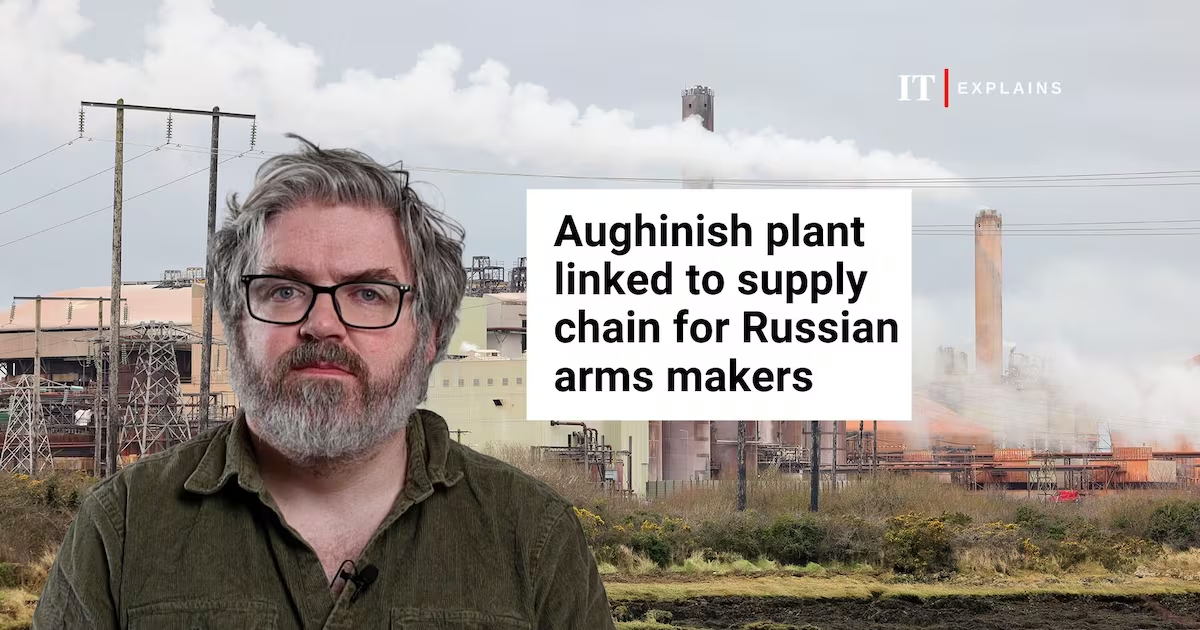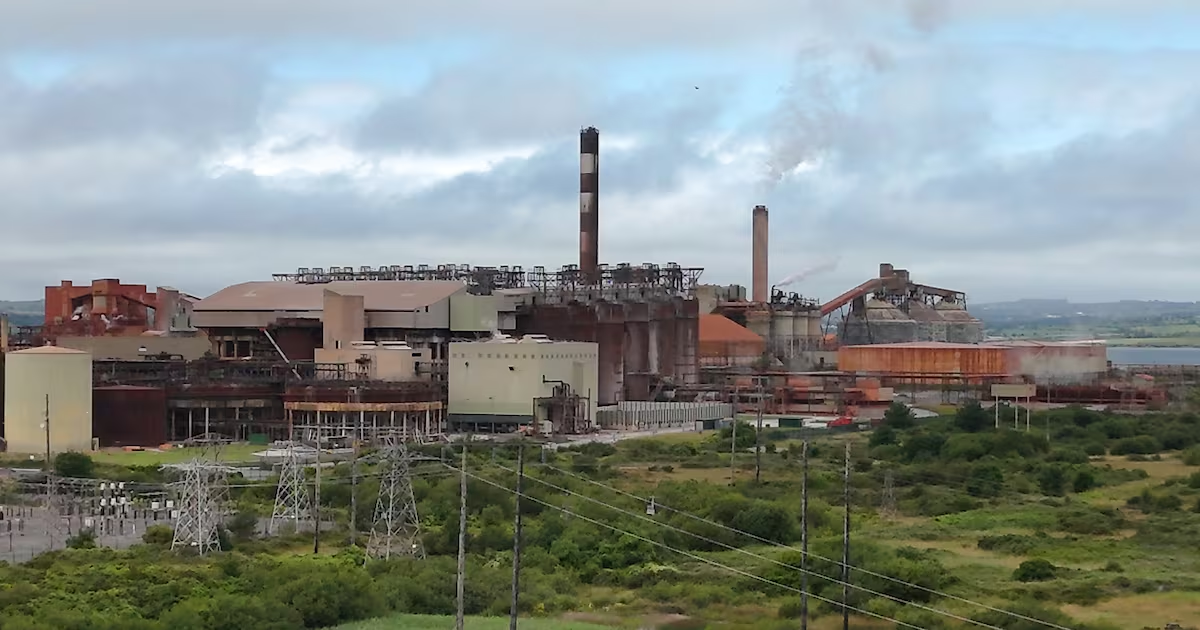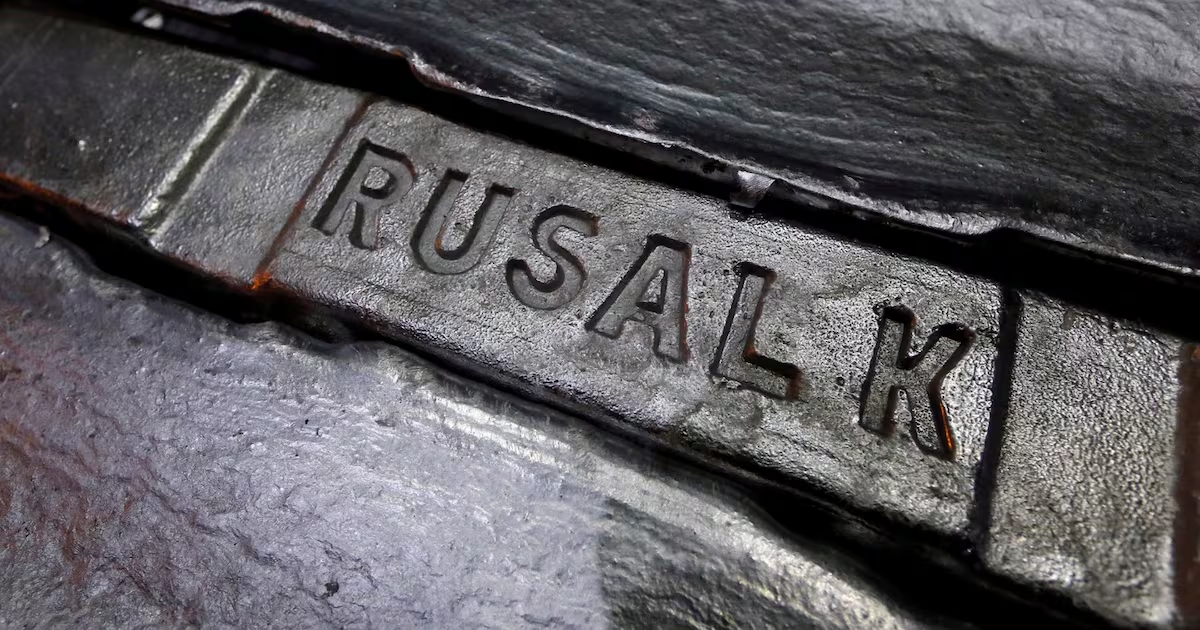
On Tuesday afternoon Ireland’s Ambassador to Ukraine, Jonathan Conlon, arrived at the office of the president in central Kyiv for a meeting with Volodymyr Zelenskiy’s most senior officials.Amid diplomatic niceties and discussions of Ukraine’s path to EU membership, one item dominated the agenda: the export of vast amounts of Irish alumina to Russia which, according to a recent Irish Times investigation, is ending up in the supply chain of Moscow’s military industry.The same day Ukraine’s embassy in Dublin issued a statement expressing alarm at the rise in alumina exports to Russia in recent years, from €196 million in 2021 to €318 million in 2025.“These figures raise serious concerns, as alumina remains a critical raw material for the production of aluminium, which is extensively used by Russia’s military-industrial complex,” the embassy said.The statements will add pressure on the Irish Government to take action over the continuing export of alumina from the Aughinish plant in Co Limerick to Russia.[ Amount of Irish-made alumina exported to Russia hits highest level since start of Ukraine warOpens in new window ]This pressure began to build in late March following the publication of The Irish Times investigation, which was carried out in co-operation with the Organised Crime and Corruption Reporting Project.Taoiseach Micheál Martin quickly announced an investigation but also played down the prospect of any action being taken on alumina exports, a position the Government has stuck to.In Europe the reaction was different. The Belgium government said it would take action to ensure alumina is sanctioned while dozens of MEPs wrote a letter to the EU Commission demanding action, including that alumina be added to the bloc’s 21st sanctions package targeting Russia.[ Putin associate still controls Aughinish Alumina parent company, Swedish investigators believe ]Matters came to a head last week when it was reported the product would, for now, be excluded from the next sanctions package. Around the same time, in a letter first reported by RTÉ News, Aughinish wrote to the Government warning of the impact on jobs in the region and on electricity supply. (Aughinish operates a small coal plant that provides excess energy to the national grid.)Various Government Ministers appeared in the media echoing these talking points, despite the investigation apparently still pending.In its letter Aughinish also claimed Russia was a minority customer, accounting for 45 per cent of exports. This contradicted figures provided by the Central Statistics Office (CSO) showing 65 per cent of exports went to Russia last year. For the first three months of this year the figure was 83 per cent.Further confusing matters, Ministers later disputed the official CSO figures, saying Aughinish had provided incorrect export data to authorities. The CSO said it is awaiting amended statistics.The Government is not only facing political pressure. A vocal social media campaign, using the hashtag “alumina21” has emerged online and has been lobbying TDs and MEPs for sanctions. Popular documentary maker Caolan Robertson, who usually reports from the frontline in Ukraine, has been doorstepping politicians on the matter and posting the clips online. “There’s no Russians working there,” junior minister Niall Collins said after being confronted by Robertson at a farming show this week. “Then why are all the signs in Russian?” Robertson replied in a clip which has since been viewed millions of times.All this seems to be having an effect. Domestically, the Government has gone out of its way to defend the exports. But at least six Irish MEPs have come out demanding some sort of action. This includes all four Fine Gael MEPs, who on Thursday issued a joint statement raising “serious concerns”.“If it is established that material exported from Ireland is contributing, directly or indirectly, to Russia’s capacity to sustain its war against Ukraine, then that must be taken with the utmost seriousness,” the MEPs said. New revelations in today’s Irish Times that Swedish investigators believe Aughinish’s parent company Rusal is still controlled by Putin confidant Oleg Deripaska will no doubt add to those concerns.
Ukraine joins those questioning Irish exports of alumina to Russia
Pressure builds on Government with embassy and MEPs raising concerns about Aughinish plant
657 words~3 min read