Get the latest news and updates from Dawn
EVERY June, Pakistan’s budget season follows a familiar pattern: business groups repeat their proposals for relief, the government defends its targets, and taxpayers prepare for additional burdens. Yet a more fundamental question is rarely asked — what is the budget ultimately meant to achieve, and does it reflect a clear long-term national purpose?
In principle, the budget is the state’s main instrument for promoting growth, improving public services, reducing poverty and raising living standards. In Pakistan, however, it has increasingly come to resemble an accounting exercise: mobilise sufficient revenue to finance a growing state and meet fiscal benchmarks agreed with the IMF.
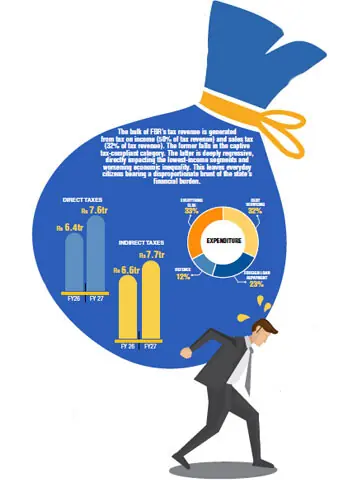
The result is a lopsided process that remains focused on extracting more from those already within the tax net, while paying insufficient attention to the quality of public spending, the need to broaden the base, or the incentives required for investment, employment and productivity. The Tax Policy Office was expected to introduce a longer-term perspective to this debate, but that wider vision is still not evident.
The burden continues to fall, predictably, on the formal economy. Corporations, salaried employees, entrepreneurs, exporters, documented businesses and investors remain the most visible and therefore the most easily taxed. What receives much less scrutiny is whether public spending is yielding meaningful improvements in citizens’ lives, particularly in a country where a large share of the population remains below the poverty line.