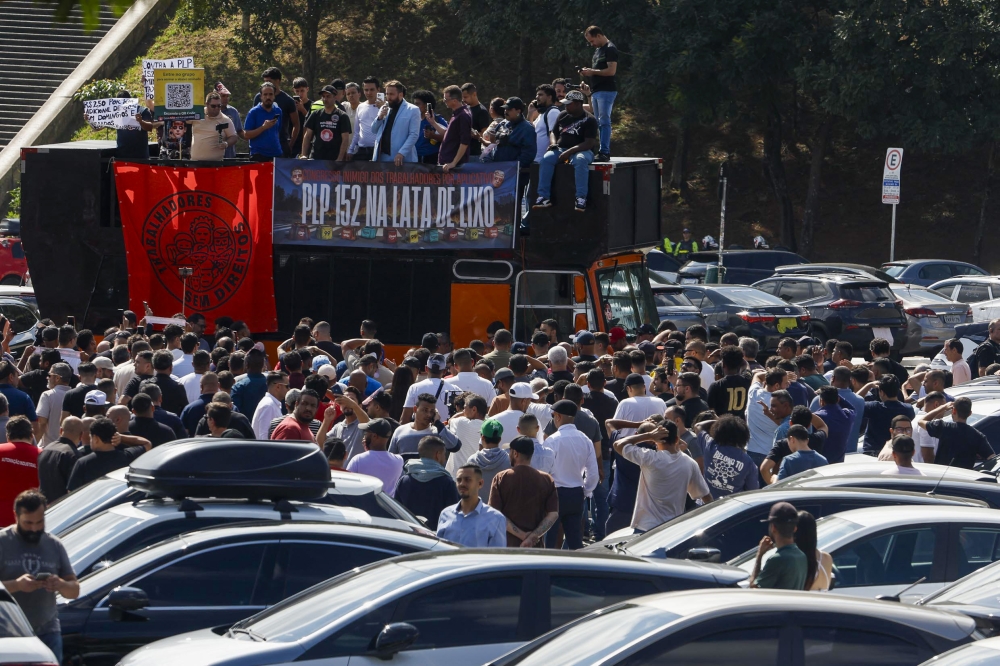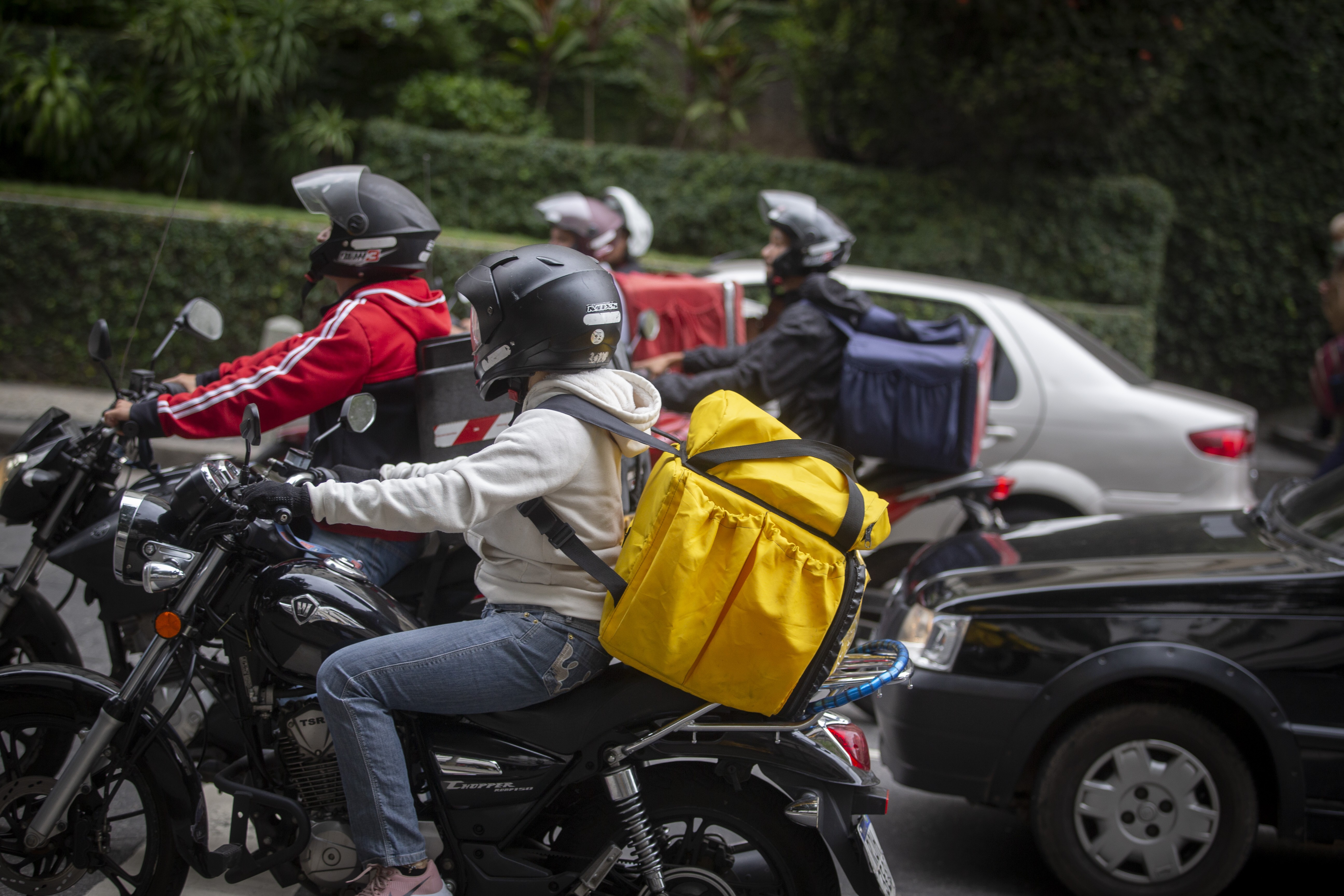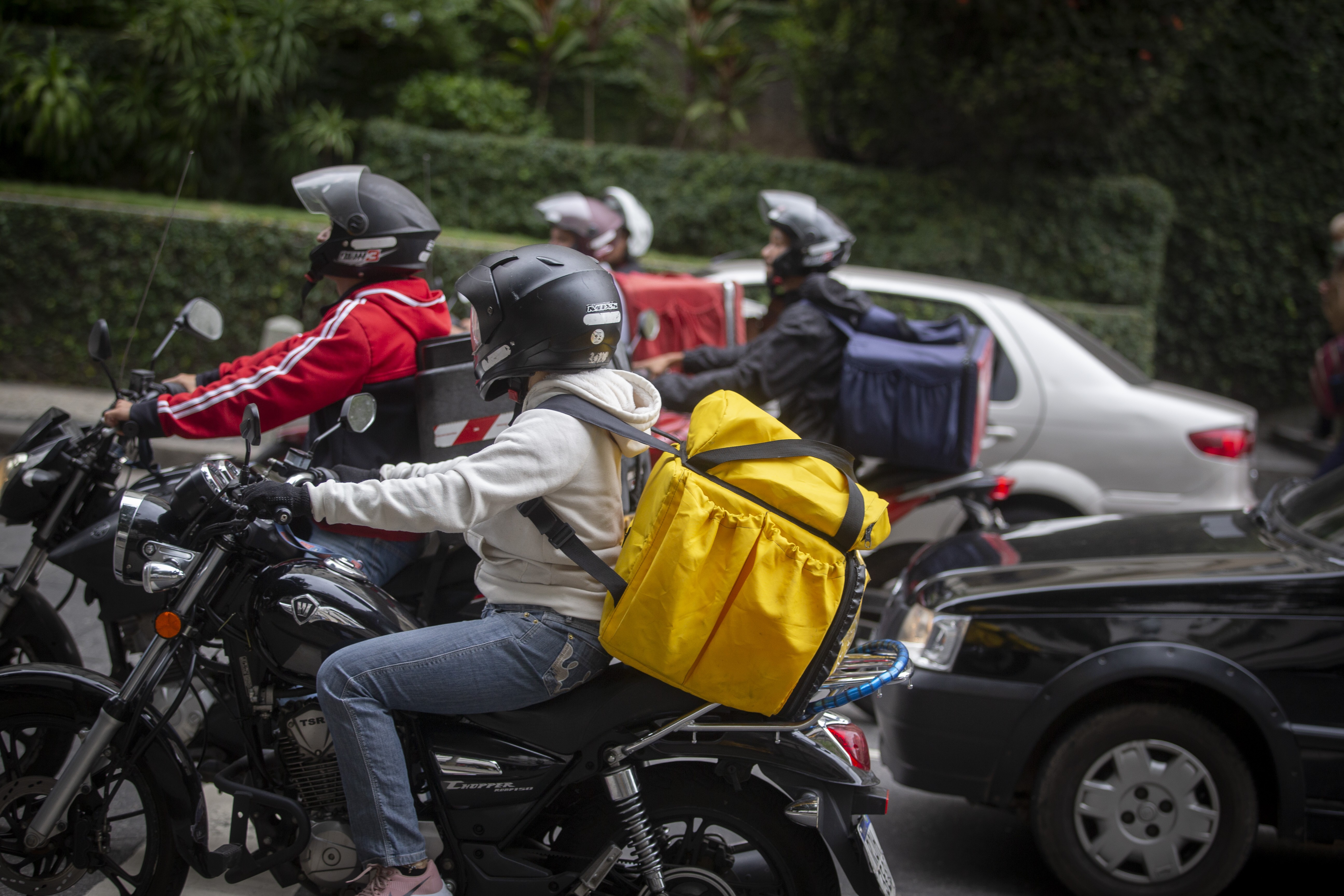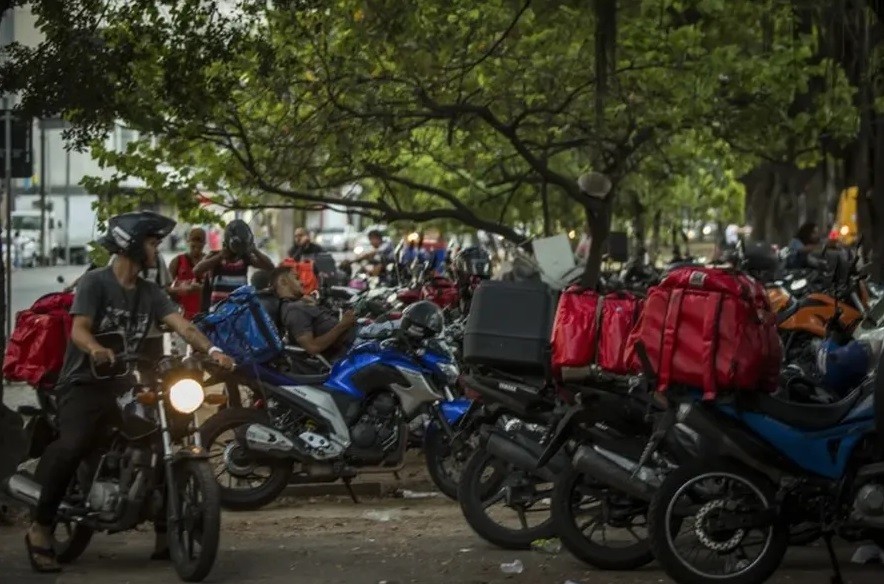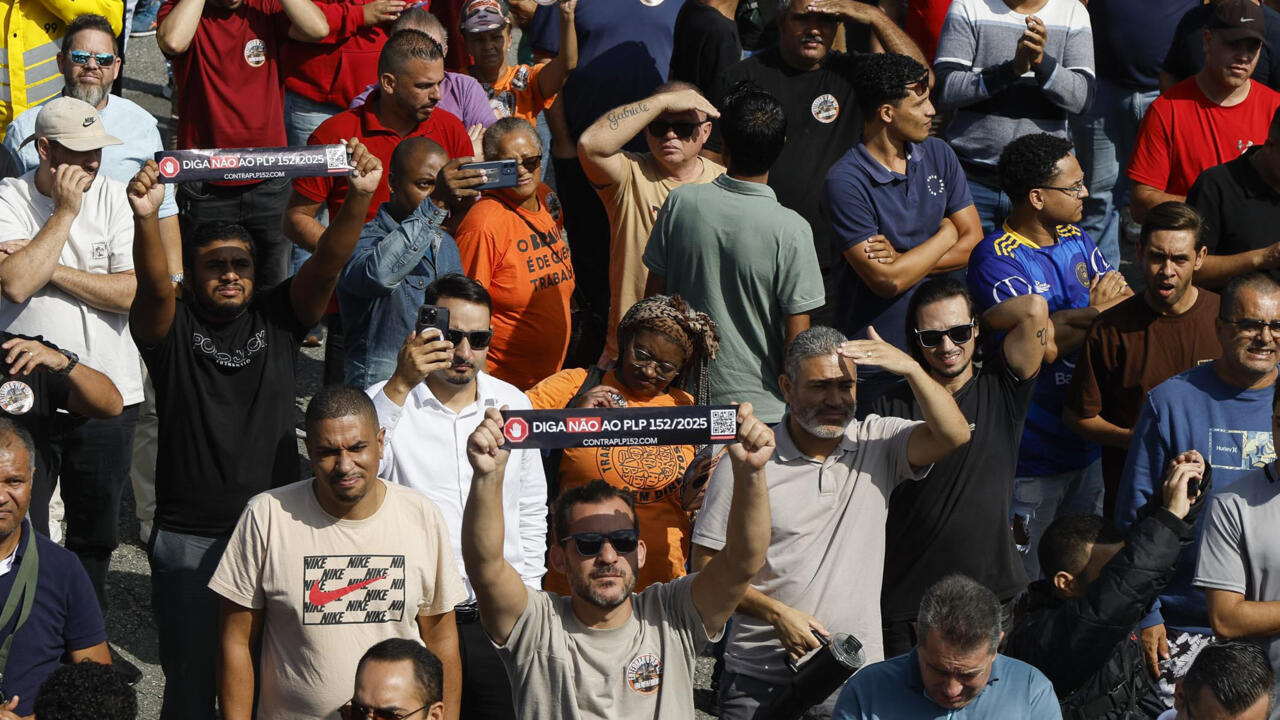
The 20-year-old Brazilian belongs to a booming new professional class of delivery workers -- precarious by nature but increasingly organized in defense of their rights.It is also a group being increasingly courted as an October presidential election draws near."Deliveries are like crack. I can't go without them. It's my only source of income. When I'm not working, I think about how much I'd be earning if I were out riding," Teixeira told AFP.And ride he does -- for over 10 hours a day, six days a week, stringing together as many deliveries as possible to earn between 700 and 1,000 reais a week ($135 to $197).That is significantly more than the monthly minimum wage of 1,621 reais in Brazil -- a nation of 213 million people where the unemployment rate is low, but the informal sector accounts for a large share of the workforce.In April, Teixeira took part in a day of major protests against a bill aimed at regulating the activities of delivery and ride-hailing drivers working through digital platforms. Protesters argue that the minimum income set in the law for each trip is way too low. Thousands of these workers took to the streets in major Brazilian cities, prompting lawmakers to indefinitely postpone consideration of the bill.'Massive boom'
Brazil's delivery riders emerge as unpredictable political force
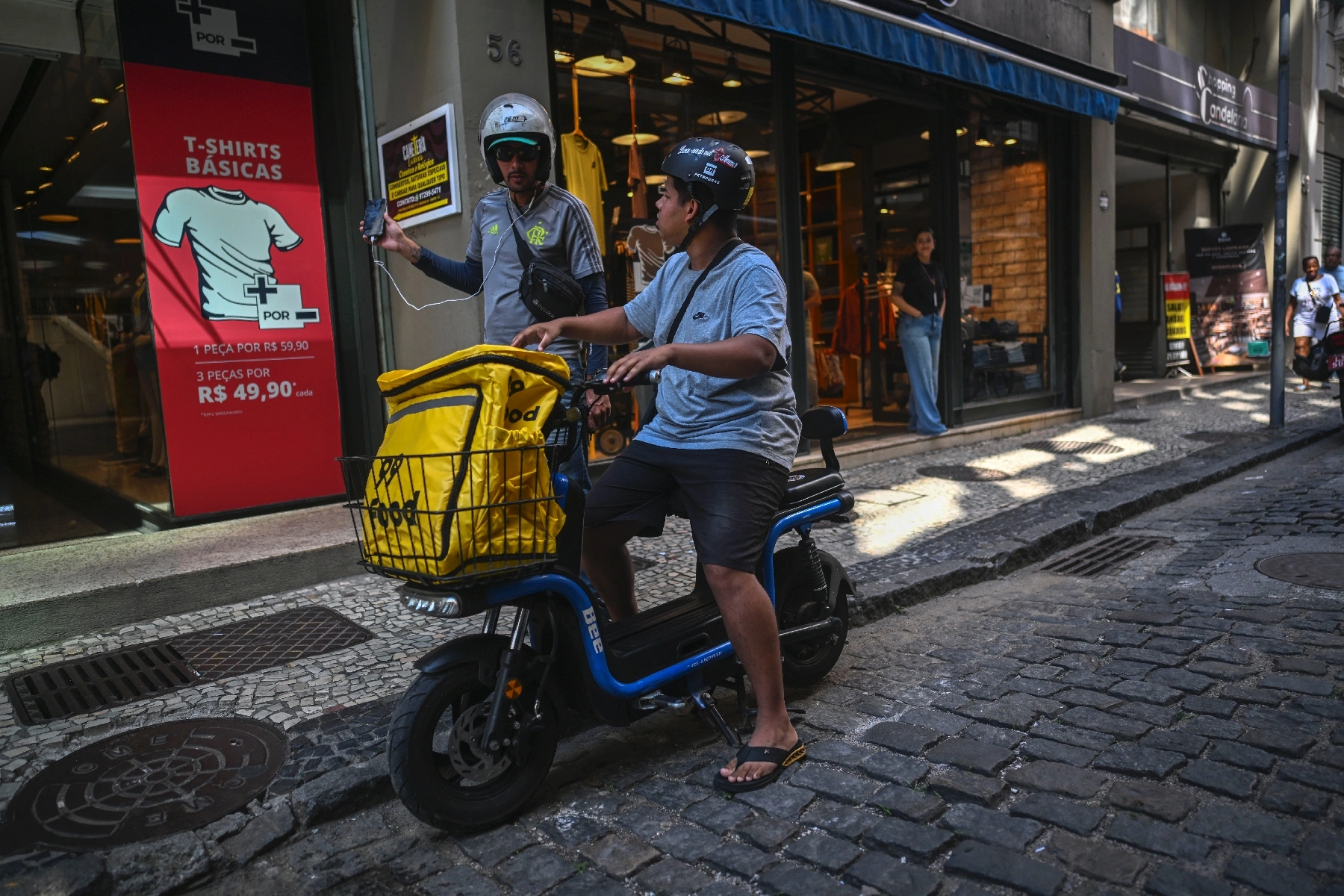
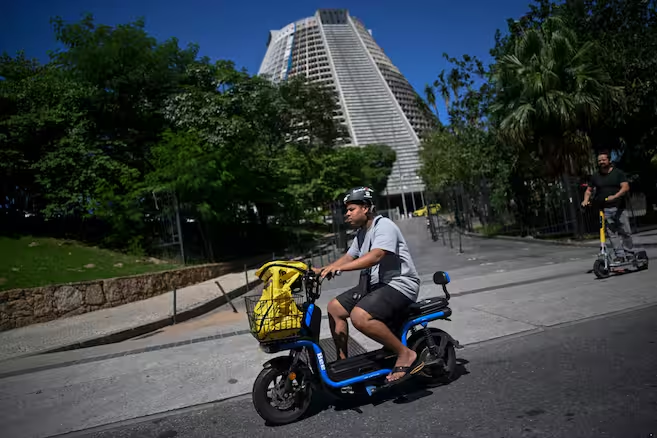
Clad in Bermuda shorts and flip-flops, Joao Paulo Teixeira zips through traffic on his electric scooter to deliver a meal in downtown Rio de Janeiro.
734 words~3 min read